@Trezor Self-custody still depends on device integrity, seed hygiene and what the user signs. Meta Coin Guard’s non-custodial model does not replace wallet security: its rules only evaluate predefined cover conditions, subject to eligibility, exclusions and contract terms.
Recovery after a breach differs from a predefined onchain rule. Meta Coin Guard describes a non-custodial, parametric model where assets remain in the user’s wallet and settlement conditions are set in advance. It does not prevent hacks or automatically cover exchange losses.
Binance has begun recovering affected assets for users and continues to work with law enforcement, issuers, blockchain intelligence firms and industry partners to trace, freeze and recover additional funds.
The company has already publicly committed to cover losses through company funds in the prior announcement.
Binance has already reserved over $6.34B of company funds to cover this incident. $5B of these funds are already held in the exact token assets that were impacted. We are completing the purchase of the remaining amount by buying token assets through market channels and OTC channels. We are doing this to match the format of the remaining token assets and address any asset shortfalls. This step can take longer because some tokens may have low liquidity and OTC settlement also takes time. We will share more progress as soon as we can.
These figures do not include frozen or protected assets, which remain subject to ongoing recovery and verification. Currently, $3bn has been frozen, with thanks to our industry partners. We are working with partners and law enforcement to recover the frozen assets.We will continue to use company resources to cover confirmed shortfall and will provide further verified updates as recovery efforts progress. Ultimately, all user funds will be verified publicly through our Proof of Reserves.
We will weather this storm. Thank you for the support.
Your Wallet key controls Wallet—not contract settings.
Check who can change settings, approval count, and whether a delay applies.
RZ Prime’s report covers TokenForwardSale.sol only; it lists no timelock for vault changes as Pending. Not proof of current settings.
#RZPrime
RZ USD: platform credit.
“USD” in a name does not mean cash, a bank balance, or a Stablecoin.
Meta Coin Guard’s Terms describe RZ USD as an in-ecosystem credit not fiat or a stablecoin.
Read the terms: use, transfer, redemption.
#MetaCoinGuard
Non-custodial does not mean every token is beyond issuer control. Blacklisting, wallet custody and cover eligibility are separate layers. Meta Coin Guard keeps assets in the user’s wallet, while predefined rules determine whether cover applies.
Tether Blacklists Dozens of TRON Addresses Holding Approximately $27 Million in USDT
According to TrustSniffer, Tether blacklisted at least 33 addresses on the TRON network on October 28. The addresses held approximately $27 million in USDT at the time they were flagged, with the largest individual address holding around $7.8 million. The figures are based on monitored address balances and do not necessarily represent the exact amount frozen at execution. Tether has not publicly disclosed the reasons for the coordinated blacklisting activity.
@Cointelegraph Address poisoning is a wallet-security failure, not automatically a covered event. Meta Coin Guard is described as non-custodial, rule-based cover: assets remain in the user’s wallet, and only predefined eligible conditions can trigger settlement.
@Ledger Human approval is a critical security boundary. Meta Coin Guard addresses a different layer: non-custodial, rule-based cover. It does not replace signing security, and cover applies only when predefined eligible conditions are met.
@opensea Non-custodial wallet access preserves user control, but custody and cover solve different problems. Meta Coin Guard keeps assets in the user's wallet while applying only predefined, eligible on-chain cover conditions.
This is a useful distinction: validator-key risk, custody of delegated stake, paused rewards and user-fund loss are not the same event. Meta Coin Guard is designed around predefined on-chain cover conditions, so eligibility depends on the exact trigger.
Design can turn a vehicle into more than transport; it can reshape demand and perceived value. CoinHalls’ Car Hall asks how many Car tokens will equal the declared prize’s value at the final reveal. The closest valid estimate wins.
A snapshot saves Wallet balances at one moment.
Ducat said its Oct. 25 snapshot decides redemption eligibility; later-bought tokens do not qualify. Claim unverified here.
Current balance does not prove eligibility. Check cutoff, Wallet, rules, contract, deadline.
#RZPrime
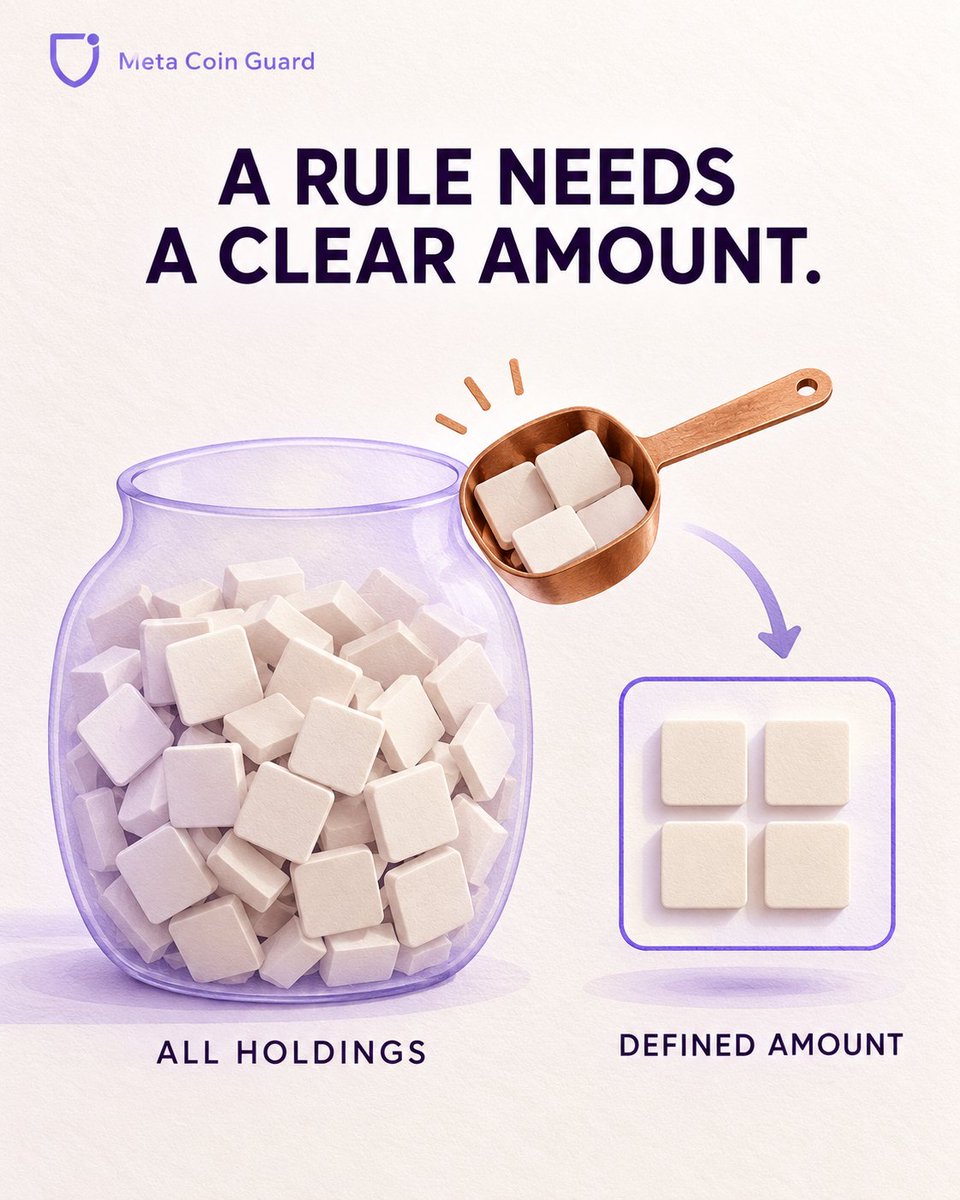
Every rule needs a clear amount.
A recipe uses a set amount, not every ingredient.
Meta Coin Guard lists token, quantity, period and plan for a Guard. The chosen quantity should not be mistaken for every token in your Wallet.
Check what amount the rule covers.
#MetaCoinGuard
Autonomous payments make permission design critical. Meta Coin Guard does not replace wallet security or prevent bad approvals; it is described as non-custodial, rule-based cover that applies only when predefined eligible conditions are met.
LIGHTNING LABS LAUNCHES WAVELENGTH ON BITCOIN MAINNET, ENABLING AI AGENTS TO MAKE AUTONOMOUS PAYMENTS
Lightning Labs has opened Wavelength to everyone, allowing AI agents to send and receive Bitcoin payments over Lightning without human approval for each transaction.
Agents can autonomously pay for API calls, purchase data, and transact with other agents for fractions of a cent using Lightning and L402, without credit cards, accounts, or API keys.
Developers can integrate payments into apps without running Lightning nodes, managing channels, or sourcing liquidity.
The self-custodial toolkit supports independent on-chain exits, with initial limits of 300,000 sats per wallet and a 0.25% service fee on Lightning payments.
Wavelength remains in alpha, with stablecoin support planned.
Your Wallet keys protect crypto. Websites can still store your data.
Wu Blockchain reported a Keystone website data incident; unverified here. It said Wallet secrets weren’t exposed.
Before using a site, check what it asks for, official contact, and Wallet requests.
#RZPrime
Before using a Guard, check its start, end, and what can switch it off.
Meta Coin Guard says it can switch off if your token balance drops below the chosen amount or you move tokens before expiry. Assets stay in your Wallet.
Read the rules before you connect.
#MetaCoinGuard
@Ledger Wallet security is layered. A trusted approval screen helps prevent signing deception; it does not define what follows a covered market event. Meta Coin Guard adds a separate, non-custodial layer: predefined on-chain conditions while assets remain in the user’s wallet.
Self-custody should not force users to surrender control to access structured protection. Meta Coin Guard keeps supported assets in the user’s wallet while predefined on-chain conditions govern eligibility and settlement. Control stays with the holder; rules stay transparent.
🚨 INSIGHT: Can you “be your own bank” without becoming a security expert?
Crypto executives are divided over whether self-custody is ready for beginners, as multisig and seedless wallets bring their own trade-offs.
@coindanslecoin reports.
https://t.co/x7FQIpkIJK
Eight-hour humanoid endurance shows how quickly industrial technology is advancing. CoinHalls’ Industrial Hall turns progress into a precision challenge: estimate how many Industrial tokens will equal the declared prize’s value at the final reveal. Closest valid guess wins.
Non-custodial: the product does not hold your assets; they remain in your connected Wallet.
Meta Coin Guard describes rules intended to operate through Smart Contracts.
Asset control and rule logic are separate. Non-custodial does not remove risk.
#MetaCoinGuard