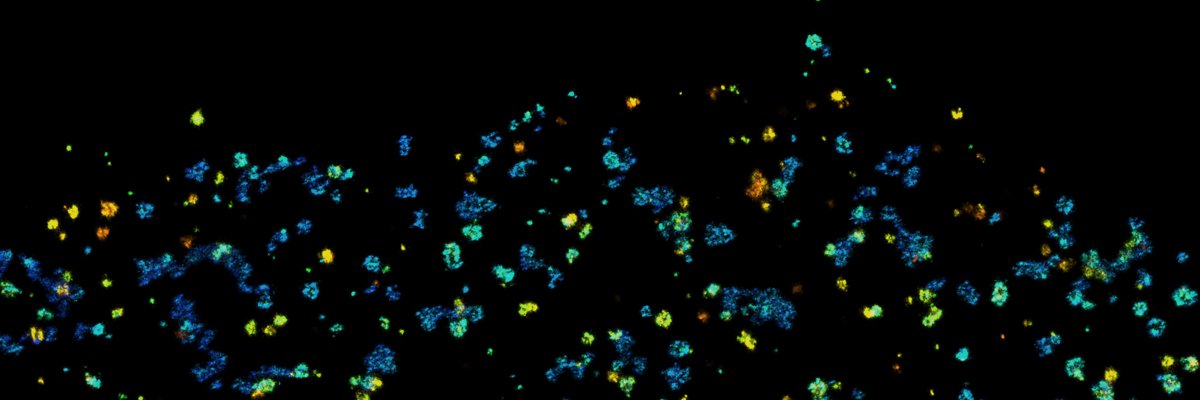
🔬 We're hiring a postdoc in #SpatialBiology & #CancerResearch!
Join our newly funded SPICE-CC project at the University of Milano-Bicocca (Milan, Italy).
📍 2 years | €50K gross/year
📅 Apply by Dec 10, 2026
Details below 👇
#PostdocJobs#AcademicJobs
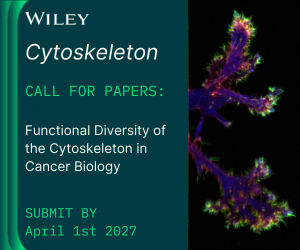
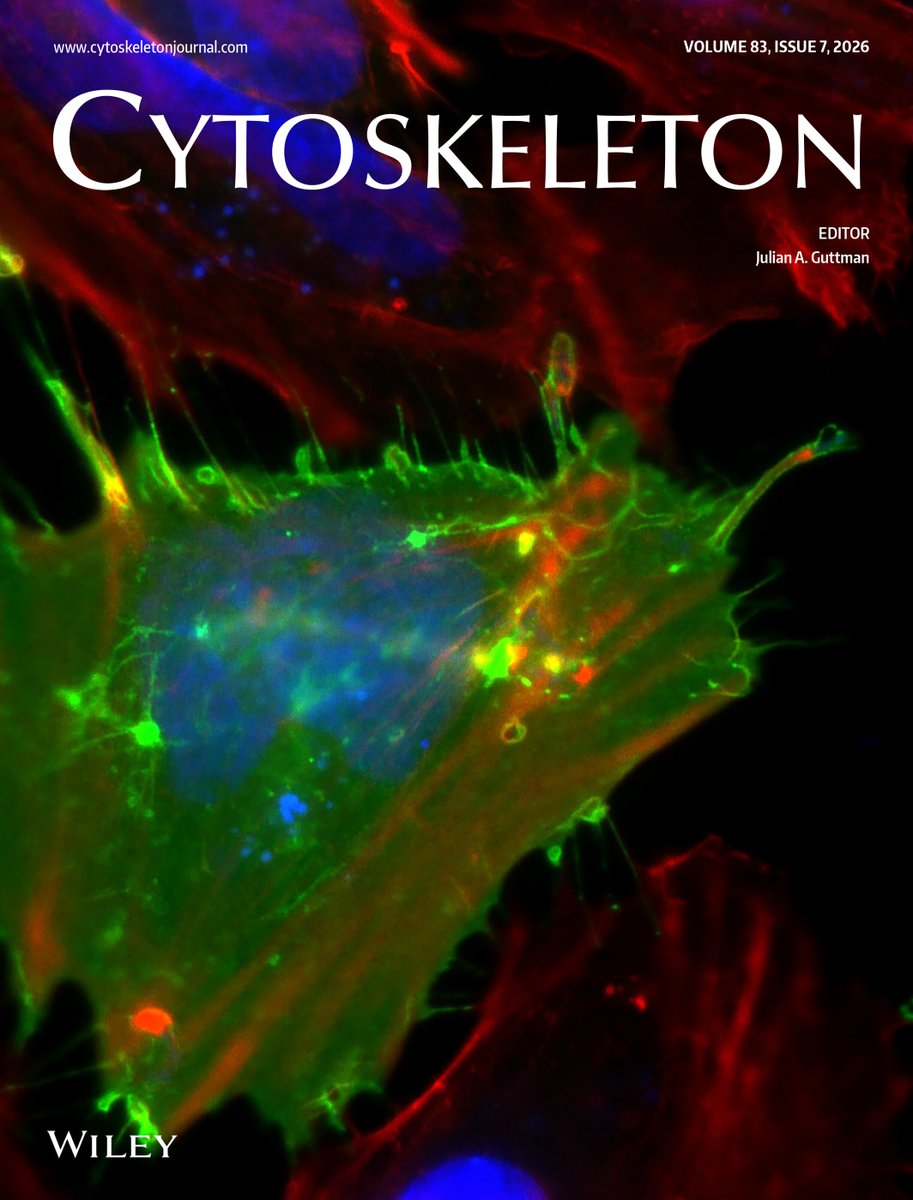
📢 Call for Papers! #Cytoskeleton invites submissions to our Special Issue: “Functional Diversity of the Cytoskeleton in #Cancer#Biology.” 🧬
📅 Submission Deadline: April 1, 2027
#Free to publish!
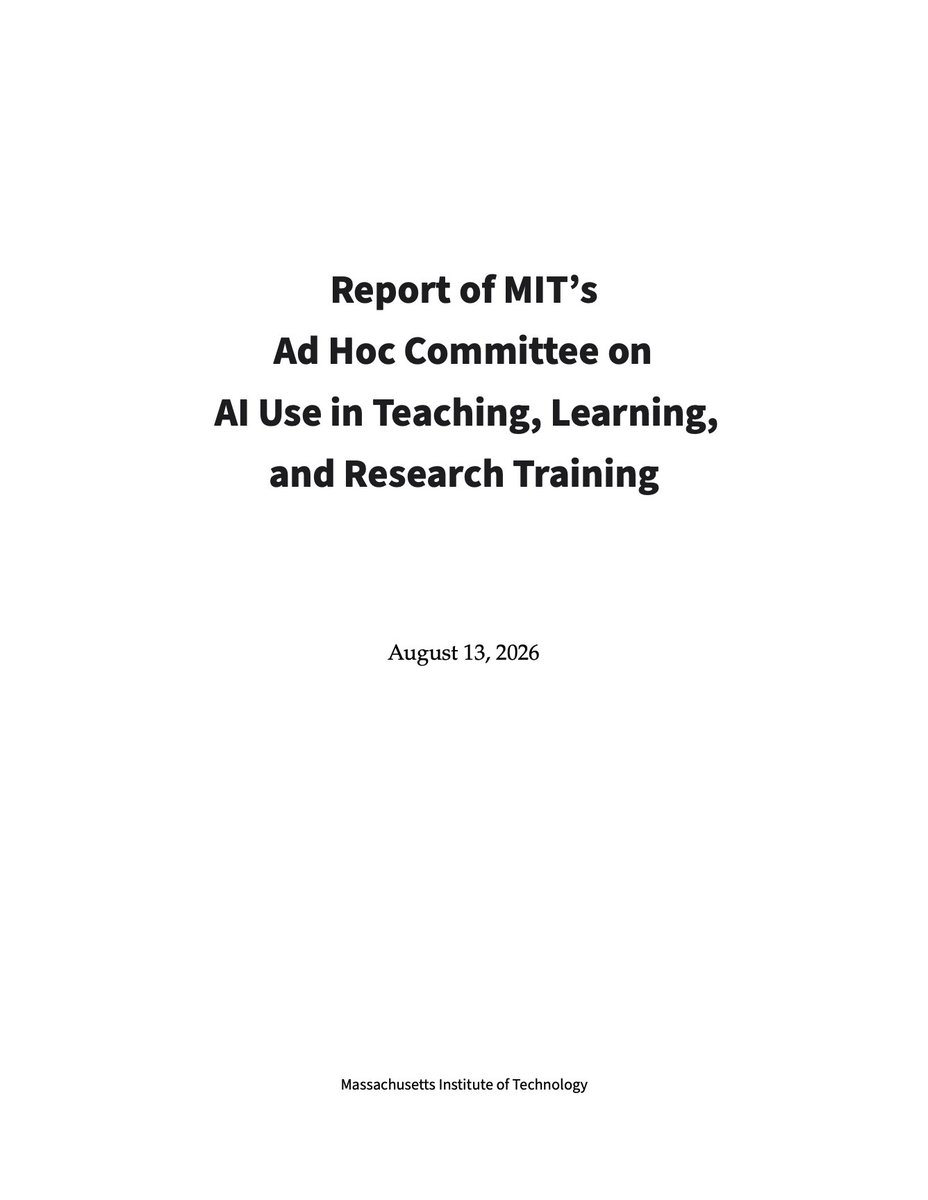
MIT published a brutally honest report on what AI is doing to students.
A committee of professors and students spent five months studying how AI changed learning on campus, and the findings read like a warning to every university on the planet.
Study groups are disappearing. Office hours are emptying out. Problem sets and take-home exams no longer prove anything, because AI can produce credible solutions to almost any written assignment in the undergraduate curriculum. Students who lean on chatbots lose mastery and confidence, and some slip into what the report calls cognitive surrender, reaching for AI at the first hint of struggle.
The numbers are rough. 46 percent of surveyed MIT undergrads use LLMs daily. 90 percent worry about their own overreliance. Undergrads who feel AI makes them replaceable now outnumber those who feel it makes them capable.
The committee's answer surprised me. They refused to fight AI with surveillance. The report calls AI detectors unreliable, says lockdown browsers feel like spying, and warns that policing students builds a classroom atmosphere of mutual distrust.
Instead, MIT wants to rebuild education around the things AI can't replace. That means oral exams, semester portfolios, in-person project work, and a required social component in every subject. The report even floats the idea of rethinking grades entirely, since without a GPA to optimize, much of the incentive to cheat with AI evaporates.
The committee warns professors against replacing undergrad research assistants with AI agents just because they're cheaper, because a university exists to grow people, not output.
The most famous tech school on earth admitted the machines broke its way of teaching. Its answer is more humans, not more software.
How do mammals mount an effective #ImmuneResponse?
🧩 Dr. Francesca Granucci's lab has uncovered another piece of the puzzle by uncovering microbial adhesion to myeloid cells as a critical initiation event.
Abstract in @NatImmunol: https://t.co/b1EnM7OPOe
🚨 Glad to share our new paper, out now in Nature Immunology!!!
https://t.co/tquCnC47fz
We identify microbial adhesion as a previously unrecognized danger signal that activates Piezo1 in myeloid cells before PRR engagement.
Excited to share TEAMSTER: an end-to-end workflow for 3D tumour spheroids, from reproducible generation and colour-coded OCT cryosectioning to semi-automated quantitative CellProfiler analysis.
https://t.co/GSrnkkkq5y
#3Dculture#CancerResearch#Nanomedicine@BtBsUNIMIB
The @FEBS_Letters Special Issue on dendritic cell biology is now online, offering a timely overview of recent progress in the field.
It was a pleasure to be involved as a guest editor with @dendriticell & @frarro1
✨ That’s a wrap on The Power of Multiplexed Imaging!
A full week of hands-on sessions, inspiring lectures, a great seminar, and data analysis!
Huge thanks to all participants for your energy. Can’t wait for the next edition — stay tuned! 🔬🌈
#MultiplexImaging#SpatialBiology