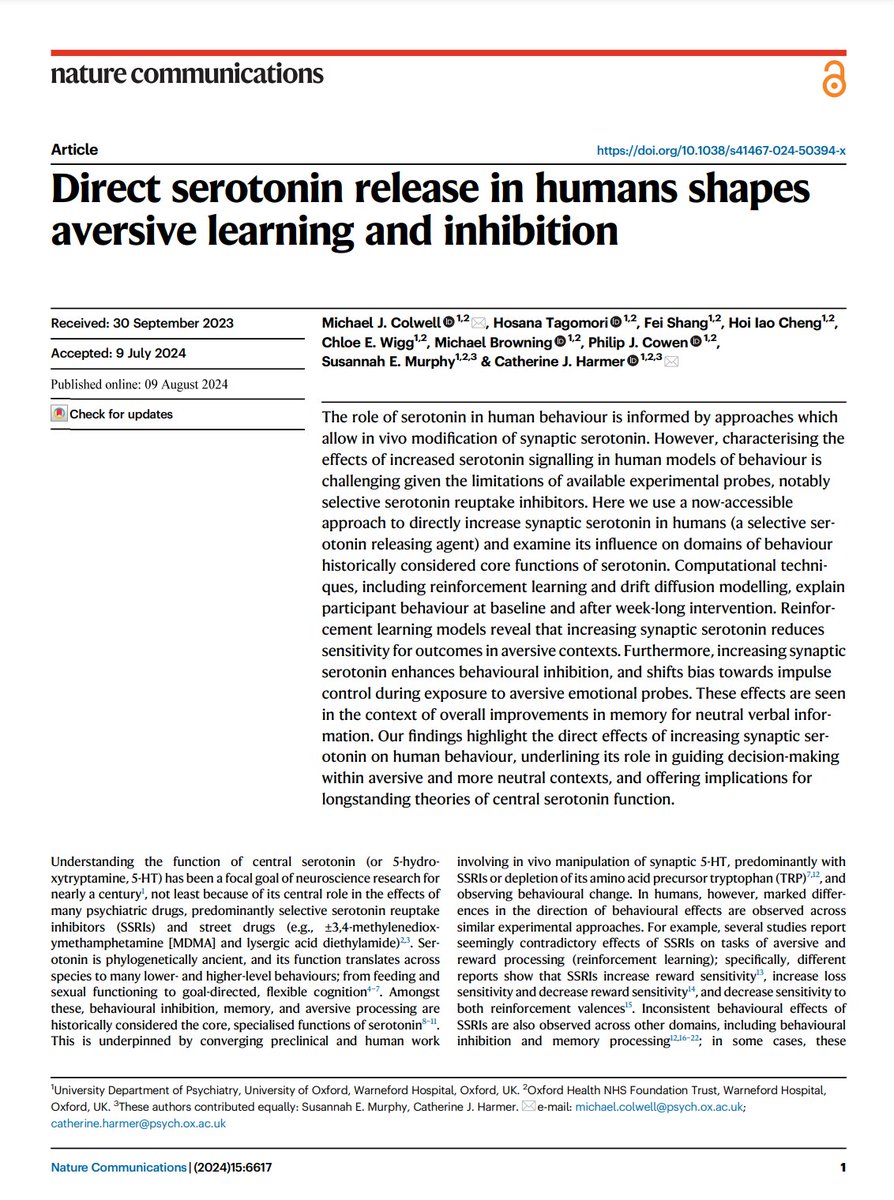
New paper in Nature Comms @NatureComms !
If you're interested in serotonin and its influence on human behaviour, you may enjoy our new paper. We use a now-available method to increase brain serotonin that differs from conventional methods (e.g., SSRIs).
https://t.co/PPQgil4dwF
NEW: Researchers have found increasing serotonin makes people better able to control their behaviour, particularly when exposed to negative information.
More info ⬇️
https://t.co/AZOFKiRO80
New paper in Nature Comms @NatureComms !
If you're interested in serotonin and its influence on human behaviour, you may enjoy our new paper. We use a now-available method to increase brain serotonin that differs from conventional methods (e.g., SSRIs).
https://t.co/PPQgil4dwF
@zenbrainest@mattbagg Thanks for sending your papers on! I will have a read tomorrow for sure. BTW I did not mean to suggest they are the same thing, but rather one supersedes the other.
Would you be happy to speak over email? It's difficult to have a considered discussion re: character limits etc.
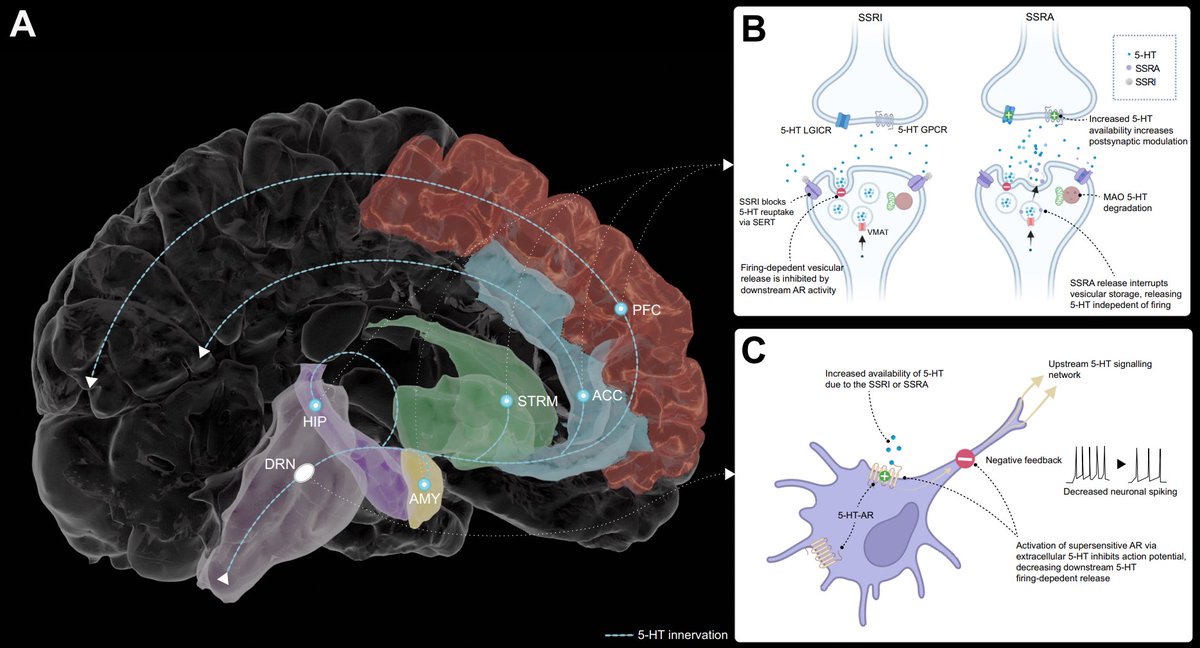
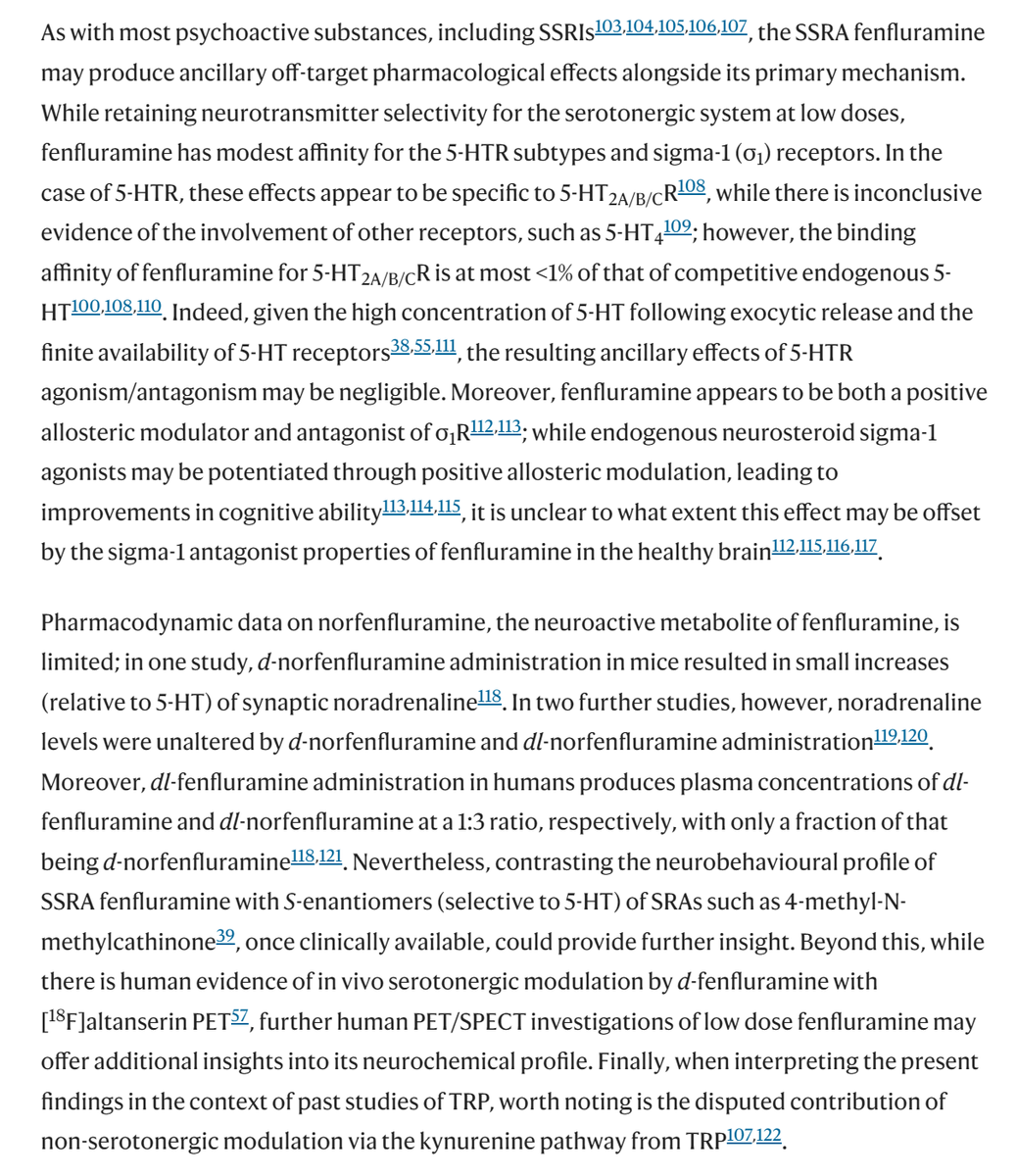
@zenbrainest@mattbagg We used low-dose fenfluramine our study. Fenfluramine is no longer selective to serotonin at high doses, and indeed, we know the effects on VHD are dose-dependent: https://t.co/kZEkUKTJld
@mattbagg Thanks! That is interesting; firing-independent release is helpful in the sense that it is less deterred by autoreceptor supersensitivity (which delays the action of SSRIs), producing a less muddied picture of temporal/spatial aspects of 5-HT signalling. But, no method is perfect
@dr_alexharris Thank you! While not always, aversive RL is typically increased in depression, while reward RL is reduced (see https://t.co/xW7nRCGMTB). It is tempting to speculate that this drug could reduce aversive RL in MDD, but this needs testing empirically in a clinical cohort.
The serotonin releasing agent fenfluramine enhances memory, reduces impulsive responses and sensitivity to negative consequences, translating work from preclinical models to humans, by Michael Colwell @SusieMurphy ://inews.co.uk/news/why-antidepressants-work-serotonin-3215154"