Cursor is now part of @SpaceX.
Today, we have officially closed our acquisition. We will join the @SpaceXAI team to help make Grok the world's most useful AI and improve Grok Build, Grok Bot, Grok API, Cursor, and more.
SpaceX has built some of the most inspiring and impressive technology in the world, and we’re grateful for the opportunity to become part of such a special company. Onwards.
the market is currently severely mispricing human life. right now, the consensus trade is to spend down biological assets (your body+mind) to acquire fiat currency and status. soon biological persistence will become the most valued asset.
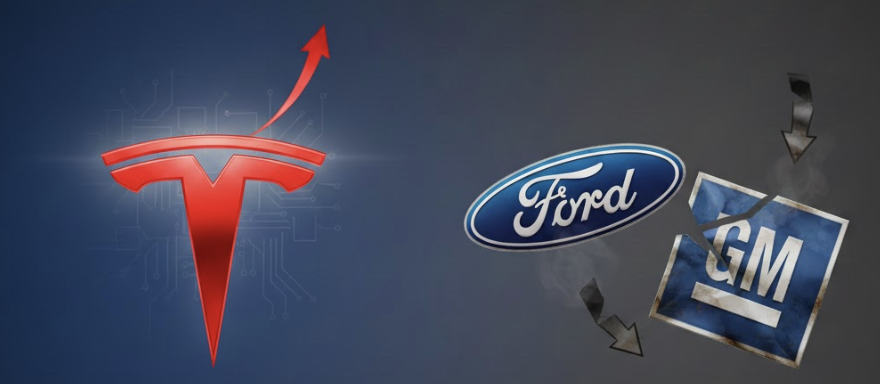
It is striking (though not surprising) how poorly legacy automakers have invested in their future. Technology is reshaping transportation at an accelerating pace, yet most incumbents are not playing to win. They are playing to delay.
Their first failure was cultural and structural: a broad rejection of the EV transition. By any rational measure, legacy OEMs could have simplified their product lines, collapsed complexity, lowered costs, and built more efficient vehicles. Instead, progress stalled because dealers (the real customers of legacy auto) resisted change. EVs threaten the service revenue that underpins the dealer model, and the OEMs remain captive to it.
Those that did pursue EVs made a second, more damaging mistake: they refused to start from a clean sheet. Rather than building modern, software-defined vehicles, they bolted electric powertrains into architectures designed for ICE cars. The result was predictable— bloated wiring, fragmented ECUs, vendor-owned software, and vehicles fundamentally incapable of rapid iteration, cost compression, or true OTA evolution. They built electric cars, not modern machines.
Autonomy exposed this weakness completely. Legacy highway-assist systems were never designed to win; they were designed to check a feature box. With no data flywheel, no vertically integrated stack, and no AI-first architecture, most OEMs outsourced the “brain” and accepted permanent dependency. Autonomy, for them, was a feature. For winners, it is the product.
The problem is not that legacy CEOs are blind. Most understand exactly what is happening. But they are trapped, by dealer economics, union constraints, internal incentives, stranded assets, and balance sheets that cannot survive a true reset. So they allocate capital defensively, mistaking spend for progress and compliance for strategy.
Where does this leave them? Not suddenly extinct, but structurally behind, with futures defined by dependence and protection rather than innovation and control. These are survival paths, not winning ones.
The auto industry is being rewritten in software, manufacturing systems, and AI. Legacy auto largely chose not to compete there. The consequences are now unavoidable.
@Jason Version 14.0 goes into early wide release next week, then 14.1 about 2 weeks later and finally 14.2.
The car will feel almost like it is sentient being by 14.2.