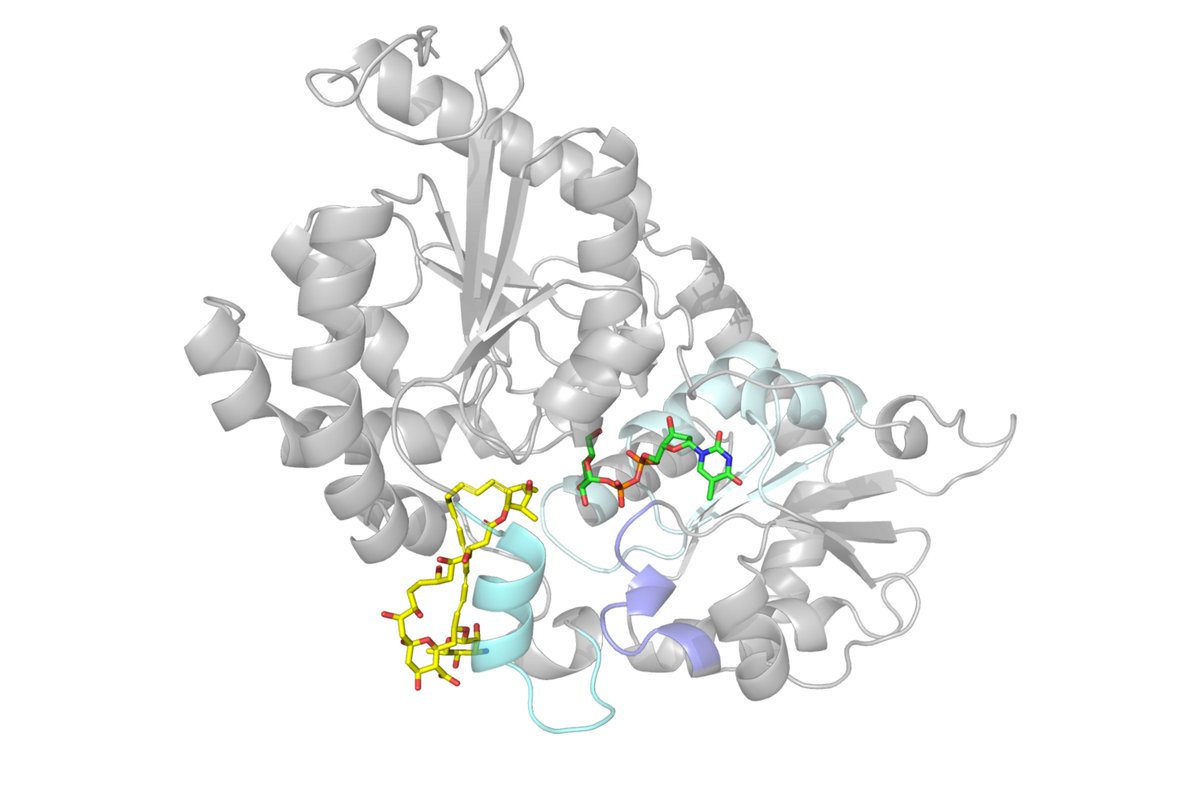
Our latest article in Nature (@Nature) reports the discovery of pathways to new polyene antifungals that outperform current clinical drugs and act via a different mechanism. Combating #AMR@imperialcollege
https://t.co/42W2nOEmiQ
Delighted to see this excellent News & Views article in Nature Chemical Biology highlighting our lab's work on a new enzymatic approach for producing safer, more effective polyene antifungal agents.
https://t.co/jfsLpH2IOQ
#Biocatalysis#NaturalProducts#ChemBiol#Antifungals
Newly discovered ligase enzymes are expanding the biocatalytic toolbox for peptide synthesis. In our latest review, we discuss their potential to deliver more sustainable and efficient manufacturing of peptide therapeutics.
https://t.co/pOzqlCaHzU
#grabstract of the day
Scientists engineered enzymes to add sugars to antifungal drugs, making them more powerful against deadly fungal infections while reducing harmful side effects for patients.
https://t.co/bj0LZRF2T8
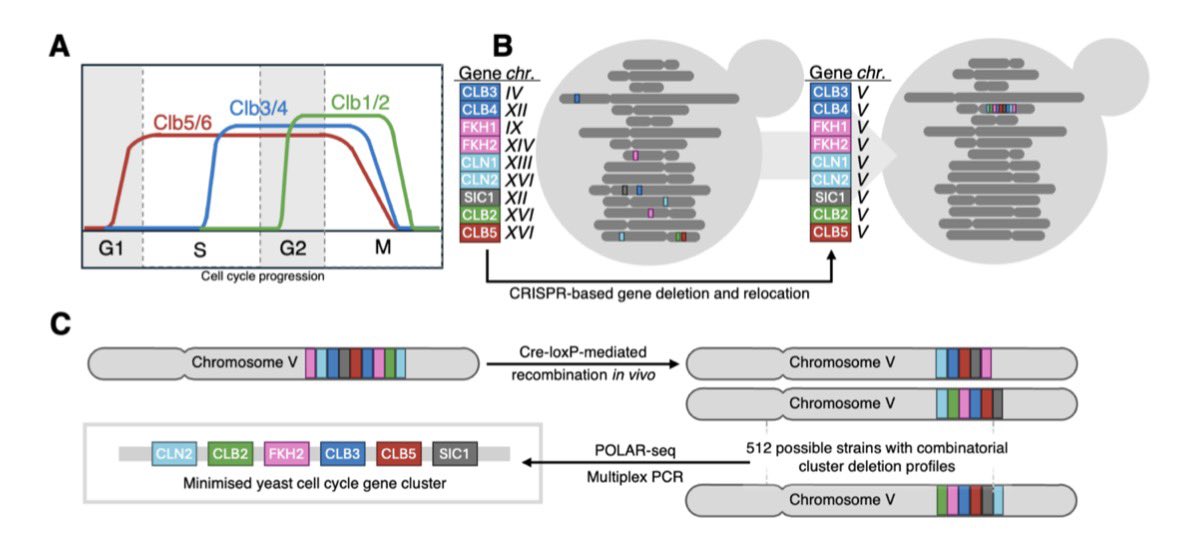
Our lab’s latest on synthetic genomics “Synthetic Combinatorial Minimisation of Cell Cycle Control” is up now on BioRxiv - covering ambitious yeast #synbio cell cycle work led by Anastasiya Malyshava and co-supervised by @UniOfSurrey’s Matteo Barberis.
Excellent commentary and insight on our latest paper in Nature – Enzymatic glycosylation and amidation reshapes polyene bioactivity – from Brianna Barbu at C&EN:
https://t.co/jSgjyB4qGm
🚨New research from the @Micklefield_Lab. The team have uncovered a new class of antifungal agents that are more effective and less toxic than existing treatments. Read the full story: https://t.co/cge9aUXfQf
Our group had a fantastic couple of days away in the South Downs National Park, enjoying walks, taking in the stunning scenery, and making the most of the sunshine and refreshing sea breeze. ☀️🌿🌊
New PhD opportunity in our lab – Enzymatic Technologies for Discovery of Improved Oligonucleotide-peptide Conjugates. Funded by AstraZeneca & the EPSRC CDT for Chemical Biology, with enhanced stipend £31,805 p.a. @Imperial @impchemistry
https://t.co/C37peGKM5S
Our latest paper in @NatureComms provides alternative enzymatic pathways to essential penicillin antibiotics, replacing the complex native NRPS assembly line with simple ligase enzymes. @Imperial @impchemistry
https://t.co/GUSEULDLdS
New postdoc position available in our labs @imperialcollege, @impchemistry. If you’re keen to explore new horizons in chemical biology and work in a collaborative, competitive, and friendly environment, send your CV by email and apply via this link:
https://t.co/qug8xbxgBl
Our lab is delighted to host two newly awarded MSCA Fellows Dr Liu and Dr Fatma @impchemistry, @Imperial. Congrats to all this year’s successful fellows. If you are interested in applying for MSCA 2026, then email Jason. https://t.co/NlmfvDgiEh
PhD opportunity in our lab! Funded by the EPSRC CDT for Chemical Biology, this project will develop next-gen mRNA display technology for encoded derivatisation of bioactive cyclic peptides. Enhanced stipend ~£31k p.a.
https://t.co/iApzj0aD2D
Great fun at our group’s first Christmas party at Imperial — games, quizzes, and a night out 🎉 We have several PhD positions available for next year. Interested in joining us? Get in touch
🎉 We’ve done it again! We've secured our 3rd consecutive #AthenaSwan Gold Award 🏅
Dr Nazila Kamaly shares how allyship, adaptability & community spirit keep inclusion at our core 💛
Read the Q&A 👉 https://t.co/u5fhOmRjx8
#EDI#STEMinclusion#ImperialChem
PhD Studentship in Chemical Biology – developing enzymatic methods for peptide synthesis – funded by a larger ERC Advanced Grant @imperialcollege, @impchemistry, @ImpScience, @WCIDLondonopen. Open to home & overseas. Deadline 30 Nov 2024. Details here:
https://t.co/QDZRmOuiof
PhD Studentship in Synthetic Biology – Discovering novel antimicrobial peptides at Imperial College in collaboration with André Brown's MRC lab.
@imperialcollege, @impchemistry, @ImpScience,
@WCIDLondon
Deadline 20 Nov 2024. More details here:
https://t.co/iE43bwmlx3