Associate Prof. @NotreDameofMD. #microbiology#womeninstem#SciComm antibiotics; non-invasive antimicrobials; bioinformatics she/her; mom of 2 small kids
Seeking scientist volunteers for this fall! Want to practice science communication and help author a ✨comic📷 about your research? I need collaborators for the next cohort of SciComm & Comics art students! Sign up here by 9/13: https://t.co/X5VebRq51H…
How do you decontaminate your PCR workspaces? For anyone wanting a contamination-free lab, here are six studies validating the use of diluted domestic bleach (or 1% hypochlorite), or chlorine wipes, then wiping with water, for simple, cheap, and effective decontamination 👇
1️⃣ Champlot et al. (2010) published an extensive investigation of decontamination methods of surfaces and reagents for hypersensitive PCR applications.
For surfaces, they concluded that a generous treatment with bleach (2.6 % active chlorine) or CoPA reagent (a patented solution of copper-bis-(phenanthroline)-sulfate/ hydrogen peroxide) worked best, and both could degrade 99.4% of DNA applied to their test surfaces.
They also found that wiping with DNA Away® or detergent removed roughly two-thirds of surface-attached DNA — better than nothing but not as good as either bleach or CoPA.
Champlot et al. (2010). An efficient multistrategy DNA decontamination procedure of PCR reagents for hypersensitive PCR applications. PloS one, 5(9), e13042.
https://t.co/ZWd7tymR5T
2️⃣ Ballantyne et al. (2015) investigated methods of DNA removal from plastic and metal surfaces contaminated with blood, semen, and touch-DNA, using different concentrations of sodium hypochlorite and the disinfectant Virkon®.
They found that 1% sodium hypochlorite left for 5 minutes, followed by wiping with ethanol, removed nearly all detectable DNA.
However, hypochlorite plus ethanol produces some gaseous chlorine and chloroform, so they replaced the ethanol wipe with wiping with distilled water. This change made no significant difference to detectable levels of DNA, although bleach+ethanol seemed slightly better for decontaminating blood samples.
The authors also found no significant differences between leaving bleach on a surface for 5 minutes or immediately wiping it off with water, provided the solution could penetrate surface cracks or crevices.
Based on these results they updated their laboratory processes to include a 1% hypochlorite decontamination followed by wiping with water, taking care to clean any surface cracks or crevices.
Ballantyne et al. (2015). DNA contamination minimisation–finding an effective cleaning method. Australian Journal of Forensic Sciences, 47(4), 428-439.
https://t.co/yIVDQbMi5V.
3️⃣ Kampmann et al. (2017) tested six different methods for cleaning sequencing library DNA from hard laboratory surfaces: water, ethanol, water followed by ethanol, 3-6% hypochlorite solution, 0.9-1.8% hypochlorite solution, and no treatment.
They found that both hypochlorite solutions removed all traces of amplifiable DNA, and they suggest using 0.9-1.8% hypochlorite solution to minimise any chlorine gas release.
Kampmann et al. (2017). Decrease DNA contamination in the laboratories. Forensic Science International: Genetics Supplement Series, 6, e577-e578.
https://t.co/DAJxiYEoVV
4️⃣ Nillson et al. (2022) investigated the removal of DNA molecules, cell-free DNA, and blood from plastic, metal, and wooden surfaces.
They found that hypochlorite-based solutions removed over 99% of free DNA present on their test surfaces, and Virkon® removed over 99.2% of DNA from blood-cell contaminated surfaces.
Based on these findings they updated their laboratory routines to use a 15% dilution of household bleach for laboratory work surfaces, and Virkon® for metal instrumentation to avoid corrosion.
Nilsson et al. (2022). Evaluation of different cleaning strategies for removal of contaminating DNA molecules. Genes, 13(1), 162.
https://t.co/OYFUdgZsoq
5️⃣ Stoufer et al. (2023) evaluated a range of commercial disinfectants to degrade DNA including PCR products.
They found that application of a 10% dilution of 8.25% bleach, or of the bleach-based disinfectant Avert, for up to four minutes, removed the vast majority of detectable DNA present on surfaces.
Stoufer et al. (2023). Evaluation of the ability of commercial disinfectants to degrade free nucleic acid commonly targeted using molecular diagnostics. Journal of Hospital Infection, 133, 28-37.
https://t.co/l94QaV4t4L
6️⃣ Kampmann et al. (2022) tested the ability of two brands of chlorine wipes and a sodium hypochlorite solution to decontaminate sequencing library DNA from laboratory surfaces.
Both wipes and hypochlorite solution efficiently removed contaminant DNA, but one brand of wipe dried fast after opening and was much less effective after two weeks.
Kampmann et al.. (2022). Test of chlorine wipes for efficient removal of DNA from forensic genetics laboratories. Forensic Science International: Genetics Supplement Series, 8, 149-150.
https://t.co/IXVxh8BLsC
***
Overall, these studies all agree that wiping your lab surfaces and equipment with some form of ~1% sodium hypochlorite solution (including diluted bleach), or fresh chlorine wipes (don’t let them dry in the packet!), should be good enough to get rid of most contaminant DNA.
It appears that the bleach can be washed away by wiping with water soon after application, either after around five minutes, or immediately (presumably best for light routine cleaning) if you’re worried about potential surface damage or chlorine gas production. It might also be worth opening some windows for ventilation.
Other solutions such as Virkon® may also be useful for surfaces that could corrode when exposed to bleach (such as metal equipment).
Do you have a favourite DNA decontamination method? If you do, please let us know - we'd love to hear about it!
For anyone interested in reducing PCR reagent usage in resource-limited or resource-scarcity scenarios, here’s a very promising study suggesting that expired and reduced-concentration qPCR reagents can be used to save money and extend supplies 👇
The study, by Bustin et al. (2022), was inspired by the global shortage and increased pricing of molecular diagnostic testing following the onset of the COVID-19 pandemic. This contributed to major problems for testing in resource-limited areas, and for academic laboratories operating on shoestring budgets.
⭐To stretch out reagent supplies, the authors investigated whether six qPCR master mixes past their expiry dates (from 2014-2017) could produce comparable results to new qPCR master mixes.
Their results showed it was “patently clear to use master mixes that are considerably past their expiry date”, even amplifying larger amplicons (for qPCR) of up to 437 bp. They also found the same results regardless of conventional slow PCR cycling times or fast (e.g. a 10 sec extension step), or the type of qPCR instrument used.
⭐Bustin et al. (2022) then examined whether both new and old qPCR master mixes could be used at a range of dilutions from 0.8x to 0.3x their recommended concentration.
Here they were able to generate reliable sensitive results when diluting the master mixes to 0.8x concentration. Several master mixes could even be used at 0.5x or even 0.4x concentration, even if quite old!
⭐Finally, they investigated the impacts of freeze-thawing on one qPCR master mix that had only been defrosted and aliquoted once in 2014, to investigate whether unknown freeze/thawing could be a concern when reusing old reagents.
Their results showed that for this master mix at least, freeze-thawing was not a major factor in performance reduction.
Bustin et al. (2022) conclude that “with proper validation and appropriate protocols and instruments, master mixes years past their expiry dates can generate qPCR results that are as specific, sensitive and reliable as those generated by newly purchased ones”,
And also that “using reagents past their expiry date or at a lower than recommended concentration is a useful recommendation especially in a research context where resources can be scarce and the research budget tight.”
You can find their article here:
Bustin et al. (2022). Maximising the Use of Scarce qPCR Master Mixes. International Journal of Molecular Sciences, 23(15), 8486.
https://t.co/XimWDIGuDj
Additionally, even though this study focused on qPCR master mixes, there is no reason why the same resource-saving measures couldn’t be tested for standard PCR master mixes, especially for routine non-challenging targets. Even a 20% increase in samples per master mix tube (at 0.8x concentration) could make a big difference for many people.
Combined with other cost saving measures (such as using smaller PCR volumes, bulk pack tips, etc.) this approach could cut PCR costs considerably, making it more accessible to everyone from funding-poor academics and students, citizen/community scientists, and PCR beginners!
For anyone interested in drawing phylogenetic trees, here’s a new free and powerful tree-drawing software application called TreeViewer. Available on Windows/macOS/Linux, it lets you transform phylogenetic trees, add layers, map data to branches, align text, and much more! 👇
Treeviewer, developed by Bianchini & Sánchez‐Baracaldo (2024), aims to be a flexible, modular and user-friendly application that can help make phylogenetic trees publication-quality without needing to do additional modifications on graphics packages such as Photoshop.
Its modular system also allows future transformations to be developed by its creators and its users.
Its features allow:
⭐ Alignment of images with branches, for example drawing taxon images next to their respective clades
⭐ Displaying alignments alongside phylogenies to show taxonomically important regions
⭐ Displaying character states next to each branch, for example taxonomically important characters or the presence and absence of specific genes
⭐ Extensive modifications using transformations, colour-coding, and additional objects
⭐ Custom scripts
The software is very powerful and has lots of different options, so it may take a little while to get used to it, but fortunately it has a detailed manual with worked examples that should get you familiar with the key functions.
TreeViewer can be downloaded from https://t.co/2Z8xQ9r8PI, and you can read the accompanying article here:
Bianchini & Sánchez‐Baracaldo (2024). TreeViewer: Flexible, modular software to visualise and manipulate phylogenetic trees. Ecology and Evolution, 14(2), e10873.
https://t.co/BENk2kup2o
They finally figured out why pee is yellow! https://t.co/ekiNNVfGqA It’s because of an enzyme called bilirubin reductase that’s made by certain microbes in the gut
Seeking scientist volunteers! Want to practice science communication and help author a ✨comic✨ about your research? I need collaborators for this spring's cohort of SciComm & Comics art students! Please share widely. #STEMeducation#Science#sciart
Take your great idea for a science outreach project to the next level! Apply for a COMPASS Outreach Grant and receive up to $1K to fund your project. Apply by Sept 8.
https://t.co/1ohop1zZQ5
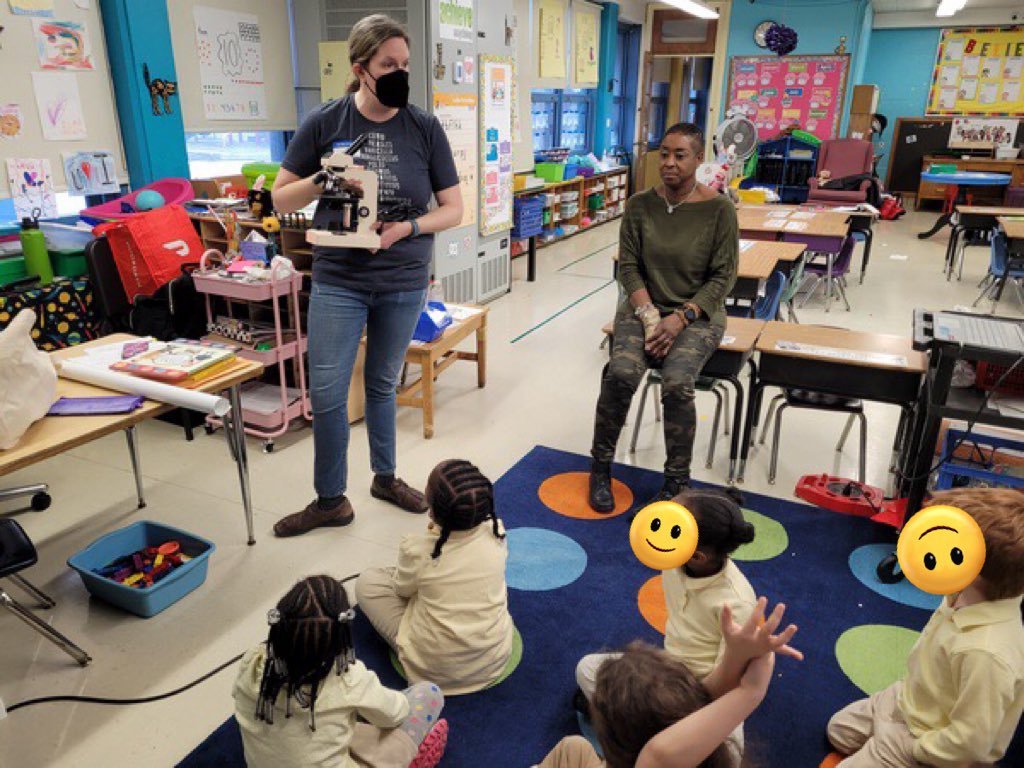
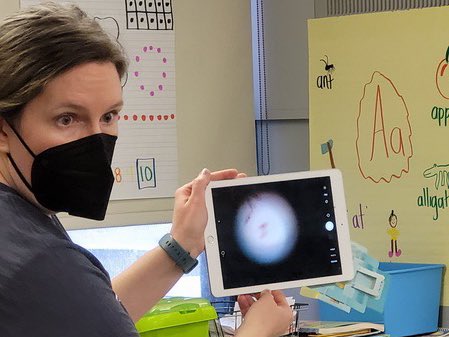
Yesterday I kept 25 kindergarteners engaged for over 30 mins talking about microbiology! The paper microscope from @TeamFoldscope was a big hit. They asked me to come back next week! #SciComm win
We updated our database and now list 385 postdoc fellowship opportunities (w/ description, deadline, amount, eligibility, etc).
Getting one means a lot more freedom to do the work you want to do.
Checkout the @NShortwave podcast! I am talking about agar art at a recent @ASMicrobiology event organized by @TheGeoffHunt https://t.co/ezY5wM8lB4 #sciComm