Imagine telling someone in 1999…
The year is 2026.
The President is Donald Trump in his second non consecutive term.
The richest man in the world is PayPal cofounder Elon Musk… but not because of fintech or Paypal. Because of rockets, electric cars, AI, satellites, brain chips and something called “Boring Company”.
Apple is worth trillions but its main business isn’t computers… its selling glass rectangles everyone stares at for 9 hours a day.
People don’t watch TV. They watch teenagers explain geopolitics, finance, and relationship advice in ~60 second videos.
The biggest taxi company owns no taxis.
The biggest hotel company owns no hotels.
The most powerful media companies are social networks where everyone argues with strangers for free.
Kids are making millions filming themselves playing video games.
AI Robots write emails, code, legal memos, songs, essays, and breakup texts.
The internet is mostly bots arguing with humans who are trying to prove they aren’t bots.
You can summon a car, groceries, a doctor, a date, a private jet, or a dog walker from your phone.
People pay real money for invisible currencies, digital monkeys, AI girlfriends and pictures that disappear after 24 hours.
The richest companies in the world don’t sell oil, steel, or cars. They sell attention, compute, data, and addiction.
And somehow, after all of that everyone is still using Excel.
As everyone watches the SpaceX IPO today, its worth remembering this advice from Buffett
"The idea that a newly issued security (IPO)—brought to market at a time of the seller's choosing and surrounded by massive hype—is the single best bargain among thousands of global businesses is absolute nonsense.
When an offering carries a ridiculous 7% commission just to incentivize salespeople, it simply cannot be the most attractive investment available.
While people easily get caught up in the excitement of a new launch, look at the reality: you have thousands of existing public companies whose prices are set by a natural auction market, free from aggressive promotion or hidden fees.
It makes no sense to buy a security precisely when an insider decides the timing is perfect to sell. Frankly, it isn't worth spending five seconds thinking about IPOs."
- Warren Buffett
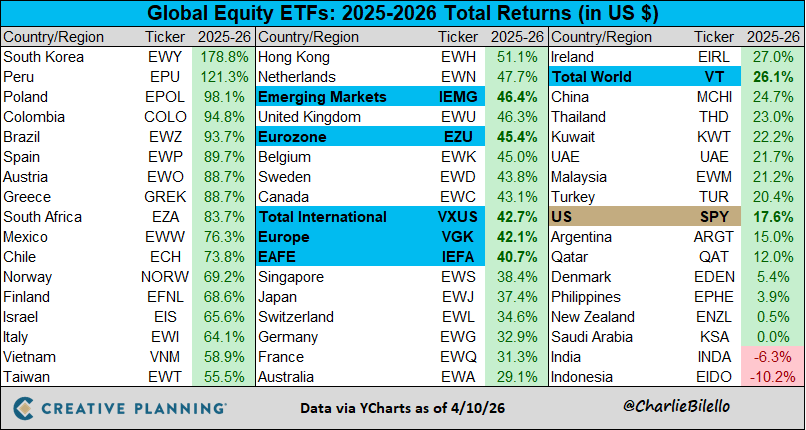
Start of 2025: ‘Why should I own anything outside of the US?’
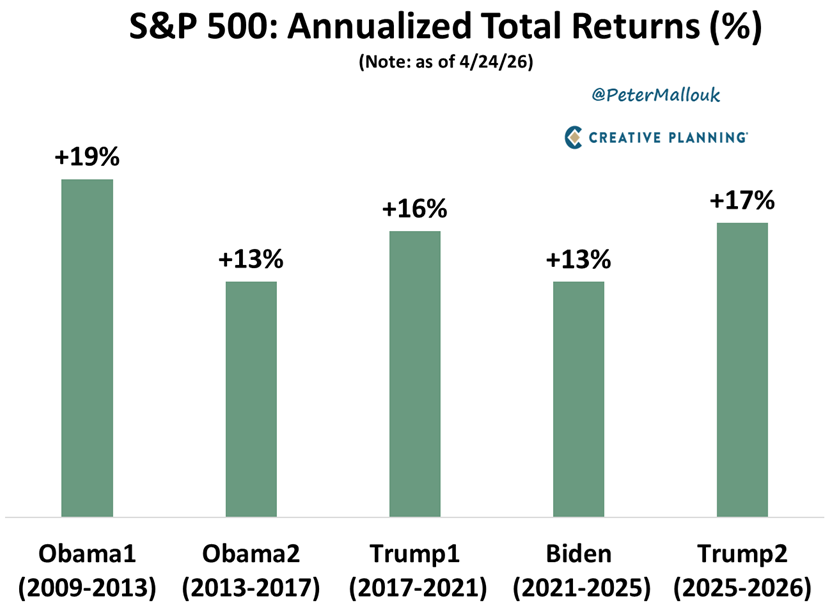
15 months later: South Korea +179%, Peru +121%, Poland +98% … S&P 500 +18%.
The future is unknown. That’s why you diversify.
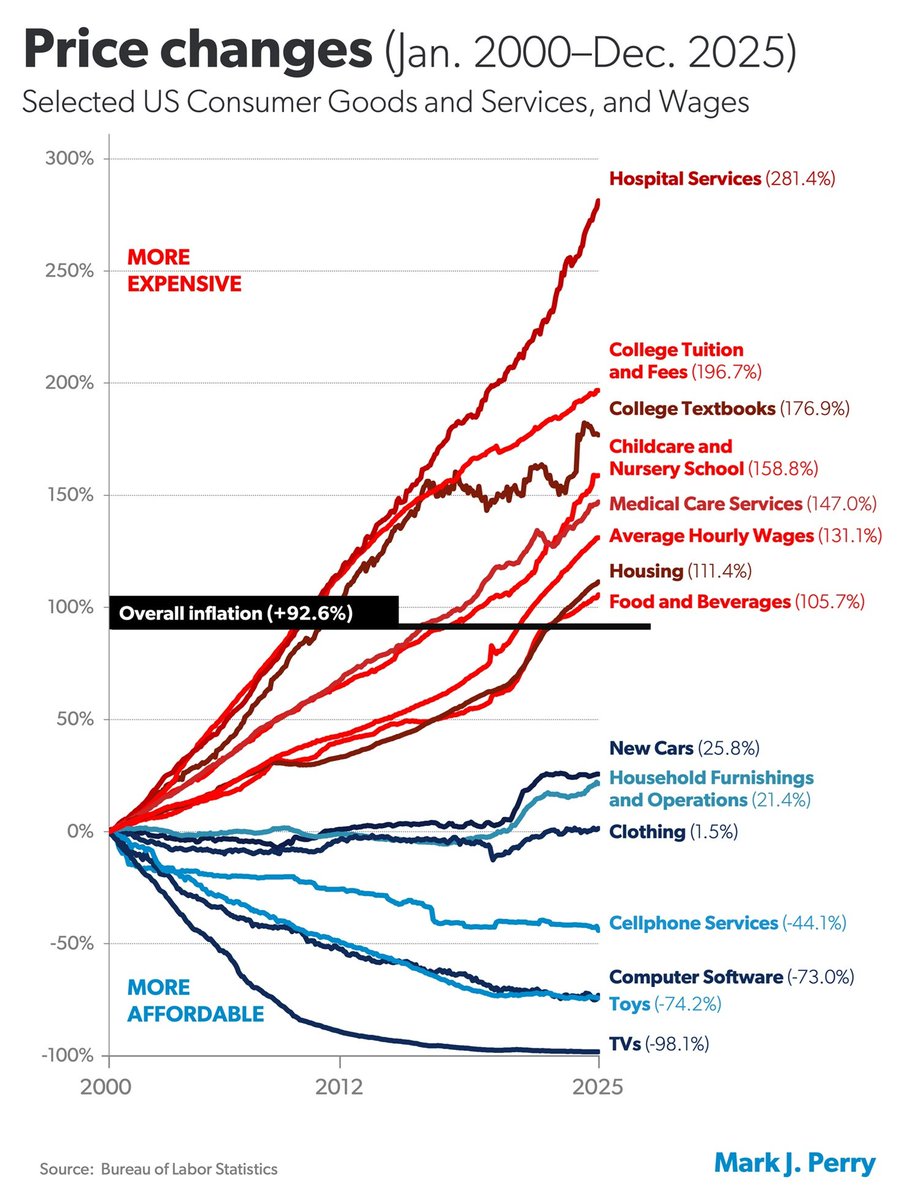
The inflation story in one chart:
Where government spending and subsidies are highest, prices rise the fastest.
Where competition is highest, prices fall.
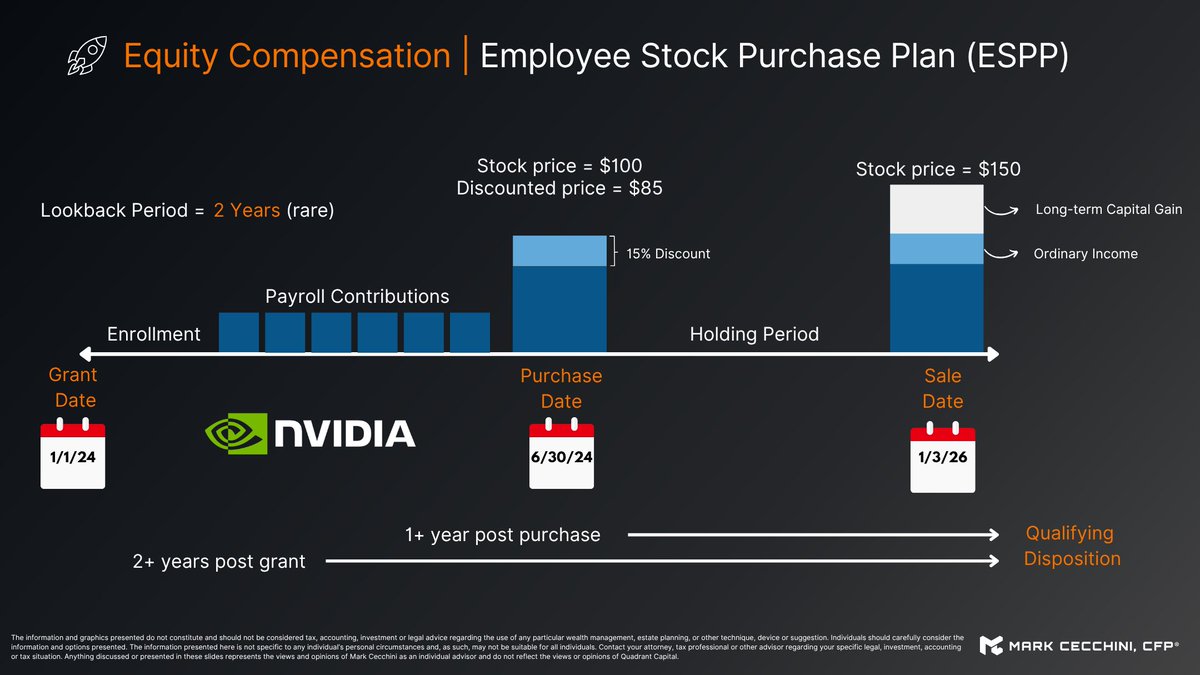
The 4 core elements of equity compensation:
RSU Restricted Stock Units
ISO Incentive Stock Options
NSO Non-qualified Stock Options
ESPP Employee Share Purchase Plan
visualized.
The Montreal Expos are exiting the baseball space. During Q2 and Q3 2026, we will transition to acquiring high-performance GPU assets. This is all part of our long-term vision to become a fully integrated GPU-as-a-Service (GPUaaS) and AI-native cloud solutions provider.
Bill Gurley just identified the only career advantage that AI cannot commoditize.
It isn’t talent. It isn’t your degree. It isn’t your network.
Gurley: “The thing that will differentiate you more in your career than anything else is to be the most hyper curious person that’s trying to do this thing.”
For centuries, knowledge was gatekept. Elite institutions. Expensive mentors. Geographic luck.
The information existed but access to it was the moat.
That moat is gone.
Gurley: “You have no excuse not to be the most knowledgeable person, because the information’s all out there.”
Every question you can formulate now has an answer available instantly.
Every industry. Every domain. Every skill you want to acquire.
The playing field didn’t just level. It inverted.
The people who used to win by controlling access to information now compete against anyone willing to ask better questions.
Gurley: “I can’t make you the most talented person in your company or your field.”
Talent is genetic. It’s luck. It’s the variable you cannot control.
But knowledge is a choice. And curiosity is a compounding asset.
Gurley: “If you are the most curious person that’s constantly learning in your field, you will do extremely well.”
This was always true. What changed is the multiplier.
Gurley: “That advantage is put on steroids with these AI tools.”
A relentlessly curious person with access to all human knowledge and the ability to interrogate it in real time doesn’t just outlearn their peers.
They outlearn entire institutions.
The gap between the curious and the incurious was always there.
AI just made it insurmountable.
The market is going to have a negative return about 1 in every 4 years.
You can expect a drop of over 10% nearly every year.
You can expect a drop of over 20% about every 5 years.
Successful investors know this. If you can't accept it, the stock market isn't for you.
Got denied for a credit card on Monday
Called back Tuesday, talked to a different person, got approved for $24,000
Same application. Same credit. Different human
The reconsideration line hack:
When you apply for a credit card and get denied, it goes through an algorithm. The algorithm says no. You accept defeat and move on
Wrong move
Every bank has a "reconsideration line" - a phone number where a real human reviews your application manually. They have override authority the algorithm doesn't
The algorithm denied you for:
- Too many recent inquiries
- Not enough history with that bank
- Utilization snapshot looked bad that day
- Some random flag in their system
A human can look at the full picture and say "actually this person is fine"
The reconsideration numbers:
Chase: 888-270-2127
Amex: 800-567-1083
Capital One: 800-625-7866 (note: CapOne is stubborn - they rarely overturn, but worth trying)
Citi: 800-695-5171
Bank of America: 800-732-9194
Discover: 800-347-2683
US Bank: 800-685-7680
Wells Fargo: 800-967-9521
Barclays: 866-408-4064
The script that works:
"Hi, I recently applied and was declined. I'd like to request a reconsideration. I have [X years] of history with [bank], my utilization is [X%], and I've never missed a payment. Is there any additional information I can provide?"
Then shut up. Let them look
Success rate: 30-40% of denials get overturned on reconsideration (except Capital One who barely budges)
That's not a small number. That's almost half of "denied" people who just needed to make one phone call
The banks don't advertise these numbers. They want you to accept no and go away
Don't go away. Call the line. Talk to a human. Get your money
(I help you get approved and stack up to $250k in 0% funding. DM me if you're collecting denials instead of approvals)
I think it's incredible that if you made the worst possible investment imaginable -- going all in at the peak of one of the craziest bubbles in history -- that it would've only taken you 15 years to recover your losses