New blog post: A Decade of Slug
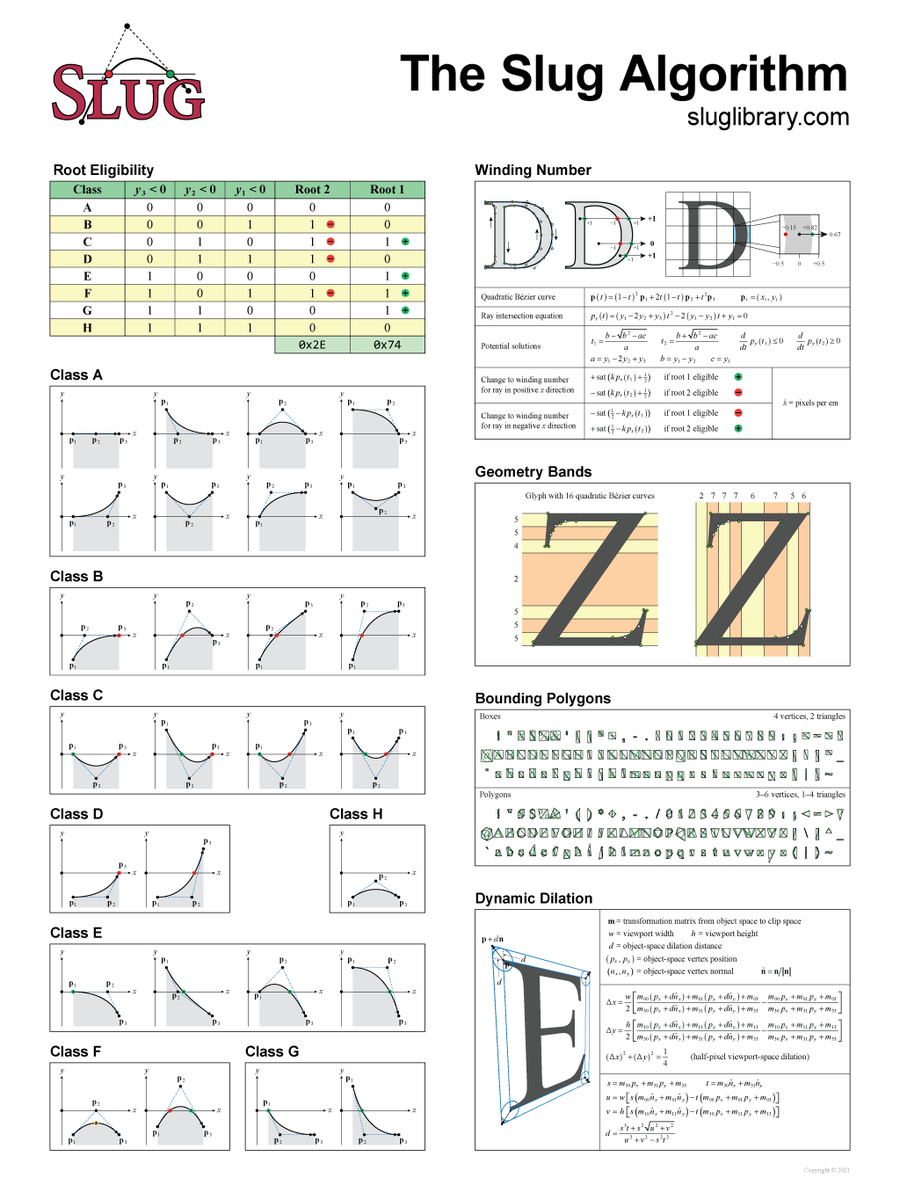
This talks about the evolution of the Slug font rendering algorithm, and it includes an exciting announcement: The patent has been dedicated to the public domain.
https://t.co/xWEz0q2c4N
CONTROL Ultimate Edition is now available on Steam for macOS. Get it for 85% off in the Steam Winter Sale.
Those who already own CONTROL Ultimate Edition on Steam for PC will automatically have it available on macOS, too.
Enter the Oldest House. Take CONTROL.
https://t.co/cpZeAGg2iw 🔻
Remedy needs your help! We're testing the matchmaking and balancing of FBC: Firebreak in our CLOSED Technical Test, running from May 15th until May 19th. PC, PS5 and Xbox Series X|S players are all needed so sign up now:
https://t.co/NpFkkNSvc2
Crossplay is supported so Firebreakers on all platforms can play together! Capacity for the Technical Test is limited so signing up does not guarantee access. Director Faden has yet to approve the Unlimited Firebreakers Ordinance (U.F.O). Sorry about that.
#FBCFirebreak
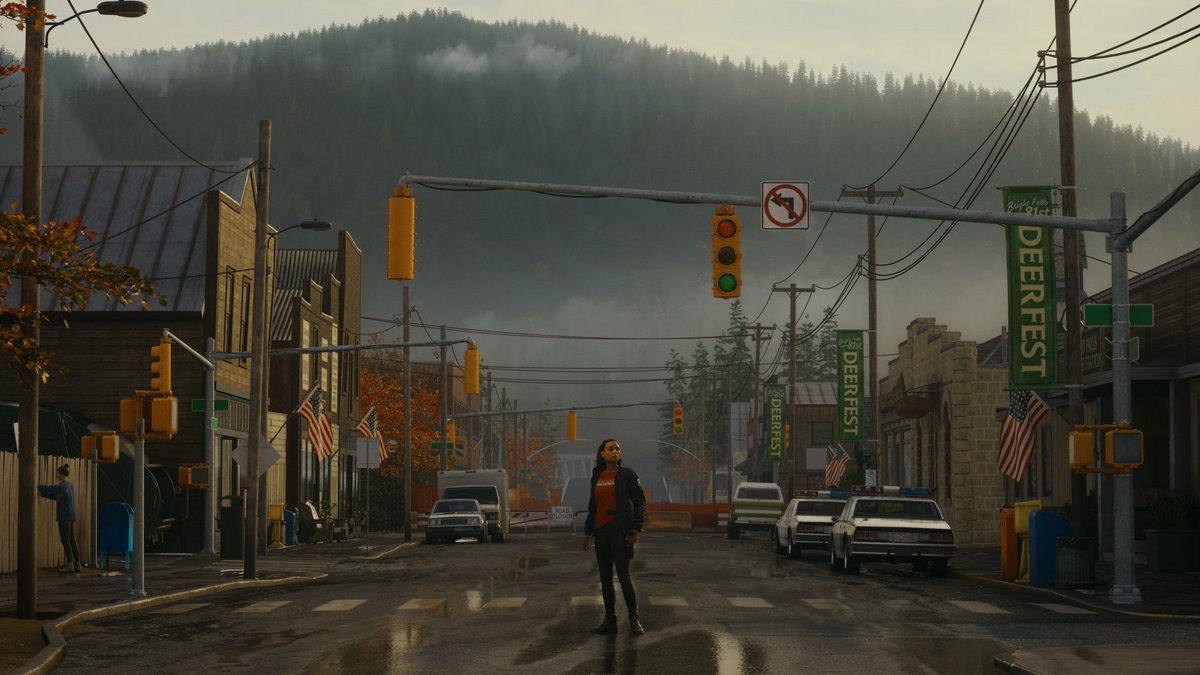
The new PC update for Alan Wake 2 makes it the first game to feature NVIDIA RTX Mega Geometry technology, available on all GeForce RTX GPUs and laptops. @nvidiageforce
Also included is support for NVIDIA DLSS 4 with Multi Frame Generation which allows for additional visual refinement and performance increase, a new Ultra quality ray tracing preset, and more. #RTXOn
Learn more: https://t.co/2qQX92FvMe
News from our Capital Markets day:
🔦 Alan Wake 2 has sold over 1.8M units
🔻 Control Ultimate Edition will release on Mac February 12th, 2025
💥 Control 2 will be an action RPG
🎁 Control will receive a free update in early 2025, unlocking some previously released content
🔎 More info: https://t.co/2lgZeV6rQn
Dive into the knowledge behind Alan Wake 2, and explore technical innovations in our Northlight Engine.
Now available: All talks from GDC on programming, visual arts, audio design, narrative, and Northlight! https://t.co/9LIhnWNxZc
I've been thinking about writing this thread for a long time, because I think most people - including a lot of game devs, especially more junior ones - don't understand something important about the AAA games industry.
Let's talk about home run swings.
(thred)
We are partnering with Annapurna to co-finance Control 2. We hope you're as excited about what this means for our creative output and ongoing independence as we are.
We are also happy to announce that Annapurna will work with us on expanding the Control and Alan Wake franchises into film and TV.
Read more: https://t.co/x7HakTGlJu
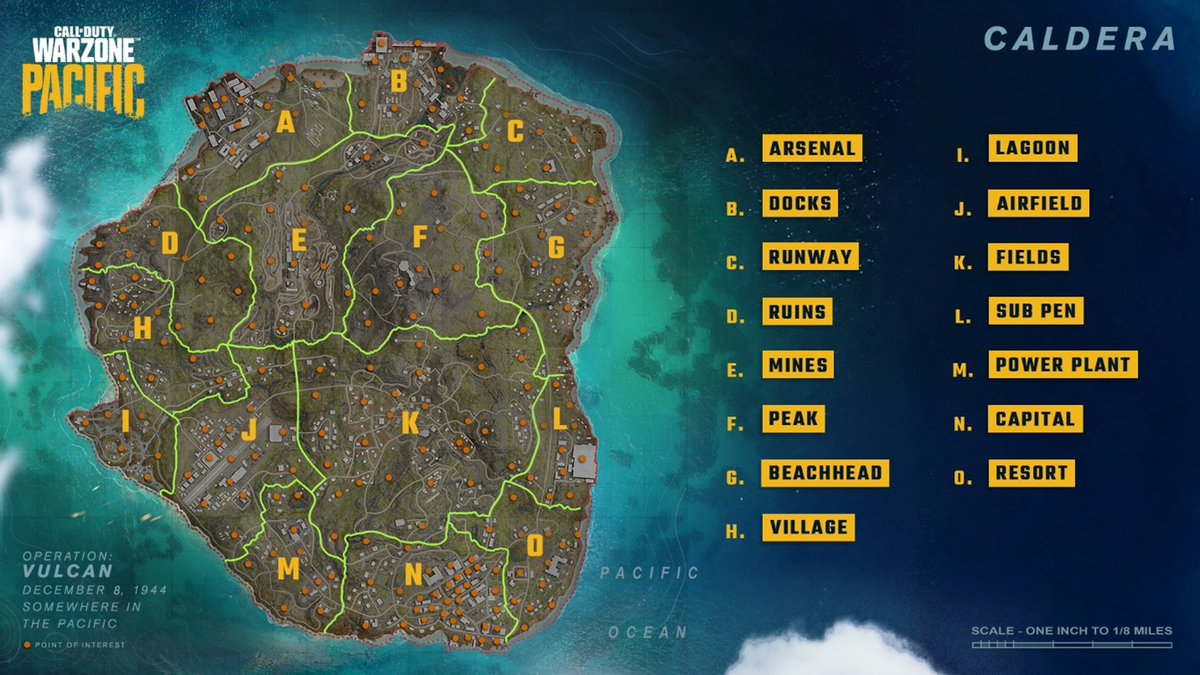
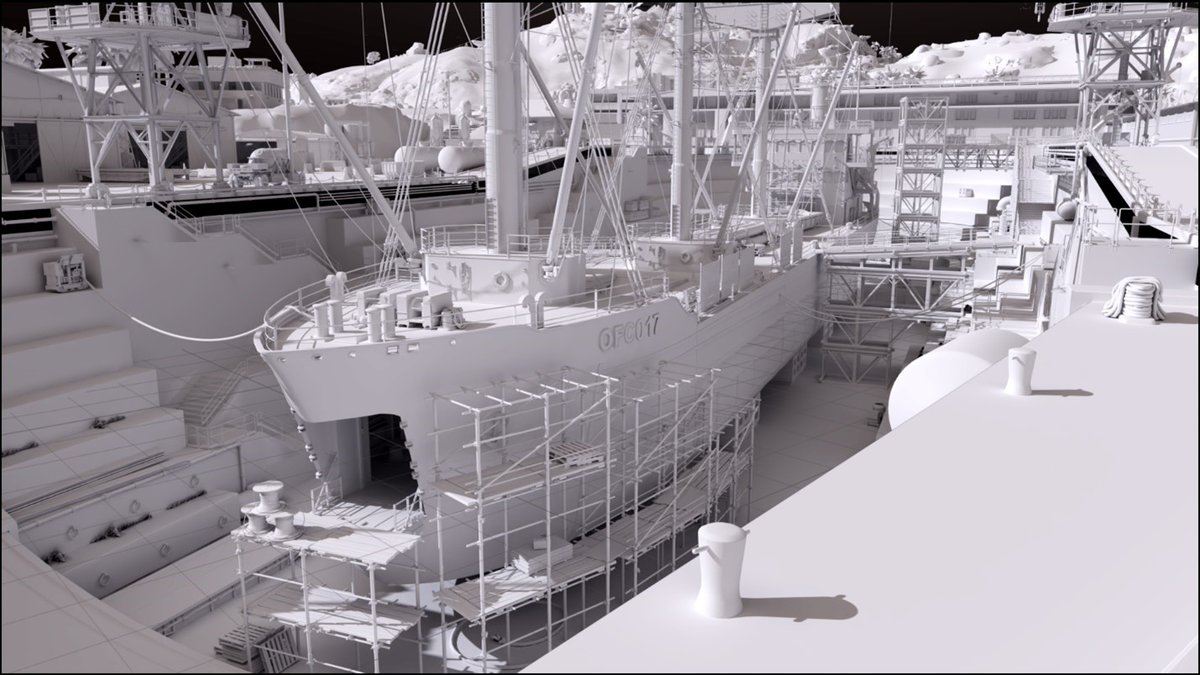
The release of a new open-source data set, features the map Caldera from Call of Duty: Warzone for non-commercial use. This data set release contains near-complete geometry of Caldera and in-game character pathing. Read more 👇
https://t.co/xFxNDAhKk9
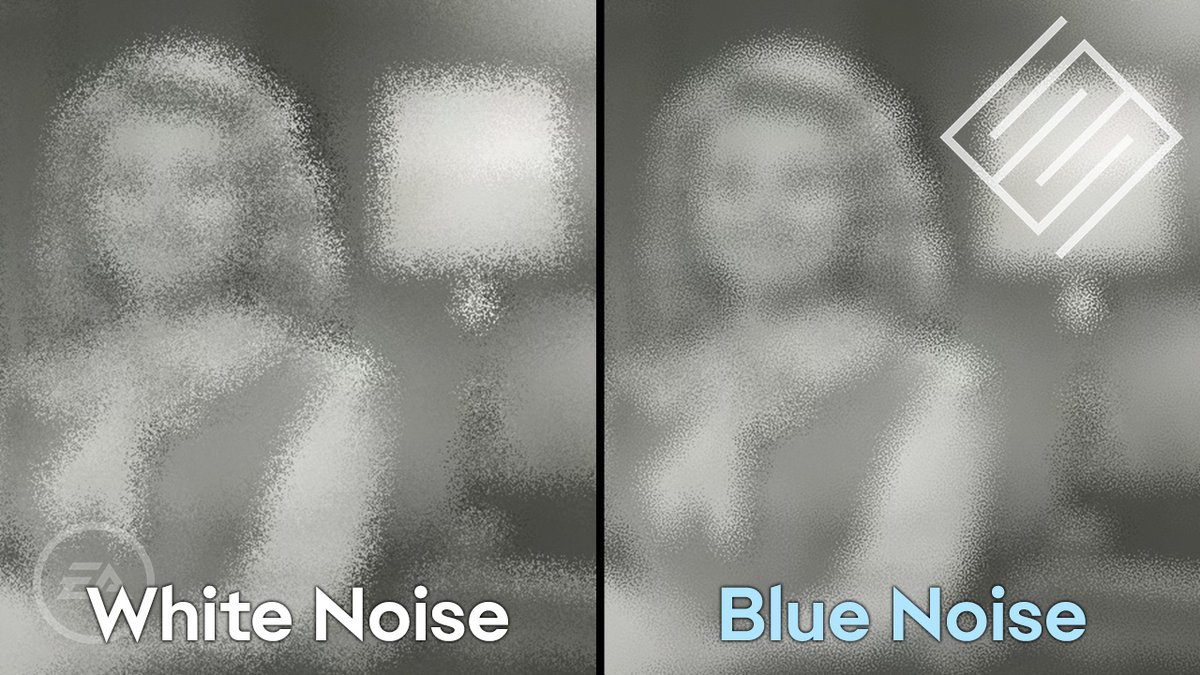
Going beyond white noise for real-time rendering can produce better results with no increase in rendering time.
Check out Alan Wolfe's full-length video workshop on using different types of noise for random number generation. https://t.co/YZPKJCGqOh
Tool use, in which an LLM is given functions it can request to call for gathering information, taking action, or manipulating data, is a key design pattern of AI agentic workflows. You may be familiar with LLM-based systems that can perform a web search or execute code. Some of the large, consumer-facing LLMs already incorporate these features. But tool use goes well beyond these examples.
If you prompt an online LLM-based chat system, “What is the best coffee maker according to reviewers?”, it might decide to carry out a web search and download one or more web pages to gain context. Early on, LLM developers realized that relying only on a pre-trained transformer to generate output tokens is limiting, and that giving an LLM a tool for web search lets it do much more. With such a tool, an LLM is either fine-tuned or prompted (perhaps with few-shot prompting) to generate a special string like {tool: web-search, query: "coffee maker reviews"} to request calling a search engine. (The exact format of the string depends on the implementation.) A post-processing step then looks for strings like these, calls the web search function with the relevant parameters when it finds one, and passes the result back to the LLM as additional input context for further processing.
Similarly, if you ask, “If I invest $100 at compound 7% interest for 12 years, what do I have at the end?”, rather than trying to generate the answer directly using a transformer network — which is unlikely to result in the right answer — the LLM might use a code execution tool to run a Python command to compute 100 * (1+0.07)**12 to get the right answer. The LLM might generate a string like this: {tool: python-interpreter, code: "100 * (1+0.07)**12"}.
But tool use in agentic workflows now goes much further. Developers are using functions to search different sources (web, Wikipedia, arXiv, etc.), to interface with productivity tools (send email, read/write calendar entries, etc.), generate or interpret images, and much more. We can prompt an LLM using context that gives detailed descriptions of many functions. These descriptions might include a text description of what the function does plus details of what arguments the function expects. And we’d expect the LLM to automatically choose the right function to call to do a job.
Further, systems are being built in which the LLM has access to hundreds of tools. In such settings, there might be too many functions at your disposal to put all of them into the LLM context, so you might use heuristics to pick the most relevant subset to include in the LLM context at the current step of processing. This technique, which is described in the Gorilla paper cited below, is reminiscent of how, if there is too much text to include as context, retrieval augmented generation (RAG) systems offer heuristics for picking a subset of the text to include.
Early in the history of LLMs, before widespread availability of large multimodal models (LMMs) like LLaVa, GPT-4V, and Gemini, LLMs could not process images directly, so a lot of work on tool use was carried out by the computer vision community. At that time, the only way for an LLM-based system to manipulate an image was by calling a function to, say, carry out object recognition or some other function on it. Since then, practices for tool use have exploded. GPT-4’s function calling capability, released in the middle of last year, was a significant step toward general-purpose tool use. Since then, more and more LLMs are being developed to similarly be facile with tool use.
If you’re interested in learning more about tool use, I recommend:
- Gorilla: Large Language Model Connected with Massive APIs, Patil et al. (2023)
- MM-REACT: Prompting ChatGPT for Multimodal Reasoning and Action, Yang et al. (2023)
- Efficient Tool Use with Chain-of-Abstraction Reasoning, Gao et al. (2024)
Both Tool Use and Reflection, which I posted about last week, are design patterns that I can get to work fairly reliably on my applications — both are capabilities well worth learning about. In the future, I’ll describe the Planning and Multi-agent collaboration design patterns. They allow AI agents to do much more but are less mature, less predictable — albeit very exciting — technologies.
[Original text: https://t.co/gHCOYSsKQO ]
1/ I’m an Israeli academic. My community is too silent about the ongoing war in Gaza. Here is how I see things based on reading hundreds of articles and watching thousands of videos and images about the war. This tweet chain contains my conclusions as a sort of executive summary.
Congratulations to Apple leadership for designing the worst app installation experience in the history of computing! Because Apple designers are the world’s best, there’s no question that this abomination is a premeditated part of a malicious European DMA compliance strategy.
🐲 Give a warm welcome to our next speaker:
Erik Jansson - Senior Graphics Programmer from @remedygames!
🟢 Topic: GPU-driven Rendering with Mesh Shaders in Alan Wake 2
🪪 Buy your early bird ticket here: https://t.co/iiLAXwKzzY
Shed some light on Alan Wake 2 development with our GDC talks! @Official_GDC
🔦 The Case Board implementation
🔦 The Dark Place world-building
🔦 Mission structure design
🔦 Narrative design
🔦 Audio
🔦 Vegetation
Our full talk list is here: https://t.co/fLhtz8rgtw
I'll be at this year's Digital Dragons giving a talk about mesh shaders and the GPU-driven rendering pipeline that powers Alan Wake 2! Lots of interesting low-level optimizations and data on how mesh shaders perform on a shipped title! See you there! 👋