When I was with the St. Louis Cardinals, we had a team meeting about hitting with two strikes.
Albert Pujols was leading it.
At the time, he was hitting something ridiculous with two strikes.
I want to say it was around .265.
Naturally, everyone wanted to know how.
So somebody asked:
"What's your two-strike approach?"
Albert's answer surprised me.
He said:
"I think fastball inside and hit it back through the middle."
That was it.
No complicated mechanics.
No secret formula.
Just:
Fastball inside.
Back through the middle.
I remember sitting there thinking:
"Why would you think fastball inside with two strikes?"
So somebody asked him.
And Albert said something I'll never forget.
He said:
"If I can hit a fastball inside back through the middle..."
"I can hit the fastball away."
"I can stay on the changeup."
"I can stay on the slider."
"I can stay on the curveball."
Then he paused.
And said:
"The ball gets deeper."
That's when it clicked for me.
He wasn't trying to pull the inside fastball.
He was using one thought to cover everything.
The more I thought about it...
The more it made sense.
So I started trying it.
And it changed the way I thought about hitting with two strikes.
Instead of worrying about every pitch...
I focused on one.
Fastball inside.
Back through the middle.
See it DEEP.
If you're struggling with two strikes, here's what I'd do tonight:
Round 1: Short Box
(Set the distance somewhere between front toss and batting practice.)
Have a coach throw only fastballs inside.
Your only thought:
"Fastball inside."
Drive the ball back through the middle.
10 swings.
Round 2: Mix Speeds
Now the coach mixes:
- Fastballs
- Changeups
- Breaking balls
- Sliders
But your thought never changes.
You're still looking:
"Fastball inside."
10 swings.
Round 3: Two-Strike BP
Every pitch starts 0-2.
Compete.
Battle.
Use the same approach.
"Fastball inside."
Back through the middle.
10 swings.
That's it.
30 focused swings.
One thought.
One approach.
One goal.
Drive the baseball back through the middle.
One thing I've learned:
Most hitters get worse with two strikes because they add thoughts.
Albert got better because he removed them.
With two strikes, simplicity is a weapon.
Thank you for reading,
Jermaine Curtis
P.S. - If you enjoyed this and thought it was helpful, please share it.
(When you share it, it tells me you want more content like this.)
Instead of watching Netflix tonight, watch this 2-hour Stanford lecture.
You’ll learn more about how ChatGPT, Claude, and other LLMs are built than most people at top AI companies learn in years.
"It's a deep-rooted thing, we're off and this will never happen again"
Blunt honesty from Jay Johnson about some of the things plaguing the #LSU offense this year.
Says he made mistakes in roster construction with his team this year.
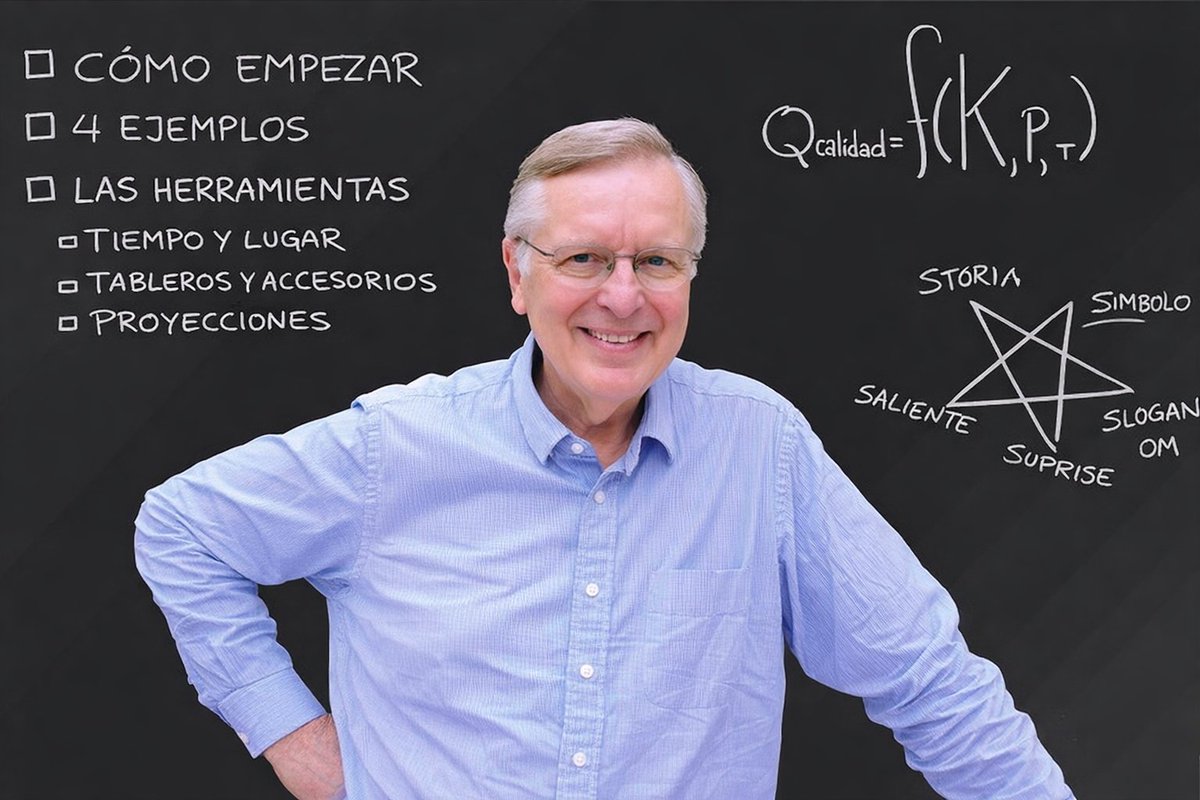
Un profesor del MIT dio la misma conferencia cada enero durante 40 años, y cada una de las veces no cabía ni un alma en el aula.
La vi a las 2 de la mañana y cambió por completo mi forma de entender la comunicación.
Su nombre era Patrick Winston. La conferencia se titula "Cómo hablar" (How to Speak).
Su frase de apertura te golpea como un camión: "Tu éxito en la vida vendrá determinado en gran medida por tu capacidad para hablar, tu capacidad para escribir y la calidad de tus ideas, en ese orden".
Ni tu nota media, ni tus títulos, ni tu coeficiente intelectual. Cómo hablas es lo que separa a las personas que son escuchadas de las que son ignoradas.
Este es el esquema que inculcó a los estudiantes del MIT durante cuatro décadas:
1) Nunca empieces con un chiste: Empieza diciendo a la gente exactamente qué es lo que va a aprender. "Prepara la bomba antes de verter nada". Él lo llamaba la "promesa de empoderamiento": dales una razón para no levantarse del asiento en los primeros 60 segundos.
2) La regla de las 5S: Para que una idea se quede grabada debe ser: Símbolo, Slogan, Sorpresa, Saliente (relevante) e Historia (Story). Cualquier idea que valga la pena recordar cumple al menos tres de estas.
3) La técnica del "casi acierto" (Near Miss): Esta parte me dejó alucinado. No te limites a mostrar lo que está bien; muestra lo que parece estar bien pero no lo está. Ese contraste es lo que hace que el cerebro registre algo de forma permanente.
4) Su regla final: Termina con una contribución, no con un resumen. No recapitules lo que ya dijiste. Dile a la gente qué les has dado que no tenían antes de entrar por la puerta.
He usado este esquema en ventas, entrevistas y presentaciones desde que lo vi, y los resultados no son sutiles.
Patrick Winston falleció en 2019, pero esta clase sigue siendo gratuita en el OpenCourseWare del MIT. Una hora, vista por millones de personas, y no cuesta absolutamente nada.
Video: "How to Speak", Patrick Winston, MIT OpenCourseWare, RES.TLL-005, January IAP 2018.
Fuente: MIT OpenCourseWare.
Licencia: CC BY-NC-SA.
Términos: ocw. mit. edu/ terms
“Hear Me…”
Mike Tomlin GOLD 🔥
“It’s not what you are capable of; it’s what you are willing to do. Plenty of people are capable. Fewer people are willing.”
Potential is common.
Commitment is rare.
"What's the biggest difference between the athletes who WIN vs the ones that don't?"
Answer: They have a WINNING story running in their head, all the time
- Too good not to share, sending to all my hitters (repeatedly)
Transactional vs. Transformational Coaching…
Dan Hurley shared a story about asking Geno Auriemma for advice after a rough start last season. Geno didn’t mince words:
“Listen, if the only gratification and the only part of coaching that excites you is winning the national championship, then you’ve lost your way, buddy! Where’s the joy in the things that you’ve always been about as a coach before you went on the championship run, like relationships with your players, like helping people get better, like making your team the best it can be. Be a coach, man. This is when you really need to be a leader. This team isn’t as good as last year’s, so what the hell are you going to do about it? Are you going home? Are you going to let this thing unravel?”
That’s the tension every coach feels:
Transactional vs. Transformational.
Transactional coaching is outcome-obsessed. It’s about the wins, the losses, the trophies. The problem? When results don’t come, your purpose crumbles with them.
Transformational coaching is different. It’s about people. It’s about growth. It’s about building something that lasts, whether the scoreboard agrees with you or not.
And this is why mentorship matters so much in coaching.
Left on our own, it’s easy to drift into a transactional mode without even realizing it.
A trusted mentor can pull us back to center and remind us why we started coaching in the first place.
To build relationships.
To develop players as people.
To make teams the best they can be.
Wins matter. But they’re not the why.
The why is impact.
The why is growth.
The why is leaving your players better than you found them.
The process is the prize. Stay grounded. Stay on the path.
Always remember your why.
How to Get Recruited to Duke Baseball | Coach Corey
Muscara Breaks It Down
I recently had the privilege of sitting down with the Duke head coach @CoachMoose31.
In this episode we cover:
- What Duke coaches actually look for in recruits
- Transfer portal vs high school recruiting
- Metrics that matter (velo, exit velo, academics)
- Day-to-day life as a Duke baseball player
- The culture and legacy he wants to build
- And much more....
If you're a high school player, parent, or coach trying to understand recruiting, this episode is a must-watch.
@FedEx the horrendous customer service continues. Told my package is being returned. So asked for refund, since it’s not delivered. CS tells me, no refund, no supervisor, and hangs up. Do better @FedExHelp
@fedex horrible all around. Next day delivery less than 5 hours away is now going to be 6 days. 3 CS reps/3days telling me delivery happening. This morning it’ll be delivered within hours, just told ‘no way’ not on a Sunday and call back Monday. Unbelievable.