Quite enjoy getting this sort of alert.
An asteroid has just been discovered before it’ll hit Earth! It’ll enter the atmosphere just northwest of Australia.
(Don’t worry: it’s ~1m long, so it’ll just make a cool, brief fireball. We aren’t all about to die.)
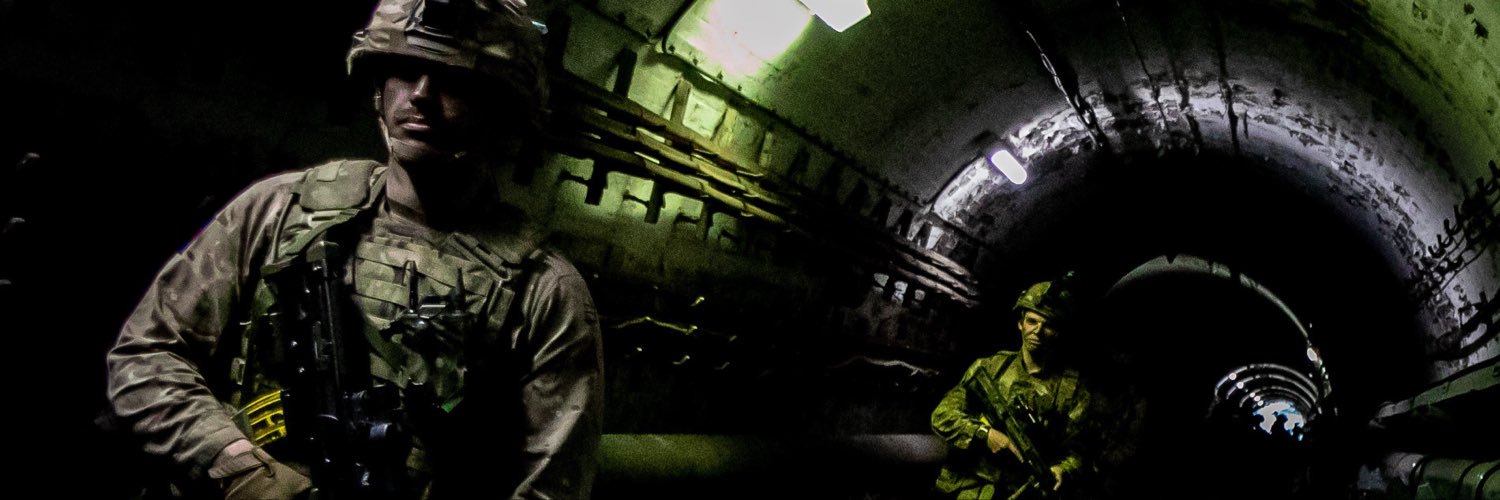
"Digging Below The Death Zone: The Underground War in Ukraine," my latest with @SapperGeologist discussing how the evolution of underground environments have exploded/advanced as the surface has become so lethal. A trend that many are still not ready for. https://t.co/S4hTd6aCZO
The IAMG is delighted to announce that ICMG28 will be hosted in Rome, Italy in June 2028. Steeped in history with access to some of the most famous Second World War battle sites, this edition will also allow attendees to visit millennia old sites.
https://t.co/spLBfl1X2e
Rock Flash! ⚒️
Delighted to announce that #ICMG28, the 17th International Conference for Military Geosciences will be held in Rome, Italy! 🇮🇹
Details to follow but the return of the conference series to #Europe offers millennia of #history and some amazing #geology!
Day 5 #ICMG26 - Poster Session and International Association for Military Geosciences biennial general meeting.
And that’s it! Many of our delegates return home, whilst some continue on with the battlefield study for a few more days.
Thanks to @WestPoint_USMA for hosting us!
It was either a disingenuous question or a grossly ignorant one. @SecWar It is NOT a war crime to target bridges, power infrastructure, telecommunications networks, or other infrastructure if they constitute lawful military objectives. The law of armed conflict does not prohibit attacks simply because an object is also used by civilians. The legal question is whether the object makes an effective contribution to military action and whether the attack complies with military necessity, distinction, proportionality, and feasible precautions.
Bridges, electrical infrastructure, telecommunications systems, transportation networks, and other infrastructure have been targeted in many modern wars, including Bosnia, Kosovo, Iraq, Libya, and others. The U.S. military has long recognized that such infrastructure can constitute lawful military objectives when it contributes to an enemy's military operations or warfighting capacity.
That does not mean every strike against infrastructure is lawful. Each attack must be assessed based on the facts and the requirements of the law of armed conflict.
But to suggest that targeting bridges, electrical infrastructure, or telecommunications assets is inherently a war crime reflects either a gross misunderstanding of the law of war or an unprofessional misrepresentation of it.
Pictured;
A MEXE Shelter was a prefabricated sectional structure and covering design for observation, command, and regimental aid posts. A Smart design, but definitely 'of its time'
Day 4 #ICMG26 - Battlefield Tour of the West Point area. Stop 4 - Stoney Point.
A swift and famous victory against incomplete #British defences. #Independence
Day 4 #ICMG26 - Battlefield Tour of the West Point area. Stop 3 - Chain Battery and the Hudson River.
#Geology and glacial #geomorphology has shaped the terrain, making this one of the most significant #military sites during the War of Independence.
Central London became the backdrop for a major NATO readiness Exercise ARRCADE STRIKE, led by HQ ARRC — a rare look at how allied forces train for real‑world scenarios.
Don’t miss Thursday’s drop: an exclusive interview with Exercise Director Brigadier Rob Alston plus a full carousel of behind-the-scenes images from inside the exercise.
#StrongerTogether #WeAreNato