FinX: "We're in a bubble..."
Reality:
-> $SPY PEG is at 30 year lows
-> 98% of US households aren't paying for AI
-> $NVDA, $MU, and everyone else: "We are supply constrained, not demand constrained."
Look at the facts.
Na tomhle modelu jde i velmi dobře demonstrovat proč je tak zásadní problém mít investice v různých fondech, které si účtují poplatek za správu + success fee z části zisku. V dlouhém horizontu (20-40 let) udělá rozdíl 1-3% ročně propastný rozdíl v řádu milionů Kč na konci časové řady. K tomu si přičtěte, že téměř všechny běžně dostupné fondy nedosáhnout ani výkonnosti S&P, ale účtují si za to poplatky v násobcích nákladů ETF. Byl bych hrozne rád, kdyby v téhle pasti nabylo tolik lidi a miliardy korun drobných investorů.
Fundamenty zatím spíš říkají opak: hyperscalers dál zvyšují capex, data center spending roste vysokým tempem, backlogy a objednávky jsou pořád silné a earnings estimates se zatím nehroutí.
A věta „už není nikdo, kdo by chtěl nakoupit“ je podle mě úplně neověřitelná. Trh není uzavřená skupina lidí, která jednou nakoupí a tím dojdou kupci.
Seriózní drawdown bych čekal až dojde na capex cuts, slabší objednávky, inventory build, pokles backlogu, tlak na marže a snižování earning. Dokud tohle nevidíme, je „říjen/listopad crash“ spíš vibe feeling. A tisíckrát přesídlený graf market psychology, ke kterému nedáte jediný data point naznačující, kde tedy jsme, tomu moc nepomáhá 🙂
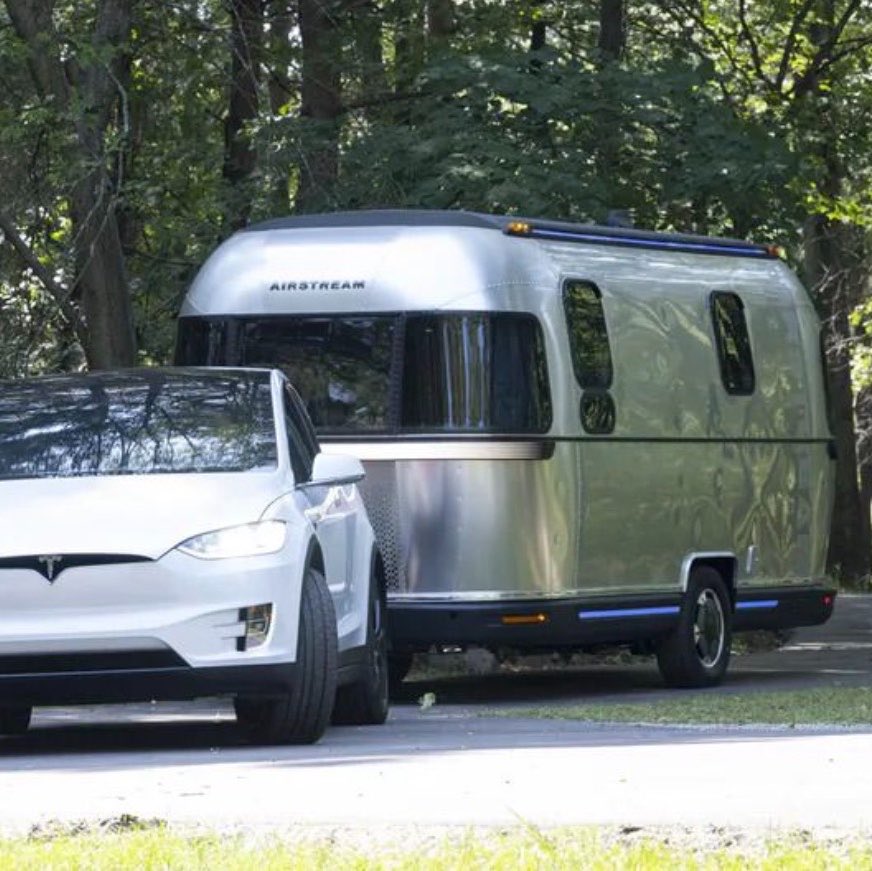
Elon Musk has temporarily moved into a motor home on-site in Tennessee.
Speaking on the All-In podcast, he confirmed he is staying in an Airstream trailer parked directly at the Memphis facility. Living here allows him to work alongside engineers to speed up work on xAI's Colossus supercomputer.
I think we'll see 5x the number of people become hardware and robotics founders over the next 18 months
Why? Because you can rent every step, from design to manufacturing:
DESIGN
- Astra to drive Blender, FreeCAD, and KiCad the way a person would, so you get editable geometry instead of a dead render. Zoo dot dev's text to CAD API if you want it programmatic.
- Or have Claude write build123d code, which is Python parametric CAD, and there's a Claude Code plugin that runs it and exports the STL for you.
PROTOTYPE
- Bambu A1 mini is $299, P1S around $399 on sale. Or skip owning one, JLC3DP prints and mails it for about $20. PCBWay does resin, SLS, and CNC if plastic won't cut it.
ELECTRONICS
- KiCad for the board, Astra can drive it. JLCPCB fabricates and assembles, often under $100 for a small run. ESP32 for wifi, Raspberry Pi if it needs a brain.
ANYTHING THAT MOVES
- Unitree sells a Go2 with a full SDK for about $2,500.
- Hugging Face put out a $399 open-source biped.
- LeRobot gives you the whole train in sim, deploy to real pipeline, and Physical Intelligence open-sourced π0 so you're fine-tuning instead of starting from zero.
- Prototype the policy in MuJoCo or Isaac Lab first.
MANUFACTURING
- Alibaba RFQ for the first 100 units. Check 1688 to see what the factory actually charges domestically, then negotiate. Pietra or Sourcify if you want someone to handle it.
FULFILLMENT AND SELLING
- ShipBob or Amazon FBA. Shopify for the store, TikTok Shop for distribution, Kickstarter if you want the money before you build it.
How to think about starting your own robotics or hardware company:
1. Pick a niche that's already buying weird gear. Cyclists, tabletop gamers, beekeepers, home baristas, dog people with mobility issues. These groups spend money on specific objects and complain in public about what doesn't exist. Or grab ideas off https://t.co/QxoITW16zr
2. Go read the complaints. Reddit, IG etc Search "I wish someone made," "does anyone make," and "modified my." That last one is the best signal, because someone already hacked the product together and you're just manufacturing what they built by hand.
Also check Etsy!! If 3 sellers are doing a janky 3D printed version with 400 reviews each, the market is validated.
3. Make one. Describe it to Astra or Claude, get the CAD, print it in ugly gray PLA, use it, fix it.
4. Only go to Alibaba or similar once you've sold a few. Message 10 suppliers through RFQ, take the third cheapest, always pay the $50 for a sample before the real order.
5. Film everything from day 1. The first ugly print, the failed version, the box of 100 arriving. That's your entire marketing budget, and hardware is one of the few categories where people actually want to watch the thing get made.
6. Raise the price. Almost everyone here anchors on what the plastic cost. Your customer is comparing you to nothing, because the alternative is the product doesn't exist. Start at 5x COGS and go up.
THIS GOAL OF THIS POST IS JUST HERE TO GET YOUR CREATIVE JUICES FLOWING. Of course, you can build robotics/hardware in a bunch of different ways.
One thing I've learned is data couldn't be more important when you're building a hardware/robotics startups.
These models learn from first person video of a human doing the task, and that footage doesn't exist for almost any job.
So basically you pick one repetitive job people quit over, film someone doing it for 2 weeks, fine-tune π0 on that footage, use organic to sell the first few units and figure out scaling,
5 years ago you needed a factory, a supply chain, and a $1M just to find out if anyone wanted the thing.
Now, anyone can become a hardware/robitics founder.
And I suspect a lot of people will become one!
Vibe manufacturers.
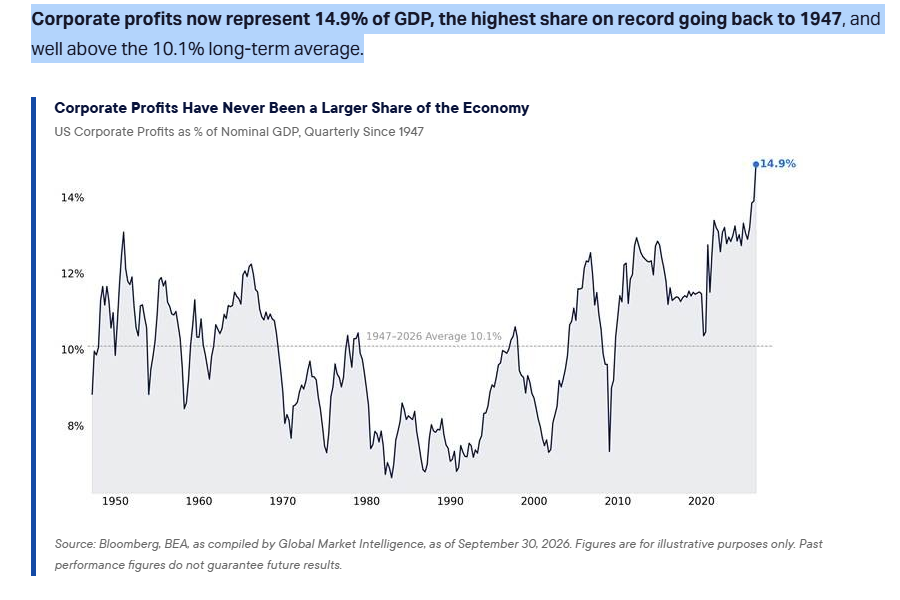
Josh Brown removed every tech company from the S&P 500 to see what was really driving the market: “even without tech, you’re looking at 28.3% earnings growth. add tech back and it becomes 32%. that’s outrageous”
this is him explaining why the bearish narratives surrounding this market keep losing money, why comparing today’s valuation multiples with those from decades ago makes no sense, and what the executives running these companies survived to reach this point
“ten of the eleven sectors are seeing profit growth. the stories that it’s all AI, that the market is too narrow or too concentrated - throw them all in the garbage. they’re money-losing narratives”
“net income margins were revised from 15% to 15.6%. sales growth is 15.2% - more than 300 basis points above what analysts expected just two months ago”
“is 20 times earnings cheap? no. but why should it trade lower? why should this group of companies trade at 16 times earnings just because that was the multiple in 1994? it makes no sense - these are the Michael Jordans of every sector”
“they survived record inflation, the pandemic, an impossible hiring environment and then the tariff uncertainty - the people running these companies are absolute warriors”
bookmark & watch the full conversation, then read the article below ↓
Everything could be so simple.
Withdraw from Iran and watch yields + oil crater.
Ride the AI bull market into the 2028 election with the S&P 500 at 10,000+ as we have multiple $10T companies.
Instead we have chaos and endless headlines, unfortunate.
Gold traders are once again being fooled by the Kevin Warsh show. His "hawkish" talk has raised expectations of a Sept. rate hike the Fed likely has no intention of delivering. Also, Trump's failure to criticize Warsh is a scripted part of the same show to feign Fed independence.
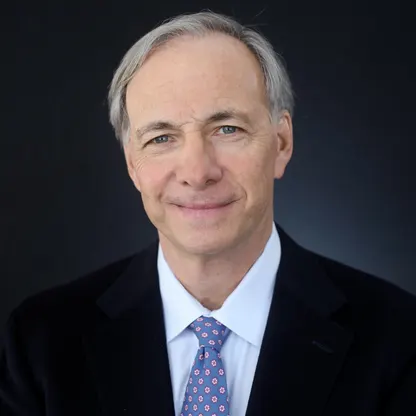
Ray Dalio, seriously, man...
2016 - 2026:
$SPY: +257% (13.57% CAGR)
$QQQ: +527.8% (20.17% CAGR)
Dalio in the meantime:
2016: "Bridgewater’s Dalio Says Risks Are Asymmetric on the Downside" (Bloomberg)
2017: "Dalio Calls End of Central Bank Era, Time to Head to Party Exit" (Bloomberg)
2018: Dalio Says Bonds Face Biggest Bear Market in Almost 40 Years (Bloomberg)
2019: 'Ray Dalio says the global economy is heading for a ‘great sag’ (CNN)
2020: "Investing legend Ray Dalio tells investors to not own bonds or cash." (Markets Insider)
2021: "Ray Dalio Sees 5% of Top U.S. Stocks in Bubble Territory" (Bloomberg)
2022: "Bridgewater’s Ray Dalio expects stocks to fall 20% if rates rise to 4.5%." (Reuters)
2023: "Bridgewater’s Ray Dalio warns of impending debt crisis in US" (Reuters)
2024: "Ray Dalio says the Fed faces a tough balancing act as the economy faces ‘enormous amount of debt" (CNBC)
2025: "Dalio Warns of US Debt Crisis ‘Heart Attack’ Within Three Years" (Bloomberg)
2026: "Ray Dalio warns the stock market is approaching 1929 and 2000 bubble levels — but another crisis is ‘past the point of no return" (Fortune)
This post was inspired by one of @ariaradnia today🙏
@SemSuchar Obávám se, že ten průnik lidí, co mají rádi auta, a současně jezdí 2.3 tunovým bochníkem chleba s filtrem řízení a rekuperací, a ještě k tomu nejsou debil, je hrozně malý. Takže gratulace 🥳
Už je potřeba se shodnout jestli je AI CAPEX hodný nebo zlý. Ja vsázím na to, že hyper-scalers prostě vědí co dělají, jen ten všeobecný konsenzus / validace ROI má prodlevu.
Co nám řekli výsledky $AMZN ? Jak to souvisí s $META
Hlavně asi to, že CapExy mají návratnost a nejsou jen spekulativní sázkou na kapacitu.
Price target který jsem měl 300 jako base case, se teď přesouvá pomalu jako bear case.
Amazon ví, že zákazníci budou ten compute potřebovat i za několik let.
Jak to souvisí s Metou ?
Takže pokud si myslíme, že výše popsáno je pravdou pro Amazon, pro $META by to mělo platit taky, ne ?
Když přebytečné kapacity dají se stejným ROI jako Amazon na trh, tak CapExy budou zvyšovat hodnotu firmy.
Takže u Amazon máme teď nově tezi: CapExy zvyšují budoucí hodnotu firmy.
Ale u Mety máme tezi CapExy ničí hodnotu akcionářů.
?
Key Differences That Separate AI From the Dotcom Bubble
The AI infrastructure buildout has invited inevitable comparisons to the late-1990s internet boom. Both eras feature massive investment in digital infrastructure, but the similarities largely end there. While today's hyperscalers—Amazon, Microsoft, Alphabet, and Meta—are spending aggressively to build AI capacity, the financial foundation supporting this cycle is fundamentally stronger than the debt-fueled telecom expansion that preceded the dotcom bust.
1. AI Spending Is Larger—and Still Accelerating
Today's hyperscalers are investing a greater percentage of revenue in infrastructure than telecom companies did during the internet buildout. More importantly, capital spending continues to accelerate, suggesting the AI investment cycle remains in its expansion phase rather than a peak.
2. AI Is Already Being Monetized
Unlike the late 1990s, when many infrastructure projects generated little or no revenue for years, AI is producing meaningful cash flow today. Cloud revenue tied to AI continues to grow rapidly, with hyperscaler cloud sales expected to exceed $375 billion over the trailing four quarters. Demand continues to outpace available capacity, and AI usage has expanded at an unprecedented pace.
3. Earnings Support the Investment
Perhaps the biggest difference is profitability. The hyperscalers funding today's AI buildout are generating record earnings and cash flow, and their valuations have actually compressed relative to earnings despite massive capital spending. By contrast, semiconductor stocks have experienced much greater multiple expansion, leaving them more vulnerable if AI capital spending eventually slows.
4. Balance Sheets Are Much Stronger
The telecom companies that financed the internet buildout relied heavily on debt, making them vulnerable when financing conditions tightened. Today's hyperscalers are funding most of their investment internally with strong free cash flow while maintaining healthy balance sheets, substantially reducing financial risk.
5. Demand Remains Strong
Unlike the excess fiber capacity that sat unused for years after the dotcom bubble burst, there is currently little evidence of meaningful overcapacity in AI infrastructure. Data center vacancy rates remain exceptionally low, suggesting demand continues to absorb new capacity.
Bottom Line
The AI investment cycle resembles the internet buildout in terms of infrastructure spending and to a degree in price action, but the underlying economics are dramatically different. Today's leaders are financing expansion with substantial earnings, free cash flow, and healthy balance sheets, while AI adoption is already producing significant revenue growth.
That doesn't mean investors should expect a straight line higher. A correction similar to 2022 remains entirely possible—particularly for semiconductor stocks—as hyperscaler capital spending inevitably slows. However, today's fundamentals argue we are not yet in the type of speculative bubble that typically requires many years to recover from a secular bear market. The space is very likely to experience increased volatility, but at this point the long-term risks appear more cyclical than structural. https://t.co/JXzFFTmMtn
@PavelFohler 🙋♂️skoro identický příběh. Včera až zvláštní mimotělní zkušenost, když koukáte během hodin na ztrátu na úrovni toho, co kdysi býval roční plat. Ale současně vděk, že na to koukat můžu a víra v to, co držím a proč. Takže neposrat se je základ, jak píšete. Pevnou ruku!