Follow the path of the unsafe, independent thinker.
Expose your ideas to the dangers of controversy.
Speak your mind and fear the stigma of conformity.
***And on issues that seem important to you, stand up and be counted at any cost***
~ Thomas J Watson (1874-1956)
🇧🇷 Brazil has compulsory voting. Yet 33.4 million registered voters stayed home in the 4 October first round, a record number.
As our partners at the Political Campaigns Resource Hub (PCRH) show in the chart below, abstention rises with each new election.
Ahead of the 25 October runoff, both campaigns face the question we explored at the UCT–PCRH Executive Short Course: who is the missing voter, and what will bring them back?
👇 PCRH's analysis
#Brazil #Elections #Voter #Turnout @ResourceHub_HQ
INSTEAD OF WATCHING AN HOUR OF NETFLIX TONIGHT.
This 1-hour Stanford lecture by Joel Peterson will teach you more about negotiation and getting what you want than most people learn in years.
Bookmark it and give it an hour, no matter what.
🎯 Candidate positioning shouldn't start with a slogan.
Start with what voters care about and what the candidate can credibly own. Strategy first. Creativity follows.
#Candidate#Positioning#Political#Communication
YOUR CAMPAIGN HAS REACHED ME. BUT HAS IT HEARD ME?
Marshall Ganz’s teaching on organising raises an uncomfortable question for political campaigns: what kind of relationship are we actually building with citizens?
In this clip, he begins with relationship building and commitment, then connects storytelling, strategy and action with the organisation needed to sustain collective effort.
What strikes me is how easily campaigns overlook the foundation of all this: authentic engagement.
We count doors knocked, messages delivered, rally attendance and social media impressions. These measures have value. But they leave a critical question unanswered:
Did the encounter give someone a reason to trust us?
A campaigner can complete a questionnaire without listening. A candidate can visit a community without learning anything. A campaign can collect thousands of telephone numbers while building very few relationships.
When the interaction is designed only to secure a vote, citizens can become instruments of someone else’s ambition.
Authentic engagement demands more. It requires the willingness to hear an inconvenient answer, allow people’s experiences to change our assumptions, and return after the photograph has been taken.
It also requires sharing responsibility. People need opportunities to shape priorities, organise others and hold leaders accountable. That is how participation acquires meaning beyond attendance.
This matters deeply to the question of the missing voter.
Before describing someone as apathetic, we should ask what their experience of politics has taught them. Have they been heard? Have commitments been honoured? Has their participation ever appeared to matter?
Organising cannot remove every barrier to voting. But Ganz’s teaching invites us to examine whether our own campaign practices deepen the distance we claim to be closing.
For those of us working to professionalise campaigns, five questions deserve a place in every review:
What have citizens told us that changed our approach?
Which relationships continue between elections?
How much responsibility do volunteers and communities actually hold?
Do our systems record concerns and follow through on commitments?
What remains of our organisation when the candidate leaves?
At ICPC, I believe these questions belong alongside our work on data, strategy, communication and campaign operations. Professionalism must include the quality of the relationships those systems support.
Watch Ganz with one question in mind:
If we stopped asking people for their votes, would they still have a reason to engage with us?
#PoliticalCampaigns #MarshallGanz #CommunityOrganising #VoterEngagement #MissingVoter #ICPC
POLITICAL CAMPAIGN WATCH NIGERIA 🇳🇬 | Week 1
In 2023, about 65million+ of Nigeria's registered voters stayed home. Those missing voters are the biggest opportunity in this election.
Campaigning is now underway ahead of the 16 January polls. Are the parties going after the missing voter, or just talking to their own base?
Watch as @DimphoLekgeu takes you through what our watchers saw on the ground in week one.
For more campaign analysis as Nigeria heads to the polls visit https://t.co/Kuk0iKqh1b
#PoliticalCampaignWatch #MissingVoter #Nigeria #NigeriaElections #NigeriaDecides2027
Last week I attended the University of Cape Town and @ResourceHub_HQ Executive short course on "How to Run and Manage a Winning Political Campaign" alongside aspiring candidates and campaign strategists from 12 African countries. All of them already play key roles in how their parties organise and compete. We learned as much from each other as from the sessions, and a challenge raised by one participant often turned out to be one that half the room had faced and solved in different ways.
The highlight for me was the module on project management in campaigning, which built directly on what I took from the Steve Jarding course. I came away more convinced than ever that strong project management belongs at the heart of African political campaigns from day one. Many thanks to @ICPCampaigns and the group lead @glenmpani for investing in us.
NIGERIA: WHO IS BUILDING VOTES, AND WHO IS JUST MAKING NOISE?
A packed rally. A powerful endorsement. Branded clothing everywhere. A campaign dominating your screen.
It can all look like victory. But what is actually changing in the minds and behaviour of voters?
Campaign Watch moves to Nigeria, and our first edition asks the question that should unsettle every campaign: Are you reaching beyond those who already support you?
Produced by the Political Campaigns Resource Hub, part of the International Centre for Political Campaigns (ICPC), this edition examines five developments:
Religious and community networks: Does existing trust translate into support for a candidate?
Empowerment initiatives: Are material benefits changing minds or reinforcing existing loyalties?
AI-generated campaign content: Is digital creativity persuading voters or simply attracting attention?
Voter data collection: Is information becoming useful campaign intelligence or accumulating as paperwork?
Unequal campaign resources: Does greater visibility mean greater electoral strength?
Running through each is a bigger question: Where is the missing voter in all this activity?
The citizen who stayed home. The registered voter no campaign meaningfully engaged. The person whose absence disappears beneath the excitement of a cheering crowd.
Our mandate is to document campaign practices, interrogate their purpose and examine what evidence tells us about their effectiveness. Who is being reached? What might change? What deserves closer scrutiny?
That is how we are building PCRH into a trusted centre of information and insight on political campaigns, connecting observation on the ground with the questions that matter to practitioners, researchers, journalists and citizens.
Nigeria is our next focus. The lessons reach far beyond its borders.
Before you mistake campaign activity for electoral progress, watch this.
▶ Watch our first Nigeria Campaign Watch edition. Follow PCRH and share the conversation.
#CampaignWatch #Nigeria #PoliticalCampaigns #MissingVoter #PCRH #ICPC @ResourceHub_HQ@CampaignPulse_@ICPCampaigns@DimphoLekgeu
Last week, 27 senior party leaders from 12 African countries closed out the third cohort of the UCT-@ResourceHub_HQ Executive Short Course in Cape Town on How to run and manage a winning political campaign. Every one of them is heading into an election.
One question kept coming back across five days. Not how to win the voters who already show up, but what to do about the ones who don't.
The parties in that room come from the very countries where the problem is sharpest. In Nigeria, 68 million registered voters stayed home in the last election.
In Angola and Kenya, close to 8 million each. In Lesotho, turnout fell to 38 percent. In Senegal, nearly 3 million are missing.
Even in Sierra Leone, Botswana and The Gambia, where turnout is high, hundreds of thousands still don't show up. Add South Africa's 11.5 million, and across eight countries nearly 100 million registered voters did not vote.
The short course gave these leaders the frameworks and case studies to diagnose the problem.
Fixing it takes a bigger room, with data experts, campaign strategists joining political parties working on the same number.
That room is IPE27.
The Westin, Cape Town
4–5 August 2027
Day 1: Who the missing voter is, region by region, election by election.
Day 2: Why they stay away, how to bring them back, and how to redesign the campaign that reaches them from the start.
The classroom was the beginning.
Save the date, and if your political party is serious about the missing voter, save your seat.
#IPE27 #MissingVoter #PoliticalCampaigns #Elections #Africa
He Taught Me Political Campaigning. Then He Helped Me Build My Vision.
Some teachers leave you with knowledge. Others influence what you go on to build.
This week’s Campaign Pulse Podcast episode is deeply personal to me. Our guest is former Harvard Professor Steve Jarding, the man who taught me political campaigning at the Harvard Kennedy School.
His influence extended well beyond the classroom. Steve’s willingness to help me build Shikamo Political Campaigns and Advisory Services supported a journey that grew into the International Centre for Political Campaigns (ICPC) and its wider ecosystem.
For me, that is a powerful measure of a teacher’s legacy: what their students go on to build, and the support they offer along the way.
This week, Steve joins Dimpho Lekgeu, our Executive Lead at Campaign Pulse Podcast, for a conversation I am particularly proud to share.
If you are interested in political campaigns, leadership and the people whose teaching shapes generations of campaign practitioners, this is an episode you should not miss.
Watch the preview and look out for the full interview.
#CampaignPulsePodcast #SteveJarding #ICPC #PoliticalCampaigns #Leadership @CampaignPulse_@ICPCampaigns@DimphoLekgeu
African political parties are collecting millions of member names digitally. For instance, in Nigeria, the Electoral Act 2026 made digital membership registers mandatory, and some parties are targeting 10 to 20 million members. In Kenya, 128 registered and provisional parties are recruiting ahead of 2027.
But a membership roll is not a voter register. Between the two sits a gap most parties can't see: members who aren't registered, who are registered in the wrong ward, or who never turn up on election day.
That gap is where the #MissingVoter starts. Across eight African countries, nearly 100 million registered voters didn't vote in their last election.
KampaignOS is a purpose-built campaign membership database designed to close it. It captures and organises your members and supporters, verifies who is on the official voter register, and shows you who can be mobilised, where they are, and where your resources should go, from membership through to GOTV.
Millions of names mean nothing until you know which ones can vote. Get KampaignOS.
For more details, contact [email protected]
#KampaignOS #MissingVoter #PCRH #IPE27 #ICPC #GOTV #PoliticalCampaigns
33.4 million Brazilians skipped voting the first round. The gap between the two runoff candidates is far smaller. Those missing voters are not a guaranteed bloc for anyone, but they are not lost either.
Ahead of the 25 October runoff, our view at Shikamo Political Advisory and Campaign Services is that counting the missing voter is where campaigning starts, not where it ends. Targeted campaigning means finding out where voters are missing, why they stayed away, and giving them a credible reason to take part.
Read the full piece below 👇
https://t.co/4BrnyphKo7
#Brazil #Elections #VoterTurnout #PoliticalCampaigns
This is not incidental coming from Flávio. His campaign team knows very well that evangelical and practising Catholic voters are one of Brazil's largest, most consistently mobilised blocs, and faith-coded messaging in a run-off campaign is not meant to persuade on policy. It is meant to activate an identity that already leans toward voting.
Million dollar question is will this persuade voters to vote for him come October 25 #BrazilDecides2026
Nigeria Added Ten Million Voters. So Where Did Seven Million Young Voters Go?
Nigeria appears to have achieved a significant electoral milestone.The Independent National Electoral Commission has announced that the voters’ register now contains 103,428,715 people, following an exercise that attracted more than 10.7 million new registrations.
Online registration reduced barriers created by distance and time. Printable and downloadable voter cards could also make it easier for citizens to participate.But beneath the headline lies a troubling question.
In 2023, Nigeria had 37.06 million registered voters aged 18 to 34. They represented 39.65 percent of the register. The latest figures place this group at 29.78 million, or only 28.79 percent.
The register grew by almost ten million voters, yet the recorded number of young voters declined by more than seven million.
Where did they go?
Some voters naturally moved into the next age category. Biometric verification may also have removed duplicate or invalid records. But normal ageing alone does not appear sufficient to explain the scale of the decline. It could reflect data cleaning, inconsistent classification or a much deeper Missing Voter problem among young Nigerians.Whatever the explanation, campaigns must stop treating the size of the register as proof of electoral participation.
Nigeria had more than 93 million registered voters in 2023, but only about 25 million voted in the presidential election. Nearly three out of every four registered voters did not cast a ballot.
Registration is only the first conversion point.
The real campaign journey is:
1. Eligible citizen
2. Registered and validated voter
3. Voter with the required credentials
4. Reachable voter
5. Persuaded voter
6. Mobilised voter
7. Voter who casts a ballot
Every stage loses people.
Campaigns that treat all 103 million registered voters as equally reachable are working with an administrative number, not a strategic voter universe.
For campaigns preparing for 2027, the critical questions are:
1. Who entered the register and who was removed?
2. Where are the registration and turnout gaps?
3. Who has collected or downloaded a voter card?
4. Which voters can be identified and reached directly?
5. What will persuade them that voting is worth the effort?
6. What operation will move them to the polling station?
INEC should publish a clear reconciliation of the age data, showing additions, removals and movement between age categories.For ICPC and the Political Campaigns Resource Hub, this demands a Nigeria Registration to Turnout Audit.
Nigeria may have added millions of names to its register. The more important question is whether it has expanded the electorate that will actually vote.
The voters’ register tells us who can participate. Turnout tells us who did. The Missing Voter lies in the distance between the two.
#PoliticalCampaigns Political Campaigns Resource Hub International Centre for Political Campaigns @ResourceHub_HQ@ICPCampaigns
It was an absolute pleasure to host you. We are certain #UNITE is in impeccable hands. We will be closely following your journey to achieving all your political goals.
A campaign should track voters who stay away from the polls, not only voters who support it. If a campaign tracks this early, it can act before an election, not scramble after one.
Brazil held the first round of its presidential election on 4 October 2026. About 30 million people, roughly 21% of registered voters, did not vote. Flávio Bolsonaro narrowly beat President Lula da Silva. A runoff vote will happen on 25 October.
After the result, Lula spoke to his own party. He did not blame the voters who stayed home. He said: "We have 20 days for each one to evaluate what they can do."
This response showed humility. I respect that. But it raises a question I think about often: should 30 million missing voters really come as a surprise once the results are announced?
The data says no. Brazil's abstention rate has risen at every general election since 2006: 18.12% in 2010, 19.39% in 2014, 20.33% in 2018, and 20.95% in 2022, the highest since 1998. If Lula’s campaign had simply extended that trend line into 2026, it would have projected around 33 million non-voters. The actual figure, about 30 million, sits close to that projection. This was not a hidden pattern. It was a visible line on a chart, available before a single vote was cast.
This matters even more in Brazil than in many other countries, because voting there is compulsory for most adults. There is no large pool of unregistered citizens to explain the gap. The missing voters are registered people who chose not to turn up, which means the number was there to model directly from past turnout data, not estimated from registration gaps.
If numbers had been the starting point of President Lula’s campaign strategy, rather than a figure to explain afterwards, the campaign could have forecast the scale of likely abstention, tested what it would mean for the first-round threshold, and built a turnout plan sized to that risk, months before election day. Instead, the shortfall became something to address with 20 days left before a runoff.
Building turnout modelling into a campaign's strategy from day one, using historical trend data and not just this election's polling, is critical. A rising abstention line across past elections is not noise. It is a forecast, and a campaign that reads it early can plan for it instead of reacting to it.
#PoliticalCampaigns #DataStrategy #CampaignIntelligence #Brazil2026
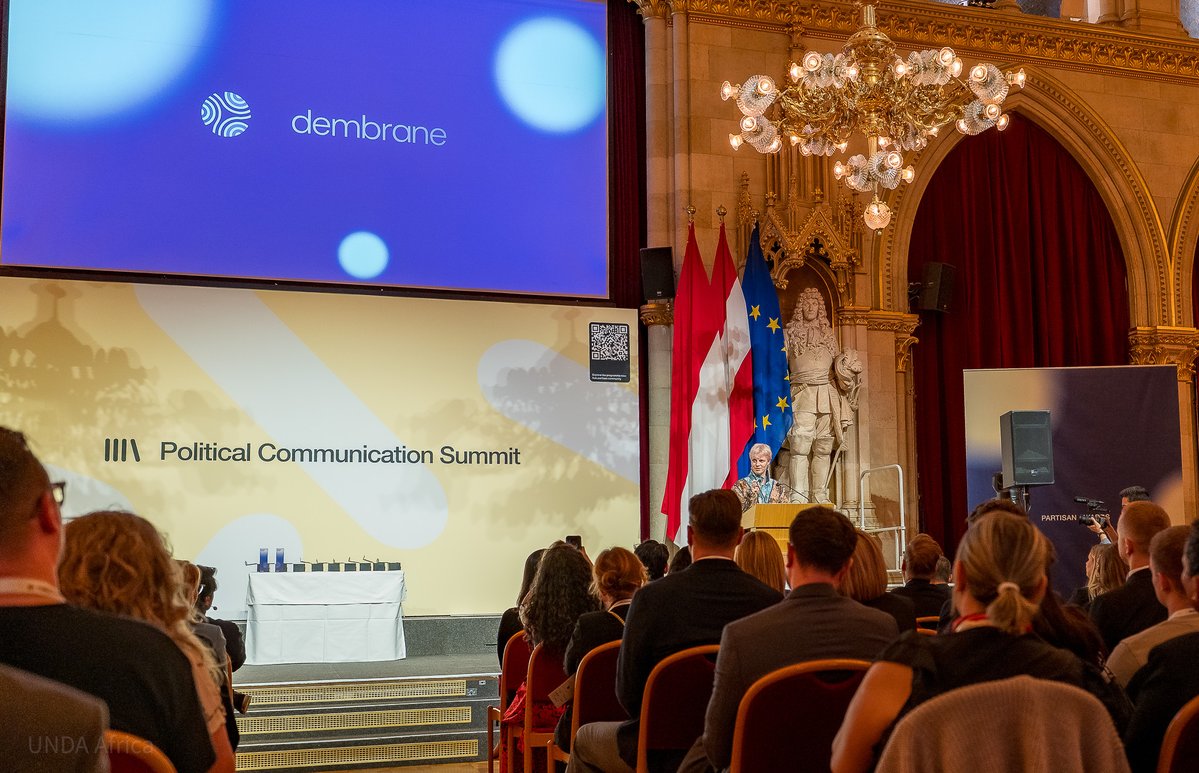
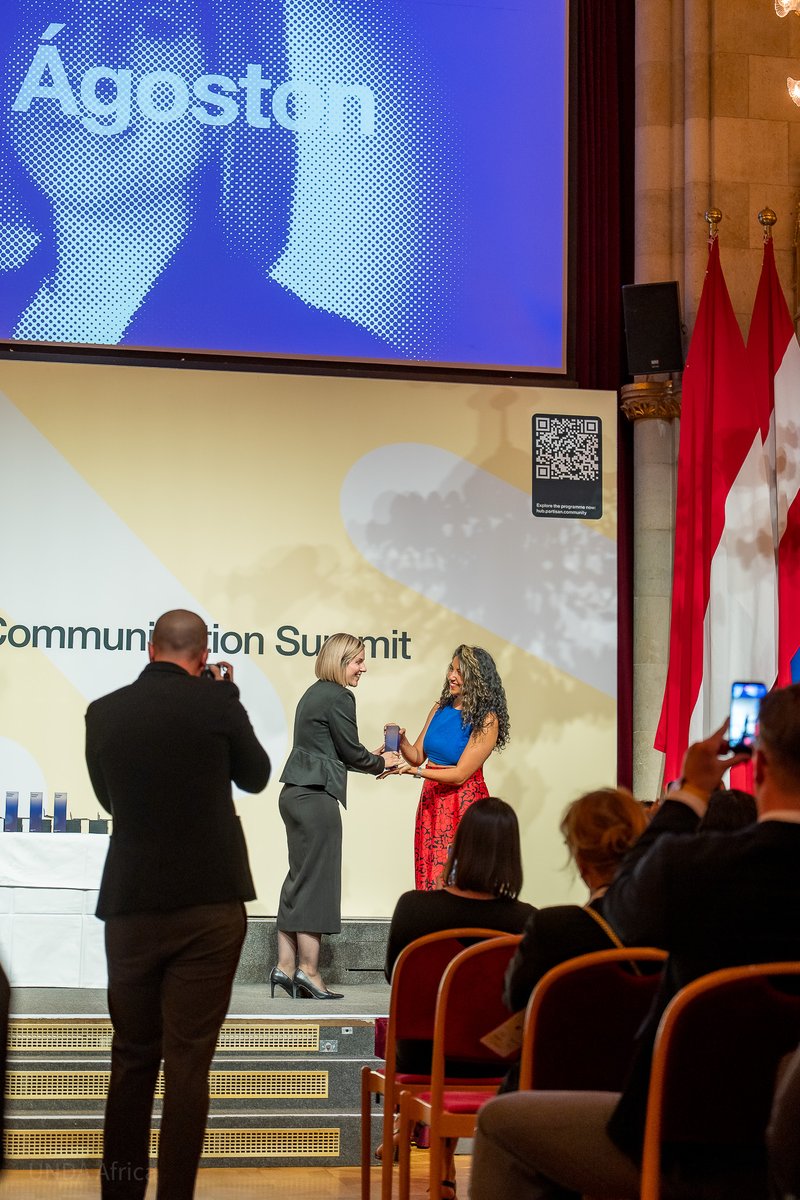
Honoured to attend the inaugural #PoliticalCommunicationSummit and Partisan Awards, celebrating the creativity and strategy that make political communication truly connect. Congratulations to all winners and finalists. Great to make new connections; looking forward to day two.
What a powerful week of learning, unlearning, meaningful engagement, and productive disagreement.
Thank you, @ResourceHub_HQ, for putting together such a world-class programme!👌🏾
It was a pleasure to have the Campaign Pulse Podcast team at the Executive Short Course last week. We cannot wait to hear what the different political leaders had to say about political campaigns and their experiences on the campaign trail.
Decoding Campaigns; Defining Power