Hello friends, it's paper day again! I'm excited to present, for the first time, a detection of a likely accretion shock in the FU Ori system!
https://t.co/d5YSVH0xDR
We see you, @NASAEarth
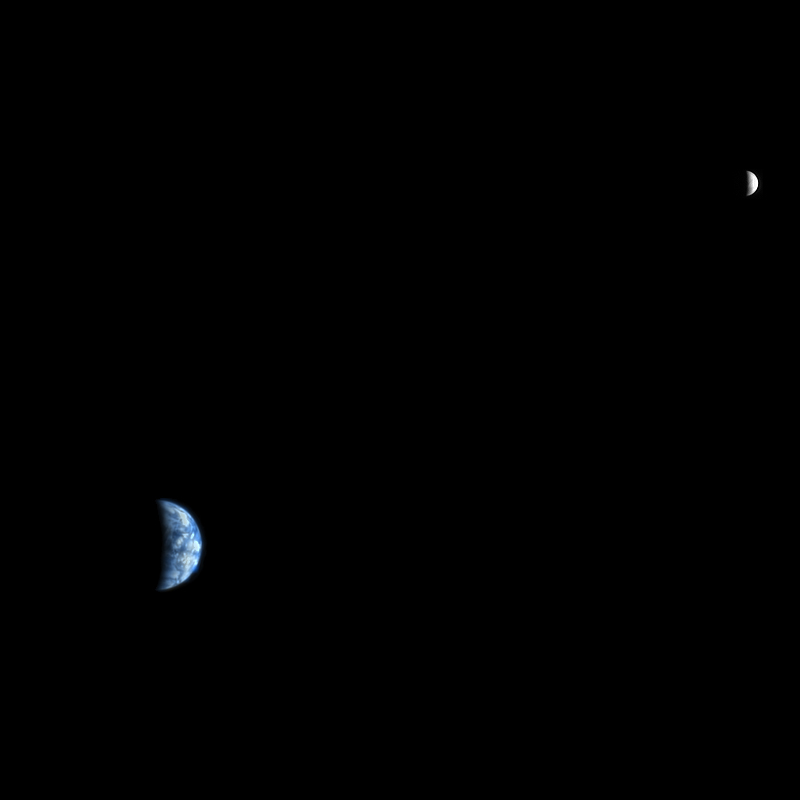
Here's a view of the extraordinary Blue Planet and its moon, taken by the HiRISE instrument aboard the Mars Reconnaissance Orbiter. Happy Earth Day!
Only one chance in this lifetime…
Like watching sunset at the beach from the most foreign seat in the cosmos, I couldn’t resist a cell phone video of Earthset. You can hear the shutter on the Nikon as @Astro_Christina is hammering away on 3-shot brackets and capturing those exceptional Earthset photos through the 400mm lens. @AstroVicGlover was in window 3 watching with @Astro_Jeremy next to him.
I could barely see the Moon through the docking hatch window but the iPhone was the perfect size to catch the view…this is uncropped, uncut with 8x zoom which is quite comparable to the view of the human eye. Enjoy.
I am hesitant to get ahead of a proper data review, but I understand the space community’s curiosity, especially when imagery can give the impression of a problem.
As you would expect, engineers were eager to inspect the heat shield, starting with diver imagery shortly after splashdown and continuing with the review aboard the ship. No unexpected conditions were observed. I suspect when the images are released, it will be pretty obvious the stark difference between Artemis I and Artemis II head shield performance.
As to the question specifically, the discoloration was not liberated material. The white color observed corresponds to the compression pad area and is consistent with the local geometry, AVCOAT byproducts, and transitional heating environments. We observed this behavior in arc jet testing and expected it in this compression pad area.
We will complete a full data review across all systems, including the thermal protection system, and make the results publicly available.
NASA is such a beautiful contradiction of the precision of mathematics and engineering combined with the idiot yeehaw spirit of Texas. Mission around the moon was commanded from a building that has longhorns grazing on one side and a swamp full of gators on the other. -OS
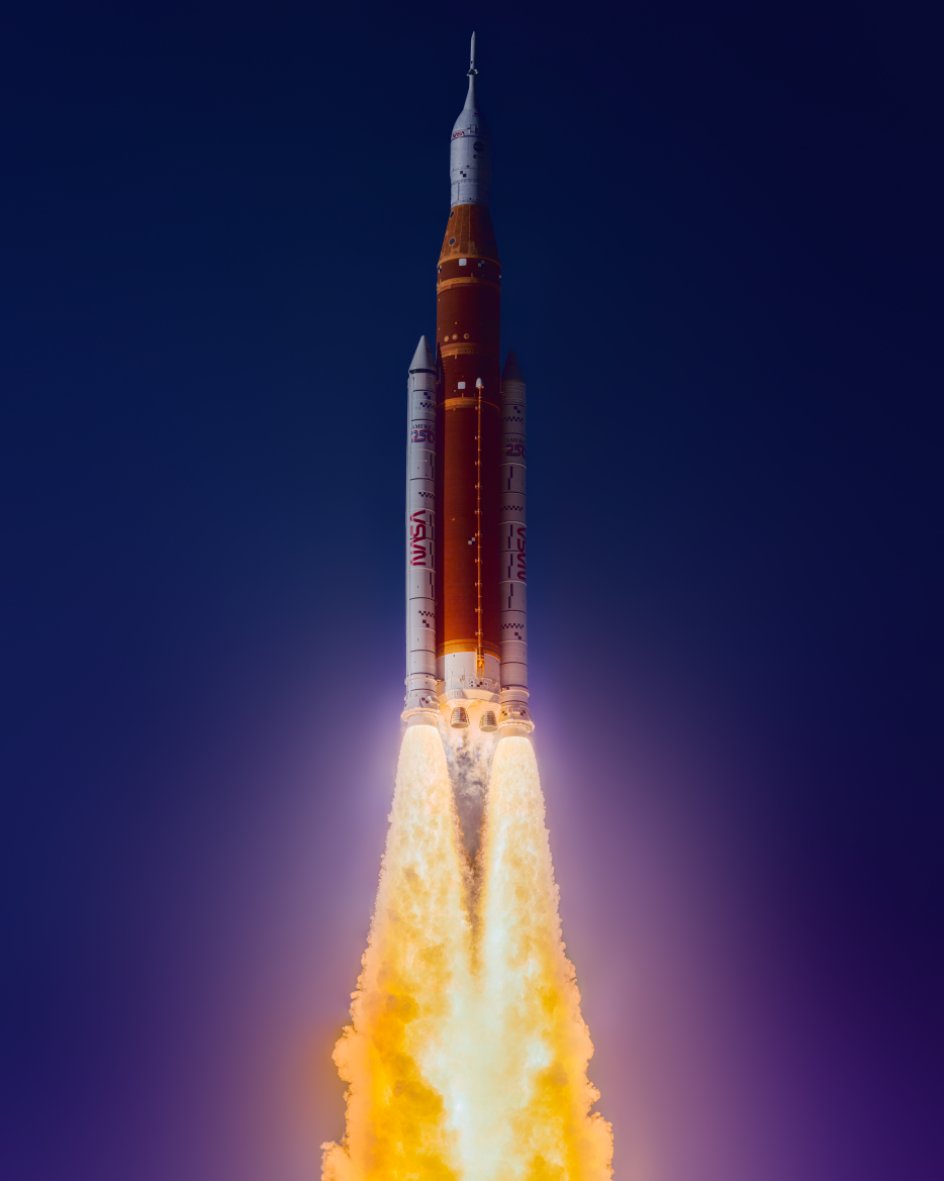
I'm pleased to reveal my highest resolution photo of the complete SLS in flight, captured entirely using sound-activated triggers from cameras placed near the pad. Thanks to the technique used the image is ~300 megapixels!
A ridiculously hard shot to get, but worth the effort.
“Imagine waking up near the moon” already precludes every soviet and russian cosmonaut from participating in your little thought exercise, for lack of plausibility.