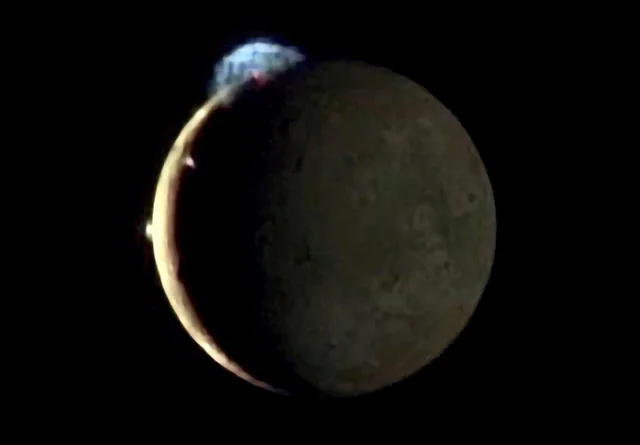
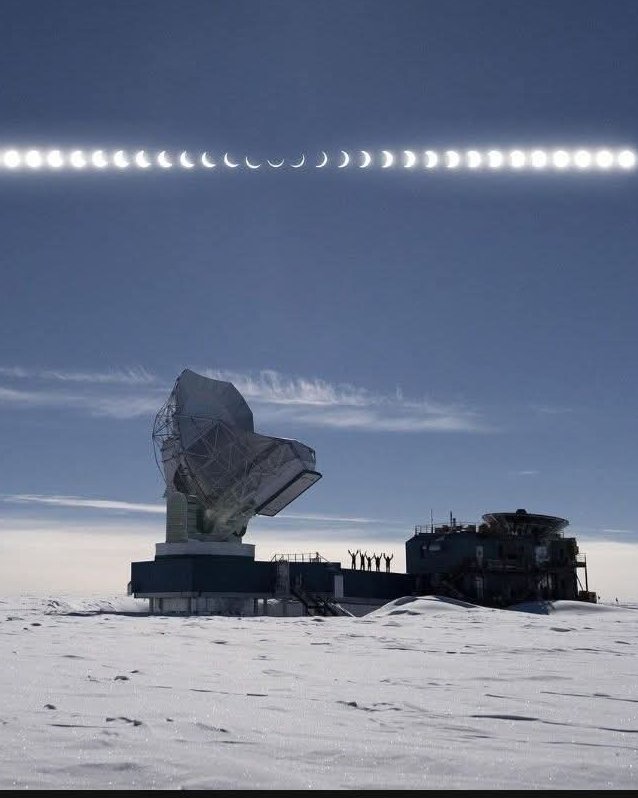
In the rare case you haven’t seen it yet:
Here is the 10-day trajectory of Artemis II around the Moon and back.
It follows a figure-eight loop around the Moon, reaching over 230,000 miles away from Earth.
Tonight is our last open night of the 2025/2026 winter season. It's been a really wet and windy 6 months with scarce viewing opportunities. Here's hoping for clearer skies for 2026/2027. We will reopen full-time on the 1st October. Thanks to all our visitors and supporters.
The Pythagorean Theorem is more than an algebraic formula, it is a fundamental property of space that can be demonstrated through the physical rearrangement of areas.
More than 400 years ago, Galileo Galilei proposed that mass does not affect the speed with which an object falls. Now, using the world's largest vacuum chamber at NASA, we can confirm this fundamental principle of physics. https://t.co/2reVxljez5
We are delighted to be hosting the UoD's 8th Physics Science Fair @MillsObs on Saturday 21st March from 2:30pm onwards. Amongst the exhibits we'll have "banana keyboard", "magnetic loops" and "fun with fusion". No admission fee, no booking required - just turn up - all welcome.
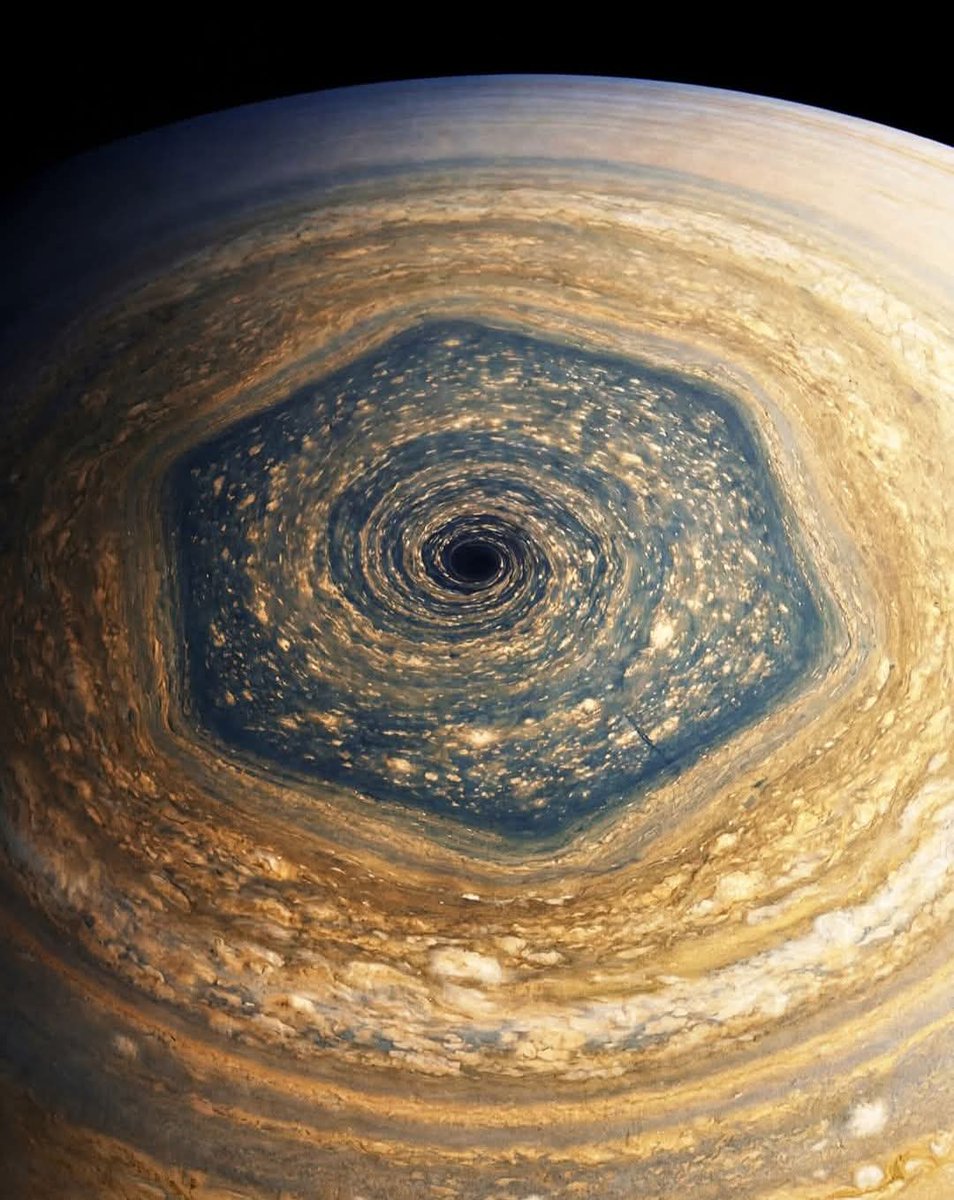
⚡️This is the clearest image ever taken of Saturn’s North Pole.
A perfect hexagonal storm is raging for decades now and it is over 30,000km across.
First spotted by Voyager 1 back in 1980s.
📷 NASA
Saturn's north pole is a perfect hexagonal storm!
Earth is about 12,700 km wide. This hexagon is nearly 30,000 km across. You could drop two whole Earths inside this storm and they still wouldn't touch the sides. A geometric masterpiece raging at the top of the world.
NASA
Obviously, this all depends on the weather and the forecast for the next few evenings does not bode well for viewing. Overcast and drizzly conditions are expected with very few breaks in the cloud cover. If you are planning a visit to the observatory, please bear this in mind...
Mercury, Saturn, Venus and Neptune will be either too faint or too close to the horizon, making viewing impossible. Shortly after sundown they will also set below the horizon. Mars is not visible either as it is too close to the Sun..........
The only visible planets will be Jupiter and Uranus, though the latter will be extremely difficult to locate given its current location and faintness in the night sky. Other visible bodies will be the Moon and the constellations.....
We would like to clarify what planets will be visible from the observatory over the next few days and into next week, if weather permits of course, as there appears to be some confusion.....