feels like spiders are crawling through my arms and legs when I try to sleep. like the fabric of my limbs are silently screaming in a panic. what the fuck. If this is somatic awareness I want a refund
My short and long-term memory are v good fwiw afaict.
There is some mild fluctuation; when working memory gets temporarily very slightly worse (for 2-7 days), I’m about to have a meditative insight.
meditation will nuke your short term memory and you'll end up doing basic things twice in a row because you forgot you just did it, but you'll be so baseline happy doing anything that you won't mind doing things twice
@QiaochuYuan the completion of the rationalist project has not been done I think. even if you integrated all your trauma/conditioning, the positive form of rationality (forming correct beliefs on evidence) remains very unsolved
@nabla_theta@nickcammarata frustration != suffering - Joe Hudson is fairly advanced in all this and talks about coming into work frustrated people aren't moving faster. without resisting the frustration it can also feel amazing, without curtailing the human experience, if done right
I recently started noticing how it feels for trauma to pull me into the past. Sometimes I literally feel smaller, like a kid. Not a metaphor - an experience. I thought “trauma pulls you into the past” was just a pithy statement or theory.
sometimes i'm just a 'ill kid lol
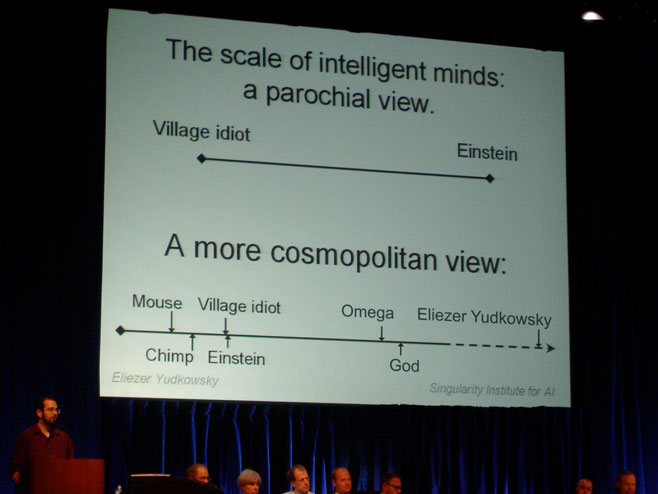
@tszzl going to need a new term, super-duper intelligence, to refer to the thing Einstein would be with a 10x larger brain while running 10x as fast. the thing that cracks the world in half is still a ways away (read: few years. maybe decade or two)
ultimately idk if my style is the best for getting results. but it feels the best for my soul, and seems to work great for me. when I deeply empathize with who I'm writing to, then I don't feel blocked by stranger danger/feeling like i'm being unreasonable/etc. which is great!
if you can't view your ask as an offer, where you can imagine the other person being glad they received it (even if they're not interested!) then it's a bad ask!
this isn't as restrictive as you might think. i'll give a few examples of crazy asks below, written like this 🧵
asking for stuff doesn't feel like grifting if you genuinely only want them to say yes if it'll benefit them as well as you. ditto for applying to programs/fellowships/etc. it's basically a rich guy who wants to improve the world or make returns, you provide them evidence for how good you'd be at what they want, as best you can, then you go back to getting better.
many kinds of interpersonal agency can feel icky, like grifting, so ppl avoid it. but if you refuse to be inauthentic, to lie, to have nothing unwholesome in your heart, then it's easy!
when everyone feels like, on some level, a friend who you haven't met yet, then it all flows so much more naturally and better.
never having gone to school myself (homeschooled, whole life) this kind of orientation comes more naturally to me I think. imagine never having a stupid test, adults that wouldn't listen to you/take you seriously, and oppressive institutions. I deeply feel like everyone can be reasoned with.
that said, i still have to work to monitor my orientation! it's easy for me to fall into a grift-y mindset momentarily, there's so of that in the world, it's natural to mirror occasionally. nothing wrong with that! but, for me, it feels better for my soul to be authentic and wholesome. and, thankfully, it's also very effective! authenticity really stands out in an application, when everyone else is trying to convince you, and one person stops to be real and simply connect. as people.
hope this helps someone! :-)
I say this is an "offer" because, at least for me, I genuinely like when people ask me stuff like this! It feels good even if I decline. I usually encourage people who do this :-)
asking for stuff doesn't feel like grifting if you genuinely only want them to say yes if it'll benefit them as well as you. ditto for applying to programs/fellowships/etc. it's basically a rich guy who wants to improve the world or make returns, you provide them evidence for how good you'd be at what they want, as best you can, then you go back to getting better.
many kinds of interpersonal agency can feel icky, like grifting, so ppl avoid it. but if you refuse to be inauthentic, to lie, to have nothing unwholesome in your heart, then it's easy!
when everyone feels like, on some level, a friend who you haven't met yet, then it all flows so much more naturally and better.
never having gone to school myself (homeschooled, whole life) this kind of orientation comes more naturally to me I think. imagine never having a stupid test, adults that wouldn't listen to you/take you seriously, and oppressive institutions. I deeply feel like everyone can be reasoned with.
that said, i still have to work to monitor my orientation! it's easy for me to fall into a grift-y mindset momentarily, there's so of that in the world, it's natural to mirror occasionally. nothing wrong with that! but, for me, it feels better for my soul to be authentic and wholesome. and, thankfully, it's also very effective! authenticity really stands out in an application, when everyone else is trying to convince you, and one person stops to be real and simply connect. as people.
hope this helps someone! :-)
We’ve raised 75m in new funding from Sequoia and Spark Capital—partnering with @sonyatweetybird, @MikowaiA, and @YasminRazavi, all of whom are deeply supportive of our long-term mission. We’ve also brought on angels & advisors including @karpathy, @tszzl, and @_milankovac_.
-----
Our early results with FDM-1 moved computer use from a data-constrained regime to a compute-constrained one; this latest round of funding unlocks several orders of magnitude of compute scaling for that work. With the FDM model series we have a path to scale agentic capabilities through video pretraining, and we expect to achieve superhuman performance on general computer tasks in the same way that current language models have superhuman performance on coding tasks.
We’re also now able to invest in the blue-sky research necessary to our long term mission of building aligned general learners. To realize the civilizationally transformative impacts of AI, models must generalize far out of their training distributions, actively exploring and building skills in new environments. This capability represents a substantial shift from the current paradigm of model training. We believe that current alignment techniques are insufficient to predictably and safely steer a model with human-level learning capabilities, and so we’re doing work to study small versions of this problem in controlled environments to develop a science of alignment for general learners.
We’re a team of 6 people in San Francisco. We’re hiring world-class researchers and engineers to help us achieve our mission. If that’s you, please get in touch.
We’ve raised 75m in new funding from Sequoia and Spark Capital—partnering with @sonyatweetybird, @MikowaiA, and @YasminRazavi, all of whom are deeply supportive of our long-term mission. We’ve also brought on angels & advisors including @karpathy, @tszzl, and @_milankovac_.
-----
Our early results with FDM-1 moved computer use from a data-constrained regime to a compute-constrained one; this latest round of funding unlocks several orders of magnitude of compute scaling for that work. With the FDM model series we have a path to scale agentic capabilities through video pretraining, and we expect to achieve superhuman performance on general computer tasks in the same way that current language models have superhuman performance on coding tasks.
We’re also now able to invest in the blue-sky research necessary to our long term mission of building aligned general learners. To realize the civilizationally transformative impacts of AI, models must generalize far out of their training distributions, actively exploring and building skills in new environments. This capability represents a substantial shift from the current paradigm of model training. We believe that current alignment techniques are insufficient to predictably and safely steer a model with human-level learning capabilities, and so we’re doing work to study small versions of this problem in controlled environments to develop a science of alignment for general learners.
We’re a team of 6 people in San Francisco. We’re hiring world-class researchers and engineers to help us achieve our mission. If that’s you, please get in touch.