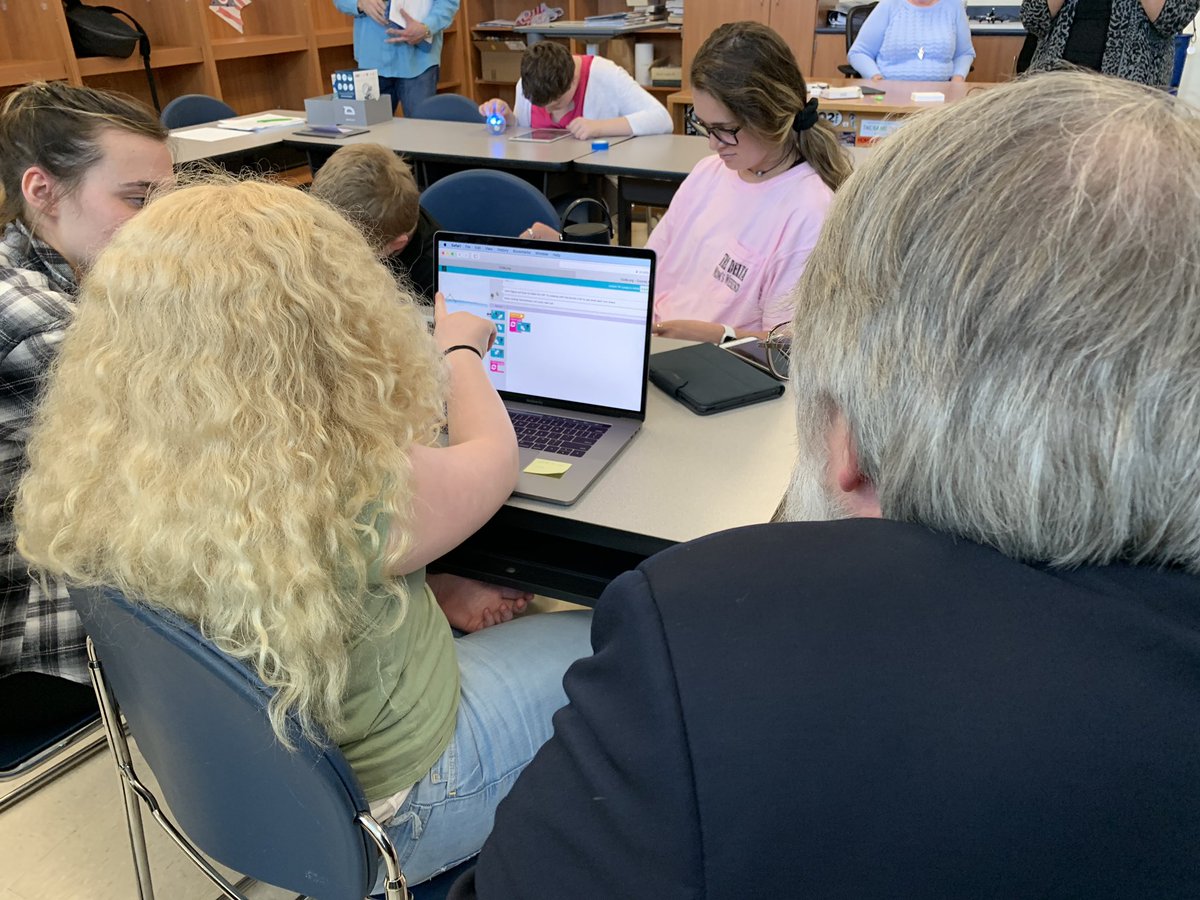
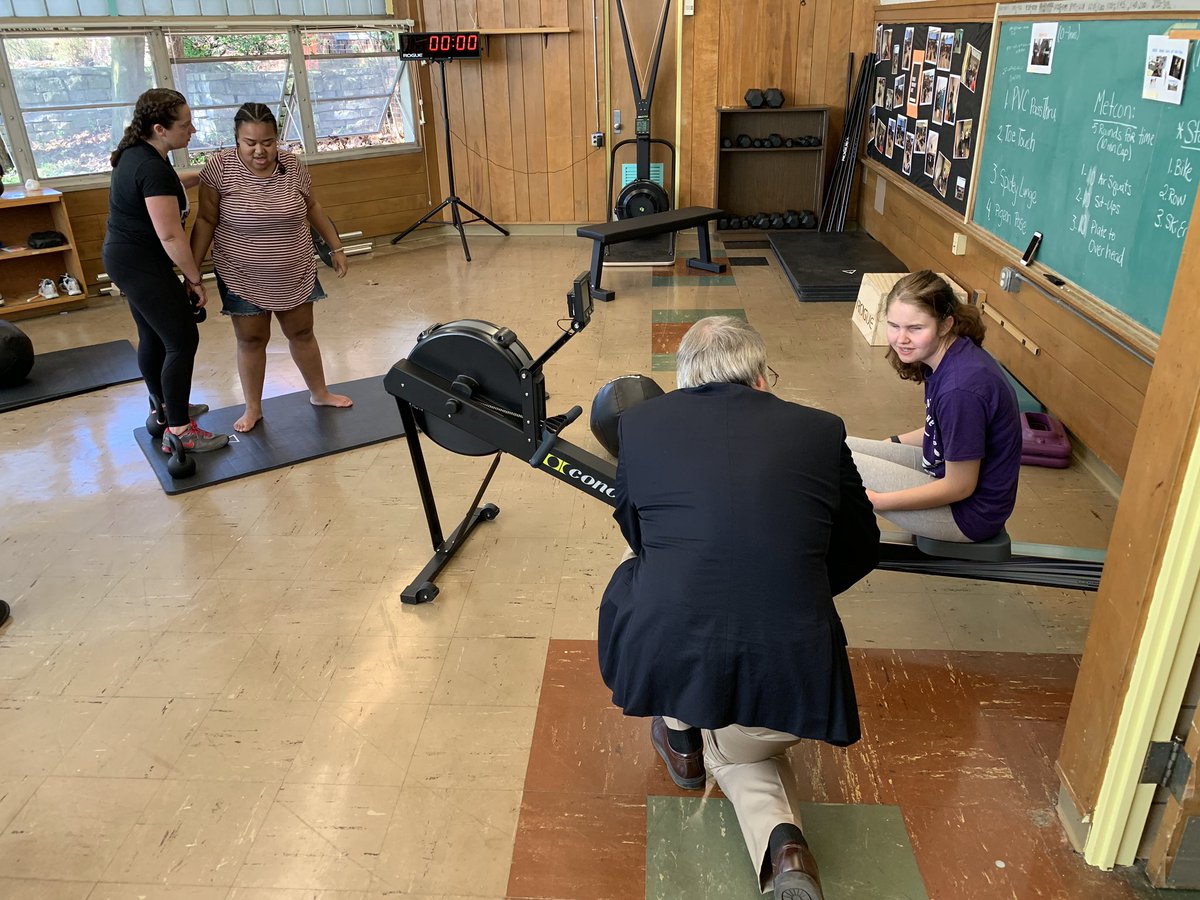
The Ohio State School for the Blind’s after-school pgrm serves 50+ students five days a week w/ 25 unique clubs. Today, we visited a few: daily living skills, modeling, coding, fitness and girl’s leadership/running clubs. Really great things happening for these students! #OhioEd
@MissMorosky@MissUlbrichOSU A2: Kelsey, I also said that accessibility is the most important. If the problems are not accessible for all students, this can create a divide and a privilege for students who do not need special accommodations. This makes me think of students with visual impairments and those
@MissUlbrichOSU student success. In doing so, all students will be able to understand what is asked of them and not feel left out if they do not understand. #OSUElemMath
@MissUlbrichOSU A1: All questions are important to consider. However, I would argue the most important would be "What settings are interesting and accessible to all students?" This is most important as the problems asked should be inclusive and relevant to all students in order to have the most
@MrCourtneyOSU could be used to compare to other shapes, and later introduced as standard measurements. By giving students a change to learn using nonstandard measurements, they know what to relate the sizes and objects to. #OSUElemMath
@MrCourtneyOSU A2: The use of nonstandard measurements can be beneficial to those with visual impairments because a lot of students will already have some schema of the world and different sizes and shapes. An example would be the size of a pencil, students know the size of a pencil and this
@MissMorosky@MrCourtneyOSU A1: Kelsey, I agree that students would struggle with this the most. Students need to have developed abstract thinking, as the shapes vary in sizes on different ends of the line. They would need to compare multiple different line sizes, which could be difficult. #OSUElemMath
@Miss_Erin123@MissRushOSU A2: Erin, I thought of this too. Using money at home for an allowance or letting the students purchase items at different places the family may go. Explaining the amounts and letting students be hands on will be the most beneficial #OSUElemMath
@MissRushOSU A1: Different ways that families can practice math at home is by letting students see real life examples and how it is relevant. A good example would be cooking and fractions can even be used by cutting the recipe into halves, thirds, and so forth. Having an allowance, or using
@MeaganClardy@MissTaliahK_OSU Meagan, that is a good point because we can also understand where they started to solve the problem and why through explanation #OSUElemMath
@smith11169 @MissTaliahK_OSU Brooke, that’s a good point. I think students can also see and clarify their answers where they may have “slipped up” through explanation #OSUElemMath
@MissDanielleOSU@MissTaliahK_OSU Danielle, I think this is true as well as we can hear more from the student and dig deeper if they are able to explain this to us. Why do you think explaining the problem can also be beneficial for the student?
@Miss_Erin123@MissTaliahK_OSU Talking to the student and creating an open discussion can be beneficial. Do you think a student would learn more hearing the questions the teacher facilitates or their own answers? #OSUElemMath
@ZhenWan72704088@MissTaliahK_OSU Rose, I really like how you brought in the aspect of ELL's. I think this goes with both are obviously important; however, it can be situational to the student and their ability to explain in the same language as the person they are presenting it to. This also reminds me of
@MissRushOSU@MissTaliahK_OSU Emily, I do agree that body language can tell us a lot; how comfortable a student is as well as how confident they are in solving the problem is evident in the way they are presenting themselves. Do you think that by using this language, students are able to see their own thought
@MissJonesOSU@MissTaliahK_OSU Hannah, this reminds me of Piaget's theory where children would see juice poured equally into two glasses & then shown a taller glass. When the same juice was poured into a taller glass, the children thought that there was more juice just because the glass is taller. #OSUElemMath