Backed by a team with decades in the energy industry, with experience running and launching large-scale commercial facilities, along with a technology proven out at commercial scale for the production of lithium carbonate from recycled batteries, R3 Lithium is pushing to become the largest supplier of battery-grade lithium carbonate from secondary sources in the United States.
I interviewed R3 Lithium’s CEO, Linh Austin, who outlined the company’s goals, their strategy to achieve them, and why R3 Lithium is very different company from the one that came before it.
https://t.co/geyXIsGeuR
Where Is Capital Going Next in Critical Minerals?
Four perspectives I shared at the North American Critical Minerals Summit in Washington DC last Monday:
1. Batteries are a NATIONAL SECURITY imperative.
2. We must solve the battery supply chain's "missing middle."
3. We need SECTOR-WIDE price stability mechanisms.
4. Seafloor nodules could mirror the 30% share of global oil & gas supply extracted off-shore.
See link below for full comments.
#NACMSummit
From commissioning to full-time operations.
EMP Metals has reached an important milestone at Project Aurora in Saskatchewan.
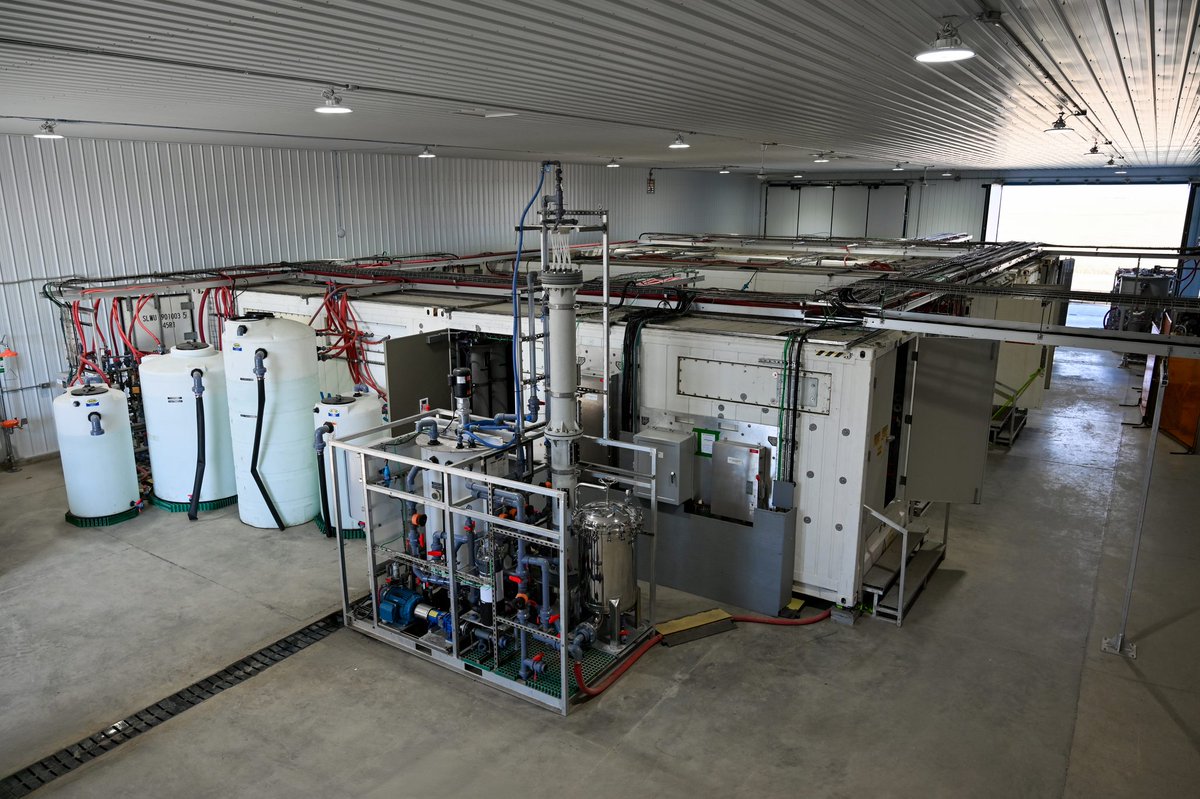
After successfully completing commissioning in September 2026, the fully integrated lithium refining demonstration plant is now operating full-time.
Developed in partnership with Saltworks Technologies, the facility:
🔹 Processes live Saskatchewan lithium brine directly from the production well
🔹 Integrates pre-treatment, Direct Lithium Extraction (DLE) and concentration
🔹 Returns spent brine through the disposal system
🔹 Is designed to process 10 m³ of raw brine per day
The facility is generating operating and engineering data to support commercial plant design, cost estimates and future development.
From resource development to real-world operations.
CSE: $EMPS | OTCQB: $EMPPF
#Lithium #ProjectAurora #DLE #CriticalMinerals #Saskatchewan
Critical minerals are getting crushed, and lithium is caught in the selloff. But why are prices falling as inventories draw down?
@matt_fernley sees potential for up to 100% upside in lithium prices from here.
What's the market missing?
He answers at 48:23 👇
(00:00) Critical Minerals Carnage, Lithium Bright Spots
(02:45) Lithium Sentiment from LME Week and SMM
(07:30) Why Lithium Demand Forecasts Keep Missing
(11:46) Why Critical Minerals Stocks Are Getting Hammered
(16:29) Fund Flows, Rates and Midterm Risks
(21:35) Higher Capital Costs Test Speculative Miners
(26:16) Rare Earths Look Oversold
(30:40) Project Vault Won't Fix Price Volatility
(36:59) Rare Earth Processing: The Missing Middle
(39:02) Energy Transition Versus National Security
(42:06) Tesla and Asian Battery Makers Signal Strong Demand
(48:23) Why Chinese Speculators Are Selling Lithium
(54:40) Lithium Africa and Upcoming Earnings
“Battery fires are like shark attacks: frightening events that loom cinematically large in the American psyche and almost never actually happen.” As US grid batteries surge, risk of fires plummets @CanaryMediaInc https://t.co/GCLZr3b58N #energy#BESS#batteries
It would be helpful to disambiguate these two claims, both true imo:
1. BAAJA treats new data much centers worse than other grid users, making them pay the full cost of the upgrades they trigger *and* a full share of the existing grid (and states can the elect to charge them even more on top). This redounds to the benefit of all other grid users.
2. BAAJA makes it easier to build about anything that needs a federal permit and/or new power, and data centers benefit from that the same way factories, housing, transit projects etc do.
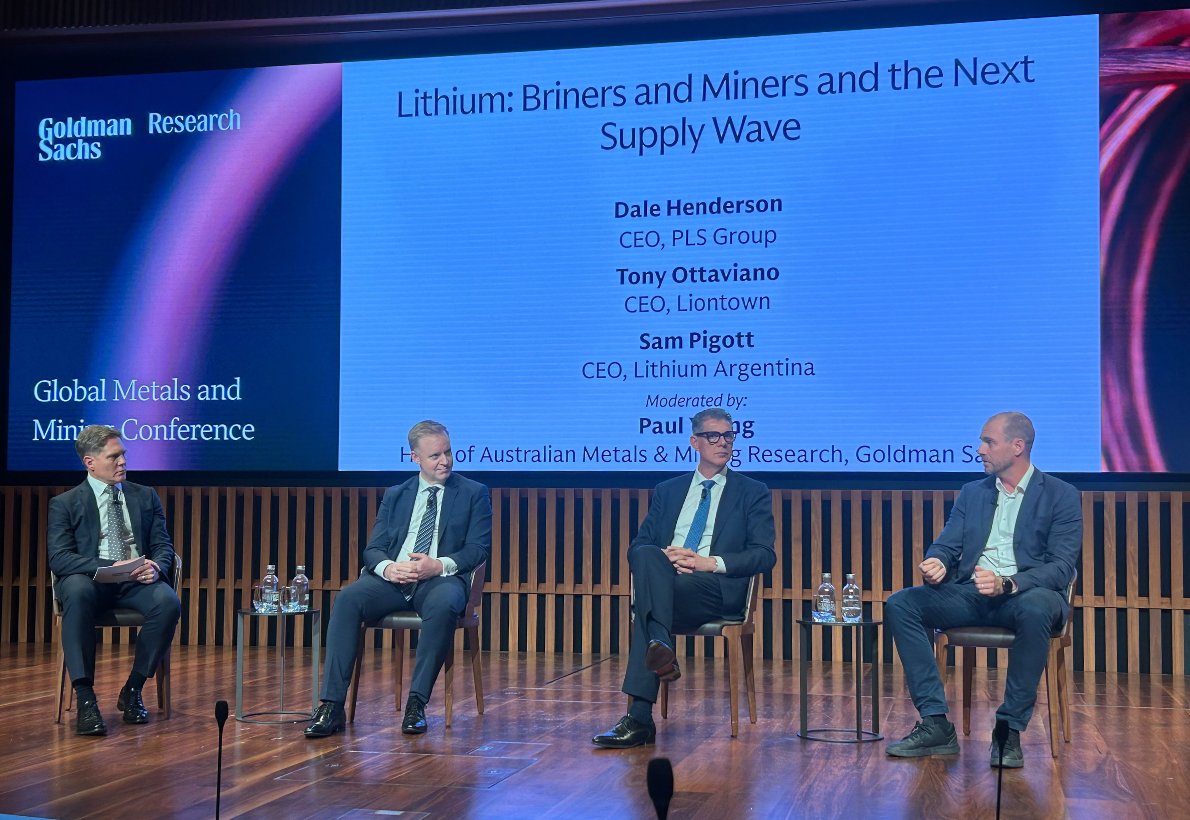
Our CEO Sam Pigott joined industry peers at the @GoldmanSachs Global Metals and Mining Conference to discuss brine and hard-rock supply and where the next wave of lithium production will come from. Thank you to Paul Young for moderating a great discussion.
$LAR #LithiumArgentina #CriticalMinerals
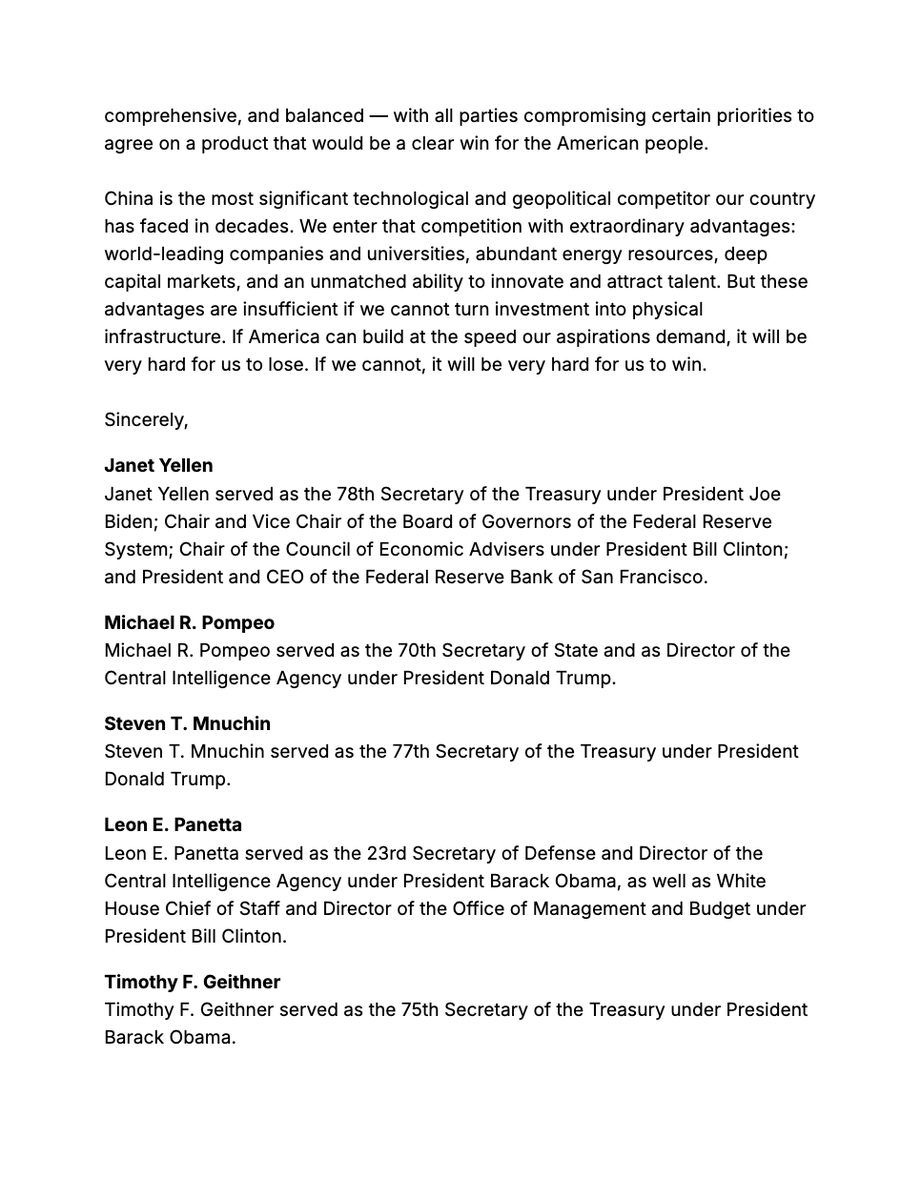
"As leaders who have served six presidents in economic policy and national security, we believe Congress has a generational opportunity to strengthen our nation’s industrial capacity in the face of unprecedented competition from China.
We call on Congress to pass the Bipartisan American Affordability and Jobs Act of 2026 and send it to President Trump’s desk."
-Janet YELLEN, Michael R. POMPEO, Steven T. MNUCHIN, Leon E. PANETTA, Timothy F. GEITHNER, Henry M. PAULSON, Jr., Robert E. RUBIN, Stephen MIRAN, Jared BERNSTEIN, Tyler GOODSPEED, Jason FURMAN, Glenn HUBBARD, Laura D’Andrea TYSON, Michael J. BOSKIN, Jeffrey ZIENTS, Jake SULLIVAN, Brian DEESE, Larry KUDLOW, Allan B. HUBBARD.
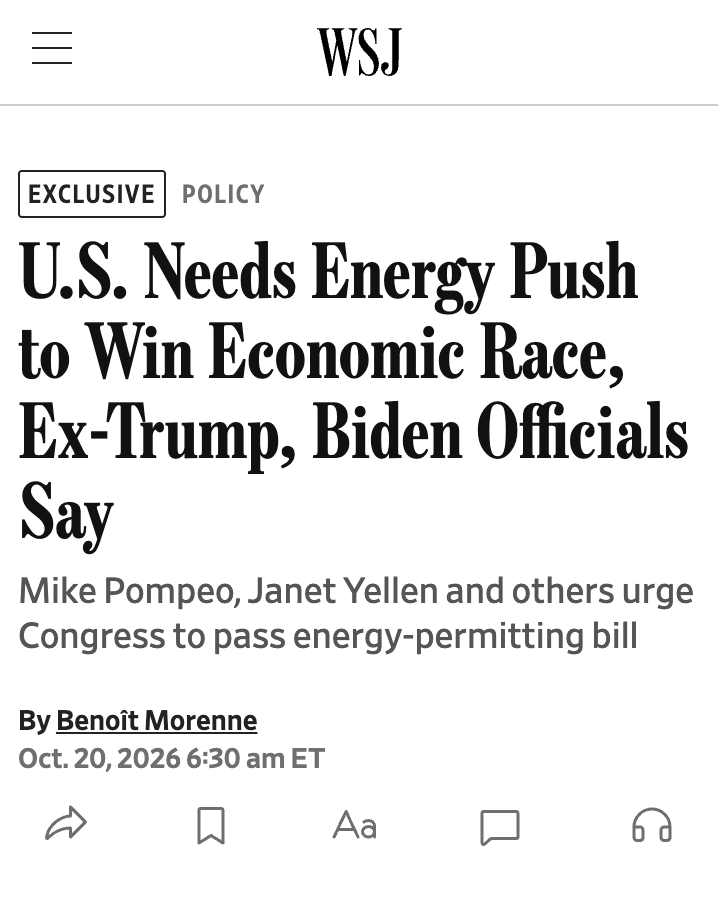
NEWS: 19 FORMER ECONOMIC AND NATIONAL SECURITY LEADERS ENDORSE THE BIPARTISAN PERMITTING REFORM BILL
Today, a group of former Cabinet members and White House principals across seven Democratic and Republican administrations sent a letter calling on Congress to pass BAAJA. Here are the signatories:
Janet YELLEN, Michael R. POMPEO, Steven T. MNUCHIN, Leon E. PANETTA, Timothy F. GEITHNER, Henry M. PAULSON, Jr., Robert E. RUBIN, Stephen MIRAN, Jared BERNSTEIN, Tyler GOODSPEED, Jason FURMAN, Glenn HUBBARD, Laura D’Andrea TYSON, Michael J. BOSKIN, Jeffrey ZIENTS, Jake SULLIVAN, Brian DEESE, Larry KUDLOW, Allan B. HUBBARD
Key highlights from the letter:
1. “We are not building infrastructure fast enough to remain globally competitive… The median time for a new power plant to move from an interconnection request to commercial operation has more than doubled, from less than two years for projects built between 2000 and 2007 to more than four years for projects built between 2018 and 2024.
2. China has built more high-voltage transmission in the last fifteen years than the U.S. has built in all of its history... In 2024, China accounted for 31.5% of global knowledge- and technology-intensive manufacturing value added, compared with 20.7% for the United States.
3. Federally funded or permitted projects require NEPA review, but private projects often do not, creating a threat of failure precisely where the government is trying to be proactive, strategic, and engaged.
4. A project that spends years awaiting approval must continue carrying development and financing costs while remaining exposed to rising input costs. The IEA reports that prices for utility-scale transformers increased 26% in 2024, while lead times for some transformers have stretched as long as six years.
5. Mining projects also face tremendous uncertainty: a 2026 study by researchers at the Colorado School of Mines found that permitting for modern mining projects takes an average of 5.5 years, rising to 8.9 years for contested projects. The U.S. currently has the second-longest mine development timeline in the world.
6. The Bipartisan American Affordability and Jobs Act is the most significant bipartisan legislative effort that Congress has undertaken in decades to tackle these challenges.
7. BAAJA addresses key constraints stifling American industry by requiring interregional transmission planning, strengthening the federal backstop for nationally significant transmission lines, and creating a faster, more predictable process for connecting new generation to the grid.
8. BAAJA also makes permits more durable by imposing tighter timelines for litigation and limiting frivolous lawsuits that can halt projects indefinitely, while preserving community input and judicial review of substantive agency decisions.”
The letter was organized by @arnabdatta321 on behalf of @IFP and covered exclusively by the WSJ this morning.
@Saluki_55@MAlkhteeb This account has been posting fake news for years, he changes his name and the name of his alts every now and then, you are better off requesting a community note instead of reporting him then at least the post is flagged for review by a actual person.
@boogeymantradez That account has been doing it for years, I actually think everyone who follows him just does so they know when he is posting fake news about a stock.
Our first drill results from Norrabees I at the Springbok Project include 7.5 m at 1.97% Li₂O, including 6.0 m at 2.27% Li₂O, with individual samples up to 4.11% Li₂O.
CEO Dr. Tom Benson sat down with @RKEquityRocks to walk through the results. Three rigs are drilling, channel sampling is underway across 21 pegmatites, and more results are on the way.
▶️ Watch the interview: https://t.co/PRIzJkRD20
$LAF.V #LithiumAfrica #CriticalMinerals #Springbok
Enacting the Bipartisan American Affordability and Jobs Act is a critical step toward building secure domestic supply chains and reducing America’s reliance on foreign adversaries for the minerals and materials vital to our economic and national security. Critical minerals companies are making substantial investments to strengthen the domestic supply chain, supporting our national defense, our energy future, and the growth of the American economy. But they are doing so on permitting timelines that are too often unpredictable. BAAJA brings needed coordination, predictability, and accountability to federal reviews and authorizations.
ACMA applauds @SenatorHeinrich, @SenWhitehouse, @SenCapito, and @SenMikeLee for their tireless, bipartisan work on this bill. We look forward to working with Democrats and Republicans in the House to swiftly pass BAAJA and send it to the President’s desk.