Calcutta Stock Exchange | কবে খুলছে কলকাতার শেয়ার বাজার? https://t.co/Ui84QU1tsl via @YouTube
THANK U SIR.... PLZ BRING BACK GOLDEN ERA OF OUR STATE
@AmitShah@SuvenduWB@swapan55@SamikBJP
This beautiful animal is in a severe, life-threatening condition. After being hit by a vehicle, it has been stranded on the side of the road for the past 3 days—bleeding, in immense pain, and completely unable to stand or walk.
We are making an urgent appeal to any verified animal welfare organizations, equine vets, or NGOs in the area to please step in and guide a rescue operation.
📍 Exact Location: https://t.co/HEnyeXdmAm
Please share this post widely across your networks, tag local authorities, and alert animal activists who can get to the site.
#AnimalEmergency #RescueMission #HorseLovers #NGO #AnimalCrueltyFree #HelpSaveALife #IndiaAnimalRescue #StreetAnimals #RightToLive
@PetaIndia@Stock_Precision@Atulsingh_asan@Share_Market
In Sotará, Colombia, stray dogs walk to the local police station every day… because they know kindness is waiting for them there.
Police officers have been feeding the hungry dogs and welcoming them with care, turning the station into a safe place for animals with nowhere else to go.
They don’t just come for food…
they come because they feel loved.
In a world filled with difficult news, small acts like this remind us that humanity and compassion are still alive.
West Bengal govt notification states that no cow, bullock, bull, buffalo, or calf may be sacrificed without a specific certificate issued by municipal chairman/ panchayat samiti head & a govt vet. Prohibits animal slaughter in public place.
On Eid, from May 17-30, buffalo and goat markets will operate at Mumbai’s Deonar abattoir ahead of Eid s@crifices. What investigators documented there is beyond horrifying.
Animals reportedly d*e packed into overcrowded transport vehicles before they even reach the slaughterhouse. De@d buffaloes were seen being dragged away by bulldozers. A shed full of decomposing bodies of buffaloes, goats and sheep was found inside the premises.
Past investigations also documented terrified animals being sl@ughtered in front of one another, with throats s!it while fully conscious despite Indian rules requiring stunning before ki!!ing.
This is not compassion. This is systemic cruelty happening in plain sight while laws meant to protect animals are openly ignored year after year. Why are the Prevention of Cruelty to Animals Rules and Transport of Animals Rules not being enforced? @mybmc@MumbaiPolice@CMOMaharashtra@Dev_Fadnavis@Manekagandhibjp
WEST BENGAL👏
Bengalis > is a 4000 years old civilization. The world's 3rd ethnic community right after the Arabs & Chinese Huns. The community & state that holds the maximum "number ONE position"
India's first metropolitan city - KOLKATA
India's first WI-FI city - KOLKATA
India's 1st metro rail - KOLKATA metro rail
1st IIM in India, is in KOLKATA - Joka IIM, 1960
1st IIT in India, is in KOLKATA - IIT Kharagpur
1st University in India is in KOLKATA - Calcutta university (established in 24th Jan. 1857)
1st college in India is in KOLKATA - Presidency college 1817
Oldest school in India, is in KOLKATA - St. Thomas, 1789
Toughest school board in India - WB BOARD OF SECONDARY EDUCATION
1st male graduate in India, were BENGALIS - Bankim chandra Chatterjee & Jodunath Bose, 1858
1st female graduate in India, a BENGALI - Kadimbini Ganguly
1st Nobel Prize holder from India, a BENGALI - Rabindranath Tagore, 1913
1st Oskar prize holder from India, a BENGALI - Satyajit Ray
1st Indian woman freedom fighter, a BENGALI - Sucheta Majumdar. She was India's 1st woman chief minister of the state Uttar Pradesh (1963-1967)
1st Bank in India, was in KOLKATA - Bank of Hindustan 1770, later State Bank of India, established in June 1806
1st Indian, who fought for abolishing Hindu evil practices like " Bal vibha & Sati", were BENGALIS - Iswar chandra Bandhopadhyay & Ram Mohan Roy in 1829 & July 26, 1856.
Founder of Indian National Army, was a BENGALI - Subhas Chandra Bose
Indian National Anthem, written by a BENGALI - Rabindranath Tagore
1st newspaper of India, published in KOLKATA - Hickey's Bengal Gazette, 1780
1st Miss Universe was from India, a BENGALI - Pramila, in 1947
1st Bharat Ratna pride holder, a BENGALI - Dr. Bidhan Chandra Roy
1st museum in India, is in KOLKATA - Indian museum, 1814
1st Theatre hall in India, is in KOLKATA - Chaplin cinema, 1907
India's largest zoo, is in KOLKATA - Alipore Zoo
Tallest Building in India, is in KOLKATA - The 42 storey
Tallest residential twin buildings in India, is in KOLKATA - Atmosphere
1st floating market in India, is in KOLKATA - Patuli
Largest Delta in India, is in WB - Sundarban Delta
World's largest drinking water tank in KOLKATA - Tala Tank (established in 1909, 18th Nov)
1st football club in India, is in KOLKATA - Calcutta FC 1872
India's 1st hockey Club in KOLKATA - Kolkata hockey Club, 1885
India's largest library, in KOLKATA - National library, established in 1903
India's first High court, is in KOLKATA - Calcutta High court, established in 1st July 1862
India's largest football ground is inc KOLKATA - Yuva Bharati Krirangan Or Salt lake stadium (it's 2nd largest in world)
India's largest cricket ground is in KOLKATA - Eden Garden stadium before Narendra Modi Stadium was established
No 1 Indian doctor in Britain, at present, a BENGALI - Dr. Apurba Chatterjee
Within top 9 NASA astrophysicist, at present out of 4 Indian... 3 are BENGALIS - Sharmila Bhattacharya, Anitax Sengupta & Madhulika Guha Thakurta
India's 1st under water train ll be launched - in KOLKATA
First car bought in India - in KOLKATA 1897
First Indian who climbed mount Everest, the highest peak in the world, was from WEST BENGAL - Tenzing Norgay, Darjeeling district
Father of football in India, a BENGALI - Nagendra prasad Sarbadhikari (for his role in introducing soccer in 1877)
First Indian swimmer to cross English channel, male & female, both were BENGALI - Mihir Sen in 1958 & Arati Saha in 1959
India's astonishing skywalk is in KOLKATA - Dakshineswar skywalk, having 14 escalators, 4 lifts & stairs
The founder of BJP was a BENGALI - Shyamaprasad Mukherjee
1st citizen of India, promoted Hinduism throughout the world, a patriotic saint, was a BENGALI - Narendra Nath Dutta (Swami Vivekananda).
BENGALI is the only Indian language, which is declared as the official language in 2002, outside India & apart from Bangladesh - a country in West Africa, called Republic of Sierra Leone.
This sickens me and makes me want to raise hell over these scumbags 👺We are destroying life on our planet. Farming fishing and hunting animals must be stopped and phased out permanently and we must do it now. There is no other way to sustain life on our planet #LiveVegan or face extinction ✌️
The Truth about Bengal's De-industrialisation
In 1947, Bengal was the most industrialised province in India, with one-fourth of all registered factories, and 24-27 percent of industrial output.
But these figures hide some important truths:
a) Bengal's key industries largely produced raw materials and inputs: jute, coal, iron & steel, and tea.
b) They were overwhelmingly owned by non-Bengalis, and
c) The condition of the working class was abysmal.
The largest of the capitalist groups were British expatriates who operated through managing agencies - Andrew Yule, Bird & Co., Williamson Magor, McLeod & Co., Begg Dunlop, etc.
As late as 1955, more than two-thirds of India's diversified business groups were British owned conglomerates with headquarters in Calcutta.
The second big group was Marwari trading capital - Birlas, Goenkas, Bangurs, Khaitans, Kanorias, Jalans, Bajorias, etc.
British control was finally dismantled after the Hazari Reports of 1964 and 1966, and the Monopolies Inquiry Commission of 1965.
This accelerated the transfer of corporate control from the British to the Marwaris - something that had already started in the early 1950s.
The buyouts were financed by private banks, share market manipulations, and even funds diverted from worker PFs.
The focus was on arbitrage earnings, rather than expanding production.
What broke Bengal's back, however, was the Freight Equalisation Act of 1956.
Before 1956, it made sense to set up factories close to the source of coal, and iron ore. And that gave Bengal its unique advantage, since it was the hub of the mineral wealth of the eastern states.
But the Freight Equalisation Act brought in by the Nehru government removed that advantage, by subsidising the flow of raw materials to other states.
This meant that factories could be set up elsewhere and didn't need to be concentrated in Bengal.
Within a few years, Maharashtra was receiving many more industrial licences than Bengal, and by 1964, well before the Left came to power, Bombay's factories were employing 13.5 lakh workers, compared to Bengal's 8.8 lakh.
What about workers?
Bengal's jute, steel and mining companies were notorious for exploiting workers.
This became a cause of struggle under the national movement as long as their employers were British.
But even after the transfer of ownership, the conditions of Bengal's working class continued to be terrible.
Even in the early-70s, their wages were about a third less than what workers earned in Maharashtra, and surveys showed they suffered from chronic work-related ailments.
That was the ground on which Bengal's militant labour movement arose and then intensified from the mid-1960s.
The Left and socialist parties rode on the anger and frustration of industrial workers, miners, and of course, share-croppers.
The 1967 United Front govt, brought SUCI's labour leader, Subodh Banerjee, to the labour minister's chair. He would come to be known as 'gherao minister.'
Gheraos increased dramatically, and industrial stoppages rose from 179 in 1965 to 894 in 1969.
The Left's political obligation was towards workers - not their employers.
This accelerated the flight of capital that had already started two decades earlier.
Equally important was the collapse of the global demand for jute, which was once the mainstay of Bengal's industry.
Along with that the nationalisation of coal by Indira Gandhi also removed another important magnet for private capital in the region.
The end of the licence-quota raj after the mid-1980s, caused a massive migration of capital from pro-worker states to pro-employer states.
The Left Front's initial strategy was to implement land reforms, and generate capital formation in agriculture.
While there is no doubt that Operation Barga was the most successful example of land reforms in India, the LF completely failed in its programme to create rural industries.
This was despite the CPIM's trade union, CITU, becoming largely an industrial peace broker, shedding its old militant stance.
By 1991, the number of stoppages had dropped to 192 (from 894 in 1969) out of which only 32 were because of workers' strikes.
Most of the industrial stoppages were because of employers locking their factories and leaving.
By 2003, mandays lost in West Bengal due to lockouts by owners was 16x that of what was lost due to workers' strikes.
Of course, this was because other states were much more capitalist-friendly than West Bengal, and were much more open to implement anti-worker 'labour-reforms.'
The biggest example of that was the suppression of the long textile workers' strike in Mumbai.
The Left Front, under Buddhadeb Bhattacharjee tried its best to compete with other states to present a business-friendly image.
It succeeded as well, in attracting capital into real estate, establishing SEZs across the state, and even getting the Tatas to invest in Singur.
The rest, of course, is history.
The question remains - why did the Bengalis not develop their own capitalist class?
That is an entirely different story.
Well done New Zealand 🇳🇿.
In 2023, New Zealand made a decision that changed how the world looks at farm animal welfare.
New Zealand banned the live export of farm animals by sea. This means cows, sheep, goats, and deer can no longer be shipped across oceans on long, stressful journeys.
For years, these trips have raised serious concerns. Animals are often kept in crowded conditions for days or even weeks. They face heat, rough seas, dehydration, and fear. Many do not survive the journey.
One tragedy in 2020 shocked the world. A ship carrying thousands of cattle sank during a storm. Most of the animals died. Only a few crew members survived. That moment forced people to take a closer look at what these animals go through.
After that, pressure grew. Animal welfare groups spoke out. Citizens demanded change. And the government listened.
This ban was created to prevent that kind of suffering from happening again.
It is important to be clear. This is not a full ban on all live exports. Animals can still be transported by air. But long sea voyages were seen as too dangerous and too cruel to continue.
New Zealand became one of the first countries to take this kind of strong action. It sent a message that animal lives matter, even in industries built around profit.
For many people, this is more than just a policy change. It is a sign that things can move in a better direction.
Now people around the world are asking the same question.
Reference:
- MPI GOV NZ... Restrictions on exporting livestock.
#newzeland #animal #animalexort #animalcruelty
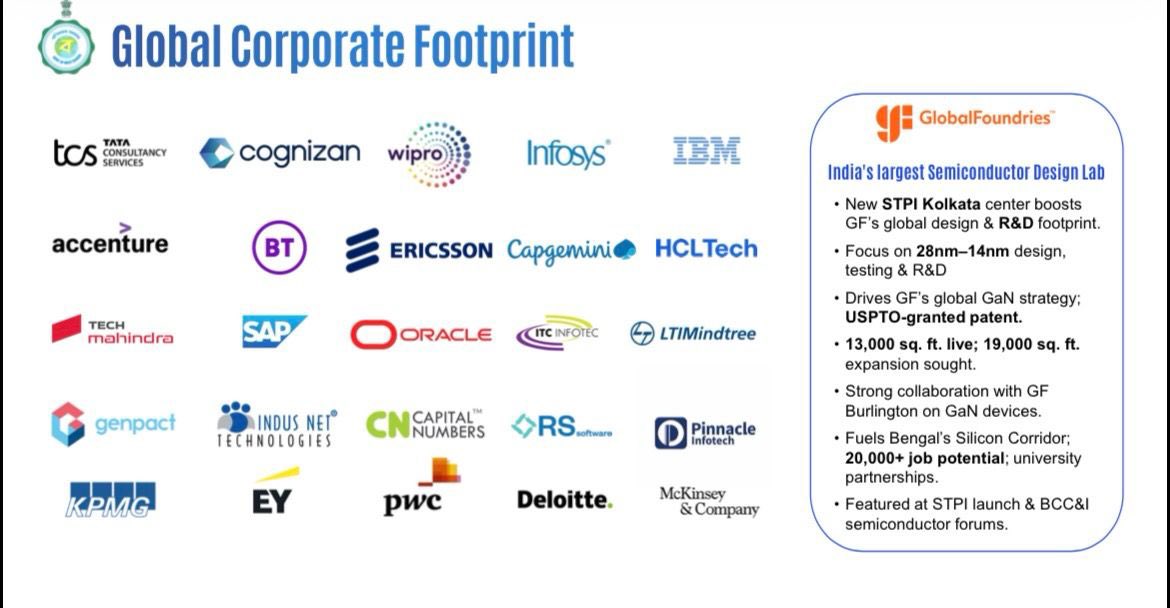
It’s true that we started late; but since 2011 Bengal has taken steady and determined strides to emerge as one of India’s most vibrant IT destinations. Today, Kolkata hosts almost all major IT giants, with TCS alone employing nearly 55,000 people in the city.
These achievements reflect the clear vision of our Hon’ble Chief Minister @MamataOfficial . Grateful for her leadership as we continue strengthening Bengal’s position as a leading IT hub of India.
@abhishekaitc@derekobrienmp
Calcutta shall not be compared with Bangalore, it's actually demean the legacy of the city, because till 70 it was the powerhouse of India , much ahead of Bombay or New Delhi. NO other city suffered like us politically, Expect to reach that position, only stable Govt can do
চলমান নানা আলোচনা সত্ত্বেও কলকাতা এখন ভারতের তৃতীয় বৃহত্তম অর্থনীতি।
কলকাতা কোনো একটি নির্দিষ্ট ক্ষেত্র (যেমন আইটি) ওপর ভিত্তি করে গড়ে ওঠেনি। এর শক্তির উৎস হলো কাঠামোগত কিছু শিল্প:
১. ধাতু ও শিল্পজাত পণ্য উৎপাদন পূর্ব ভারতের ইস্পাত ইকোসিস্টেম, ফাউন্ড্রি, রোলিং মিল এবং কাস্টিং ক্লাস্টার—যা সারা দেশের পরিকাঠামো ও নির্মাণ শিল্পে যোগান দেয়।
২. বিদ্যুৎ ও ইউটিলিটি বিদ্যুৎ সঞ্চালন, উৎপাদন, ইপিসি (EPC) এবং ঐতিহ্যবাহী শক্তি উৎপাদনকারী সংস্থাগুলোর এক শক্তিশালী ভিত্তি এখানে রয়েছে।
৩. বন্দর, বাণিজ্য ও লজিস্টিকস, বাংলাদেশ, নেপাল, ভুটান এবং উত্তর-পূর্ব ভারতের কৌশলগত প্রবেশদ্বার—যা পূর্ব ভারতের বাণিজ্য প্রবাহের জন্য অত্যন্ত গুরুত্বপূর্ণ।
৪. নির্মাণ সামগ্রী ও এমএসএমই (MSME) উৎপাদন পাইপ, প্লাস্টিক, কেবল, রাসায়নিক, রং এবং ছোট ইঞ্জিনিয়ারিং শিল্প—যা মূলত ডিস্ট্রিবিউশন বা বণ্টন-ভিত্তিক ব্যবসা।
৫. চা, পাট ও কৃষি বাণিজ্য পূর্ব ভারতের বিশাল অংশের পণ্য বা কমোডিটি ট্রেডিংয়ের প্রধান কেন্দ্র হিসেবে কলকাতা এখনও নিজের আধিপত্য বজায় রেখেছে।
৬. আর্থিক পরিষেবা ও আঞ্চলিক সদর দপ্তর অনেক ব্যাংক, বিমা সংস্থা এবং বড় শিল্পগোষ্ঠীর পূর্ব ভারতের প্রধান কার্যালয় বা সদর দপ্তর এখানেই অবস্থিত।
বেঙ্গালুরু হলো উচ্চ-প্রবৃদ্ধি ও উচ্চ-দৃশ্যমানতার (High-visibility) অর্থনীতি। কলকাতা হলো বৈচিত্র্যময়, বণ্টন-নির্ভর এবং সম্পদ-চালিত (Asset-led) অর্থনীতি। দুটোর বৃদ্ধির মডেল আলাদা, প্রভাবও আলাদা।
আসল ব্যবধান জিডিপির আকারে নয়। ব্যবধানটি হলো:
•পুঁজি গঠনের গতি (Capital formation velocity)
•স্টার্টআপের ঘনত্ব
•প্রিমিয়াম কর্মসংস্থান সৃষ্টি
•বৈশ্বিক সংহতি বা গ্লোবাল ইন্টিগ্রেশন
যদি মূলধন এবং উদ্ভাবনের তীব্রতা বাড়ে, তবে এই বড় ভিত্তির ওপর দাঁড়িয়েই দ্রুত উন্নতি সম্ভব।
পূর্ব ভারত নিয়ে আলোচনা কম হয়—তার মানে এই নয় যে এটি অপ্রাসঙ্গিক।
আগামী দশক সেই শহরগুলোকেই পুরস্কৃত করবে, যারা উৎপাদনের গভীরতা + লজিস্টিক সুবিধা + প্রযুক্তির ব্যবহার—এই তিনের সমন্বয় ঘটাতে পারবে।
কলকাতার প্রথম দুটি বৈশিষ্ট্য রয়েছে। তৃতীয়টি ঠিক করে দেবে তার ভবিষ্যতের গতিপথ।
রাজনৈতিক গোষ্ঠির থেকে বকশিস নিয়ে, শহরটাকে-রাজ্যটাকে নিয়ে ঘরে বসে কুৎসা করে আর কতদিন?
#NirbhikUttor #TMCS #EgiyeBangla
Everyone talks about Bengaluru’s tech boom and a decaying Kolkata. But GDP tells an interesting story.
India’s top cities by GDP:
Mumbai ₹25.73 lakh crore
Delhi NCR ₹24.37 lakh crore
Kolkata ₹12.45 lakh crore
Bengaluru ₹10.9 lakh crore
Chennai ₹9.5 lakh crore
@rajeshsawhney
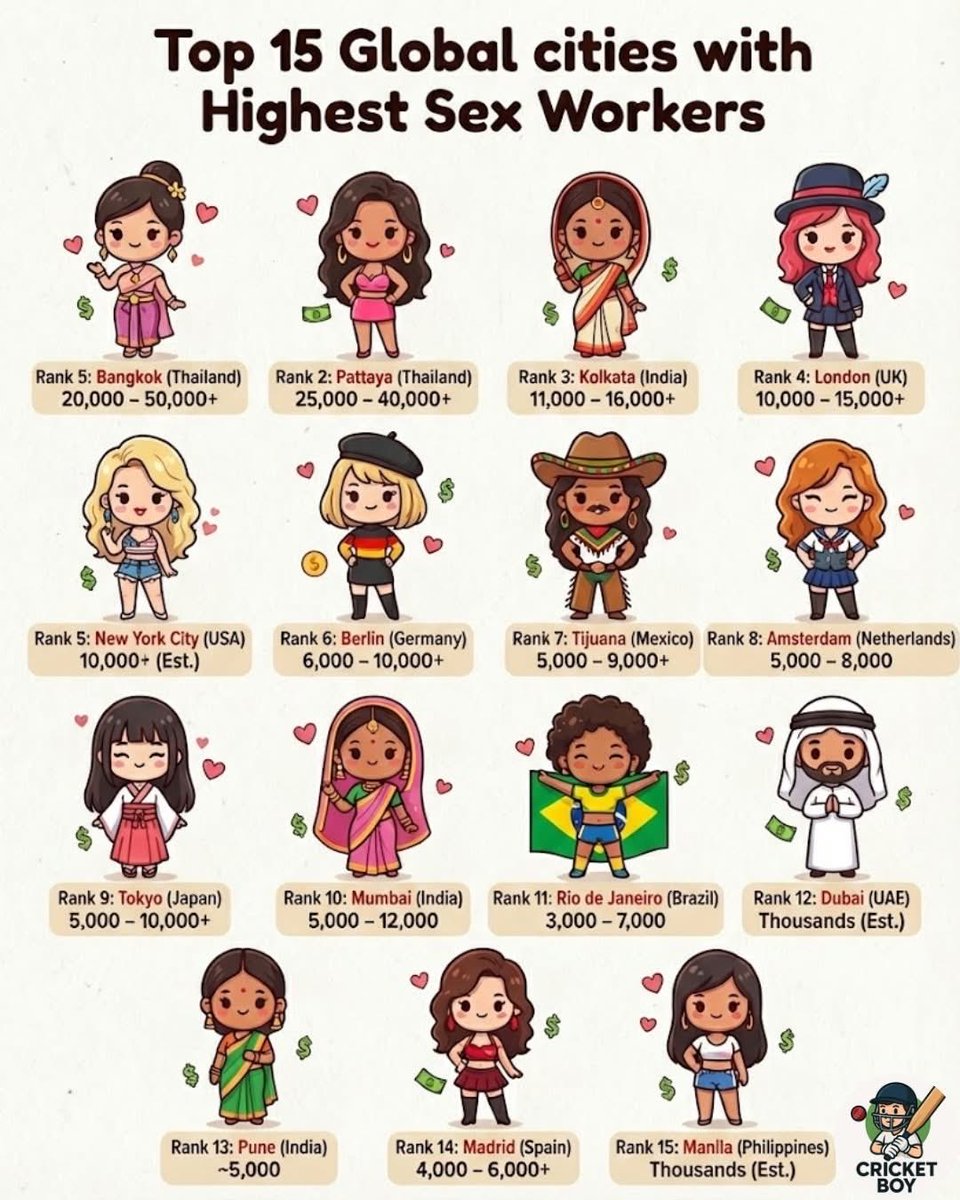
🌃 Top 15 global cities with highest sex workers
1.🇹🇭 Pattaya, Thailand — 25,000–40,000+
2.🇮🇳 Kolkata, India — 11,000–16,000+
3.🇬🇧 London, United Kingdom — 10,000–15,000+
4.🇹🇭 Bangkok, Thailand — 20,000–50,000+
5.🇺🇸 New York City, United States — 10,000+ (est.)
6.🇩🇪 Berlin, Germany — 6,000–10,000+
7.🇲🇽 Tijuana, Mexico — 5,000–9,000+
8.🇳🇱 Amsterdam, Netherlands — 5,000–8,000
9.🇯🇵 Tokyo, Japan — 5,000–10,000+
10.🇮🇳 Mumbai, India — 5,000–12,000
11.🇧🇷 Rio de Janeiro, Brazil — 3,000–7,000
12.🇦🇪 Dubai, United Arab Emirates — Thousands (est.)
13.🇮🇳 Pune, India — ~5,000
14.🇪🇸 Madrid, Spain — 4,000–6,000+
15.🇵🇭 Manila, Philippines — Thousands (est.)
🖇️ Source: Various estimates compiled from public reports and studies
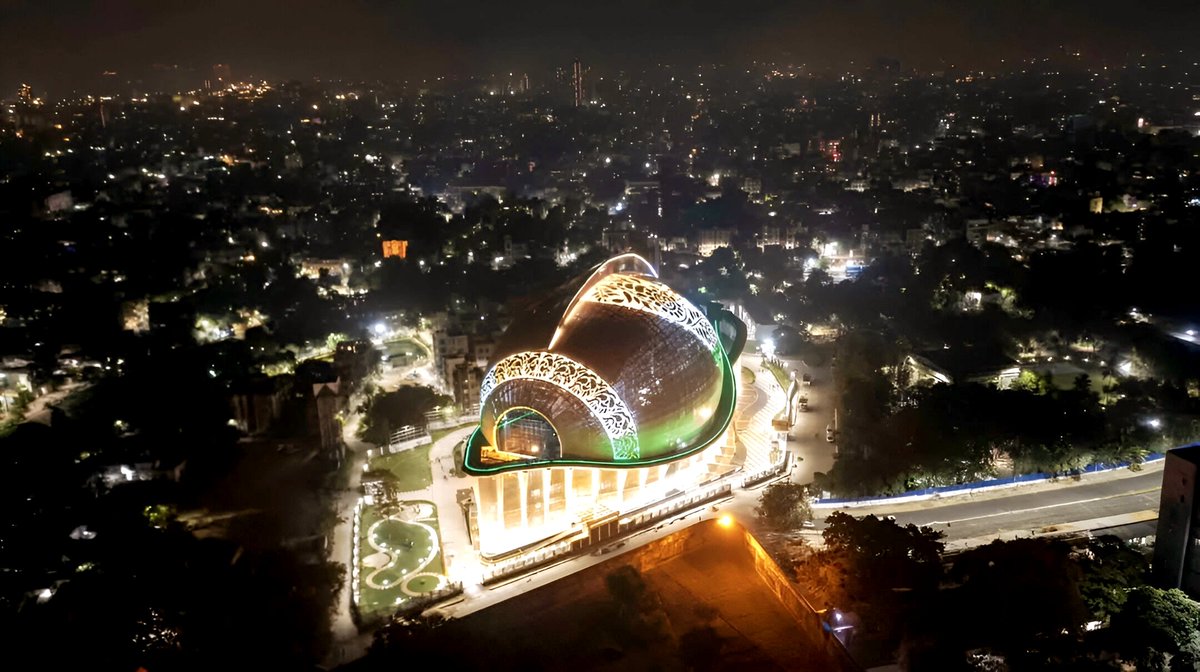
𝗕𝗲𝗻𝗴𝗮𝗹 𝗲𝗺𝗲𝗿𝗴𝗲𝘀 𝗮𝘀 𝗜𝗻𝗱𝗶𝗮'𝘀 𝘁𝗼𝗽 𝗠𝗜𝗖𝗘 𝗱𝗲𝘀𝘁𝗶𝗻𝗮𝘁𝗶𝗼𝗻.
Bengal has emerged as India’s top Meetings, Incentives, Conferences, and Exhibitions (MICE) destination with 1,200 events and more than ₹1,100 crore in business in 2025–26. Bengal already has the 2nd highest Foreign Tourist Arrival (FTA), wherein the highest foreign visitor footprints have come from the USA, Russia, Italy, the UK, and Nepal, underscoring rising global interest even without direct flight links.
Government of West Bengal has been prioritizing heritage tourism, culinary tourism, and sustainable tourism to safeguard its ecologically fragile zones. Bengal’s five diverse geographical zones, coupled with its status as a cultural powerhouse, are being effectively amplified by the state government to strengthen the tourism sector.