Or maybe, hear me out:
There is an identity crisis stemming from women empowerment & gender roles in that dynamic but also the institutional erosion of the role of marriage in building wealth, happening simultaneously.
Some people are marrying for love & forgetting there is a future to build where 2 masons are better than one.
So now empowered women want equal pay but also want to keep their pay so that the man spends his on them cos that’s what they saw their fathers doing in the house when their moms weren’t liberated from the shackles of patriarchy, while the men expect the women to still play house how their moms did.
It’s layered like an onion.
@kamauwaruhiu and then when they leave and go to university they become absolutely wild and then carry the trauma or whatever it is to their marriages.
Men,
In addition,
If you are the lastborn,
Be a responsible man.
Your parents & the homestead are your responsibilities.
It is the reason in Afrikan culture, the lastborn remains to inherit the home while elder brothers emigrate outside the homestead.
#MasculinitySaturday
At the end of the video you conveniently ignored where a guy says “hatakangi corruption” and that should have been the highlight of your video and tweet but, of course, let’s hype questionable characters and throw mud at ethical ones.
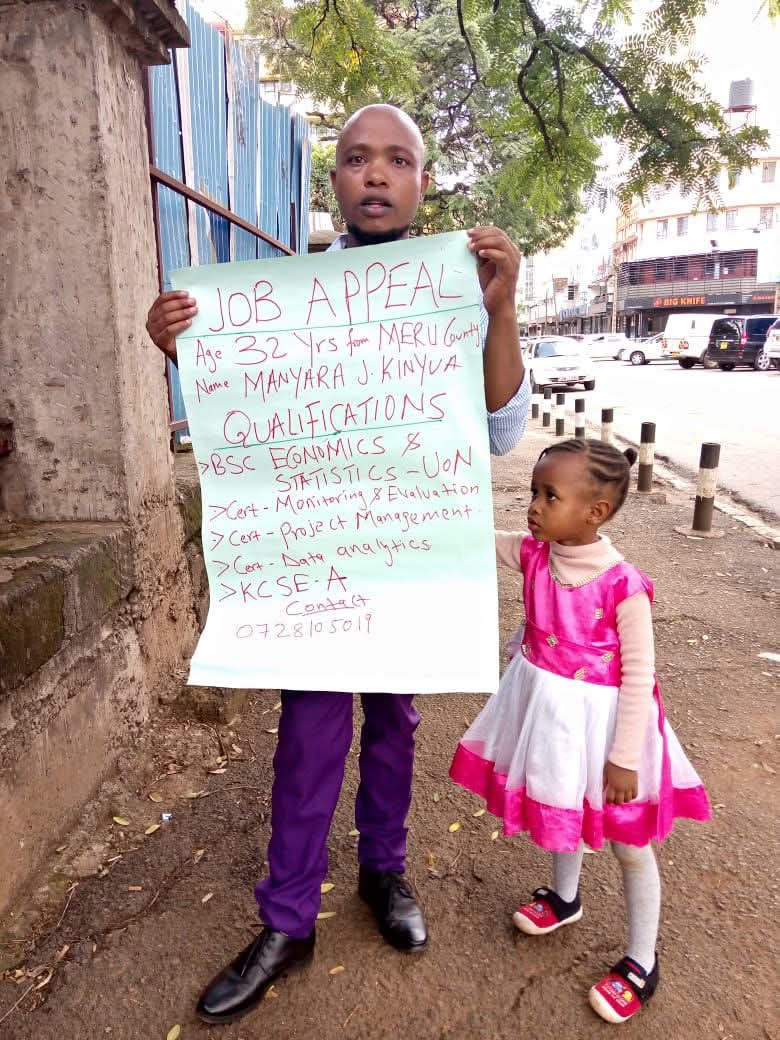
The life of a graduate is harder because of high expectations. A form 4 leaver knows he is just him against the world and that no one is coming to save him so he will take any job available.
Graduates on the other hand are selective and have some entitlement (ofcourse as a graduate you deserve to have some entitlement) and that is what makes the job market challenging for them.
Kenyan economy is more of manual labour which is paid peanuts thus discouraging graduates.
Financial Firm M-Kopa Under Fire Again for Holding Devices Hostage After Payment
Micro-loan-based digital retailer is once again at the centre of a dispute after a client who completed payments for a smartphone found that the company had refused to remove the device from its control system.
The client, having met every financial obligation as stipulated in the repayment plan, expected to regain full and unrestricted ownership of the device.
Seeking clarity, the customer engaged with the company’s support team, only to be informed that this policy was non-negotiable.
The reasoning provided was vague, with representatives merely stating that this was a standard requirement.
Despite repeated attempts to challenge this condition, the company remained resolute, maintaining that the software would remain embedded within the device for the stipulated period.
"Hi Nyakundi. I have finished paying for my phone from M-Kopa, but they have refused to unlock it. When I asked them to remove their control, they told me their app must remain on my phone for another year because of 'company policy.' I have cleared the full amount, yet they are still holding onto my device. This is exploitation. Why should they keep controlling a phone I have fully paid for?"
This incident exposes a broader pattern of predatory practices that have been repeatedly brought to light by aggrieved customers.
Many who enter into these financial arrangements do so under the belief that they are securing a straightforward path to ownership.
However, as numerous cases have illustrated, repayment does not always translate into autonomy.
Customers have previously reported similar experiences, where even after completing payments, the company continued to exercise control over their devices.
Some have found themselves subjected to unexplained deductions, while others have been locked out of their phones over trivial disputes.
Those who dare to question these irregularities are often met with automated responses and an arduous customer service process designed to exhaust their patience rather than resolve their complaints.
The firm relies on a micro-loan model that promises affordability and accessibility but has instead been criticized for imposing layers of control that extend beyond repayment.
Customers who enter these agreements under the impression that they are gradually earning full ownership frequently discover hidden conditions that limit their autonomy.
This latest case is just one among many complaints that have surfaced regarding the company’s treatment of customers.
Previous reports have detailed how users who had completed payments continued to experience remote restrictions on their devices, leaving them unable to use them freely.
Complaints about excessive penalties, prolonged device lockouts, and an inability to remove the company’s proprietary software have been raised repeatedly.
Beyond customers, the company has also been accused of mistreating its employees, with numerous reports detailing poor working conditions, toxic management, and exploitative labour policies.
Warehouse workers, many of whom are hired through outsourcing agencies, have described harsh conditions, including gruelling shifts that stretch beyond contracted hours without additional pay.
Workers have repeatedly called for fair compensation, with some claiming they are forced to endure unpaid overtime and unrealistic performance targets.
Internal accounts from employees paint a picture of an organisation where intimidation is a management tool.
Reports of workplace bullying, suppression of grievances, and preferential treatment in promotions have surfaced, creating an environment where workers feel powerless.
Several employees have revealed that promotions are often granted based on personal relationships rather than competence, leaving those with genuine qualifications sidelined.
In addition to mistreatment within the workplace, the company has also been entangled in financial disputes with authorities.
It has been locked in a long-running battle with the Kenya Revenue Authority (KRA) over a Ksh 308.5 million tax dispute, raising questions about its financial transparency.
The company had argued that its tax obligations were inflated due to unpaid debts from customers who had defaulted on credit-based purchases.
However, investigations suggested that the number of defaulters was far lower than what the company had presented, leading to suspicions that it may have exaggerated figures to justify tax deductions.
Regulators initially ruled in the company's favour, citing the costs of recovering debts as too high but industry insiders have questioned these claims, pointing out discrepancies in how the company reported its liabilities.
Documents suggested that the firm included customers who had purchased electric bikes on credit in its debtor records, a move that appeared to inflate losses artificially.
KRA has since considered escalating the matter further, with a possible legal challenge looming.
Even as the company maintains a carefully curated public image, the persistent reports of mistreatment, control over consumer-owned devices and financial opacity suggest deeper systemic issues.
Customers and employees alike have repeatedly voiced frustrations but little has changed.
The absence of strong regulatory intervention has allowed these problems to persist, leaving many wondering if accountability will ever be enforced.
Kama hamuwezi okoa mtu anakosa 30 bob kwa gari mtaokoa aje hii nchi? Kama hamuwezi okoa mtu anaporwa na wezi CBD mchana mtaokoa aje hii nchi? It's the little things that matter