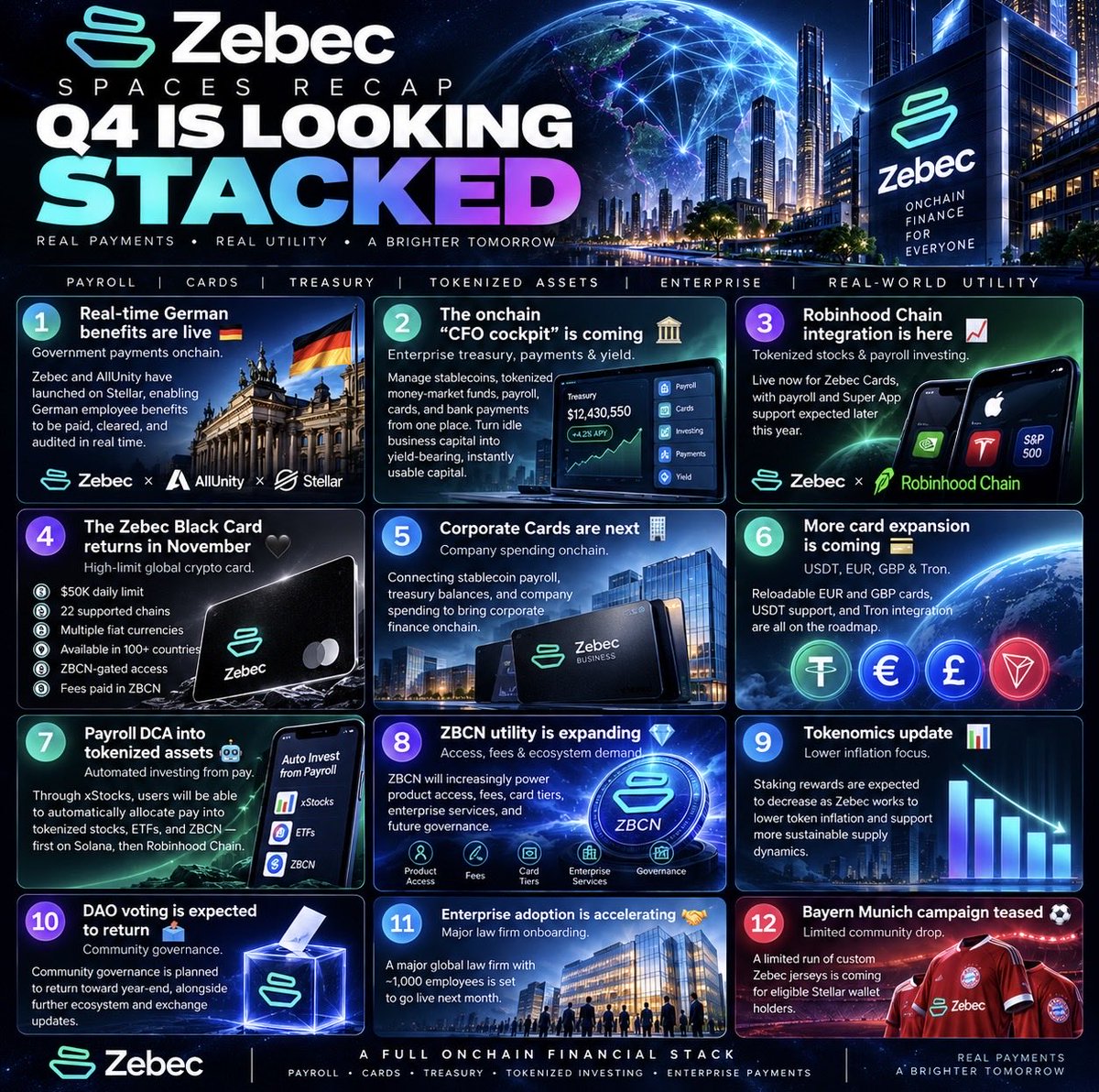
ZEBEC Q4 IS LOOKING STACKED.
This is bigger than one product or one announcement. @Zebec_HQ is building an increasingly connected financial ecosystem spanning real time payroll, enterprise treasury, cards, tokenized assets, automated investing, and solana:ZBCNpuD7YMXzTHB2fhGkGi78MNsHGLRXUhRewNRm9RU utility.
German employee benefits onchain
Enterprise “CFO cockpit” coming
Robinhood Chain integration
Black Card returning
Corporate Cards ahead
Payroll DCA into tokenized assets
Expanding ZBCN utility
DAO governance planned to return
Continued enterprise expansion
The bigger picture is what has me excited: payroll → treasury → investing → spending, all becoming increasingly connected through one ecosystem.
Q4 is shaping up to be a major chapter for Zebec.
Real payments. Real utility.
⚖️ A major law firm is coming onto Zebec rails.
$ZBCN #Zebec 🏴☠️⛵️
@Zebec_HQ@simonb_ldn says a global law firm with about 1,000 employees and 16 offices goes live on Zebec early next month. It's the first of several large enterprises onboarding, and case studies are coming on contractor payments, government benefits, and other on-chain uses.
Why it matters: a law firm running payroll and payments on-chain is serious enterprise validation, well beyond crypto-native clients.
🎥 @Zebec_HQ Community Check-In Space.
NFA(of course)
Euro and pound spending comes to Zebec cards
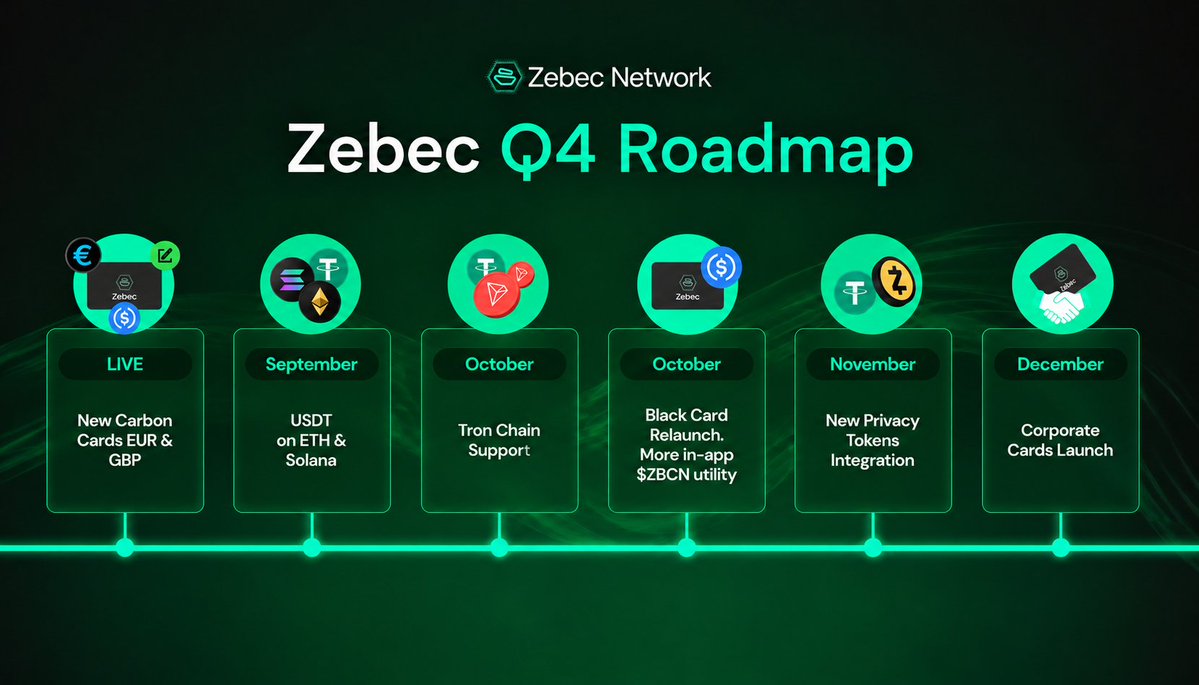
@Zebec_HQ has made its reloadable Carbon card available in euros and pounds; until now, it was only in US dollars. It kicks off the Q4 roadmap for its crypto cards.
Tron support and a Black Card relaunch with more $ZBCN uses are set for October, followed by privacy token integration in November and then corporate cards in December.
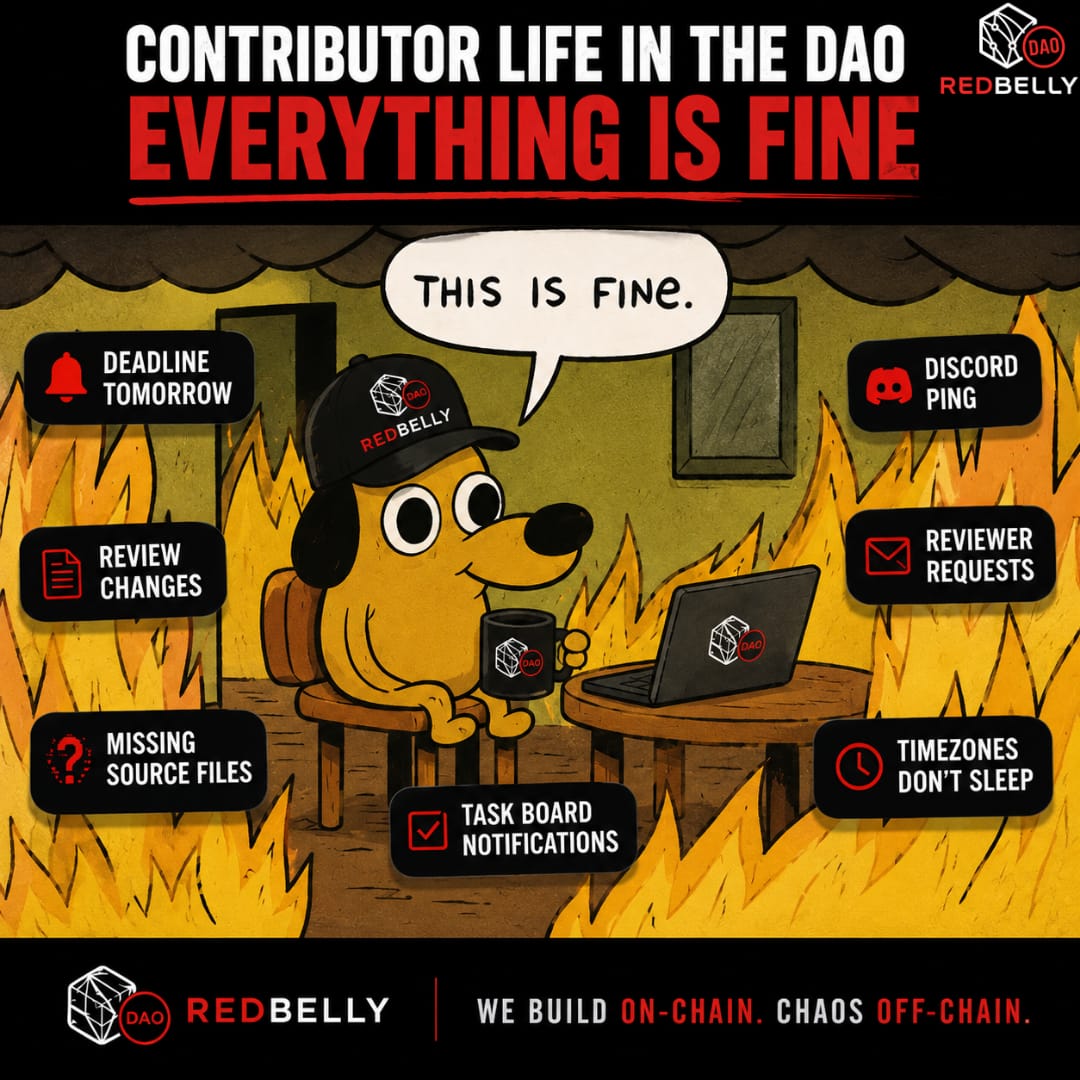
A strong community needs more than code. It needs people creating, sharing, and giving others something to build on.
The Meme & Social Asset Pack brings a collection of creative assets to the Redbelly DAO community.
It gives community members something practical to work with when creating content and joining conversations around Redbelly.
Explore Here: https://t.co/LiLmTNuM0x
Github Repo: https://t.co/Q87qVTmrQv
The Q4 roadmap for Zebec Cards is set. 📍
From Carbon Cards in EUR and GBP, now live, to Corporate Cards planned for December, here’s what’s coming to @ZebecCards through the end of 2026.
Catch the full breakdown in today’s Community Check-In.
Nothing alarming for the moment on $SEI 🫡
We’re catching our breath after smashing the existence of the bears into a thousand pieces 😂
#SEI is destined to prices much higher than these and the community that is with me knows it well 🚀
@SeiNetwork
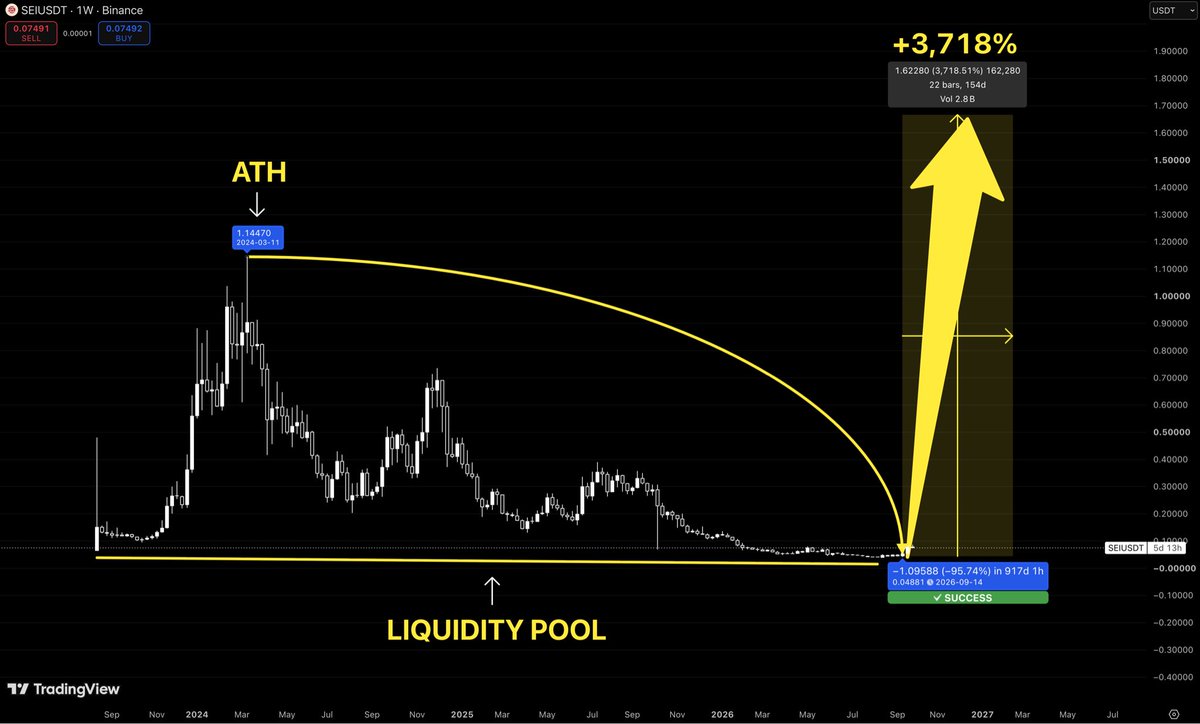
$SEI has already lost 95%+ from ATH.
And somehow people still think the biggest risk is buying down here.
This entire structure has been one long bleed back into the same liquidity zone.
$SEI sitting near the bottom while everyone has basically written it off.
If this zone holds and the cycle finally flips
the upside gets stupid very quickly.
ATH is around $1.14.
My larger expansion target puts $SEI around +3,700% from the lows.
This is exactly where I want to be watching it.
Not after the green candles arrive.
SEI is building something much bigger than just another Layer-1.
One of the people behind the project is Jayendra “Jay” Jog, Co-Founder of Sei Labs. Before Sei, Jay worked as an engineer at SAP, Facebook, Pinterest and Robinhood, where he gained experience with large-scale technology and trading infrastructure. He has also been recognized on the Forbes 30 Under 30 list.
That background matters because Sei has a very clear focus: building extremely high-performance blockchain infrastructure for trading, DeFi and other high-throughput applications.
Sei V2 introduced a parallelized EVM, allowing independent transactions to execute simultaneously rather than processing everything sequentially. Sei is now taking that architecture much further with Sei Giga.
Giga is designed around a completely new performance architecture, including:
• Multi-proposer consensus
• Asynchronous execution
• A new EVM execution client
• Optimized storage
• Faster data propagation
• Ethereum/EVM compatibility
The stated Giga targets are around 5 gigagas per second, 200,000+ TPS and sub-400ms finality, with the current roadmap targeting around 250ms finality. Sei has also reported achieving 5 gigagas in an internal 40-validator devnet test.
And then there is the ETF narrative.
Canary Capital has filed for a Canary Staked SEI ETF with the SEC. The proposed product would provide exposure to SEI while also incorporating staking. The latest SEC filing shows that the ETF process is still subject to regulatory effectiveness — it is not yet the same thing as final approval.
If an SEI ETF eventually becomes effective and begins attracting meaningful capital, it could give SEI a completely different level of exposure to traditional and institutional investors.
Combine that with:
⚡ Sei V2 and parallelized EVM
⚡ Giga and massive scalability ambitions
⚡ Extremely fast finality
⚡ Ethereum compatibility
⚡ Focus on trading and high-performance applications
⚡ Growing DeFi and stablecoin ecosystem
⚡ Institutional ETF narrative
⚡ A team with experience from companies such as Robinhood, Facebook and Pinterest
…and you have a very interesting setup.
The big question is not whether Sei can simply move from one price to another.
The bigger question is:
What happens if Sei actually becomes one of the major high-performance EVM networks while Giga delivers on its targets and institutional access through an ETF becomes reality?
At that point, SEI could potentially be valued very differently from where it is today.
Giga + EVM + DeFi + trading infrastructure + institutional access = a combination worth watching closely.
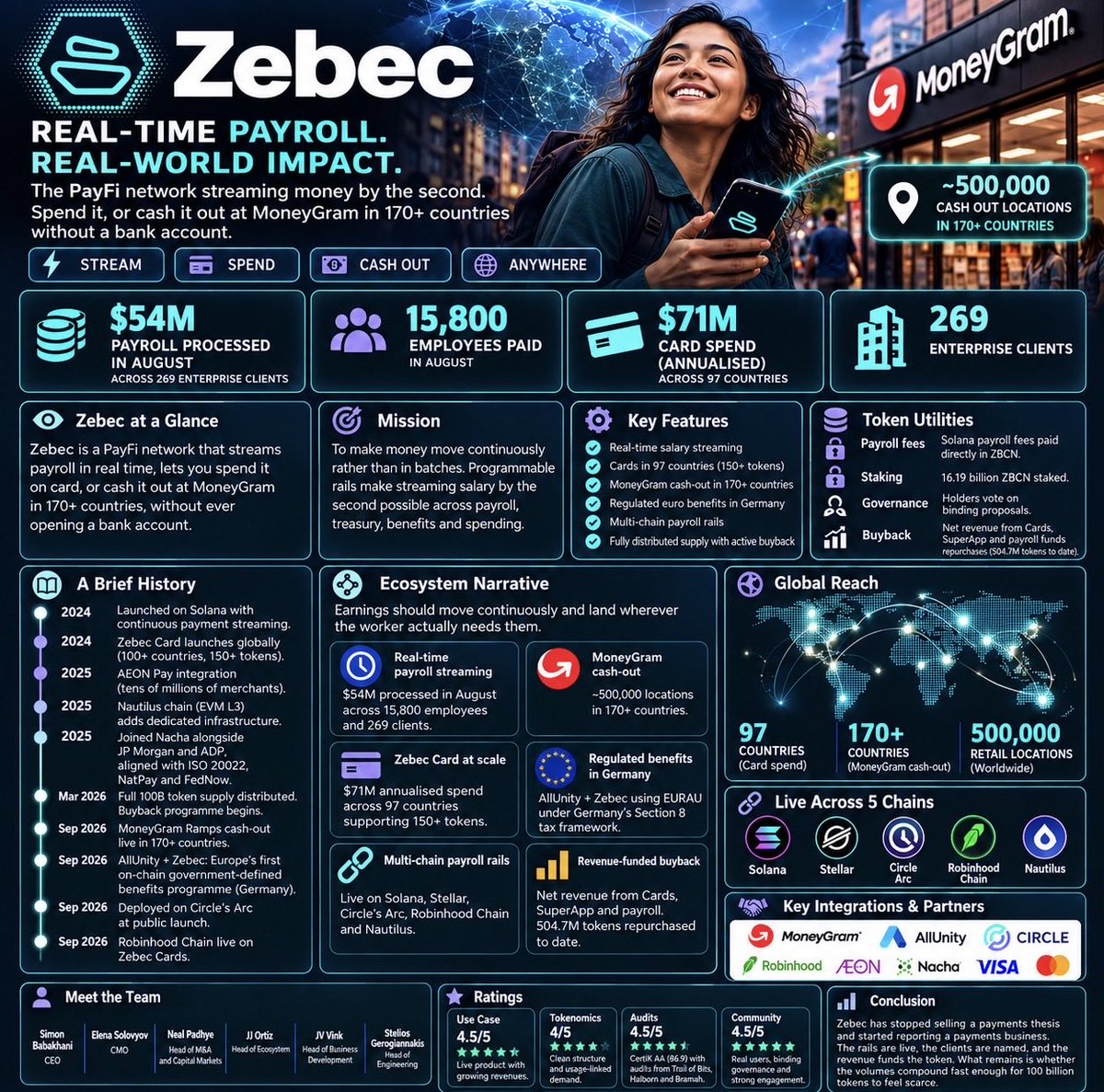
Zebec is moving beyond the promise of PayFi and showing what real-world payment infrastructure can look like.
Real time payroll
$54M monthly payroll volume
15,800 employees
269 enterprise clients
💳 $71M annualized card volume across 97 countries
MoneyGram cash out access across 170+ countries
Expanding multichain infrastructure
504.7M+ ZBCN repurchased
This is bigger than one product. It’s an ecosystem connecting earn → stream → spend → cash out across the globe.
The most exciting part? The infrastructure is being measured by real usage, real volume, and real enterprise activity.
Money should move as fast as the internet. 🌐 @Zebec_HQ | solana:ZBCNpuD7YMXzTHB2fhGkGi78MNsHGLRXUhRewNRm9RU
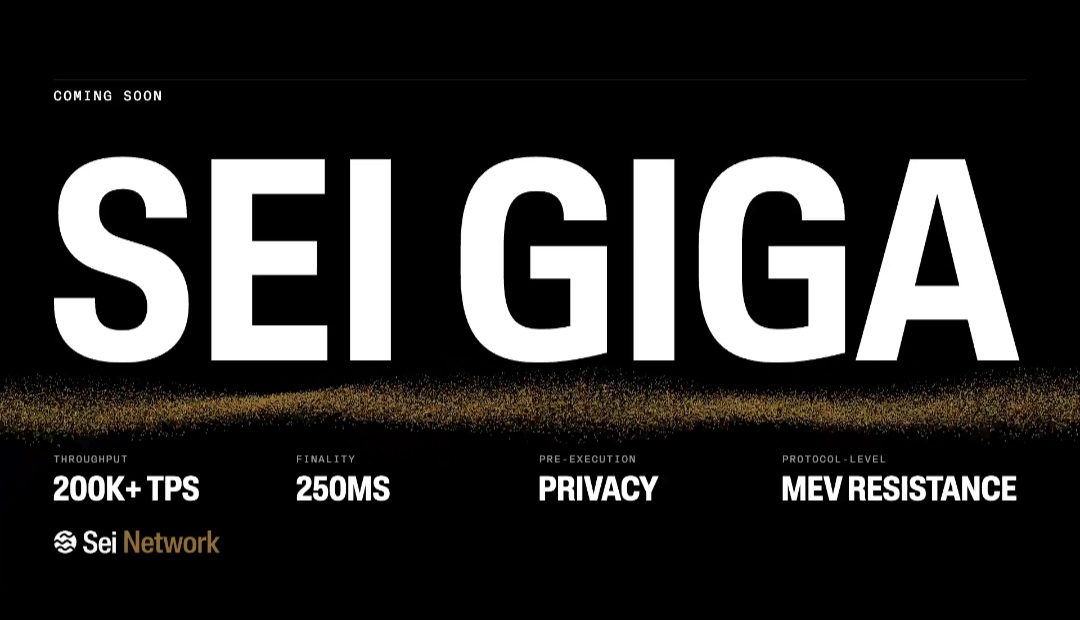
⚡ $SEI GIGA IS BUILT FOR EXTREME SCALE
Sei is targeting 200K+ TPS with around 250ms finality, while also adding privacy and stronger protocol resilience.
That is a serious performance target.
$SEI is clearly positioning Giga as the next major step for high-speed onchain finance.
$ZBCN : Review 📜
What if your salary arrived every second you worked, and you could spend it or cash it out at a MoneyGram counter in 170 countries without ever opening a bank account?
Meet Zebec, a PayFi network that streams payroll in real time rather than settling it monthly. It processed $54 million in payroll across 269 enterprise clients in August, its cards run at a $71 million annualised pace across 97 countries, and in September it deployed on Circle's Arc on launch day.
Let's explore the payments network that stopped announcing and started reporting. 👇
⚪ Zebec at a Glance
Marketplace Insight: Zebec occupies the part of crypto that has to work rather than merely launch, since payroll either arrives or it does not and employees notice immediately. What separates it from the payments field is that it now reports operating figures instead of partnership counts: monthly payroll volume, employee headcount, enterprise client numbers, card spend pace, and cumulative buyback.
September added the two pieces that make streamed stablecoin salary actually usable, with MoneyGram providing cash-out across roughly 500,000 retail locations in 170-plus countries and AllUnity running Europe's first on-chain government-defined benefits programme under German tax law. The clean contrast is that the rails are demonstrably live while the token still depends on those volumes compounding enough for buybacks to matter against a fully distributed 100 billion supply.
⚪ Mission
Zebec exists to make money move continuously rather than in batches. The argument is that the monthly pay cycle is an artefact of paper accounting, that it forces workers into payday loans and overdrafts for timing reasons rather than affordability ones, and that programmable rails make streaming salary by the second technically trivial. The broader goal extends that logic across treasury, benefits, and spending, so earnings can be streamed, held, spent on a card, or cashed out locally without a bank account in the middle.
🔵 A Brief History
Zebec launched on Solana around the idea of continuous payment streaming rather than discrete transfers. The early product was payroll: employers fund a stream, employees accrue salary by the second, and funds are withdrawable at any point rather than on a fixed date.
The network expanded outward from there. Zebec Card launched across 100-plus countries on Mastercard and Visa rails, letting users spend crypto balances directly, and grew to support more than 150 tokens.
AEON Pay integration opened a merchant network measured in the tens of millions. The Nautilus chain, an EVM Layer 3, added dedicated infrastructure, and Zebec joined Nacha alongside JP Morgan and ADP as an industry association member, aligned with ISO 20022 and connected to NatPay and FedNow rails.
March 2026 completed the token distribution, with the final unlock leaving the full 100 billion supply circulating and no overhang remaining. The buyback programme began with Zebec Card revenue and later widened to include net revenue from Cards, the SuperApp, and payroll, with Solana payroll fees paid directly in ZBCN and fees from other chains feeding the same mechanism.
September 2026 was the month the rails and the reporting both matured. On the 9th, MoneyGram Ramps became the first fiat off-ramp in the Stellar enterprise payroll product, giving recipients cash-out access across roughly 500,000 retail locations in over 170 countries, which completes a path from employer stream to employee wallet to either card spend or local cash without a bank account. On the 14th the team published analysis of the CLARITY Act's implications for enterprise adoption. The 15th and 16th brought deployment of the payroll and payments stack on Circle's Arc mainnet at public launch, Zebec having already participated in the Circle Alliance and Arc testnet.
Also on the 16th, AllUnity and Zebec went into production on Stellar with Europe's first on-chain deployment of a government-defined employee benefits programme, using the regulated euro stablecoin EURAU under Germany's Section 8 tax framework, letting employers fund tax-favourable non-cash benefits on-chain.
The 18th brought the August operating figures. The 22nd and 23rd reported 15 live enterprise accounts and over $5 million in payroll volume on Stellar within three months, alongside a binding governance vote on rewards pool distribution that closed on the 25th. Robinhood Chain went live on Zebec Cards on the 24th, framed as the first step toward spending tokenized equities in everyday transactions, and the month closed with a community call on two new card products for Q4.
🔵 Ecosystem Narrative
The organizing idea is that earnings should move continuously and land wherever the worker actually needs them.
➛ Real-time payroll streaming. Salaries accrue by the second rather than monthly, with $54 million processed in August across 15,800 employees and 269 enterprise clients, removing the timing gap that drives short-term borrowing.
➛ Cash-out through MoneyGram. Stablecoin payroll can be withdrawn at roughly 500,000 MoneyGram locations across 170-plus countries, which is what makes streamed salary usable for workers without bank accounts.
➛ Zebec Card at scale. A $71 million annualised spend pace across 97 countries on Mastercard and Visa rails, supporting more than 150 tokens across multiple chains, with Robinhood Chain assets added in September and two new card products queued for Q4.
➛ Regulated benefits in Germany. AllUnity and Zebec deployed Europe's first on-chain government-defined employee benefits programme on Stellar, using the regulated EURAU stablecoin under Germany's Section 8 tax framework.
➛ Multi-chain payroll rails. Live across Solana, Stellar, Circle's Arc from launch day, Robinhood Chain, and Nautilus, so enterprises settle wherever their treasury and their workforce sit.
➛ Revenue-funded buyback. Net revenue from Cards, the SuperApp, and payroll all feed the buyback, with Solana payroll fees paid directly in ZBCN, cumulatively repurchasing 504.7 million tokens.
⚪ Token Utilities
$ZBCN is the utility and governance token of a fully distributed supply.
➛ Payroll fees: Solana payroll fees are paid directly in ZBCN, creating usage-linked demand.
➛ Staking: 16.19 billion ZBCN staked, removing a meaningful share of supply from circulation.
➛ Governance: holders vote on binding proposals including the September vote on rewards pool distribution methodology.
➛ Buyback: net revenue from Cards, SuperApp, and payroll funds open-market repurchases, totalling 504.7 million tokens to date.
⚪ Key Features
➛ Real-time salary streaming with continuous accrual rather than monthly settlement.
➛ Cards live across 97 countries supporting 150+ tokens on Mastercard and Visa rails.
➛ MoneyGram cash-out across 170+ countries and roughly 500,000 locations.
➛ Regulated euro benefits under German tax law via EURAU on Stellar.
➛ Deployment on Circle's Arc from public launch, alongside Solana, Stellar, and Robinhood Chain.
➛ Fully distributed supply with an active revenue-funded buyback.
🔵 Meet the Team
Zebec is run by operators drawn from payments and enterprise sales rather than crypto-native backgrounds, which shows in a product line built around what finance departments actually buy.
➛ Simon Babakhani [ @simonb_ldn ] - CEO | Runs the company through its shift from a Solana-native protocol into a multi-chain enterprise payments business with named corporate clients and disclosed operating figures.
➛ Elena Solovyov [ @esolovyov ] - CMO | Leads marketing and communications, carrying a product story spanning payroll, cards, benefits, and treasury across audiences that range from CFOs to cardholders.
➛ Neal Padhye - Head of M&A and Capital Markets | Drives corporate development and the institutional relationships behind the network's capital markets positioning.
➛ JJ Ortiz - Head of Ecosystem | Owns ecosystem growth and is among the most reachable people in the network, consistently first to answer a question in the channels and quick to help newcomers work out how streaming payroll, cards, and staking actually fit together. That a project with rails across five chains and 269 enterprise clients still keeps a direct line open to ordinary holders is largely downstream of that.
➛ JV Vink [ @JV_Vink ] - Head of Business Development | Owns the partnership pipeline behind MoneyGram, AllUnity, Circle, and the enterprise client base now numbering 269.
➛ Stelios Gerogiannakis - Head of Engineering | Owns technical delivery behind payroll rails now running on Solana, Stellar, Circle's Arc, Robinhood Chain, and Nautilus simultaneously, with Arc deployed at public launch.
🔵 Ratings
➛ Use Case: ★★★★⯪ (4.5/5). Zebec is doing the version of crypto payments that has to actually work, and it now publishes numbers rather than partnerships. $54 million in monthly payroll across 269 enterprise clients and 15,800 employees, cards at a $71 million annualised pace across 97 countries supporting 150-plus tokens, and 15 live enterprise accounts on Stellar inside three months. September closed the loop that mattered most, with MoneyGram cash-out across 170-plus countries meaning streamed stablecoin salary reaches workers without bank accounts, and AllUnity running Europe's first on-chain government-defined benefits programme under German tax law. Deploying on Circle's Arc at public launch shows genuine speed. The 0.5-point deduction is that the operating figures are self-reported rather than independently audited, and payments is a brutally competitive category where incumbents move slowly but move.
➛ Tokenomics: ★★★★ (4/5). The structure is unusually clean. The full 100 billion supply has been circulating since March 2026, so there is no unlock overhang, no vesting cliff, and no treasury able to dump. Demand is genuinely usage-linked: Solana payroll fees are paid directly in ZBCN, 16.19 billion tokens are staked and therefore out of float, and the buyback has repurchased 504.7 million tokens funded by net revenue across three product lines rather than one. Governance is binding and active. The 1-point deduction is scale against supply. A 100 billion circulating supply means even a growing buyback moves the needle slowly, the repurchase total represents roughly half a percent of supply, and the mechanism depends on payroll and card volumes compounding considerably from here.
➛ Audits: ★★★★⯪ (4.5/5). Zebec holds a verified CertiK Skynet Score of 86.9, grade AA, which is a genuine top-tier score and the bar for this tier, alongside audits from Trail of Bits, Halborn, and Bramah. That is three named firms plus a verified AA, one of the deeper security stacks in this series, and appropriate for a protocol moving real payroll for named enterprises. The network has operated across multiple chains without a headline exploit. The 0.5-point deduction is that the real risk surface extends well beyond contracts into card issuing, fiat off-ramp partners, and the regulated benefits infrastructure in Germany, none of which a smart contract audit reaches.
➛ Community: ★★★★⯪ (4.5/5). Zebec's community is unusually substantive because much of it consists of people being paid through the network rather than speculating on it. 269 enterprise clients and 15,800 employees receiving salary is a constituency with genuine operational dependency, which is far stickier than holder counts. Governance functions properly, with a binding September vote putting a real methodology question on rewards pool distribution to holders rather than rubber-stamping. Consumer reach is real too, through Bayern Munich and Bundesliga matchday sponsorships and Tangem hardware wallet collaborations, and 16.19 billion ZBCN staked reflects holders willing to lock up rather than trade. The 0.5-point deduction is that retail engagement still concentrates around buyback announcements and card launches, and the market cap sits modest relative to the operating figures being reported.
🔵 Conclusion
Zebec has stopped selling a payments thesis and started reporting a payments business. $54 million in monthly payroll, 269 enterprise clients, 15,800 employees paid, cards running at a $71 million annualised pace across 97 countries.
September added the pieces that make streamed stablecoin salary genuinely usable: MoneyGram cash-out across 170 countries for workers without bank accounts, and a regulated euro benefits programme running under German tax law. Deploying on Circle's Arc at public launch, alongside Solana, Stellar, and Robinhood Chain, shows a team that ships where the money is going.
The bull case is unusually concrete for this sector. Zebec is not waiting for adoption, it is invoicing for it, and the September integrations turned a crypto payroll product into something a worker in a country without reliable banking can actually use.
The rails are live, the clients are named, and the revenue funds the token. What remains is whether the volumes compound fast enough for 100 billion tokens to feel scarce.
$SEI is positioning its ecosystem around high-performance financial applications.
The network's architecture is designed for fast transaction processing and trading-focused use cases.
Crypto infrastructure is increasingly becoming specialized.
Some chains want to be financial execution layers.
#SEI #Crypto #DeFi #Trading #Web3
JUST IN: @SeiNetwork has surpassed 2.63 billion transactions processed since its mainnet launch in 2023.
The scalability-focused EVM blockchain has reached this milestone in roughly three years, putting its transaction count among the notable figures across the crypto sector. For comparison, @Ethereum mainnet has recorded around 3.75 billion transactions over more than 11 years.
The figures highlight the rapid transaction growth Sei has achieved since going live.
Don’t forget this base:0x09be1692ca16e06f536f0038ff11d1da8524adb1 Fam
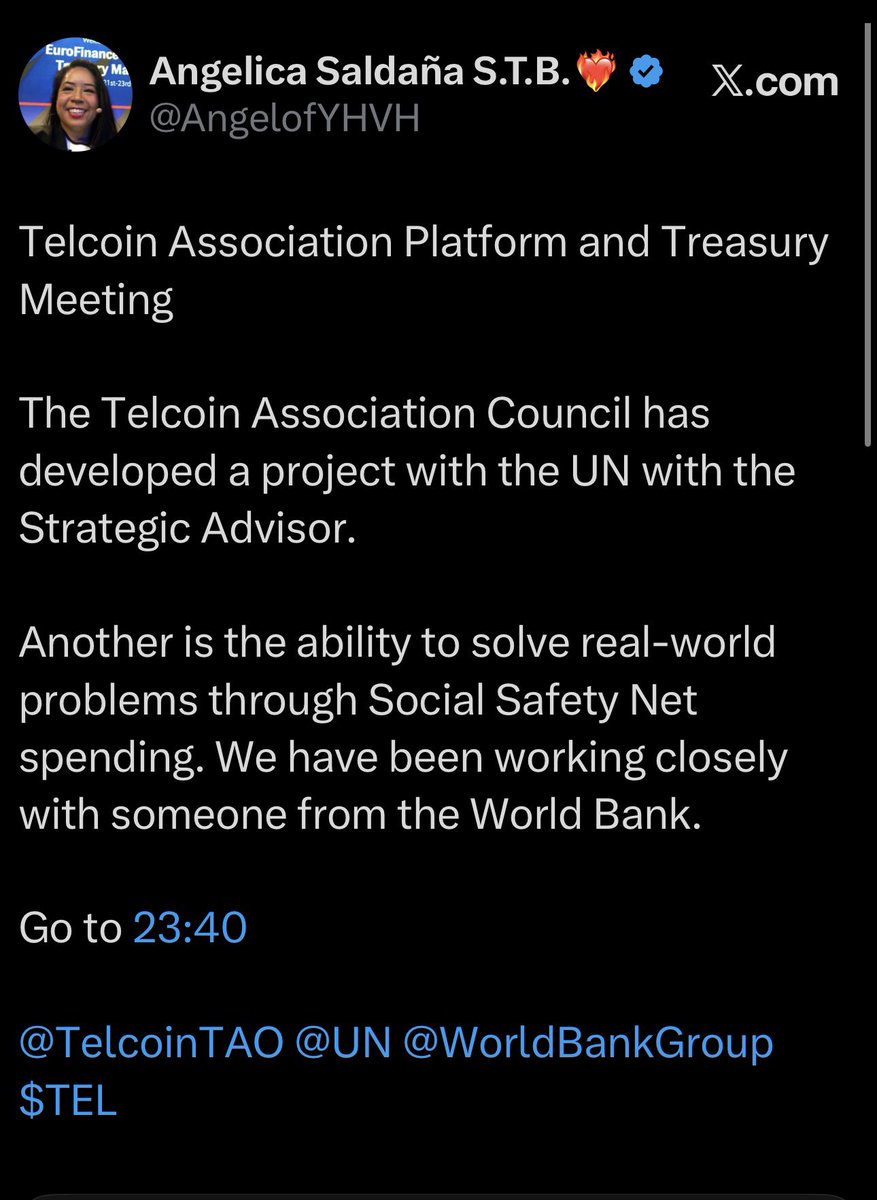
Telcoin Association Platform and Treasury Meeting
The Telcoin Association Council has developed a project with the UN with the Strategic Advisor.
Another is the ability to solve real-world problems through Social Safety Net spending. We have been working closely with someone from the World Bank.
@LordVXrp







![0xchainink's tweet photo. $ZBCN : Review 📜
What if your salary arrived every second you worked, and you could spend it or cash it out at a MoneyGram counter in 170 countries without ever opening a bank account?
Meet Zebec, a PayFi network that streams payroll in real time rather than settling it monthly. It processed $54 million in payroll across 269 enterprise clients in August, its cards run at a $71 million annualised pace across 97 countries, and in September it deployed on Circle's Arc on launch day.
Let's explore the payments network that stopped announcing and started reporting. 👇
⚪ Zebec at a Glance
Marketplace Insight: Zebec occupies the part of crypto that has to work rather than merely launch, since payroll either arrives or it does not and employees notice immediately. What separates it from the payments field is that it now reports operating figures instead of partnership counts: monthly payroll volume, employee headcount, enterprise client numbers, card spend pace, and cumulative buyback.
September added the two pieces that make streamed stablecoin salary actually usable, with MoneyGram providing cash-out across roughly 500,000 retail locations in 170-plus countries and AllUnity running Europe's first on-chain government-defined benefits programme under German tax law. The clean contrast is that the rails are demonstrably live while the token still depends on those volumes compounding enough for buybacks to matter against a fully distributed 100 billion supply.
⚪ Mission
Zebec exists to make money move continuously rather than in batches. The argument is that the monthly pay cycle is an artefact of paper accounting, that it forces workers into payday loans and overdrafts for timing reasons rather than affordability ones, and that programmable rails make streaming salary by the second technically trivial. The broader goal extends that logic across treasury, benefits, and spending, so earnings can be streamed, held, spent on a card, or cashed out locally without a bank account in the middle.
🔵 A Brief History
Zebec launched on Solana around the idea of continuous payment streaming rather than discrete transfers. The early product was payroll: employers fund a stream, employees accrue salary by the second, and funds are withdrawable at any point rather than on a fixed date.
The network expanded outward from there. Zebec Card launched across 100-plus countries on Mastercard and Visa rails, letting users spend crypto balances directly, and grew to support more than 150 tokens.
AEON Pay integration opened a merchant network measured in the tens of millions. The Nautilus chain, an EVM Layer 3, added dedicated infrastructure, and Zebec joined Nacha alongside JP Morgan and ADP as an industry association member, aligned with ISO 20022 and connected to NatPay and FedNow rails.
March 2026 completed the token distribution, with the final unlock leaving the full 100 billion supply circulating and no overhang remaining. The buyback programme began with Zebec Card revenue and later widened to include net revenue from Cards, the SuperApp, and payroll, with Solana payroll fees paid directly in ZBCN and fees from other chains feeding the same mechanism.
September 2026 was the month the rails and the reporting both matured. On the 9th, MoneyGram Ramps became the first fiat off-ramp in the Stellar enterprise payroll product, giving recipients cash-out access across roughly 500,000 retail locations in over 170 countries, which completes a path from employer stream to employee wallet to either card spend or local cash without a bank account. On the 14th the team published analysis of the CLARITY Act's implications for enterprise adoption. The 15th and 16th brought deployment of the payroll and payments stack on Circle's Arc mainnet at public launch, Zebec having already participated in the Circle Alliance and Arc testnet.
Also on the 16th, AllUnity and Zebec went into production on Stellar with Europe's first on-chain deployment of a government-defined employee benefits programme, using the regulated euro stablecoin EURAU under Germany's Section 8 tax framework, letting employers fund tax-favourable non-cash benefits on-chain.
The 18th brought the August operating figures. The 22nd and 23rd reported 15 live enterprise accounts and over $5 million in payroll volume on Stellar within three months, alongside a binding governance vote on rewards pool distribution that closed on the 25th. Robinhood Chain went live on Zebec Cards on the 24th, framed as the first step toward spending tokenized equities in everyday transactions, and the month closed with a community call on two new card products for Q4.
🔵 Ecosystem Narrative
The organizing idea is that earnings should move continuously and land wherever the worker actually needs them.
➛ Real-time payroll streaming. Salaries accrue by the second rather than monthly, with $54 million processed in August across 15,800 employees and 269 enterprise clients, removing the timing gap that drives short-term borrowing.
➛ Cash-out through MoneyGram. Stablecoin payroll can be withdrawn at roughly 500,000 MoneyGram locations across 170-plus countries, which is what makes streamed salary usable for workers without bank accounts.
➛ Zebec Card at scale. A $71 million annualised spend pace across 97 countries on Mastercard and Visa rails, supporting more than 150 tokens across multiple chains, with Robinhood Chain assets added in September and two new card products queued for Q4.
➛ Regulated benefits in Germany. AllUnity and Zebec deployed Europe's first on-chain government-defined employee benefits programme on Stellar, using the regulated EURAU stablecoin under Germany's Section 8 tax framework.
➛ Multi-chain payroll rails. Live across Solana, Stellar, Circle's Arc from launch day, Robinhood Chain, and Nautilus, so enterprises settle wherever their treasury and their workforce sit.
➛ Revenue-funded buyback. Net revenue from Cards, the SuperApp, and payroll all feed the buyback, with Solana payroll fees paid directly in ZBCN, cumulatively repurchasing 504.7 million tokens.
⚪ Token Utilities
$ZBCN is the utility and governance token of a fully distributed supply.
➛ Payroll fees: Solana payroll fees are paid directly in ZBCN, creating usage-linked demand.
➛ Staking: 16.19 billion ZBCN staked, removing a meaningful share of supply from circulation.
➛ Governance: holders vote on binding proposals including the September vote on rewards pool distribution methodology.
➛ Buyback: net revenue from Cards, SuperApp, and payroll funds open-market repurchases, totalling 504.7 million tokens to date.
⚪ Key Features
➛ Real-time salary streaming with continuous accrual rather than monthly settlement.
➛ Cards live across 97 countries supporting 150+ tokens on Mastercard and Visa rails.
➛ MoneyGram cash-out across 170+ countries and roughly 500,000 locations.
➛ Regulated euro benefits under German tax law via EURAU on Stellar.
➛ Deployment on Circle's Arc from public launch, alongside Solana, Stellar, and Robinhood Chain.
➛ Fully distributed supply with an active revenue-funded buyback.
🔵 Meet the Team
Zebec is run by operators drawn from payments and enterprise sales rather than crypto-native backgrounds, which shows in a product line built around what finance departments actually buy.
➛ Simon Babakhani [ @simonb_ldn ] - CEO | Runs the company through its shift from a Solana-native protocol into a multi-chain enterprise payments business with named corporate clients and disclosed operating figures.
➛ Elena Solovyov [ @esolovyov ] - CMO | Leads marketing and communications, carrying a product story spanning payroll, cards, benefits, and treasury across audiences that range from CFOs to cardholders.
➛ Neal Padhye - Head of M&A and Capital Markets | Drives corporate development and the institutional relationships behind the network's capital markets positioning.
➛ JJ Ortiz - Head of Ecosystem | Owns ecosystem growth and is among the most reachable people in the network, consistently first to answer a question in the channels and quick to help newcomers work out how streaming payroll, cards, and staking actually fit together. That a project with rails across five chains and 269 enterprise clients still keeps a direct line open to ordinary holders is largely downstream of that.
➛ JV Vink [ @JV_Vink ] - Head of Business Development | Owns the partnership pipeline behind MoneyGram, AllUnity, Circle, and the enterprise client base now numbering 269.
➛ Stelios Gerogiannakis - Head of Engineering | Owns technical delivery behind payroll rails now running on Solana, Stellar, Circle's Arc, Robinhood Chain, and Nautilus simultaneously, with Arc deployed at public launch.
🔵 Ratings
➛ Use Case: ★★★★⯪ (4.5/5). Zebec is doing the version of crypto payments that has to actually work, and it now publishes numbers rather than partnerships. $54 million in monthly payroll across 269 enterprise clients and 15,800 employees, cards at a $71 million annualised pace across 97 countries supporting 150-plus tokens, and 15 live enterprise accounts on Stellar inside three months. September closed the loop that mattered most, with MoneyGram cash-out across 170-plus countries meaning streamed stablecoin salary reaches workers without bank accounts, and AllUnity running Europe's first on-chain government-defined benefits programme under German tax law. Deploying on Circle's Arc at public launch shows genuine speed. The 0.5-point deduction is that the operating figures are self-reported rather than independently audited, and payments is a brutally competitive category where incumbents move slowly but move.
➛ Tokenomics: ★★★★ (4/5). The structure is unusually clean. The full 100 billion supply has been circulating since March 2026, so there is no unlock overhang, no vesting cliff, and no treasury able to dump. Demand is genuinely usage-linked: Solana payroll fees are paid directly in ZBCN, 16.19 billion tokens are staked and therefore out of float, and the buyback has repurchased 504.7 million tokens funded by net revenue across three product lines rather than one. Governance is binding and active. The 1-point deduction is scale against supply. A 100 billion circulating supply means even a growing buyback moves the needle slowly, the repurchase total represents roughly half a percent of supply, and the mechanism depends on payroll and card volumes compounding considerably from here.
➛ Audits: ★★★★⯪ (4.5/5). Zebec holds a verified CertiK Skynet Score of 86.9, grade AA, which is a genuine top-tier score and the bar for this tier, alongside audits from Trail of Bits, Halborn, and Bramah. That is three named firms plus a verified AA, one of the deeper security stacks in this series, and appropriate for a protocol moving real payroll for named enterprises. The network has operated across multiple chains without a headline exploit. The 0.5-point deduction is that the real risk surface extends well beyond contracts into card issuing, fiat off-ramp partners, and the regulated benefits infrastructure in Germany, none of which a smart contract audit reaches.
➛ Community: ★★★★⯪ (4.5/5). Zebec's community is unusually substantive because much of it consists of people being paid through the network rather than speculating on it. 269 enterprise clients and 15,800 employees receiving salary is a constituency with genuine operational dependency, which is far stickier than holder counts. Governance functions properly, with a binding September vote putting a real methodology question on rewards pool distribution to holders rather than rubber-stamping. Consumer reach is real too, through Bayern Munich and Bundesliga matchday sponsorships and Tangem hardware wallet collaborations, and 16.19 billion ZBCN staked reflects holders willing to lock up rather than trade. The 0.5-point deduction is that retail engagement still concentrates around buyback announcements and card launches, and the market cap sits modest relative to the operating figures being reported.
🔵 Conclusion
Zebec has stopped selling a payments thesis and started reporting a payments business. $54 million in monthly payroll, 269 enterprise clients, 15,800 employees paid, cards running at a $71 million annualised pace across 97 countries.
September added the pieces that make streamed stablecoin salary genuinely usable: MoneyGram cash-out across 170 countries for workers without bank accounts, and a regulated euro benefits programme running under German tax law. Deploying on Circle's Arc at public launch, alongside Solana, Stellar, and Robinhood Chain, shows a team that ships where the money is going.
The bull case is unusually concrete for this sector. Zebec is not waiting for adoption, it is invoicing for it, and the September integrations turned a crypto payroll product into something a worker in a country without reliable banking can actually use.
The rails are live, the clients are named, and the revenue funds the token. What remains is whether the volumes compound fast enough for 100 billion tokens to feel scarce.](https://pbs.twimg.com/media/HTYYKKXaQAAdPLB.jpg)