N'oubliez pas de vous inscrire à notre colloque --> Modéliser la complexité de la transition énergétique vers la carboneutralité : un défi pluridisciplinaire. 11 et 12 mai 2023
Acfas
https://t.co/OhPIBZ3NPr
Our next webinar -> February 9
FRANTIC: Financial Risk and the Impact of Climate Change with Jean-Francois Mercure (University of Exeter) and Gregor Semieniuk, (University of Massachusetts Amherst).
Register here https://t.co/pfWSRvgRIt
In 2021, a series of webinars presenting modelling-related projects will be held. For the complete schedule go to https://t.co/W3ywarTt9Q.
You are invited to register to the first ones right away!
ICYMI: "The response to #COVID19 should also put to rest the idea that we can’t afford to respond to large societal challenges." – Institute Fellow @br_haley. Read more ⬇️ #cdnpoli#canlab
https://t.co/RCGL2fygFr
For a year, the EMI has been exploring the idea of a sustainable Canadian #energyModelling network. Thanks to all contributors, a proposal for an Energy Modelling Center, many reports on the subject and an inventory of models are now available! https://t.co/8ogMdlpOY4
The largest #solar power farm in Manitoba, and the first Indigenous-owned utility scale solar farm in Canada is officially running in Fisher River Cree Nation.
#energyTransition#energyTwitter
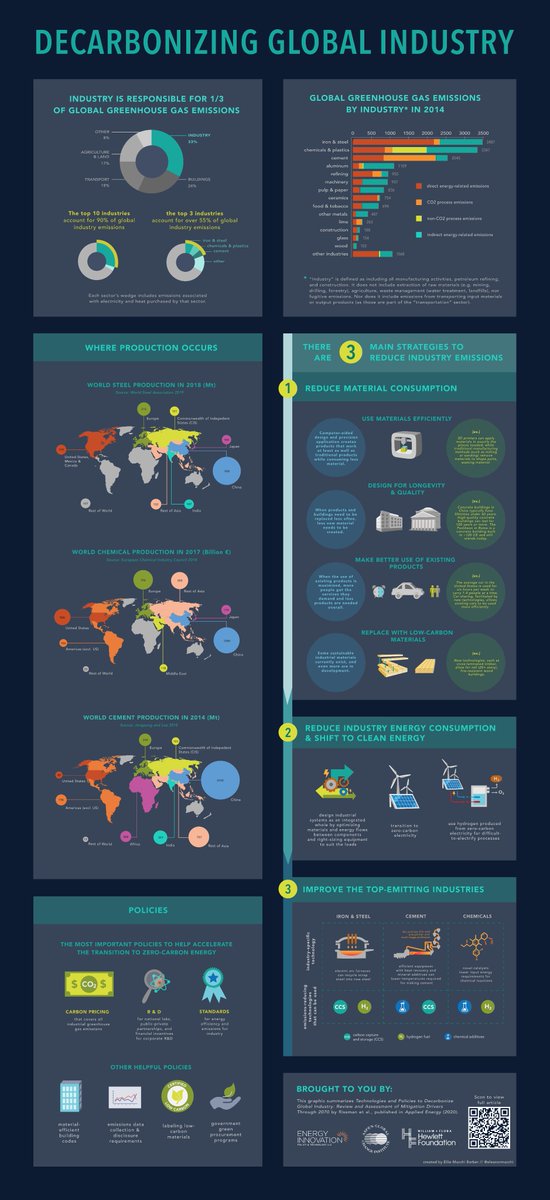
Technologies and policies to decarbonize global industry: Review and assessment of mitigation drivers through 2070 #EnergyPolicy#EnergyTransition --> https://t.co/jUyAdIMDrZ
Decarbonizing the grid must integrate the #building level. This online #openSource single interface for a combination of models allows planners to optimally design buildings, estimate electricity demand and plan renewable #energyStorage capacities and generation accordingly.
#Electricity generation in Canada is as diverse as its geographical regions—so are the mix of energy resources to power them. CER refined its #EnergyModelling tool and evaluated whether differences in hourly load, resource availability, and trade highlight variations in trends.
COVID response offers chance to shift direction of Canadian economy: experts
"This time, many are asking how the economy can be restored without greenhouse gases tagging along."
The Institute’s @enviroeconomics & @MarkJaccard weigh in on how 🇨🇦 could hasten its recovery +position itself for a low-carbon #economy in @nationalpost.
‘The real challenge, will be to not let #COVID19 derail policies already planned or in place’-Jaccard
https://t.co/FskLoV2IGc
Many #grid#decarbonization pathways involve the introduction of electricity storage units; how it affects energy prices and emission are key questions that need to be addressed for the assessment of policy options. This project aims to assess Energy 2020 model response to this.
This visually oriented #energyModelling tool that helps cities understand interactions of urban #energySystems and improve their #climateAction strategies has demonstrated its value by guiding the Toronto city council to adopt a pathway to reduce emission by 80% by 2050.
"To help guide policy makers and businesses, this work develops a blueprint for #climateaction that addresses the concerns of innovation, technical feasibility, cost-effectiveness, an enabling policy environment & the need for social equity in delivering human wellbeing globally"
Severe climate conditions are a major threat to #energySecurity — particularly for small communities using #renewableEnergie. This model can help policy makers increase the resilience of a community grid; it optimizes energy mix strategies & the location of solar+storage systems.