Every computer ever built is, at its lowest level, the same tiny operation repeating billions of times per second.
That operation is called NAND "Not AND" and the reason all of computing converges on it is simple;
NAND is sufficient to build every other logical operation a computer needs. Addition, memory, decision-making;
All of it assembles from this one gate, the way any structure imaginable can theoretically be built from a single type of brick.
A mathematician named Henry Sheffer proved this in 1913.
The proof sat untouched for three decades until the transistor arrived and engineers realized the work was already done.
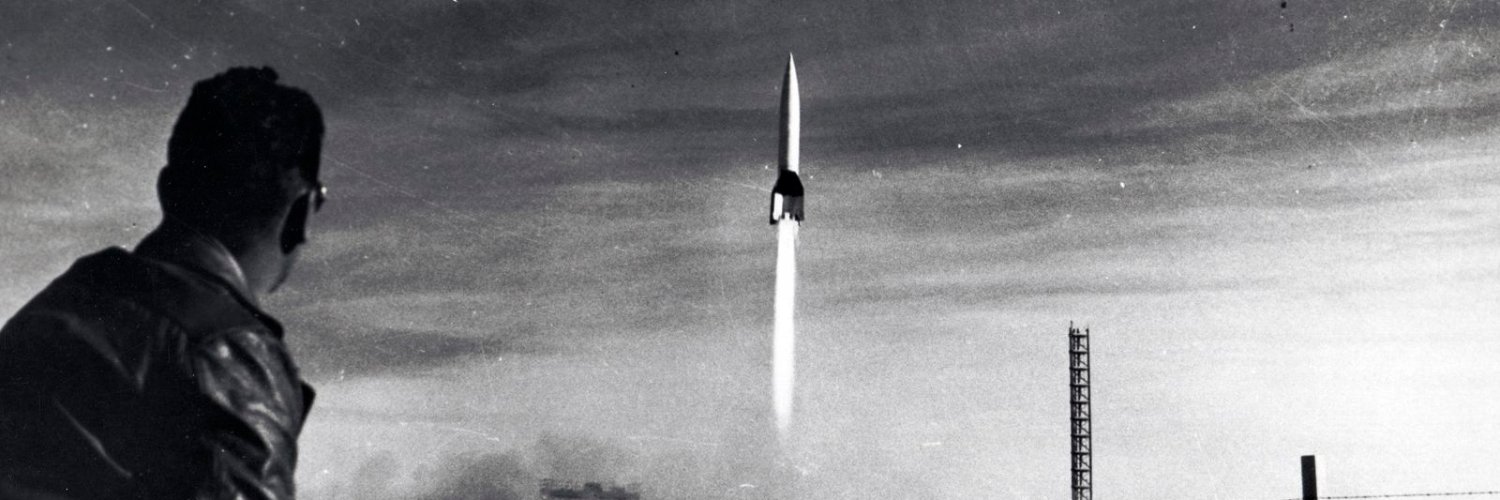
The oldest man-made object still circling Earth was launched by a program most people only remember for dropping a rocket one meter off the ground.
In 1955, the United States Navy began working on a way to put a small satellite into space. The goal was scientific; gather data about Earth from orbit during a coordinated global research period. The program was careful and methodical, the kind of work that takes years rather than months.
Then the Soviet Union launched Sputnik in October 1957, and suddenly the careful, methodical program was expected to respond immediately, in public, with cameras present.
The December 1957 attempt did not go well. The rocket lifted off the pad by roughly the height of a kitchen counter, then lost power and came back down. The fuel caught fire on impact. A small metal sphere, the satellite, rolled away from the wreckage and sat in the grass, still sending out a radio signal with nothing to receive it.
The whole thing happened on live television.
The same team went back to work and tried again in March 1958.
That attempt reached orbit.
Among other things, the data it sent back helped scientists confirm that Earth is not a perfect ball; it is very slightly wider in the middle than at the top and bottom, and carries a barely detectable difference in shape between the northern and southern halves.
Sputnik, the Soviet satellite that had started the whole race, burned up reentering the atmosphere in January 1958; two months before Vanguard 1 even launched.
Vanguard 1 is still up there, and is not expected to come down until around the year 2200.
During the Apollo program, NASA consumed 400,000 engineers, scientists, and technicians across 20,000 companies. At peak, one in every 500 working Americans was directly employed on Apollo.
The Space Shuttle's main engines ran at a temperature of 3,300°C , while the fuel lines carrying liquid hydrogen were at −253°C. A 3,550°C difference across a single machine.
@Dan_Jeffries1@Sergey_lll Do u really think ever smarter AI will not be able to solve problem it creates but less smarter human will be , sorry brother but that is pure cope,
We are going to be replaced , deal with it.
Konrad Zuse was a German civil engineering graduate who, by the late 1930s, had become preoccupied with the problem of manual calculation.
Engineering work at the time required large amounts of arithmetic, done by hand or with mechanical calculators, and Zuse believed a machine could automate the process.
He began building in his parents' living room in Berlin, funding the work himself and recruiting friends to help assemble and wire the components.
By the time World War II was underway, Zuse was deep into the project.
Wartime Germany had its own manpower priorities, and an unmarried man of working age sitting at home building unidentified electrical equipment was the kind of thing that drew official scrutiny from employment authorities.
When the employment office came asking questions, Zuse told them he was developing a tank gauge as part of a competition organized by the Ministry of Aviation. The explanation was vague and military-adjacent, which made it bureaucratically acceptable.
No one investigated further.
The cover story held because wartime German authorities had no real framework for understanding what a programmable computing machine was.
Zuse continued building, and the Z3 was completed in 1941, making it one of the earliest functioning programmable computers in history; developed largely outside of any institutional support or official awareness of what it actually was.
Every battery has two ends. One pushes electrons out. One pulls them in. The one that pulls them in is the cathode. That's it. Electrons flow toward it, and that flow is what we call electricity.
In the 1800s, scientists noticed something strange coming off the negative end of a charged glass tube; an invisible ray that cast shadows and bent near magnets.
Nobody knew what it was. In 1897, a physicist named J.J. Thomson proved it was a stream of tiny particles. He called them electrons. The cathode is literally where the electron was discovered.
Engineers then used that discovery to build the cathode ray tube. Fire electrons at a glass screen coated in glowing powder, control where they land, and you get a picture. That's how every television and computer monitor worked for nearly 80 years.
Today, the cathode lives inside every battery; your phone, your laptop, your car. The material it's made from decides how long your battery lasts, how fast it charges, and whether it overheats.
U-235's half-life is 703 million years. U-238's is 4.47 billion years,close to Earth's age. This is why U-238 dominates natural uranium; U-235 has decayed away faster over geological time.