International law requires Israel to comply and respect the territorial integrity and sovereignty of Somalia. Recognizing a part of Somalia is a complete breach of this. Somaliland is an integral part of Somalia. Our people are firmly united in the defence of their sovereignty.
President @HassanSMohamud and opposition leaders are set to meet on August 10 at Villa Somalia — their third attempt at what has so far been fruitless political dialogue.
For months, President HsM has consistently obstructed critical decisions on the Constitution, elections, and the electoral commission. Behind the scenes, he and his close ally Minister @Amohamednur AKA “Wasiir TikTok” — have reportedly assured their inner circle that the ultimate goal is a two-year term extension, designed to hijack control of Somalia’s oil revenue.
The playbook is shameless: weaponize oil money to fracture the opposition. Some will be bought off with cash; others will be sidelined through coercion, fear, and force.
As the August 10 meeting approaches, the opposition must not walk into this trap yet again. They must either secure concrete, transparent outcomes — or publicly expose the regime’s intentions.
President Hassan’s record speaks for itself, broken promises, political manipulation, and endless deflections. The opposition leaders who remain engaged now shoulder a historic responsibility. This moment cannot become another scene in the tired theatre of recycled elites and hollow agreements.
If Hassan Sheikh is truly committed to peace, let him launch a genuine, inclusive reconciliation process — one that engages real national stakeholders, not just a gathering of loyalists rehearsing old scripts.
This is no longer about salvaging a presidency — it’s about safeguarding a nation. A two-year extension will not deliver reform; it will simply authorize grand-scale looting and entrench repression.
#Somalia
Somalia can ill afford the luxury of hollow leadership, for President @HassanSMohamud’s governance is marked by a persistent void of vision and pragmatism. His foreign policy drifts like a ship without a rudder—one day offering Ethiopia empty smiles, the next pursuing fleeting alliances that yield no true benefit to the fragile stability of our nation.
As chaos deepens across the land, he wanders the globe on purposeless journeys, producing neither progress nor partnerships, nor the peace so desperately sought. His silence amid the unraveling federal system borders on culpable neglect. By refusing to engage with #Jubaland and #Puntland, he does not merely evade dialogue—he evades the very truth that demands reckoning.
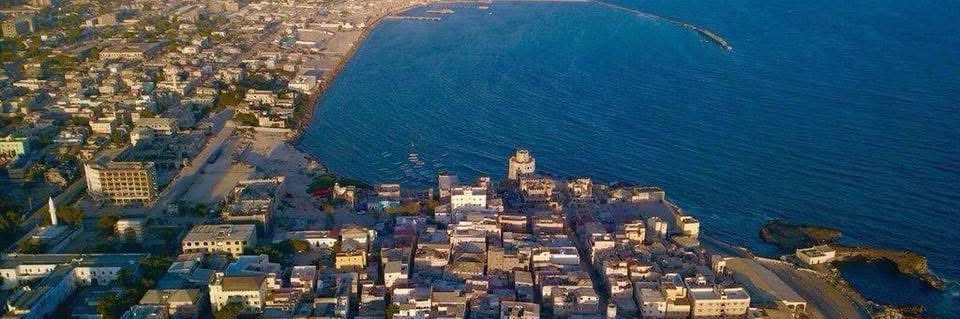
This turmoil is but a reflection of a mandate mired in disorder and misjudgment. The decision to re-elect him may well be remembered as Somalia’s gravest political misstep in recent history, and today, even the heart of Mogadishu carries the heavy burden of this regret.
His politics—rooted in exclusion, denial, and delusion—are a fragile façade, unsustainable and destined to crumble. The hour has come to shatter this illusion and confront reality, lest these fractures deepen into irrevocable collapse. #Somalia
At times, one can’t help but be baffled by the words of Somali Federal Government leaders. It’s as if they operate in isolation from their own contradictions.
President @HassanSMohamud speaking on corruption feels almost theatrical. And now his disengaged Prime Minister @HamzaAbdiBarre suddenly decries the 2022 elections—conveniently forgetting he was a key player. Hamza asked Ahmed Madobe to send him three names so he could select one for Parliament. That is not history—it’s his own record.
To condemn the past election is to confess his own complicity.
Prime Minister, the performance of honesty fools no one. HSM is clearly shaping the electoral model to suit his ambitions.
Let’s stay grounded in political reality, Deni and Madobe are essential stakeholders. Stop rewriting the script—Somalis are not asleep. Time is not yours to waste. #Somalia
“A leader without a renewed vision is a shadow of progress.”
Since his return to power, President Hassan’s direction has remained stagnant—unchanged, uninspired, and unaccountable. Replacing President Farmaajo with Hassan Sheikh in 2022 was not merely a transition — it was a strategic setback, a loss that history will not forget. That re-election was not a choice for the future, but a vote for recycled failure. Parliamentarians chose what one elder once described as “decorated dysfunction” over discipline and national dignity.
Yet, the page is not closed. 2026/2027 must be a national correction, not just an election. The Somali people deserve a leadership rooted in results — not rhetoric.
The administration of President @M_Farmaajo marked a high point in Somalia’s recent history, particularly in the realm of foreign policy. His leadership was defined by strategic diplomacy, national dignity, and a clear vision. The caliber of officials appointed during his tenure reflected a strong commitment to competence and national service, an approach that stands in stark contrast to the current administration, which has unfortunately been marked by widespread perceptions of inefficiency and mismanagement.
It is regrettable that constructive dialogue around Farmaajo’s legacy is often overshadowed by divisive narratives rooted in clan affiliations. For the sake of national unity and progress, we must rise above such limitations and evaluate leadership based on merit and outcomes.
Farmaajo’s leadership offered a model of governance anchored in sovereignty, accountability, and a deep respect for Somalia’s place in the international community. His administration prioritized the interests of the Somali people above all, resisting undue external influence and championing reforms aimed at long-term national stability.
Today, as the country faces mounting political and economic challenges, many Somalis are once again calling for the return of that principled leadership. The widespread yearning for a government rooted in transparency and national dignity is a testament to the lasting impact of Farmaajo’s tenure. As the winds of change begin to stir, Mogadishu—and indeed the nation as a whole—awaits a renewed direction that can restore trust, unity, and progress.
You served under @M_Farmaajo who weaponized the SNA to eliminate former presidents & political rivals, all while turning a blind eye as #Shabaab freely collected taxes at the Mogadishu port, checkpoints, & markets. Now you want to lecture others about statecraft and sovereignty?
Unlike your time in office, where there was no meaningful foreign policy or reform, President HSM is actually confronting terrorism, rebuilding the national army, and restoring Somalia’s diplomatic credibility. This isn’t a perfect administration but to call it reactive or transactional while ignoring the years of chaos & impunity under Farmaajo is dishonest & absurd.
This criticism is not about policy, it’s personal bitterness dressed up as concern. Somalia’s foreign policy may need refinement, but it is at least being directed by a legitimate government, not a clique of opportunists who once outsourced state institutions to personal vendettas and war profiteers.
True sovereignty is not asserted through rhetoric, but earned through credible institutions, national cohesion, and leadership anchored in the lived realities of the people. The recent decision by President @HassanSMohamud and his politically ill-equipped minister @AliOmarMP, to withdraw from the C6+ framework reflects a troubling detachment from the complex political and security landscape Somalia currently faces.
While the aspiration for self-reliance is valid and commendable, prematurely disengaging from international coordination mechanisms, without presenting a viable domestic alternative—risks isolating Somalia at a time when constructive engagement is most needed.
The federal structure is under significant strain: Puntland has invoked constitutional autonomy, Jubbaland has distanced itself from the center, Southwest remains politically fragile and externally influenced, and Hirshabelle is experiencing profound internal fractures. Even the capital, Mogadishu, is marked by deep polarization and waning public trust.
To characterize this moment as a post-transition phase is, at best, an overly optimistic misreading of the facts. Somalia’s path to full sovereignty must be strategic, inclusive, and grounded in institutional readiness, not aspirational declarations.
Now is the time for thoughtful, measured leadership, sovereignty is not diminished by partnership, it is strengthened by credibility, capacity, and unity. #Somalia
@UNTMIS_@US2SOMALIA@UKinSomalia@EU_in_Somalia@UN@antonioguterres@TheVillaSomalia@ReutersAfrica@BBCAfrica@GaroweOnline@mrsomalia
Engineered Elections, Forced Registration, and Political Exclusion — Farmaajo Sounds Alarm on Somalia’s Democratic Breakdown
Former President @M_Farmaajo has issued a forceful warning against what he describes as the systematic dismantling of Somalia’s democratic architecture by President @HassanSMohamud, accusing the administration of fabricating consensus while consolidating power through unconstitutional means.
In a sharply worded statement, Farmaajo condemned the government’s orchestration of an electoral process designed in isolation—anchored in executive-made laws, partisan electoral commissions, and deliberate exclusion of federal member states. “This is not governance—it is an engineered power structure masquerading as democracy,” he said.
He described the recently launched “Consultation Platform” as a political smokescreen, arguing it serves to legitimize decisions that have already been made behind closed doors. Farmaajo warned that such tactics sideline critical voices, fracture federal cooperation, and risk plunging the nation into a deeper legitimacy crisis.
Most alarming, he noted, is the compulsory voter registration initiative currently underway. “To force citizens into participation through coercion is not electoral reform—it is institutionalized intimidation,” Farmaajo declared, framing the move as a direct violation of civil liberties enshrined in Somalia’s provisional constitution.
The former president called for an immediate return to the consensual constitutional order that defined previous political agreements and safeguarded Somalia’s fragile unity. He urged the administration to abandon unilateralism and recommit to inclusive governance.
“Our republic cannot survive on silence, rubber-stamped legality, or executive shortcuts,” Farmaajo asserted. “The survival of the Somali state depends not on control, but on consensus.”
Political observers say the former president’s intervention reflects a broader sense of urgency among opposition leaders and regional administrations, who warn that the concentration of power in Villa #Somalia may unravel years of hard-won political progress.
@UNTMIS_@US2SOMALIA@UKinSomalia@EU_in_Somalia@_AfricanUnion@TheVillaSomalia@ReutersAfrica@GaroweOnline@TheIsbahaysi
Your accusation that Somali opposition voices are working for foreign governments is not only a distortion of reality—it is a deliberate insult to the intelligence and integrity of the Somali people. It’s the oldest trick in the book: when the truth becomes inconvenient, discredit the truth-tellers. But let me remind you—“the first casualty of war is truth,” and you, whether knowingly or not, have chosen to stand against it.
The people you so casually attack are not foreign agents, they are Somali citizens, Stakeholders and among them are some of our former heads of state, individuals who have led this nation through its most difficult hours, and who still command the respect of millions of Somalis.
We honor them just as you honor your own past leaders. Disparaging them in pursuit of a political agenda is not only undignified—it is diplomatically tone-deaf and morally hollow.
Let’s speak plainly, I know you are not here out of concern for Somalia’s future. You are defending a secret, unaccountable deal between President HSM and your government. That much is obvious. Your sudden interest in Somali affairs is not about our stability or democratic progress, it’s about justifying a political arrangement made behind closed doors, far from the consent of the people. “He who comes with a hidden agenda should not preach transparency.”
You dare speak of Somali democracy while backing a government that has unilaterally dismantled every foundation of fair governance. The electoral committee? Handpicked by the president, without a shred of consultation. The system? Rigged, centralized, and hollow. And still, you target those raising the alarm—not those sounding the siren of tyranny.
You must understand something: “To accuse others falsely is not to defend peace, it is to declare war on truth.” Your narrative does not protect Somalia, it disrespects it, and it disrespects us.
Somalis do not need foreign tongues wagging with half-truths and thinly veiled arrogance. Just as I do not presume to speak about Turkey’s internal affairs, you have no rightful place distorting our own.
Let me offer you a lesson, one that history teaches again and again: “A nation is not destroyed by the voices that question power, but by the silence of those who excuse its abuse.” If you truly cared about Somalia, you would stand with those seeking integrity, not those clinging to power through manipulation and deceit.
So before you speak again of our politics, ask yourself: Are you seeking the truth—or serving an interest? Are you here to help—or to silence? And most importantly, will your words age with honor, or with shame?
Somalia will rise, not because of foreign endorsement or engineered deals, but because its people will no longer tolerate the theft of their voice. Our dignity is not yours to measure. Our leaders are not yours to discredit. And our future is not yours to decide.
I've spent a lot of time thinking about whether the One Person, One Vote (1P1V) system is truly right for #Somalia.
I’ve studied global models, looked beyond who is president today or might be tomorrow. And one truth stands out: Somalia’s biggest problem is that its people have no direct say in how they are governed.
For too long, ordinary Somalis have been deceived by a corrupt elite—politicians who serve foreign interests, line their own pockets, and maintain power through systems designed to exclude the people. These elites pretend Somalis have a voice. But the reality is a charade.
They worship imported frameworks like federalism and the outdated 4.5 clan system—not because they empower citizens, but because they protect elite privileges. Ask yourself: If these elites are so loyal to Western-imposed structures, why do they reject the one Western value that actually gives power to the people—democracy?
There are two main forces blocking 1P1V in Somalia—and both serve foreign agendas:
Externally-backed political elites, and
Externally-backed terror groups like Al-Shabaab.
Neither of them wants to talk about how Somalis can build a more democratic and trustworthy system. All they do is play the same tired card: "We reject it." But they never offer a real alternative—because they know that when true power shifts to the people, their game is over.
If Somalia held direct elections tomorrow, most of these so-called leaders would be irrelevant. Al-Shabaab would lose its foothold. And foreign powers, who treat Somalia like a client state, would no longer hold the strings.
Real democracy in Somalia doesn’t just threaten corruption—it ends foreign dependency. And that’s exactly why they fear it.
Addressing Somalia’s ongoing political challenges necessitates a renewed commitment to constitutional integrity, inclusive governance, and national cohesion. In this spirit, it would be prudent for President @HassanSMohamud to consider a recalibration of measures perceived as inconsistent with constitutional norms.
Constructive engagement with Federal Member State leaders, former national figures, and political stakeholders is essential to forging a broad-based consensus on the 2026 electoral framework—one that reflects the aspirations of the Somali people and strengthens democratic legitimacy.
Equally important is the need to promote transparent and participatory mechanisms for the selection of parliamentarians, ensuring such processes are insulated from undue political influence. A unified and impartial security sector—focused exclusively on countering terrorism and protecting national stability—will serve as a cornerstone for long-term peace and democratic consolidation.
To safeguard public trust, institutional safeguards should be reinforced to prevent the concentration of power in the hands of any individual or group, thereby upholding the principles of fairness, accountability, and inclusive representation.
To say such things, as though we lack the wit to see through the veil, is an insult wrapped in condescension.
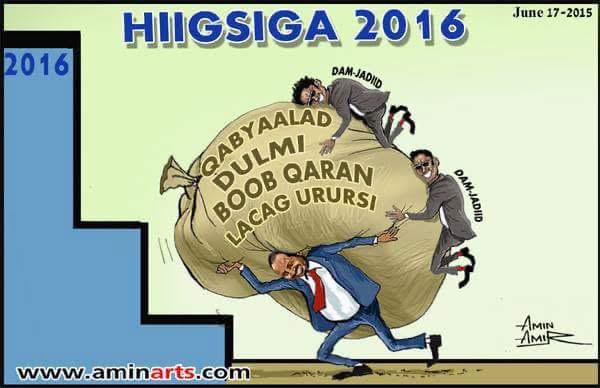
Our foreign policy, particularly under this Damjadid administration has descended to unprecedented depths, marking a nadir in our nation’s history.
And yet, with astonishing audacity, you proclaim yourselves defenders of our sovereignty, even as you barter it away piece by piece. We see it. The people see it.
As Abraham Lincoln once said, “You can fool all the people some of the time, and some of the people all the time, but you cannot fool all the people all the time.”
What you call diplomacy, we call betrayal. What you present as patriotism, we recognize as performance. Sovereignty is not for sale—yet you have set a price.
Very sad indeed.
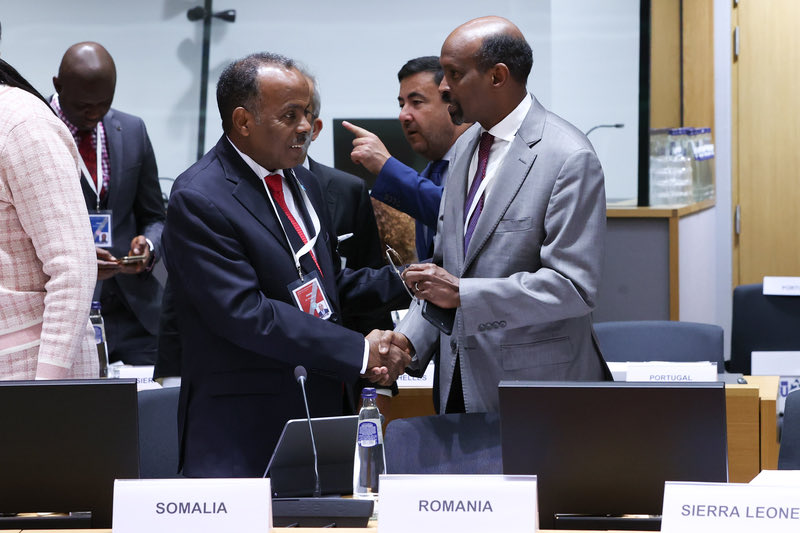
Diplomacy in action, Somalia is not just navigating global forums — we’re shaping them. From the UN Security Council, AU-EU forum to regional blocs, we are defending sovereignty and driving development. #Somalia#ForeignPolicy
Somalia’s Crisis Isn’t Just About Leaders, it’s the System That’s Rigged to Fail.
For years, we’ve played the same tired game, blaming leaders, hoping the next one will be different, only to end up disappointed again. The cycle is exhausting. But after serving in government in different levels and capacities and running for the president itself, i have seen how things really work and realized something we rarely admit: Somalia’s biggest problem isn’t just bad leaders. It’s the system itself, rotten at its core.
No leader, no matter how honest or capable, can fix a system built to resist change. Ours isn’t designed to serve the people. It’s built to serve the powerful.
Why Nothing Ever Changes;
Every new government comes in promising reform. But soon enough, the same old patterns take over: power gets hoarded, oversight is gutted, and a small circle of elites diverts public wealth into their own pockets.
This isn’t bad luck. it’s by design!
Yes, leadership matters. We need integrity, vision, and competence. But unless we confront the real machinery of Somali politics, the hidden rules, the incentives for corruption, the way power is actually distributed, no leader can steer us out of this mess.
The 8 Broken Pillars Keeping Somalia Stuck.
After years of watching this play out, I’ve pinpointed the eight structural failures that keep recycling our crises:
1. Clan Politics as a Weapon:
Positions and resources go to those with the right connections, not the right skills. Talent and fresh ideas get sidelined.
2. Federalism Turned into Feudalism:
Instead of empowering regions, federalism has become a battleground of warlords and elites fighting for Mogadishu’s crumbs.
3. Elections Without Democracy.
Our elections are backroom deals between power brokers and the people are an afterthought.
4. Security Forces as Political Tools:
Soldiers and police do not protect citizens as they should and are not accountable to them but serve as enforcers for politicians or clans.
5. Corruption as the System, Not the Exception:
Money vanishes, projects stall, and no one is ever held accountable. In fact they are often seen as heroes who took advantage when they had the chance.
6. Silencing Anyone Who Speaks Up:
Journalists, activists, and whistleblowers face threats or are paid and coerced, while lies and propaganda thrive.
7. Foreign Powers Calling the Shots:
Too often, outsiders dictate our policies behind closed doors, with no transparency.
8. A People Who No Longer Believe:
After decades of betrayal, most Somalis see the state as a tool for theft, not service.
What Real Change Looks Like;
Swapping leaders without fixing the system is like changing drivers in a car with no engine, we’re not going anywhere!
What we actually need:
A Government That Hires the Best:
No more jobs for clansmen. Let’s recruit based on skill, not connections.
Genuine One Person, One Vote:
Real elections, not staged dramas where elites pick the winners.
A National Army That Serves Somalia, Not Politicians:
Security forces must be neutral, professional, and free from clan politics.
An Anti-Corruption Body With Teeth:
Not just another empty office, real prosecutors, real transparency, real consequences and it must start at the top.
Federalism That Works for the People:
Regions should govern themselves effectively and legitimately, not just fight for a share of corruption.
Freedom to Speak Without Fear:
No more silencing critics. A country can’t heal in the dark. Democracies biggest threat is silence!
Taking Back Our Sovereignty:
No more foreign agendas deciding our fate. Our policies should be ours.
A Choice Between Two Futures:
We’re at an impasse. We can keep pretending the next leader will magically fix everything or we can admit the truth: the system itself must be torn down slowly and rebuilt.
This isn’t about waiting for a hero. It’s about demanding a new Somalia, one where the state serves the people
@abdihoosow I’m in full resonance with your insight. Swapping federal fragility for confederate chaos is not reform, it’s regression. Somalia’s cure lies in cohesion, not in codifying our divides
With all due respect, your recent remarks lack credibility when measured against the actions and outcomes of the administration you represent. Somalia’s wellbeing has not only been compromised, it has been systematically dismantled by a government engulfed in corruption, mismanagement, and ethical failure.
You, in particular, should exercise restraint. Under your leadership, the Ministry of Foreign Affairs has suffered a profound reputational collapse. What should have been a beacon of diplomacy and national pride has, regrettably, become associated with visa exploitation, allegations of human trafficking, and the erosion of institutional integrity.
You speak of progress, yet what remains is a legacy of scandal and shame. Is this the advancement you refer to, when dignity was traded for personal gain?
As for President Hassan Sheikh Mohamud, history is beginning to judge his tenure as the most ethically compromised and divisive in Somalia’s modern era. No amount of rhetoric can obscure that reality.
In the service of truth and accountability, we will not remain silent. The Somali people deserve more than narratives, they deserve integrity, justice, and leadership that restores the honor of our institutions.
Critics mock progress as “theatrics,” but fail to offer alternatives. Somalia’s shift toward one-person, one-vote is a fragile but necessary step. Those who believe in the country should engage, not just complain.