@TheAIColony Tried this. Overhyped. You can't copy a brain into a system prompt. A model's ability lives in its weights, not a manual. You can copy good habits, but that's just prompt engineering. And your proof test is rigged: 4.0M to 4.2M is 5%, plain Opus catches that alone.
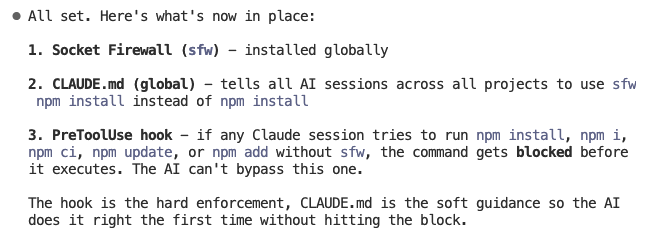
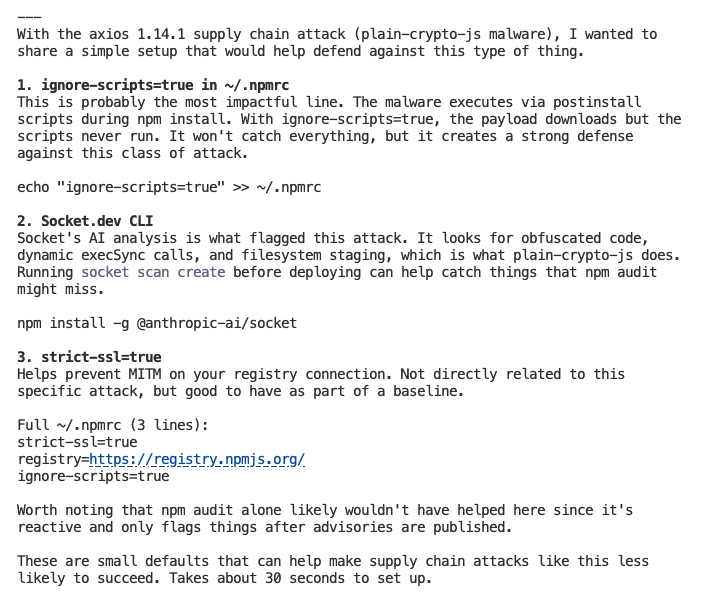
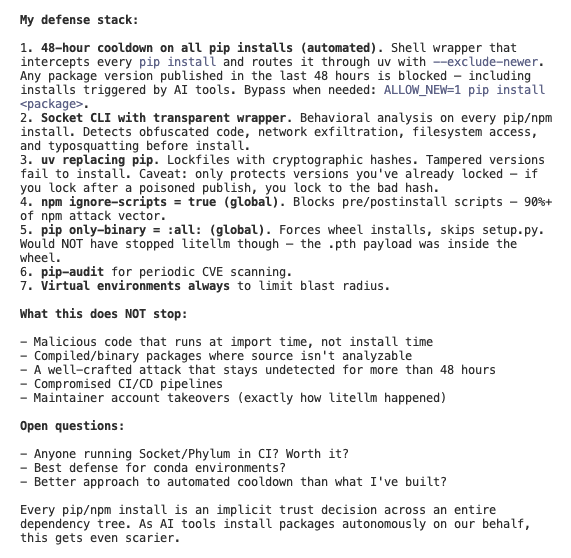
@karpathy Since I use AI coding tools (Claude Code, Codex, Gemini CLI) that install packages on my behalf, I spent the day hardening my Mac and Windows dev machines. Here's what I deployed and where the gaps still are. But I have some open questions for the community.
We offered 5 people a Porsche 911 GT3 RS if they could get @WisprFlow to make a mistake
It's the fastest and most accurate AI voice dictation app that's 3x more accurate than ChatGPT, Claude, or Siri.
Today, we’re finally launching on Android. Download now: https://t.co/TJhnUhDSLv
As a part of the launch, we’re giving away 6 months of Wispr Flow Pro for free.
Like, retweet and comment ‘Wispr Flow’ to get it. Enjoy.
— Written with Wispr Flow
@coreyganim@openclaw I do the same with all setup articles. Before using them, I run them through another system that evaluates the content, checks for security vulnerabilities, and detects prompt-injection malware. That system then produces a clean, verified list that I share with my @openclaw.
@PawelHuryn Great breakdown! Implemented this exact stack. Went further: encrypted credentials with Windows DPAPI, added a daily 14-check IoC scanner, and wired in the Ralph Wiggum loop for autonomous overnight iteration. The agent works while I sleep.
@DanielLockyer Everyone talks about security vulnerabilities to scare you away from using the latest technology (OpenClaw). Meanwhile, you can cover yourself against the vast majority of threats with the best available knowledge at your fingertips.
Ask Claude Code in your .openclaw directory: