Took a look at it and I feel I reinvented the wheel for no reason. I will make sure they support the smaller frame rate and qr version (The waveshare screen is smaller res than all the phones).
I'm making a lot of major changes to simplify the code and I am not opposed to using the linked libs ( I see there already is a foundations python implementation).
For background in case anybody was wondering:
PortableMoneroQR originally changed the custom binary format that the core seedsigner used. The idea was making it an extremely simple pagination of long data into position independent qr codes. I opted to use plain text instead of the binary qr since that isn't a standard with a lot of generic readers. Similar to the linked lib but with some slight changes (I don't use the URI etc).
Thanks for the link, I'll work on integrating it. I'll have to play around with the refresh frames.
@MoneroTime@anoneroio @0x655321 @FeatherWallet Yeah, I am looking into using polyseed lib. I was aiming at keeping it consistent with the current monero wallet. (I heard polyseed will eventually be the default).
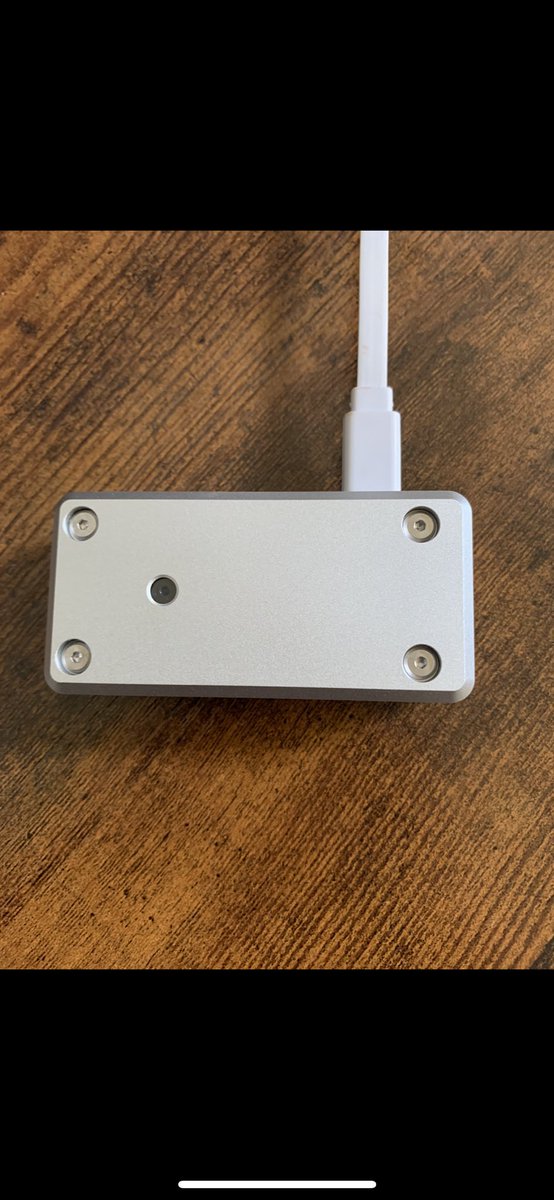
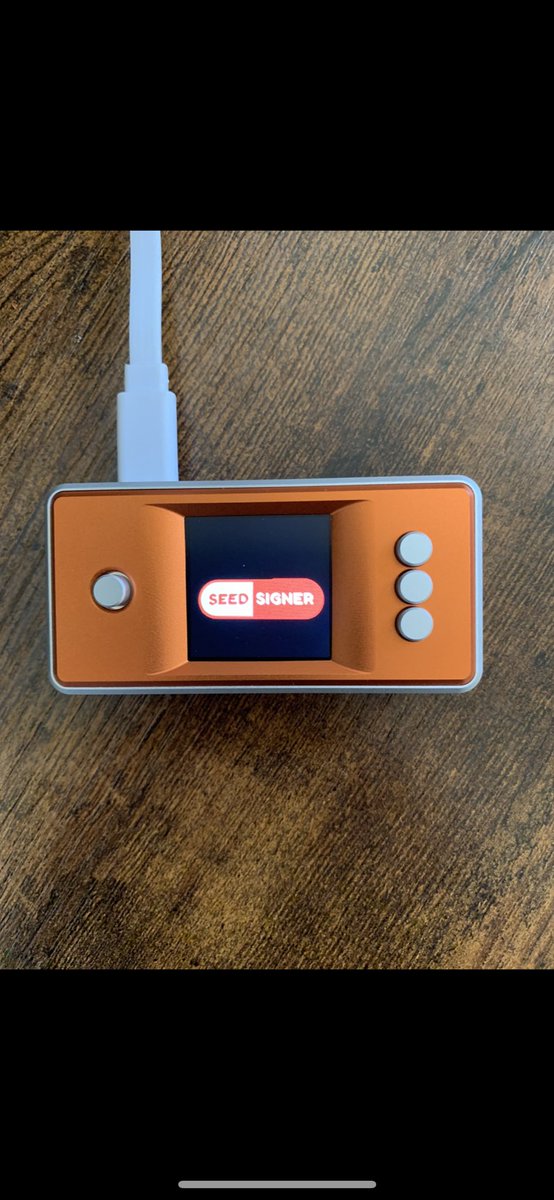
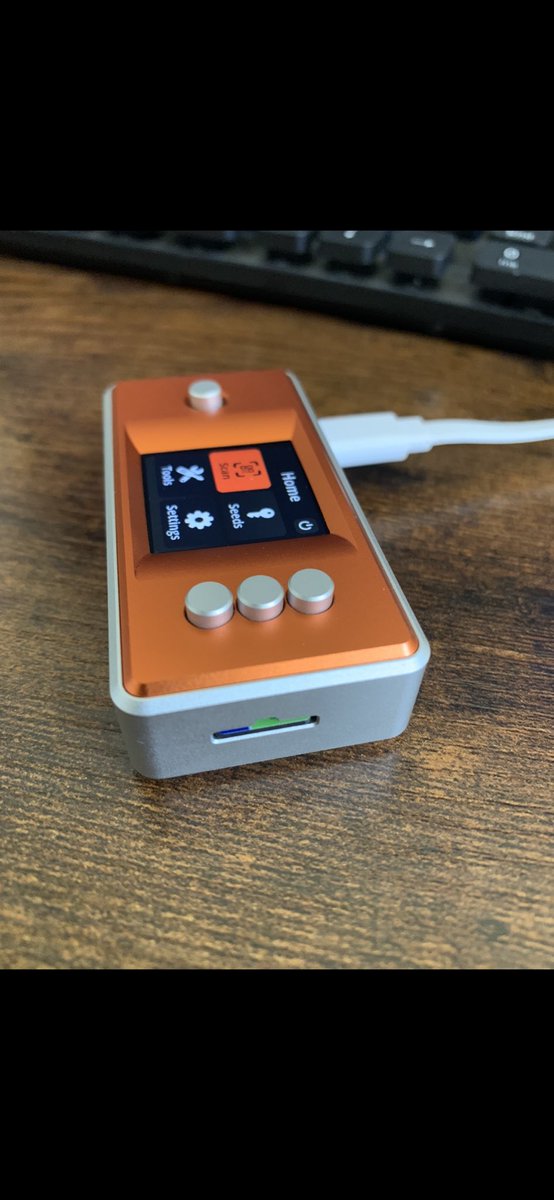
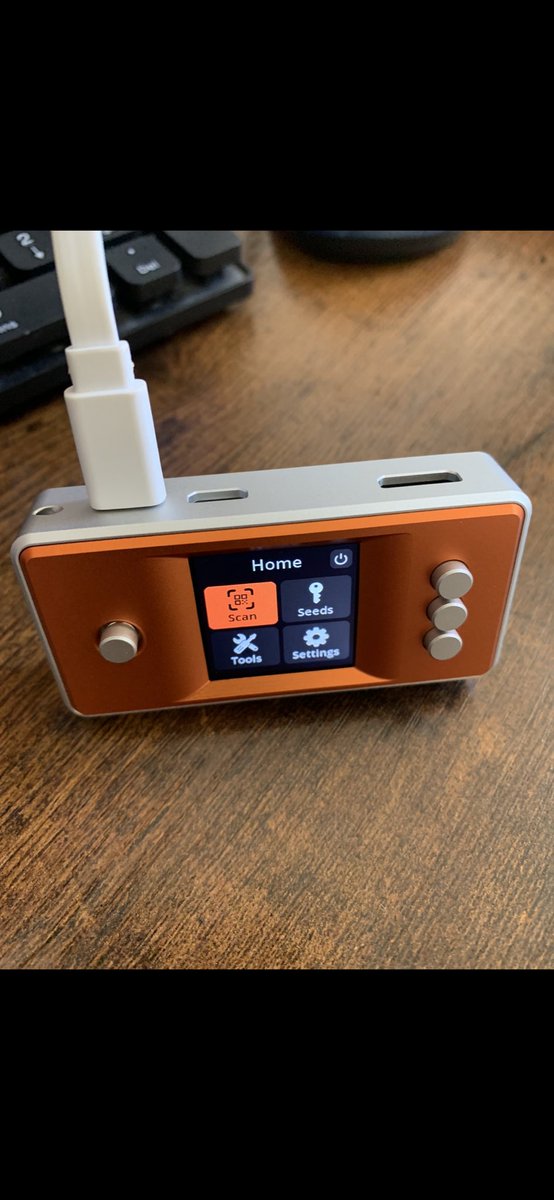
The build quality on these things are incredible.
@MoneroTime sent me a couple and I look forward to taking some pictures/videos this week.
Monero orange on the outside and monerosigner on the inside
Your patience is greatly appreciated. Building MoneroSigner has been a meticulous journey, and I want to acknowledge the time it has taken. I've been aware that many have been closely following the GitHub, eager for progress. Adapting code on an SD card and syncing it with the repository is a laborious process. I am actively working on refining the developer workflow to share the progress made so far. The upcoming website will play a crucial role in enhancing transparency. Thank you for your understanding and support.
There is currently an active bounty for pure python monero signing.
It would be really nice to get a reference implementation in python. Currently most offline signing guides rely on transferring the usnigned tx file and then using sign_transfer.
https://t.co/an5aDBAZMd
@malwaregoesbrrr Hey, I need to get better with updating the public facing stuff. I have some local builds and need to automate pushing them to the repo since I am mostly emulating during a lot of the development.
How comfortable are you with python?
Working on getting the website up and running.
It will be easier to track the progress and eventually it will be home to all the documentation and build instructions.
Data transfer through sound is on our backlog. (Post CCS delivery)
@SeedSigner Is this of any interest for your project?
Pizero can be modified.
Pi3 & 4 already have a headphone jack.
here is a python example
https://t.co/cOh7Xm9XdF
@gammapleb @MoneroTime@TheStoicCoiner There are multiple smaller projects that were not listed as milestones which I believe the community would benefit from. I list them all out here:
https://t.co/XuZ5mJMLP2
There is a lack of standards and documentation so I want to clear a lot of that up as I work on MoneroSigner
Hopefully you are not affected by atomic wallet, if you are:
The atomic wallet derivation path for XMR is
m/44'/128'/0'/0/0
You should be able to use that path with something like Py_Crypto_HD_Wallet to generate your monero key to import into a different wallet.
@XMRzoltar @satoshilabs@tropicsquare Once I have completed the MoneroSigner project I can start to take a look at other projects. One of the projects I want to dive into is PicoNero (A microcontroller based open hardware wallet).
I plan on having different SE supported on that. But it is long ways out.
Maximize for plausible deniability.
Design it to look like a cheap import retro console handheld. In the future I could add the ability to boot into a game UI.
The acrylic cases look like a security threat. Make it appear to be a toy. Draws less attention.
@XMRzoltar @satoshilabs@tropicsquare Right now the focus is on a DIY air-gapped and amnesic device built with consumer available commodity hardware. Accompanying it is the standardization of some of the standards so they can be built on by different wallets.
I'm looking at some KDF to make hidden wallets easier.