Hania (@HSalmonowicz) here! As it was my PhD viva week, I decided to draw something relaxing and pleasant… Pralines? No, these are 3 kinds of cartoony adipocytes and their #mitochondria (thread) #sciart#adipose#adipocyte
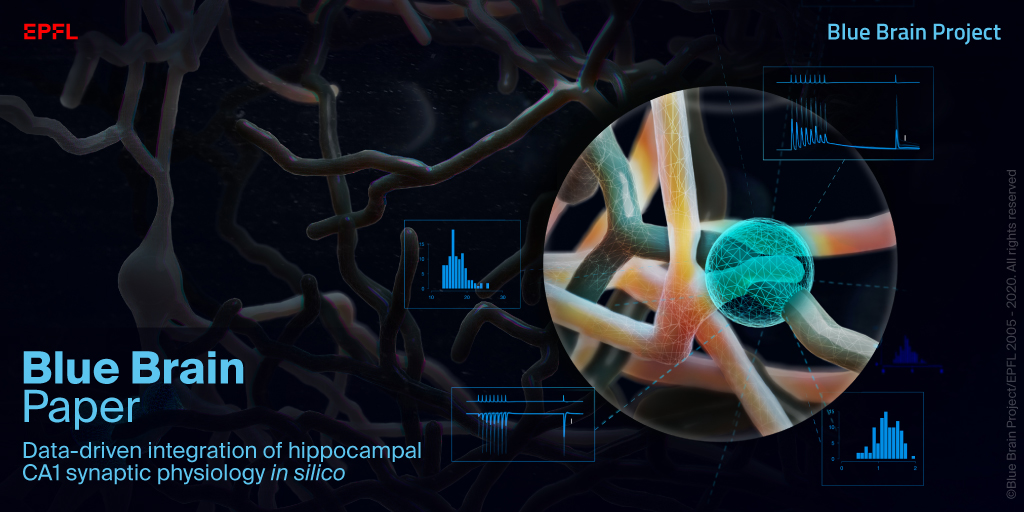
In a front cover paper published in the journal Hippocampus, Blue Brain researchers present a data-driven approach to integrate the current knowledge on the hippocampal CA1 region using an open-access, comprehensive resource.
https://t.co/KEo6XlAM7E
@andris_ecker@srikipedia
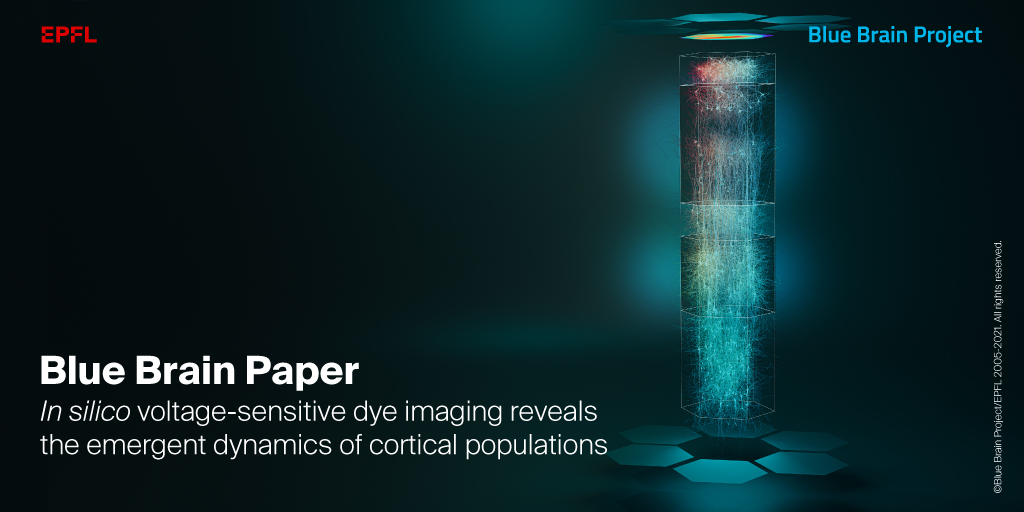
How should we interpret measurements of cortical activity?
Simulations shed new light on voltage-sensitive dye imaging in the brain.
Find out more - https://t.co/gUdmHzd3Xi
Read the Blue Brain paper published in @NatureComms - https://t.co/6ZLRznHLEh
#insilico
Research in @FrontPubHealth used AI to mine data from 240K open access papers and discovered new insights that may help the ongoing fight against Covid-19.
How does high blood glucose help SARS-CoV-2 infect our body more effectively? ⬇
#machinelearning#knowledgeengineering
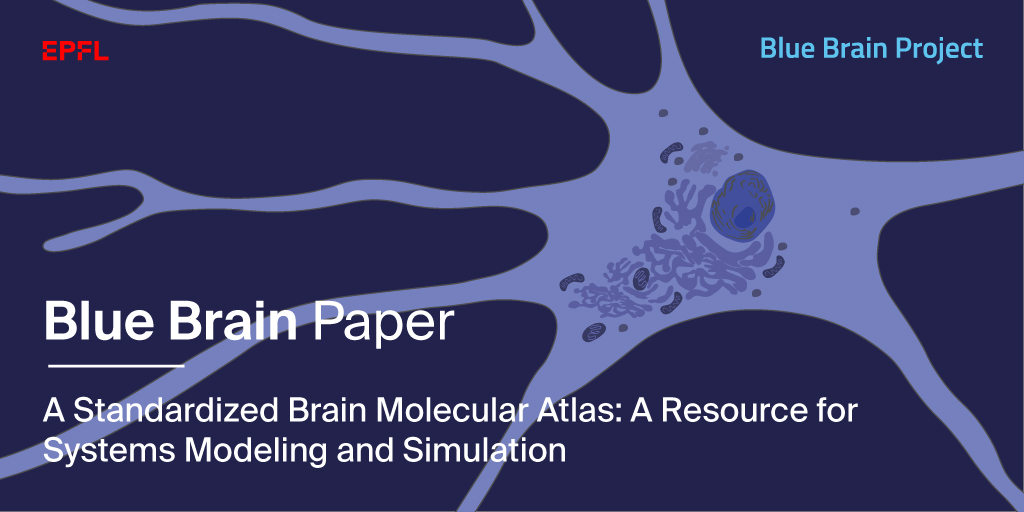
A Molecular Atlas for the Brain!
We have #open-sourced a simulation-ready database to accelerate molecular & systems biology.
Find out more – https://t.co/jOcK2yPT0X
Paper published in Frontiers in Molecular #Neuroscience → https://t.co/znxplFqLV9
@FrontNeurosci#brainatlas
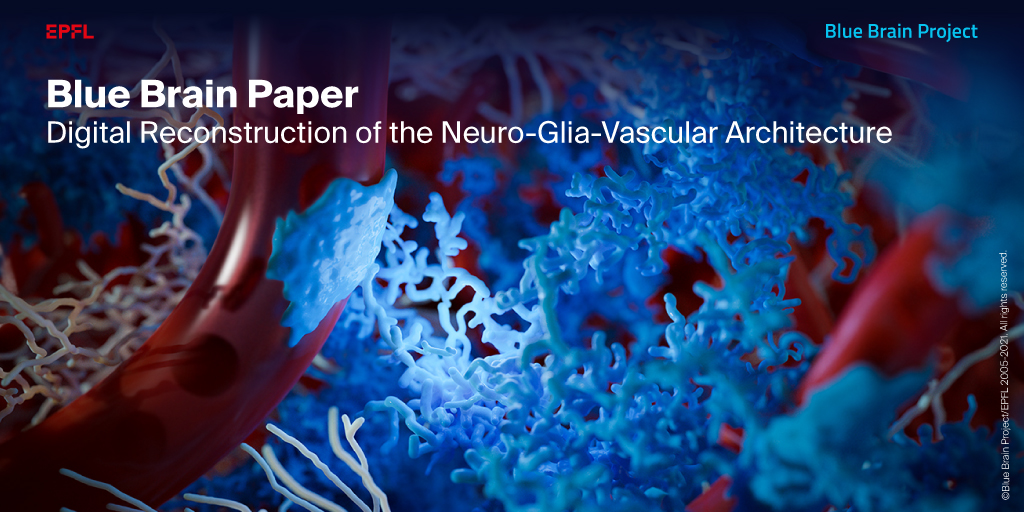
Digital reconstruction of the brain’s power source!
Find out more – https://t.co/eHxPXnorru
Read the Paper published in Cerebral Cortex - https://t.co/u06tIIEZmS
Explore the Neuro-Glia-Vasculature Portal - https://t.co/fQ5OiB9NOO
#insilico#opensource
Explore the various #opensource datasets and visuals we have made available to understand how we reconstruct #insilico the Neuro-Glia-Vasculature architecture of the rat brain.
Got to the Portal - https://t.co/fQ5OiB9NOO
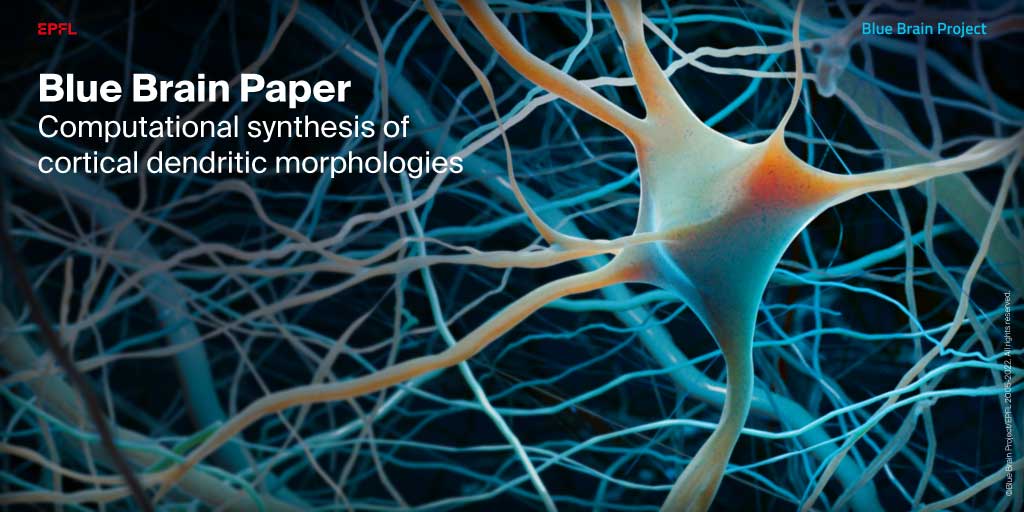
Blue Brain Builds Neurons with Mathematics
Read the new paper published in @CellReports - https://t.co/fmcVHpyAO9
Find out more – https://t.co/GXnPewYrXI
Go to the #opensource Topological Neuron Synthesis algorithm – https://t.co/rgAz91qChD
@CellPressNews#algebraictopology
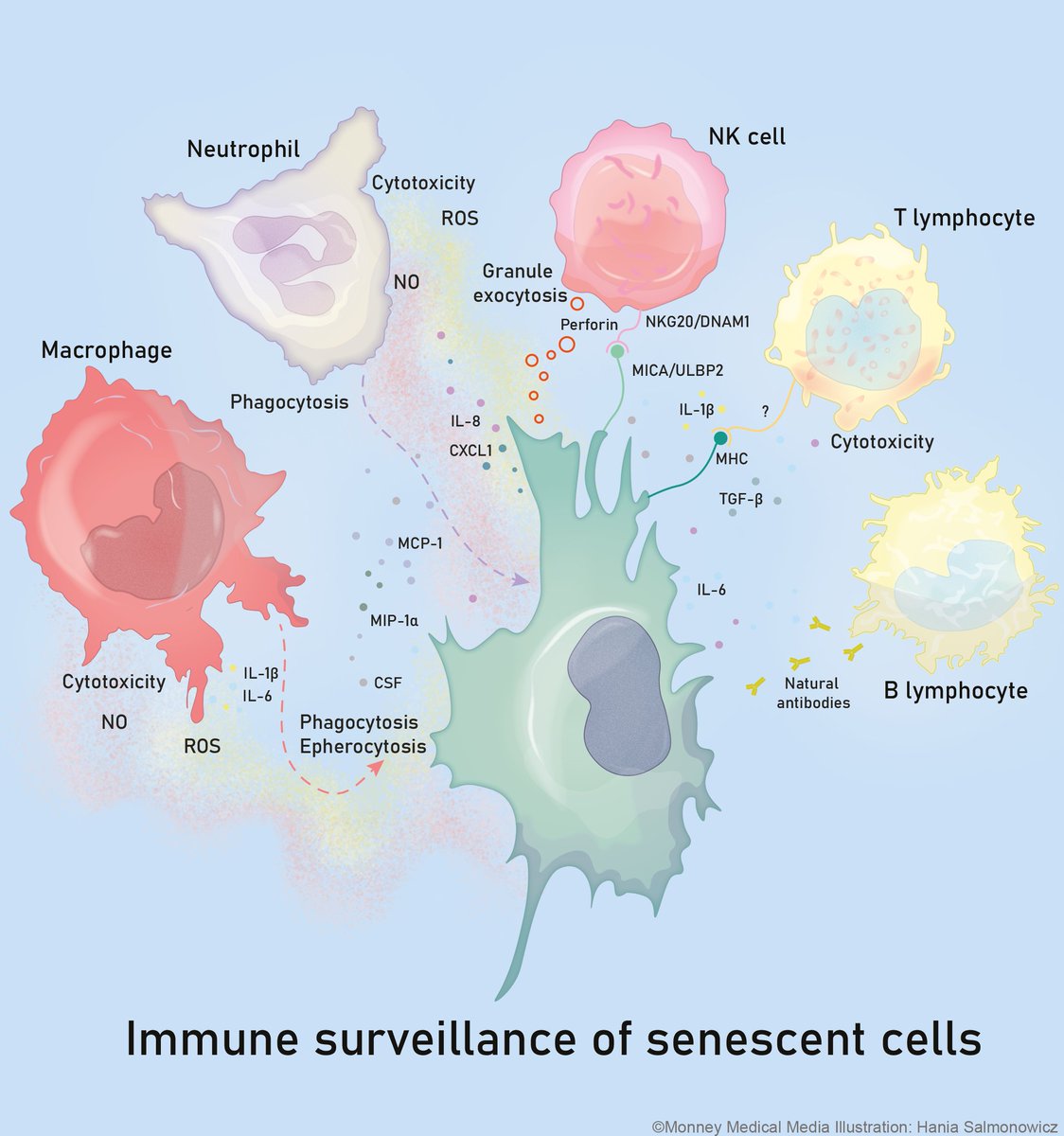
Depicting best documented immune surveillance mechanisms of #senescent cells. There're still many question marks. More cells involved! We often suspect, but don't have direct evidence. Have a look, have a read:
https://t.co/4zb66KwaBk
https://t.co/In8IEB5pax
by @HSalmonowicz
Latest info-graphics by @HSalmonowicz depicts remarkable species that contributed to our understanding of #ageing. Some were chosen by humans as models, some discovered as curiosities. Short- or long-lived or... not ageing at all !?
#sciart#scicomm#longevity#AcademicTwitter
Heroes of #ageing research! 🙂 This list is not exhaustive. Welcome are the articles about species that helped to uncover the mysteries of ageing 🪰 🐁🐩🦇🐢🐳🐒❤️
Heroes of #ageing research! 🙂 This list is not exhaustive. Welcome are the articles about species that helped to uncover the mysteries of ageing 🪰 🐁🐩🦇🐢🐳🐒❤️
The process of last week's graphics by
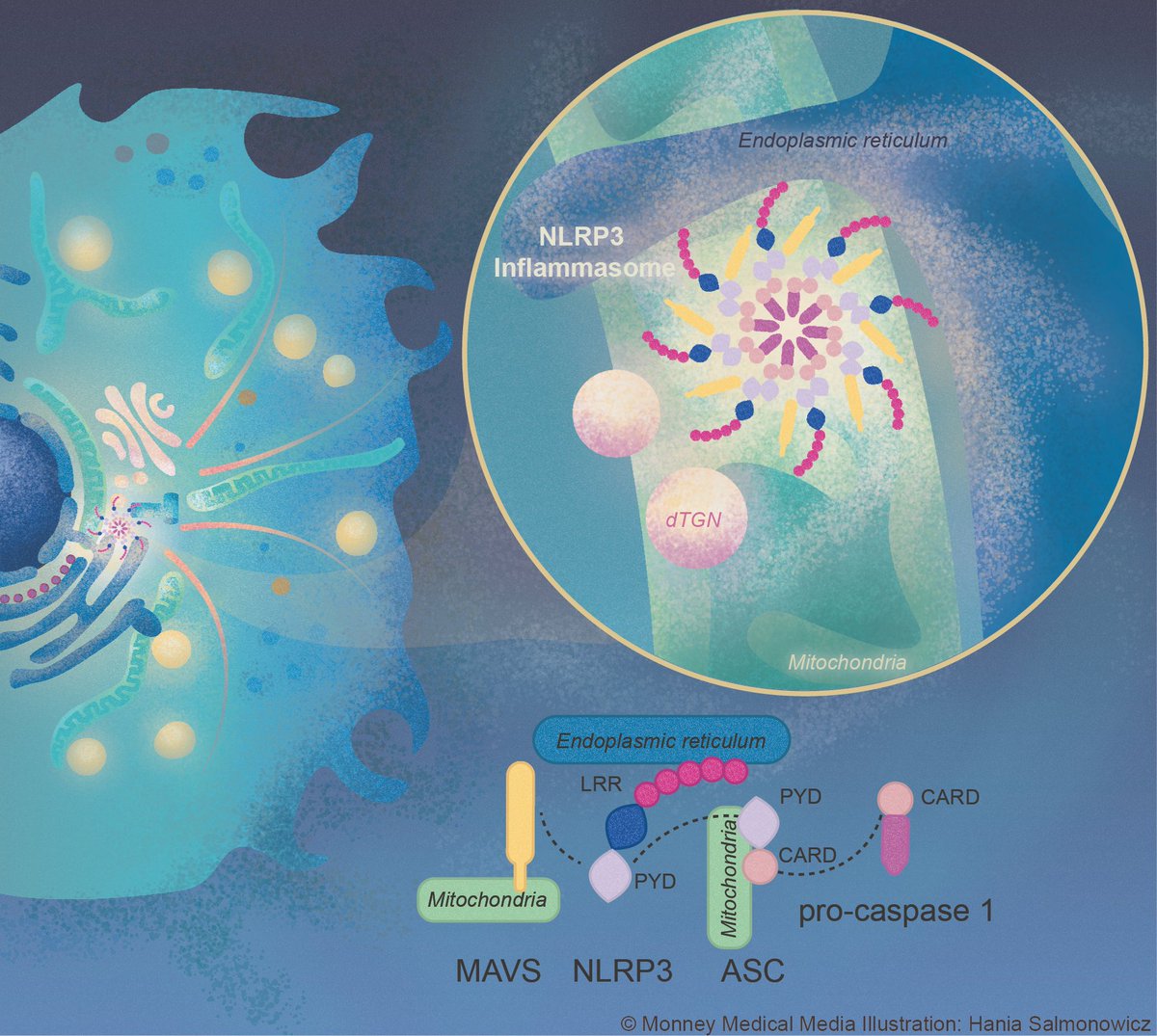
@HSalmonowicz asking where inflammasome assembles. Conceptual work done in Illustrator - slightly unsatisfactory... To bring out the main character of the story, the inflammasome became a source of light. Which one do you prefer?
On the occasion of my successful PhD defense today 🥂 I would like to reshare the public lecture recorded earlier this year - a tiny (13min) snip of my PhD research: https://t.co/QgV5RNRPWj Thank you to @PassosLab @VIKorolchuk @NKLeBRASSEUR for guidance!
Pro-caspase, the effector component of inflammasome, binds to ASC (via CARD domain). On the top, I needed to consider the interactions with mitochondria, ER and the close proximity to Golgi.
Let us know if you think the graph needs any adjustments! (7/7)
The new graphical abstract by @HSalmonowicz depicts the cellular and organellar context of inflammasome assembly. Research reveals where inflammasome is built in the cell – neighbouring MTOC, structure that summons many other important cellular machineries! (1/7) #SciArt#scicomm
Several key points I kept in mind while creating this piece: NLRP3 subunit (via its PYD domain) binds to mitochondria (via MAVS!). ASC also binds to mitochondria (via its CARD domain), while interacting with NLRP3 (via PYD domain). (6/7)
#Senescent cell vs. #neutrophil
Cooperating for the good of the organism…their interaction may spread damage. Side-effects of innate immunity and pro-survival mechanisms make #ageing multi-layered and intractable.
Happy my #sciart featured @embojournal cover!