How do non-neuronal CNS cells called astrocytes contribute to cognition & computation?
See our preprint
Headed by my students Julia Pai and Fatih Sogukpinar, also working with Hiratani, Pignatelli, Papouin, Frank, and Ching labs. This was a huge effort
https://t.co/LhzIUrsTtx
those at CVPR please stop by unlearning workshop and see the talk by Arman Hatami from our laboratory. lots of people are discussing creating greater memory capacity, but actually, adaptive unlearnig and forgetting is also a huge problem for machines and biological systems!
How do non-neuronal CNS cells called astrocytes contribute to cognition & computation?
See our preprint
Headed by my students Julia Pai and Fatih Sogukpinar, also working with Hiratani, Pignatelli, Papouin, Frank, and Ching labs. This was a huge effort
https://t.co/LhzIUrsTtx
happy 2 see Dr Okihide Hikosaka elected to NAS
Okihide has done an amazing amount of true discovery
Think big contributions to understanding of mechanisms of saccadic control, chunking and skill formation, reinforcement learning, and more!
Also a great mentor and friend.
@girishkaitholil The exact same lesions as STICs that lead to ovarian cancer. Our work, therefore, suggests that only a tiny fraction of STICs actually progress to cancer.
i was DM asked if we claim that most unlearning approaches that don't destroy networks (e.g., grad ascent) mostly maintain representations of forgotten classes in intermediate layers.. my answer: we do.
Congratulations to my great students Arman Hatami and Romina Aalishah on their new study of machine unlearning and forgetting.
https://t.co/gplQEi2ZT2
This has had clear implications for our thinking about ML and neuroscience, and we continue this work in both disciplines.
🔥🍾🙌
Huge congrats to Dr. Sophie Rogers (@synaptic_soph) receiving the Saul Winegrad Award for Outstanding Dissertation !!!
🧠@Penn@pennbgs@PennNGG
A truly field-defining body of work on pain, psychedelics, and cortical computation (first authorships in Nature and Nature Neuroscience)
Couldn’t be a more proud mentor 🥹
Check out Sophie's thesis work here:
- https://t.co/Gm85JdnRf7
- https://t.co/Nwa1uBRyXo
Congratulations to my great students Arman Hatami and Romina Aalishah on their new study of machine unlearning and forgetting.
https://t.co/gplQEi2ZT2
This has had clear implications for our thinking about ML and neuroscience, and we continue this work in both disciplines.
What has changed in mama bear brain (well, actually mice) to make her risk her life to attack a potential threat and protect her young? Oxytocin is the key! Happy to share our new study led by two awesome postdocs: Takashi Yamaguchi and Rongzhen Yan.
https://t.co/wInz2rVo8M
I am deeply grateful to the Bloomberg Endowment for supporting both our research and broader vision! We hope that our work will contribute to next generation of psychiatry treatments, bci, and ai development.
Welcome internationally recognized neuroscientist, Ilya Monosov, who joins @JohnsHopkins as the Bloomberg Distinguished Professor of Curiosity and Intelligence.
https://t.co/YH3sETChZL
Most Dense Associative Memory models do this:
👉 1 hidden neuron activates 1 memory
That’s a bottleneck. Real-world data is compositional — thus our models should be too.
@mohi_shafiei designed a model that has this desired property! The configurations of visible neurons are encoded by combinatorial barcodes of activations in the hidden layer. The local minima of the energy (memories) become compositional — built from a set of core features encoded by individual hidden neurons.
And here’s the striking part:
👉 Memory capacity becomes exponential in the number of HIDDEN neurons. Not linear, as in previous models.
Check out our new #ICLR2026 paper: https://t.co/usS84eO4T2. What would you build with this?
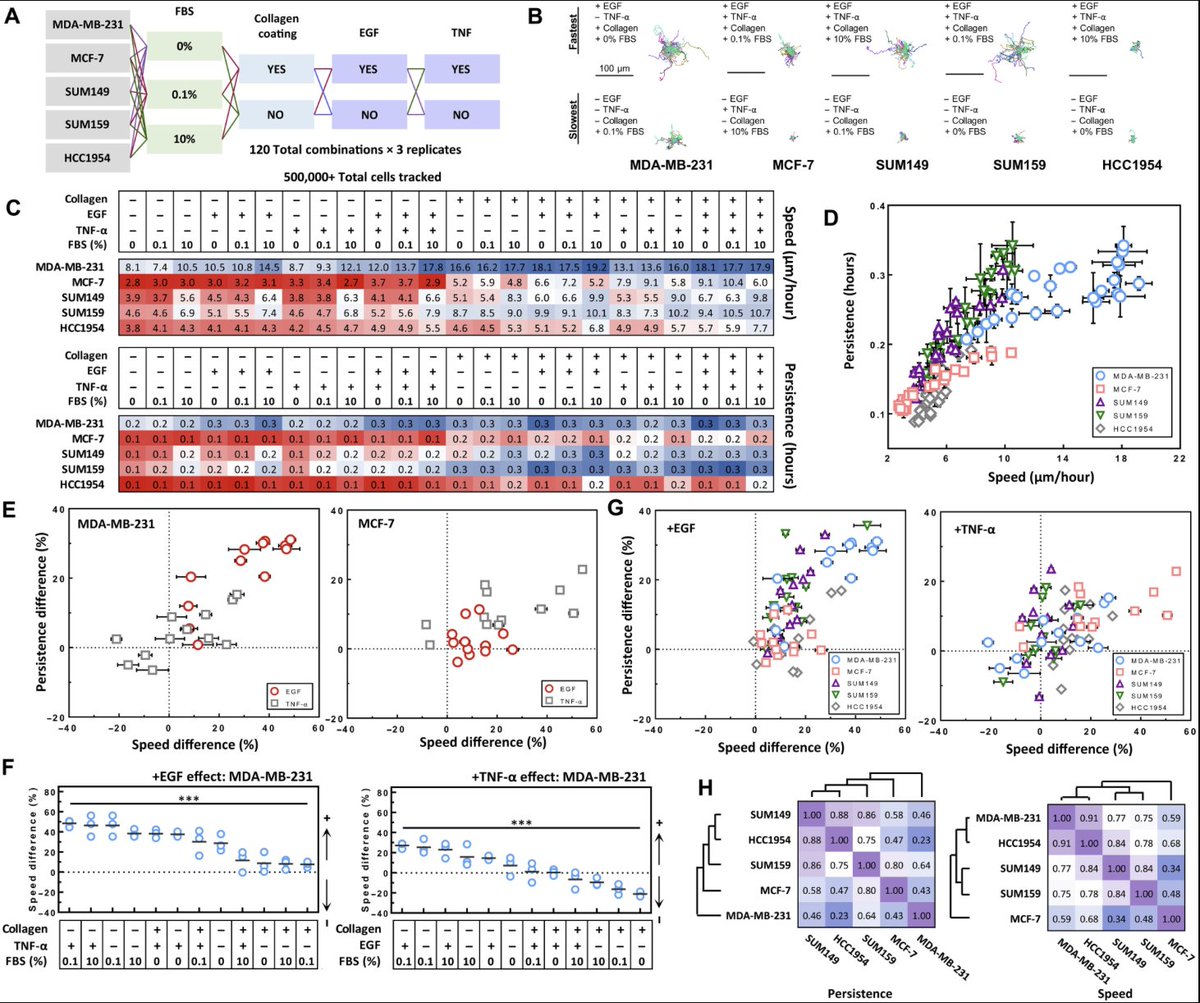
We have developed a new AI-based assay to rapidly identify new molecular targets to inhibit cancer cell migration and metastasis.
See more details here: https://t.co/U7nYtiabZY
🚨 Today in @Nature, we report GEMINI—a genetically encoded intracellular memory device that writes cellular dynamics into tree-ring-like fluorescent patterns within cytoplasmic protein assemblies.[1/n]
https://t.co/eVchPCiK6f
Congratulations to Olena, Andrew, and the rest of our incredible team! These exciting findings challenge neuron-centric models of fear - take a look!
https://t.co/x0KWWpE8cK
Our paper is out! Really grateful to my colleagues, collaborators-experts in their respective field-, and my mentor Professor Ilya Monosov. @MonosovLab
https://t.co/0k2eyp46b1
! New paper from the lab !
How does novelty impact value-based decision making ?
What are the circuits and what mechanisms do they implement?
Congratulations to Dr. Takaya Ogasawara and team
https://t.co/hfQpWkkVCt
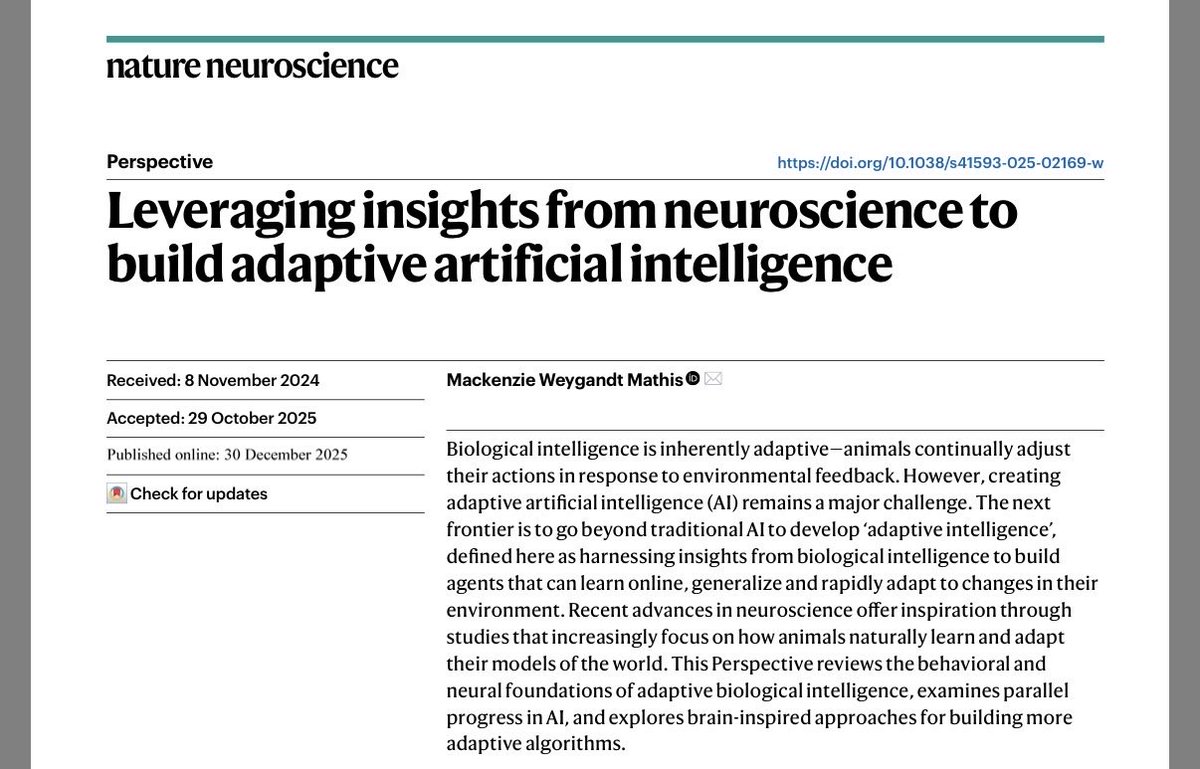
Interested in the latest advances in neuroscience (neural dynamics and internal models) and how they can be leveraged to build smarter, adaptive AI?
➡️ My first real solo piece 🖤🫶 @NatureNeuro
https://t.co/oa0Ky1qDZN
happy to see this. really nice! has very interesting conceptual interactions with our Bromberg-Martin and Feng 2024 (nat neuro) and def gives me ideas for future work.
In a recent study, researchers identify a brain circuit that promotes competition between repetitive and goal-directed behavior and find that compulsive-like behaviors can override the drive for natural rewards or social interactions. https://t.co/8V2TUOxrKn





![DingchangLin's tweet photo. 🚨 Today in @Nature, we report GEMINI—a genetically encoded intracellular memory device that writes cellular dynamics into tree-ring-like fluorescent patterns within cytoplasmic protein assemblies.[1/n]
https://t.co/eVchPCiK6f https://t.co/KPmYKFgnZt](https://pbs.twimg.com/media/HCgxFtcWkAAoaPS.jpg)