🚨 Today in @Nature, we report GEMINI—a genetically encoded intracellular memory device that writes cellular dynamics into tree-ring-like fluorescent patterns within cytoplasmic protein assemblies.[1/n]
https://t.co/eVchPCiK6f
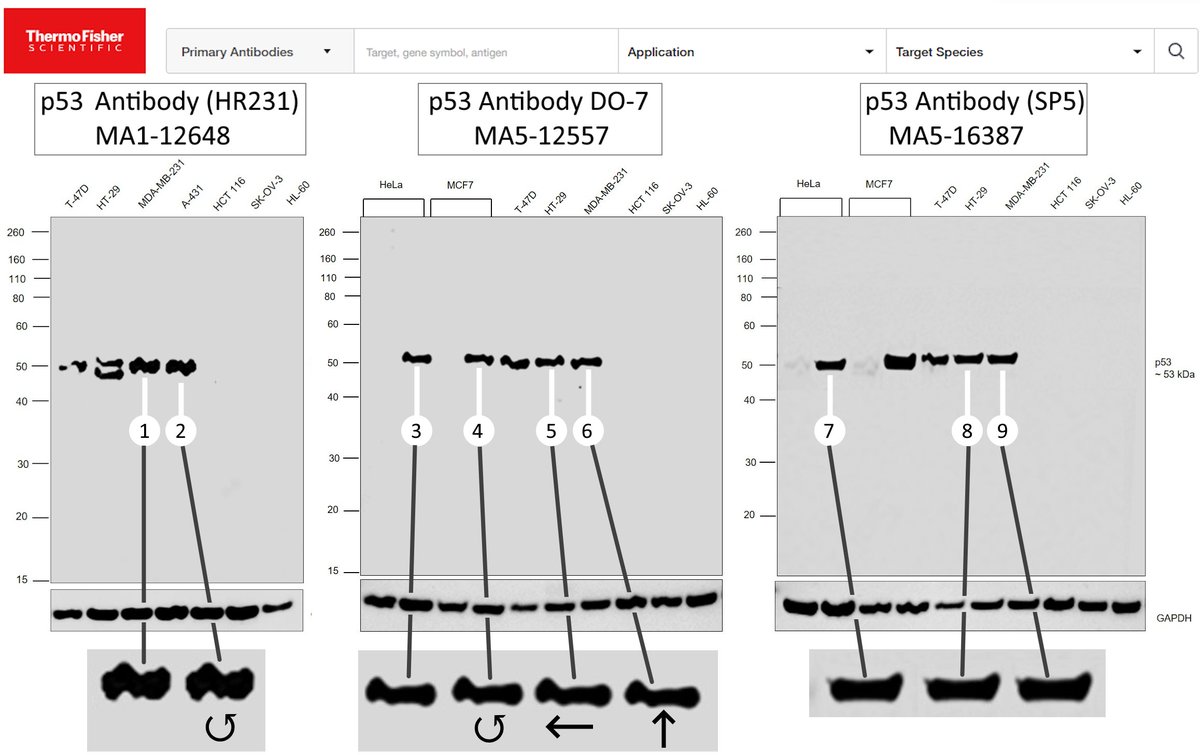
Earlier this week I posted an example of a fake western blot provided by ThermoFisher to demonstrate the validity of a p53 antibody. I considered it an amusing curiosity. In fact ThermoFisher has systematically manipulated antibody validation data. Short Thread... 🧵
Today in @Nature, we report MouseMapper: foundation-model AI to map disease perturbations across the entire mouse body cell-by-cell.
In obesity, it revealed body-wide inflammation & unexpected facial nerve damage. 🧵👇🔉
https://t.co/BERf5GQ10Z led by @Dorie00 & @yingchen733
A growing protein cage has no architect.
Each piece only responds to its local environment.
Yet somehow, thousands of pieces can come together to form a large, precise sphere.
Today in @Nature, two back-to-back papers from our team and @UWproteindesign show how de novo protein design can make this kind of self-assembly programmable.
The trick: we didn't design perfect symmetry.
We designed the rules for breaking it. [1/17]
https://t.co/zHeNBc1oFt
https://t.co/MNS1bS9r5O
Surprised to discover that Thermo Fisher appears to show a fake western blot for the validation of one of their p53 antibodies. I've added a diagram to show the very similar bands. This does not appear to be one of the "published figures", but their own internal data.
Could the folding of synthetic gene circuits in 3D shape how genes are expressed? Today @ScienceMagazine we report on the role of gene syntax in shaping feedback between transcriptional activity and genome folding for advanced circuit design🧵 (1/n)
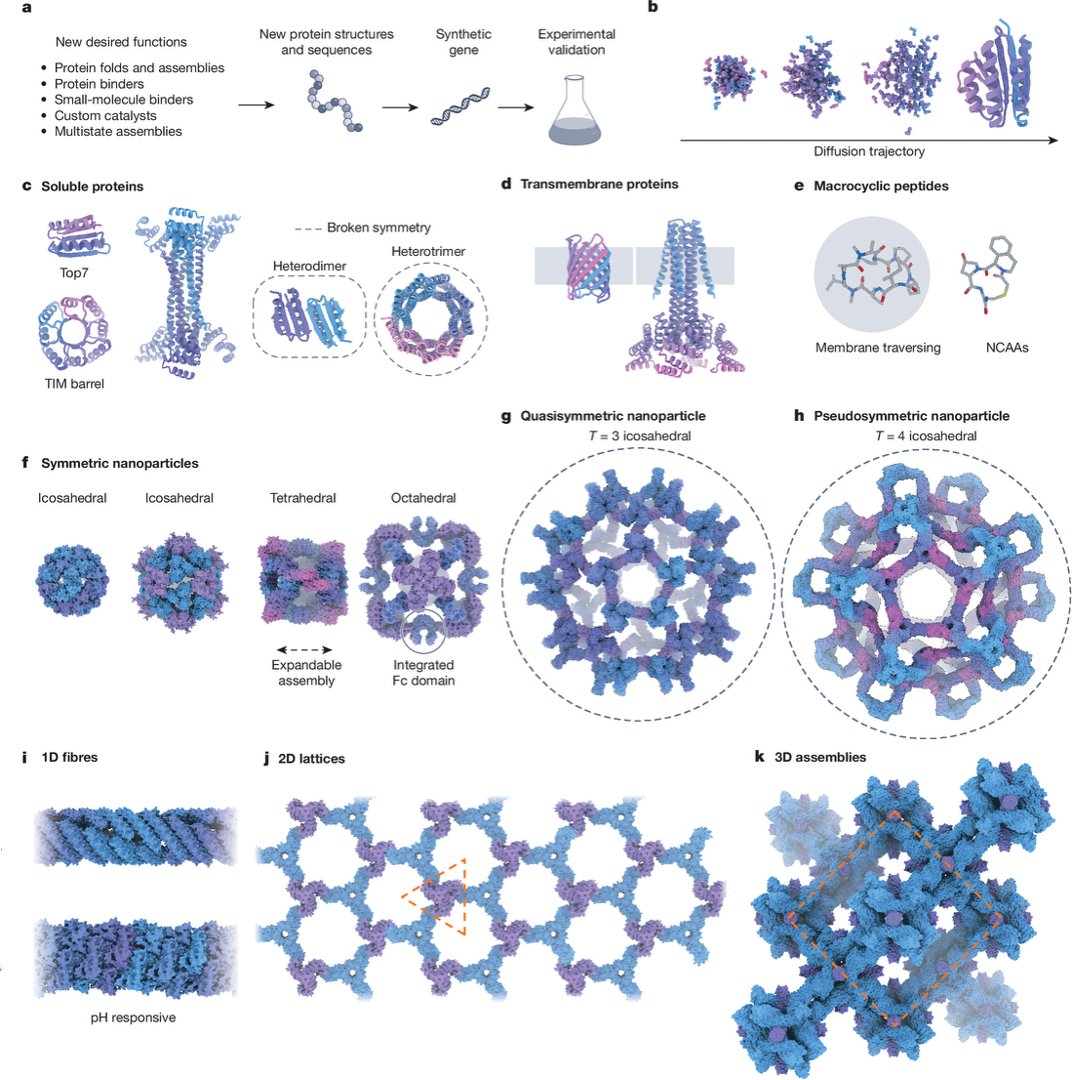
1/ Excited to share our new Review in @Nature:
“The past, present and future of de novo protein design.”
Here, we mainly focused on structure-guided protein design. The field is entering a new phase: now that we can design new proteins, what should we build next?
The most beautiful molecular recorder 😍
GEMINI is a self-assembling protein system that records cellular events as physical layers, readable via imaging. Achieves down to 15 min resolution and works nicely in vivo!
From @DingchangLin's lab in @Nature
Congratulations to the 4 Hopkins Engineers among the 449 scholars newly elected to the American Association for the Advancement of Science (@aaas): Jeff Coller & Michael Miller in @JHUBME, Kalina Hristova in @JHUMaterials, & Rajat Mittal in @jhumeche! https://t.co/rYzmuHlcDi
🚨 Today in @Nature, we report GEMINI—a genetically encoded intracellular memory device that writes cellular dynamics into tree-ring-like fluorescent patterns within cytoplasmic protein assemblies.[1/n]
https://t.co/eVchPCiK6f
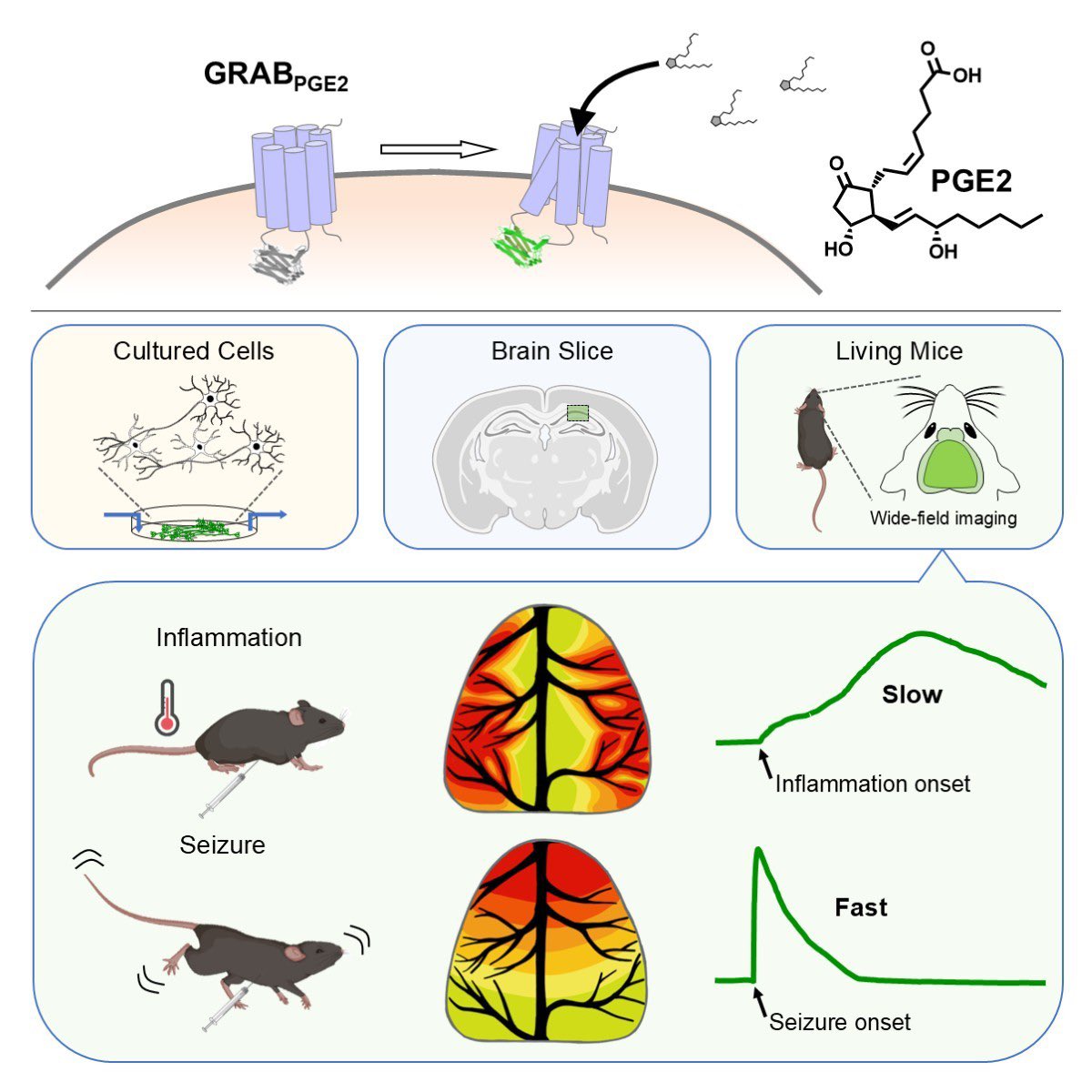
Excited to share our new paper on GRAB_PGE2-1.0, the first genetically encoded fluorescent sensor for monitoring spatiotemporal prostaglandin E2 (PGE2) dynamics in vivo! It enables real-time imaging in cultured cells, acute brain slices, and living mice.
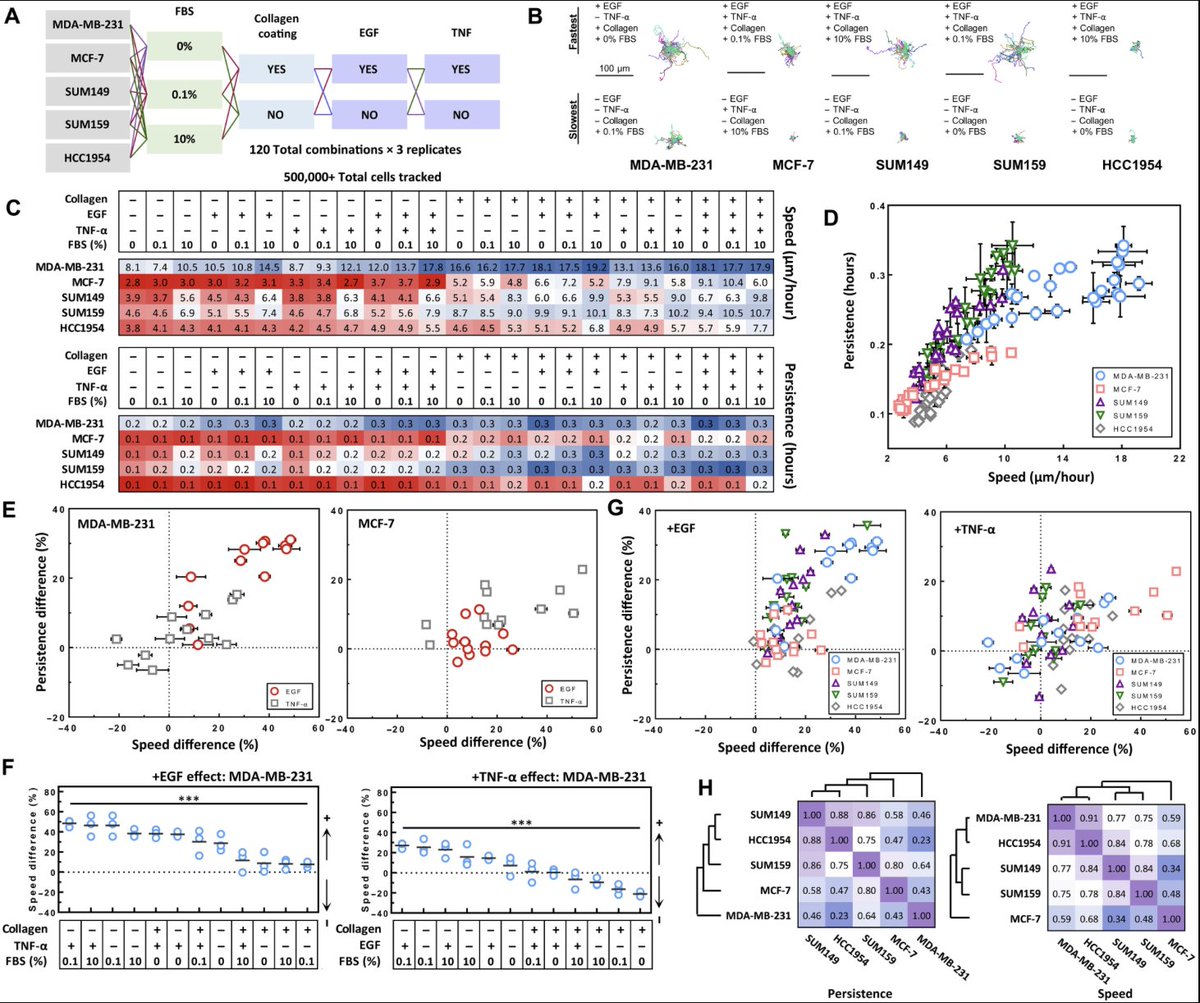
We have developed a new AI-based assay to rapidly identify new molecular targets to inhibit cancer cell migration and metastasis.
See more details here: https://t.co/U7nYtiabZY
🚨 Today in @Nature, we report GEMINI—a genetically encoded intracellular memory device that writes cellular dynamics into tree-ring-like fluorescent patterns within cytoplasmic protein assemblies.[1/n]
https://t.co/eVchPCiK6f
@N_Rajewsky Sorry we are unable to share more details about our ongoing research in this open channel. But we are willing to share offline if you are interested.
🚨 Today in @Nature, we report GEMINI—a genetically encoded intracellular memory device that writes cellular dynamics into tree-ring-like fluorescent patterns within cytoplasmic protein assemblies.[1/n]
https://t.co/eVchPCiK6f
@N_Rajewsky Push the technology to broader applications (recording more different stuffs and being used beyond our lab) and also to advance fundamental understandings.


![DingchangLin's tweet photo. 🚨 Today in @Nature, we report GEMINI—a genetically encoded intracellular memory device that writes cellular dynamics into tree-ring-like fluorescent patterns within cytoplasmic protein assemblies.[1/n]
https://t.co/eVchPCiK6f https://t.co/KPmYKFgnZt](https://pbs.twimg.com/media/HCgxFtcWkAAoaPS.jpg)


![wang_shunzhi's tweet photo. A growing protein cage has no architect.
Each piece only responds to its local environment.
Yet somehow, thousands of pieces can come together to form a large, precise sphere.
Today in @Nature, two back-to-back papers from our team and @UWproteindesign show how de novo protein design can make this kind of self-assembly programmable.
The trick: we didn't design perfect symmetry.
We designed the rules for breaking it. [1/17]
https://t.co/zHeNBc1oFt
https://t.co/MNS1bS9r5O](https://pbs.twimg.com/media/HIxf-9wWcAAJXu-.jpg)