Significant vulnerability for American AI here—one reason why Chinese developers benefit from adversarial distillation is because they don’t have indigenous firms like Scale and Mercor with expert data. If they can just buy the datasets directly…
1/ China is systematically extracting the capabilities of U.S. frontier AI.
With @danielremler, a comprehensive analysis of Adversarial Distillation: the evidence, the supply chain, and what to do about it. 🧵
When you’re dealing with a bully, you can only take so many punches before restraint starts looking like surrender
China’s gray-zone warfare demands a collective response
After months of research, I am excited to share a new @CNASdc report by @Constanza_MVB and me: The Entanglement Edge: U.S. Strategic Priorities in Quantum Networking.
For the U.S. to maintain its advantage in quantum networking, Washington must set clearer priorities, better benchmarks, and sustained investment in the applications that are most likely to deliver national security value.
The old national security playbook no longer applies. To win the 21st century, America needs New Rules:
A stronger denial defense across the First Island Chain
With Japan, Taiwan, and the Philippines, we must deploy precision fires and deter Chinese aggression
The U.S. can’t keep pace with emerging cyber threats without robust public-private information sharing. That requires a law called CISA 2015, which expires again in September.
New piece with @carriecordero on why Congress should consider long-term reauth of CISA 2015:👇
The importance of public-private information sharing is only growing as AI reshapes the cyber threat landscape. It’s time to sunset the sunset provision & permanently reauthorize CISA 2015. From @MorganCPeirce & me, via @CNASdc https://t.co/lr5l13k9DZ
An incredibly promising investment, indicating Washington’s commitment to helping Manila move up the value chain.
The Philippines also has the world's fourth- and fifth-largest copper and nickel deposits and $1 trillion of untapped gold, zinc and silver.
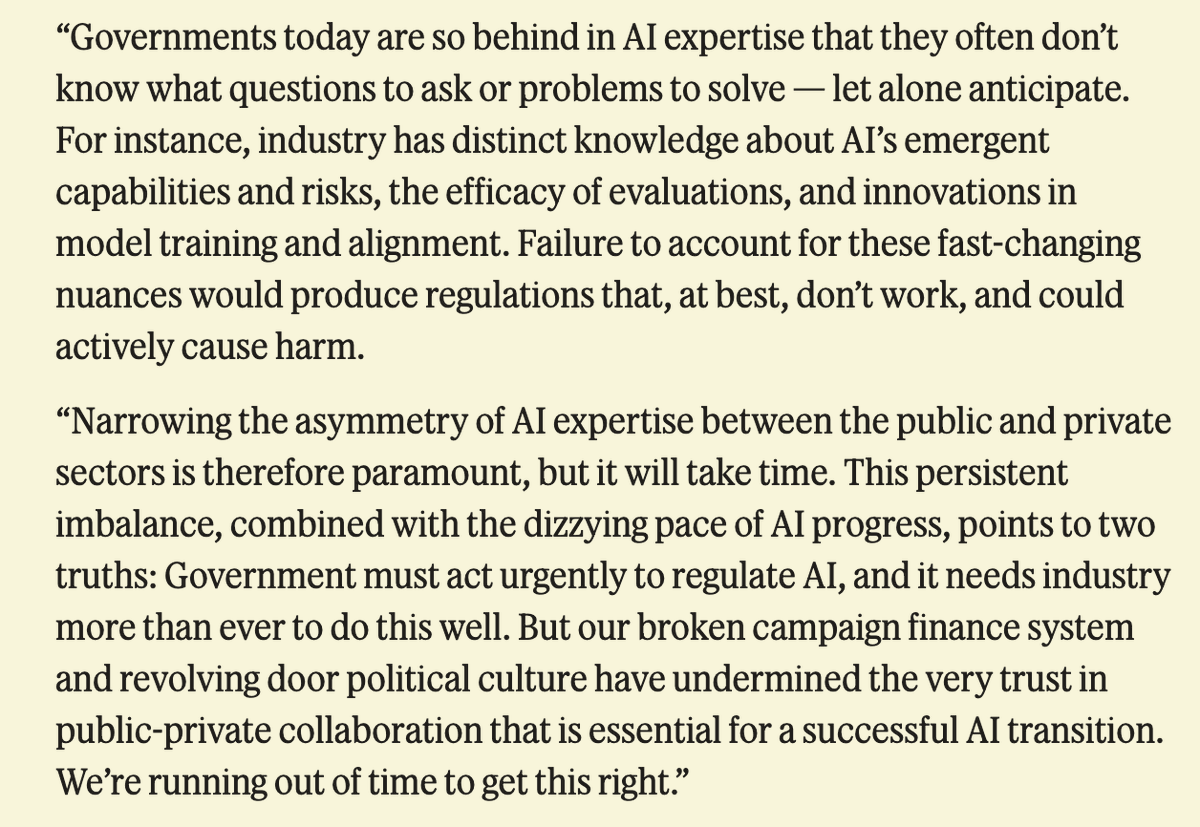
Shared some thoughts with @semafor's @mchalfant16 about the urgency of narrowing the AI expertise gap between government and industry. The gap is so large now that governments often don't even know the right questions to ask or risks to anticipate. Not good.
✍️ NEW PAPER ✍️
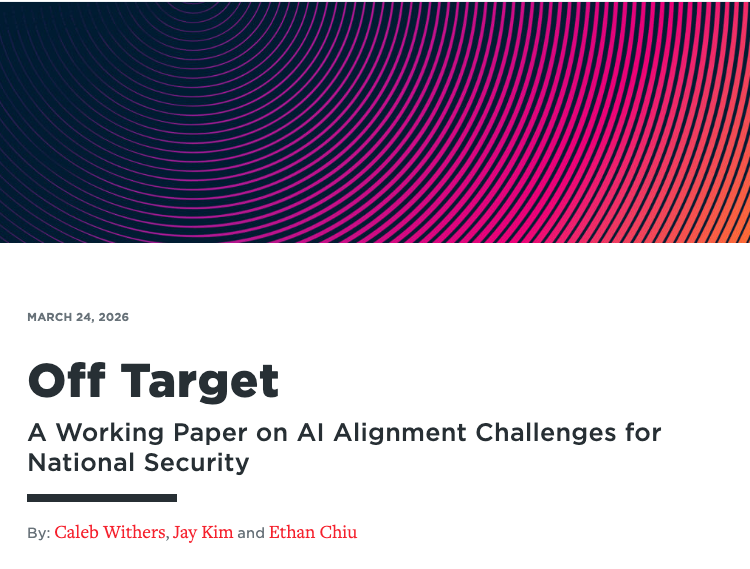
The Pentagon’s AI Acceleration Strategy, released in January, targets an “AI-first” warfighting force, accepting that “the risks of not moving fast enough outweigh the risks of imperfect alignment.” The urgency is right. But I worry this elides how quickly alignment could become a central bottleneck on realizing AI’s potential in the national security enterprise. New paper from me (w/ Jay Kim and Ethan Chiu) on this challenge and what to do about it 🧵👇