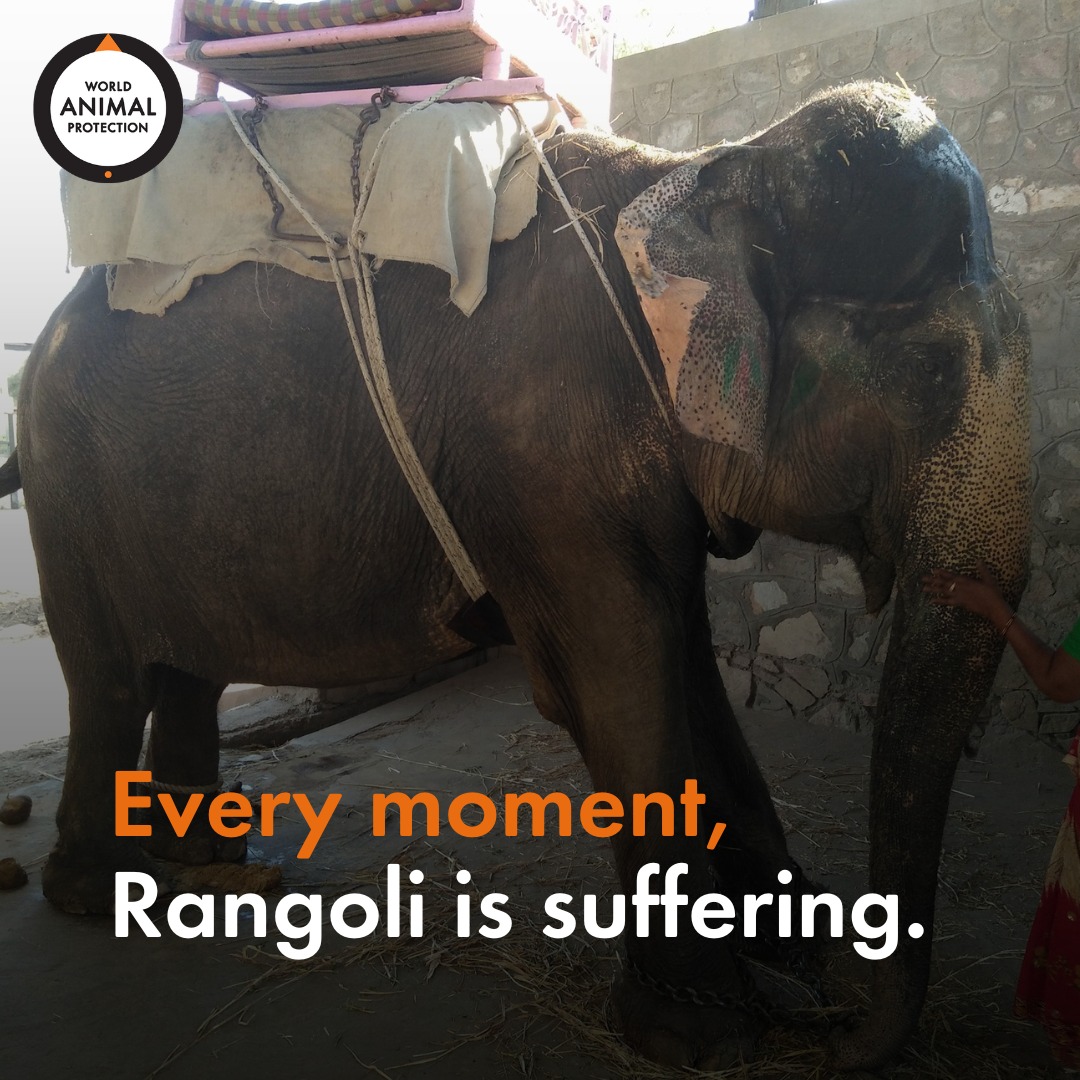
Rangoli doesn’t get a single moment of freedom. Will you help her?
For her entire 51-year life, Rangoli has suffered for the entertainment of tourists. She was born at UNESCO World Heritage site, Amer Fort, into a life of pain, captivity, and cruelty.
Rangoli is forced to carry tourists on her back walking up and down the hard cobblestone roads to the top of the hill during the day – often in extreme heat. Only to then spend her nights standing in her own faeces, while chained when she ‘rests’. Rangoli deserves better.
By donating today, you can help end elephant rides at Amer Fort so we can begin the process of safely retiring her and all 82 elephants who are suffering.
Donate Now: https://t.co/R9Edf5eEvD
#DonateToProtectAnimals #animallove #fundraising #EndtheElephantRides #saveelephants #donation #charity #help #nonprofit #makeadifference #community #socialgood
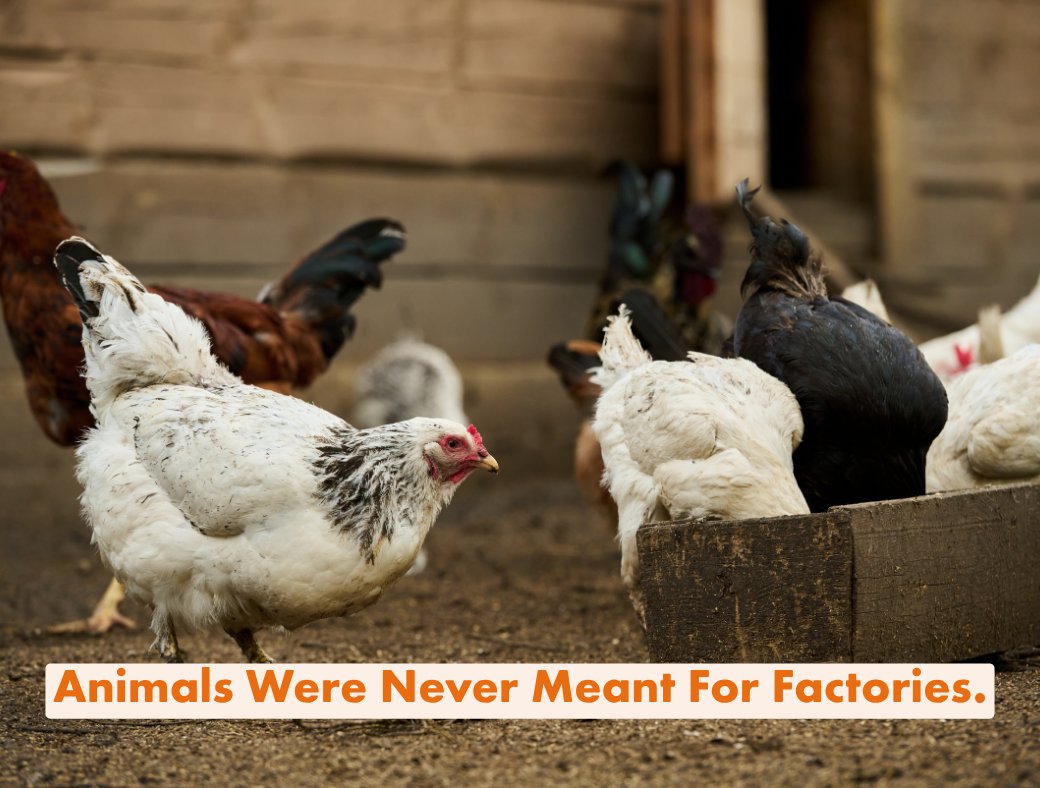
Behind every cheap piece of meat is a system built on confinement, overcrowding, and mass production.Eating less meat, choosing ethical alternatives, and becoming aware of where food comes from are small steps that can create meaningful change.
Because compassion should not disappear behind factory walls.
📍Pledge to eat less meat: https://t.co/6VfwEYMrIN
#WorldAnimalProtection #PoultryFarming #FactoryFarming #EatLessMeat #AnimalCruelty #AnimalWelfare #EthicalEating #ConsciousLiving #CrueltyFree #SustainableChoices
Once widespread across the river systems of the Indian subcontinent, the Gharial is now one of the most critically endangered reptiles in the world.
With fewer than 1,000 individuals remaining in the wild, its decline has been driven by habitat destruction, sand mining, river pollution, and accidental entanglement in fishing nets. Unlike other crocodilians, the Gharial is highly specialised — relying on deep, clean rivers and abundant fish populations to survive.
Its presence is an indicator of river health. When species like the Gharial begin to disappear, it reflects a larger ecological imbalance affecting entire freshwater systems.
Conservation is not just about saving a species — it is about restoring the ecosystems that sustain life.
📍Learn more: https://t.co/s4oYReENj5
#WorldAnimalProtection #Gharial #CriticallyEndangered #SaveOurRivers #FreshwaterConservation #Biodiversity #WildlifeProtection #SaveWildlife
Parrots are highly intelligent and social birds, meant to fly across open skies and live in flocks, not confined within cages. When kept in captivity, they are deprived of natural behaviours like flying, foraging, and bonding, often leading to stress and poor wellbeing over time.
We admire parrots for their beauty, their colours, and their intelligence. But admiration should never turn into ownership. Because what we call love often becomes a life lived behind bars for them. On this World Parrot Day, let’s redefine what it means to care. If you truly love them, let them be where they belong — in the wild, free as they were always meant to be.
📍Know more about our recent campaigns: https://t.co/YSwdPwAaCO
#WorldAnimalProtection #WorldParrotDay #LetThemBeWild #FreeTheBirds #StopWildlifeTrade #ProtectBirds #WildlifeConservation #SayNoToCages
Veganism is more than a lifestyle choice — it is a stand against animal suffering.
Every meal has the power to reflect compassion, kindness, and respect for all living beings.
Choosing plant-based means choosing a future where animals are not treated as commodities, but as lives that matter.
#Veganism #ChooseCompassion #AnimalWelfare #EndAnimalCruelty #WorldAnimalProtectionIndia
Frozen solid, yet still alive.
The Alaskan Wood Frog can survive extreme winters by freezing up to 70% of its body. During this state, its heartbeat stops, breathing ceases, and brain activity drops to zero.
Using natural “antifreeze” made from glucose and urea, it prevents deadly ice crystals from damaging its cells while surviving months in temperatures as low as -18°C beneath leaves and moss.
When spring arrives, it thaws, its heart starts beating again, and life continues as if nothing happened.
One of nature’s most extraordinary survival adaptations.
#DidYouKnow #NatureFacts #Wildlife #AlaskanWoodFrog #WorldAnimalProtectionIndia
What appears as a brief experience for us often reflects a lifetime of control for them. Elephants used for rides are frequently taken from natural environments and trained to comply through methods that prioritise obedience over welfare.
These practices continue because they are normalised within tourism. Choosing not to participate is one of the most direct ways to reduce demand and support a more ethical approach to wildlife.
🚫 End elephant rides
✍️ Sign the petition - https://t.co/giFWOaVZFX
#WorldAnimalProtection #EndElephantRides #ProtectElephants #ResponsibleTourism #AnimalWelfare #EndAnimalCruelty #EthicalTravel #WildlifeProtection
The Indian roofed turtle is part of a group of species that rarely enter public conversation, yet remain vital to ecosystem health. Freshwater turtles contribute to nutrient cycling and help maintain balanced aquatic environments.
Despite being listed as Least Concern, increasing habitat pressure and environmental degradation pose long-term risks. Conservation efforts often focus on well-known species, while others decline quietly in the background.
Source: IUCN Red List; Freshwater Biodiversity Studies (WWF)
Protecting biodiversity requires attention beyond the familiar — especially for species we rarely see, but cannot afford to lose.
📍Know more about our recent campaigns: https://t.co/YSwdPwAaCO
#WorldAnimalProtection #IndianRoofedTurtle #FreshwaterBiodiversity #ProtectWildlife #Biodiversity #SaveWildlife #WetlandConservation #WildlifeAwareness
World Animal Protection is saddened to learn of the news of the death of Marthanda, the elephant at Dubare Elephant Camp in Kodagu in Karnataka following the incident of the clash between two elephants, Kanjan and Marthanda, that resulted in the tragic death of a tourist. This incident highlights the manifest dangers of coming in proximity to elephants in captive situations and we welcome the Karnataka government's announcement of the cessation of all close contact encounters with captive elephants. This is the exact same step we had suggested to the government after the incident. Elephants are wild animals. Wildlife belongs in the wild.
In March 2026, our Animal Protector Program carried out 13 wildlife rescue interventions, helping distressed wild animals return safely to the wild where they belong. From rescuing a frightened Indian Gaur that wandered into a human settlement, to safely relocating a Spectacled Cobra trapped near a primary school, each rescue was a reminder that compassion can save lives.
These interventions were only possible because communities chose to call for help instead of reacting with fear, trained rescuers responded without delay, and supporters stood beside us every step of the way.
Wildlife is increasingly forced into human spaces due to habitat loss and environmental pressures. Yet every successful rescue proves that coexistence is possible when empathy leads the way.
Because of your support, more animals are getting the second chance they deserve.
Read the full rescue stories here:
https://t.co/ExEM67nhNa
#WorldAnimalProtection #WildlifeRescue #AnimalRescue #WildlifeConservation #EveryLifeMatters #SaveWildlife #CompassionForAnimals #HumanWildlifeCoexistence #AnimalProtector #RescueStories #ProtectWildlife #IndiaWildlife #WildAnimals #Conservation #AnimalWelfare #WildlifeProtection #NatureConservation #RescueAndRehab #SpectacledCobra #IndianGaur #ProtectAnimals #WildlifeAwareness #CompassionInAction #SupportWildlife #Coochbehar #Alipurduar
World Animal Protection is deeply saddened by the tragic death of a tourist during a clash between captive elephants at the Dubare Elephant Camp in Kodagu, Karnataka. This incident once again highlights the serious risks and suffering linked to keeping wild elephants in captivity for tourism and entertainment. Similar concerns have also been raised in the past around elephant rides at Amer Fort and other captive elephant attractions across India.
We have written to the Chief Wildlife Warden of Karnataka urging strict monitoring of all close human-elephant interactions in captive settings and calling for an end to elephant rides and entertainment. We also urge authorities to explore opportunities for the rehabilitation and possible release of forest camp elephants back into the wild, wherever feasible.
Elephants are wild animals. They belong in the wild, not in captivity.
The Malabar giant squirrel is one of India’s most striking yet lesser-known species, found high in the forests of the Western Ghats. With its vibrant colors and tree-dwelling lifestyle, it plays an important role in maintaining forest ecosystems by aiding seed dispersal and supporting biodiversity.
Although currently classified as Least Concern, its survival is closely tied to forest health. Increasing deforestation, habitat fragmentation, and human interference are gradually reducing the spaces it depends on. Species like these often go unnoticed — not because they are safe, but because they are not yet in crisis.
Conservation should not begin only when a species becomes endangered. It should begin while there is still time to protect what exists. Awareness is the first step — especially for species we rarely see, but cannot afford to lose.
📍Know more about our recent campaigns: https://t.co/YSwdPwAaCO
#WorldAnimalProtection #MalabarGiantSquirrel #WesternGhats #ProtectWildlife #Biodiversity #WildlifeConservation #SaveForests #EndemicSpecies
The majority of animals farmed for food live in conditions that cause suffering and stress. It is time to rethink farming. Treatment of farm animals is the world’s biggest animal welfare issue – and it’s getting bigger. By 2050, livestock production will be twice what it was in 2000. Right now, more than 70 billion animals are farmed for food each year – two-thirds in conditions that mean they can’t move freely or live naturally. We campaign for progress at every stage – from farming to transportation to slaughter.
📍Know more about our campaigns: https://t.co/yazPz9UHny
#WorldAnimalProtection #DairyIndustry #CowWelfare #DairyFarming #FactoryFarming #AnimalWelfare #EthicalDairy #CompassionForAnimals
From the forests of the Eastern Himalayas to the Western Ghats, these species tell a story of survival. The red panda, tiger, and Asiatic lion continue to face habitat loss and human pressure, while lesser-known species like the Malabar civet and Indian pangolin are pushed further into decline by fragmentation and illegal trade.
Some are iconic. Others are rarely seen. But each plays a role in maintaining ecological balance. Losing them is not just about species — it is about weakening entire ecosystems.
📍Support our mission to save animals: https://t.co/R9Edf5e6G5
#EndangeredSpeciesDay #WorldAnimalProtection #RedPanda #BengalTiger #AsiaticLion #IndianPangolin #MalabarCivet #ProtectWildlife
Tiny wings. A second chance.
This White-breasted Waterhen chick was rescued in Shimuliapara, North 24 Parganas, and is currently under care before being safely released back into the wild.
Many wild birds fall victim to habitat disturbance, illegal capture, and unsafe human interference. Every rescue is a reminder that wildlife belongs in nature—not in cages, markets, or homes.
Protecting wildlife starts with awareness, compassion, and action.
Read more about Animal Protector Campaign: https://t.co/dbr2Cbd7dk
#WildlifeRescue #EndWildlifeTrade #WhiteBreastedWaterhen #WorldAnimalProtectionIndia
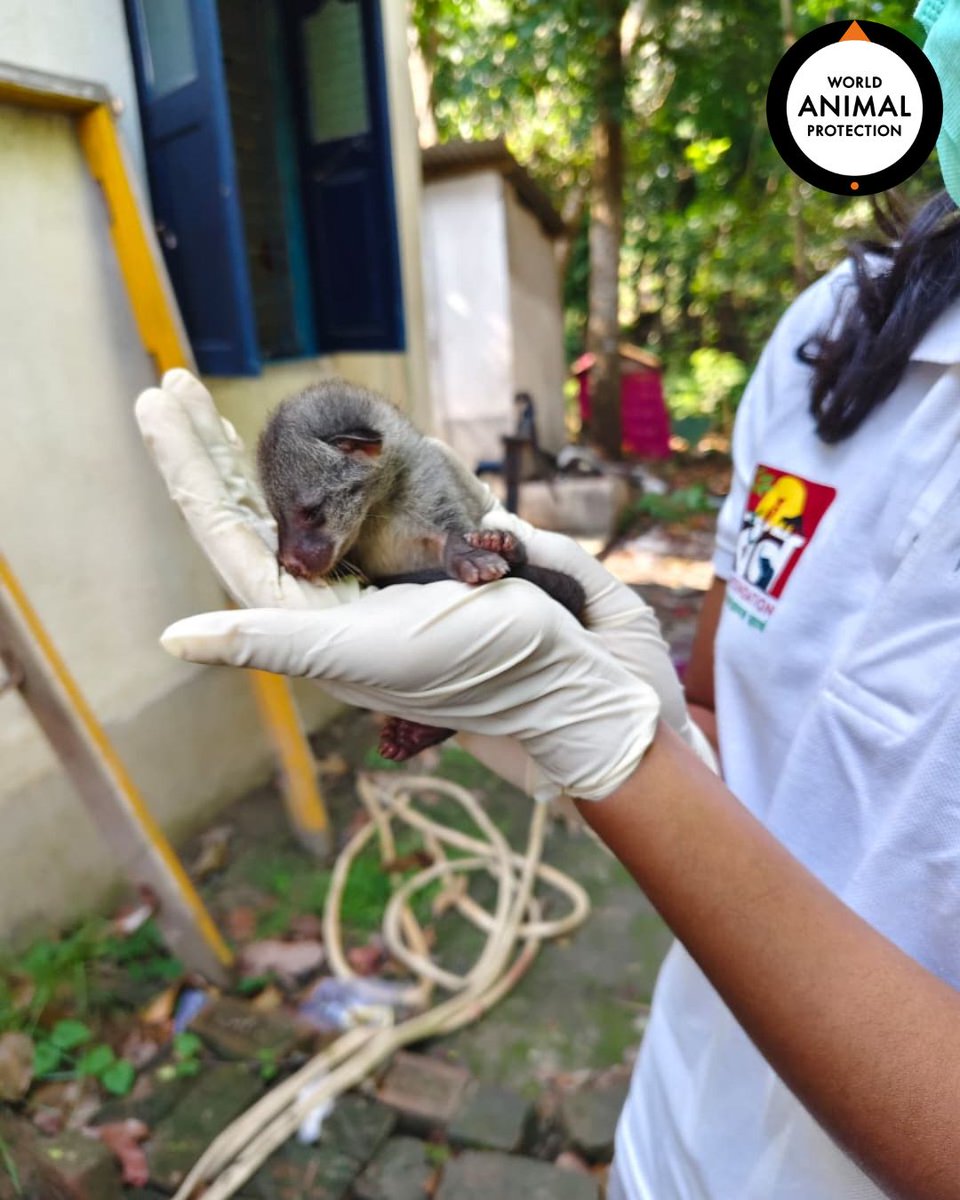
This baby Asian Palm Civet should have been in the wild — not in human hands.
Every year, countless wild animals are trapped, traded, and displaced from their natural habitats due to the illegal wildlife trade. Many never make it back home.
This civet was rescued in North 24 Parganas, Habra, and is now under care before being safely released. But not every animal gets a second chance.
Wildlife belongs in the wild.
Say NO to the illegal wildlife trade.
Would you report wildlife trafficking if you witnessed it? Tell us below. 👇
Read more about Animal Protector Campaign: https://t.co/dbr2Cbd7dk
#WildlifeTrade #EndWildlifeTrade #AsianPalmCivet #WildlifeRescue #WorldAnimalProtectionIndia
Unlike other lion populations, the Asiatic lion survives in just one landscape — the Gir ecosystem in India. This makes the species highly vulnerable to disease outbreaks, environmental changes, and human pressure. While conservation efforts have helped increase their numbers, their limited range remains a concern. Expanding and securing habitats is essential to ensure their long-term survival.
📍Learn more: https://t.co/s4oYReENj5
#AsiaticLion #WorldAnimalProtection #EndangeredAnimals #ProtectWildlife #SaveLions #WildlifeConservation #Biodiversity #NatureProtection
International Tuna Day, observed every year on May 2, highlights the urgent need to conserve tuna populations and promote sustainable fishing practices.
Established by the United Nations General Assembly in 2016 and first observed in 2017, the day draws attention to the growing decline in global tuna stocks and the need for stronger international cooperation.
Tuna and tuna-like species contribute significantly to the global economy, representing 20% of the value of all marine captured fisheries and over 8% of globally traded seafood—worth more than $42 billion annually.
But behind this industry lies a growing crisis. Overfishing remains the biggest threat to tuna populations, with species like the Atlantic Bluefin experiencing severe declines, some by more than 96%. Tuna fishing also raises serious animal welfare concerns, as hook-caught tunas suffer major injuries, while bycatch from fishing operations continues to harm dolphins, sea turtles, and other marine life.
As apex predators, tuna are essential to maintaining the balance of ocean ecosystems and healthy marine food webs. Protecting them means protecting the health of our oceans.
Consumers can support sustainable fishing by choosing products with the Marine Stewardship Council (MSC) blue fish tick label on canned tuna.
The 2025 theme, “Our Ocean, Our Tuna, Our Future,” reminds us that safeguarding tuna populations is a shared global responsibility.
#InternationalTunaDay #ProtectOurOceans #SustainableFishing #WorldAnimalProtectionIndia