🎊Heading toward America250 🇺🇸, it’s a reminder that progress is part of the story. In #breastcancer care, science, innovation, and resilience have changed survival in a real way—but there’s still more to achieve together.
#America250#IndependenceDay#BreastCancerAwareness
Statin use after but not before breast cancer diagnosis is associated with improved mortality in hormone receptor-positive early breast cancer - Let Life Happen https://t.co/765YU6LB7G
Early stage ER+/HER2- breast cancer patients showed promising clinical responses to neoadjuvant immune-modulating stereotactic body radiotherapy with durvalumab.
@AlexDeCaluwe@LauBuisseret
https://t.co/lEawlHgIDU
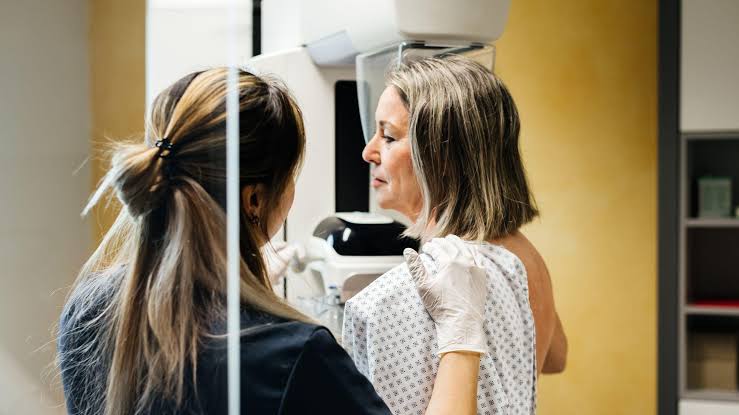
Preventing and the best early detection of breast cancer, an illuminating conversation with @DrElisaPort, getting into her new book THE BREAST ADVICE, in the new Ground Truths
We spoke about @MountSinaiNYC's Breast Center, where AI mammography is routine and there's no charge to patients
GLP-1 drugs may be reducing breast cancer risk by 30% - and weight loss alone doesn't fully explain it
University of Pennsylvania analysed 111,646 women aged 45–80 with BMI ≥25, tracked breast imaging records over Penn Medicine
Findings:
1. GLP-1 users: 1.62% breast cancer incidence
2. Non-users: 2.31% - a 30% lower likelihood for users
3. Held after matching for age, race, BMI, breast density, and diabetes
4. Effect held in both Black and White women
This said, the science is observational, not causal proof
The researchers are now launching a prospective randomised trial. But it joins growing evidence that metabolic health and cancer risk are tightly linked - and GLP-1s may be doing more than shrinking fat
For now: low visceral fat, low chronic inflammation, low insulin signalling = lower cancer risk, drug-induced or not
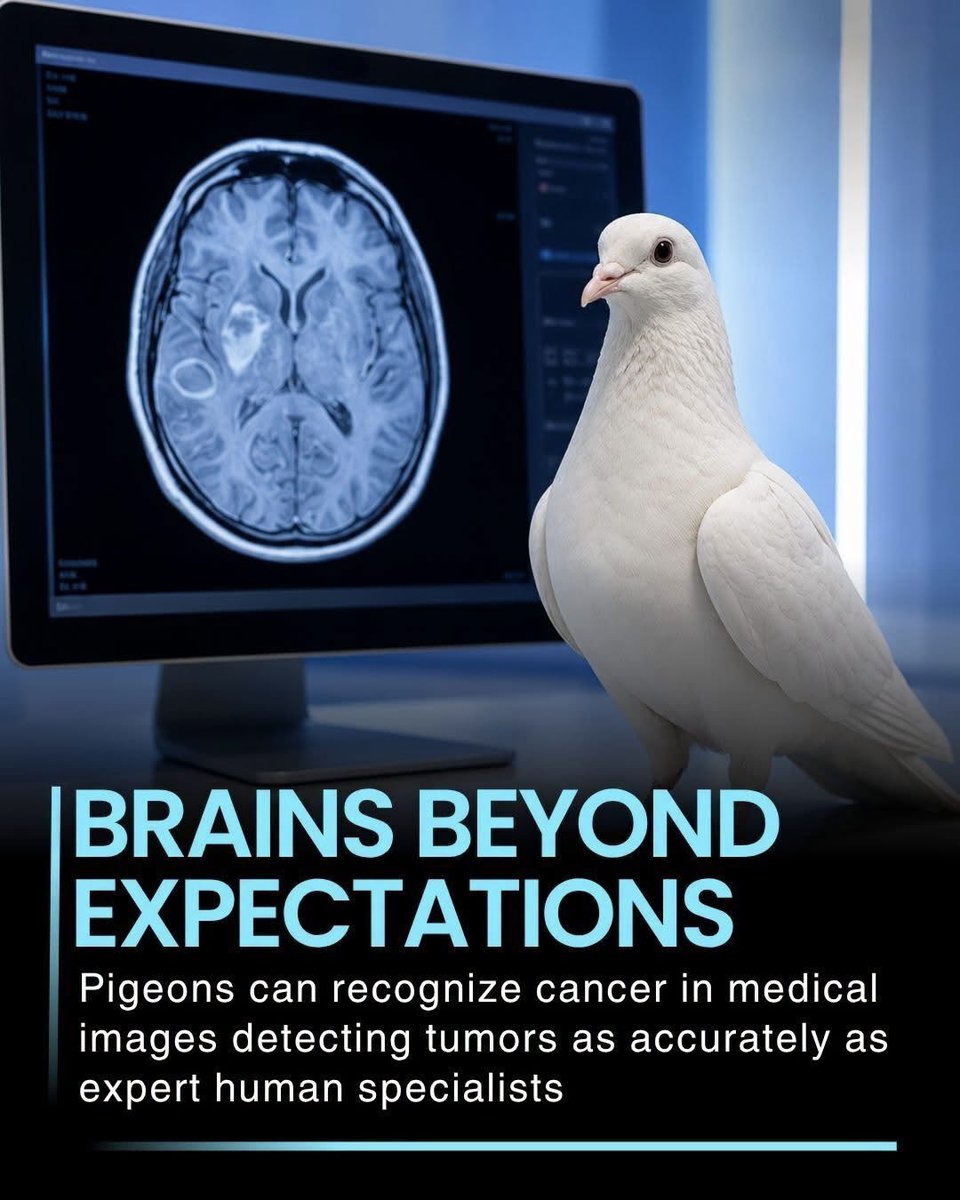
🚨 SCIENTISTS TAUGHT PIGEONS TO SPOT CANCER... AND THE RESULTS WERE SURPRISING
What if one of the best pattern detectors isn't a supercomputer... but a pigeon?
Scientists found that trained pigeons could accurately distinguish certain cancer-related patterns in medical images during laboratory experiments. Using a simple reward-based learning system, the birds learned to identify tiny warning signs in breast tissue samples and mammograms, and even recognized new images they had never seen before.
No, pigeons can't diagnose cancer or replace doctors. But this surprising research is helping scientists better understand visual pattern recognition and could inspire future advances in medical imaging and artificial intelligence.
Sometimes, the most ordinary animals reveal the most extraordinary science.
Source: Levenson, R. M., Krupinski, E. A., Navarro, V. M., Wasserman, E. A., et al. Pigeons (Columba livia) as Trainable Observers of Pathology and Radiology Breast Cancer Images. PLoS ONE.
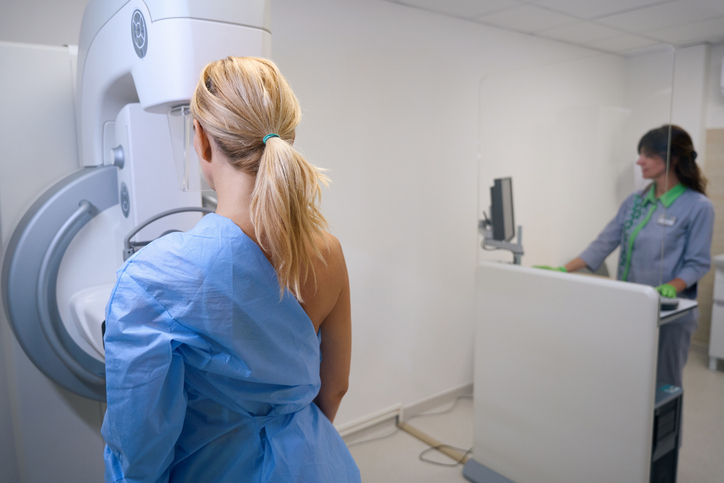
🆕 @ACPIMPhysicians#breastcancer screening guidance recommends biennial mammography for average-risk women ages 50–74 and shared decision-making for ages 40–49.
➡️The controversial guidance has prompted a response from @RadiologyACR & @BreastImaging.
🔗 https://t.co/GiFJgjKqba
U.S. Naval Hospital Yokosuka has expanded cancer screening for sailors and families, boosting early-detection rates across several major cancers over the past year and earning top honors in the Pacific from the Defense Health Agency. (from @JBaez_Stripes) https://t.co/sve6r3pTsX
🚨One of the biggest challenges in #cancer care is protecting the heart while treating the tumor. Studies like this show how advanced biomarker profiling could make treatment safer by detecting #cardiotoxicity much earlier.
Imagine destroying a tumor with extreme cold instead of a major operation.
It sounds like science fiction.
But it's already happening.
Doctors use a procedure called cryoablation, which destroys tumors by inserting a thin needle through the skin and freezing the cancerous tissue to extremely low temperatures.
An ice ball forms around the tumor.
The intense cold kills the abnormal cells while helping preserve as much healthy tissue as possible.
Unlike traditional surgery, cryoablation usually requires only a tiny needle puncture instead of a large incision.
That often means less pain, fewer complications, shorter hospital stays, and a faster recovery for many patients.
The treatment is already being used in Australia and many other countries for selected tumors, including certain kidney, liver, lung, bone, prostate, and breast cancers, depending on the patient's condition and the size and location of the tumor.
However, it isn't suitable for every type of cancer.
Doctors carefully determine whether cryoablation, surgery, radiation, or another treatment offers the best chance of success.
For the right patient, though, freezing a tumor can be just as remarkable as it sounds.
Sometimes the most powerful way to fight cancer isn't with a scalpel.
It's with ice.
🚨The most exciting part isn't just the new drugs—it's the shift toward more personalized treatment. If we can treat #cancer more effectively while reducing unnecessary #chemotherapy for some patients, that's a win for both outcomes and quality of life.
A new study suggests some HER2-positive breast cancer patients can safely reduce chemotherapy to just 12 weeks, with over half showing no cancer cells at surgery. Five-year outcomes were excellent, and nearly all patients had no detectable tumor DNA in follow-up tests.
👶This is a fascinating piece of the puzzle. If researchers can pinpoint the immune mechanisms behind this protective effect, it may eventually help develop prevention strategies beyond pregnancy itself.
https://t.co/ZGYCXUM5SC
Landmark study confirms that having children naturally protects against breast cancer - and experts say this could be why cases are rising in under 50s https://t.co/tDGolycFvP
@BioChemCellBio 🤔What's striking here is the connection between metabolism and cell signaling. O-GlcNAcylation isn't just a biochemical detail—it may help stabilize proteins that drive #breast cancer progression, making it an intriguing therapeutic target.
Breast Cancer Incidence in Asian American, Native Hawaiian, and Pacific Islander Populations, 2000-2022 | Equity, Diversity, and Inclusion | JAMA Network Open | JAMA Network https://t.co/pHbMnqnliI
#PaperoftheDay: "Gene signatures of cyclin-dependent kinases: a comparative study in naïve early and advanced stages of lung metastasis breast cancer among pre- and post-menopausal women"
DOI ⬇️
https://t.co/uNJC7rSZX1
#cancer#oncology#research#oa#peerreviewed#publishing