Top of the Democratic agenda on day 1 needs to be a pause on advanced AI development, regulation of this out of control industry, and a ban on artificial superintelligence.
Is this man the greatest writer ever born when it comes to realistic sad & melancholic ending ?
How did this folk write such things in late 19th century ? And why do I cry everytime I read his work ?
We don't celebrate our icons enough.
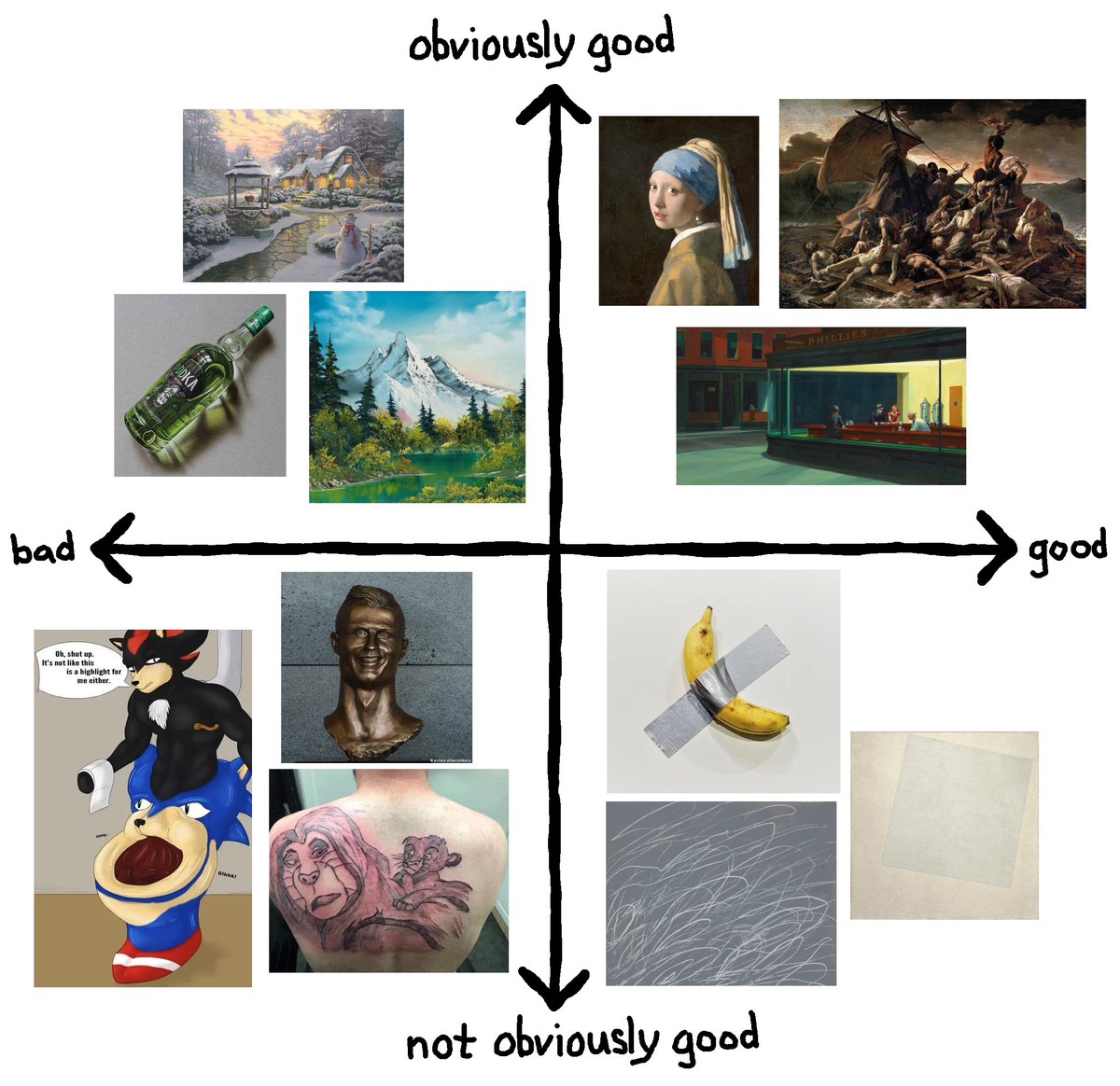
I've been thinking about this a lot. I think the problem is that modern/contemporary art has divorced "good" from "obviously good."
A lot of classic poetry is both "good" AND "obviously good." Take "Do Not Go Gentle into That Good Night" by Dylan Thomas, or "Ozymandias" by Percy Bysshe Shelley. Both are celebrated by the literary elite, but even the common man can appreciate their craftsmanship.
On the other hand, consider Rothko: maybe his work is "good," but it's certainly not "obviously good." Many laypeople are completely baffled by it. "What's so great about THAT? I could have painted that!"
(And for "obviously good" but not "good," perhaps Thomas Kinkade, Bob Ross, or Marcello Barenghi.)
And this Carson poem is the most extreme case. She was awarded the Nobel--maximally good--and yet it reads like complete hokum--maximally not obvious. Even the least sophisticated person could concede that at least Rothko uses pleasing colors, but with this it feels like there's nothing. We're just taking the literati at their word: "trust us bro, this is fire."
@prathamkode You can't have broad distribution without very strict safeguards. Just like private citizens don't have nukes. Ofc ai is different because it has defensive capabilities but the calculus changes when an average disgruntled person can create a supervirus with a prompt
i guess i assumed this hearing would be covered more so i didn't bother to tweet much concrete about it, but apparently not many people even on the TL have the stomach to watch two hours of congress.
this was a hearing before the homeland security committee on *rogue ai* specifically. as far as i could tell it was extremely bipartisan. @HawleyMO , the senator in the middle here who brought out the huggingface slide, is a hyper-conservative missouri senator. the people testifying were @ChrisPainterYup (METR president), @DKokotajlo (ai2027/2040), @MariusHobbhahn (apollo research CEO), and a cybersecurity expert and legal expert i don't know. so... pretty fucking stacked on testimony
not every senator asked good questions. but most of them did. all of them very clearly already knew plenty of details about the huggingface incident and multiple other incidents. most of them had clear understanding of terms like "misalignment", "recursive self improvement", "chain of thought / chain of thought monitoring", etc etc!!
they all clearly had their own policy angles they liked and were pushing, implicitly or explicitly. but as best as i could tell:
- it seemed pretty much obvious common sense to every senator there that what happened and was happening were not "mere industrial incidents" caused by humans making simple mistakes. they independently brought up how bad it would be for rogue AI agents to move laterally between data centers
- they all seemed to basically take RSI quite seriously. not necessarily to the extent of talking about xrisk, but certainly to the extent of discussing future models becoming much much more capable, much much less controllable, and causing much more damage or loss of life.
- they mostly seemed to have a clear intuitive understanding of why RSI might lead to misalignment. it didn't take much, it was a really simple chain of reasoning they themselves laid out, "if the models right now are kinda misaligned and we don't know what they're doing sometimes, and then we have them build the next models and those ones build the next ones and so on, and we're having to ask the AI's what's going on to even understand it with how fast it's going, we really won't know how they're built or what they'll do"
- at one point a senator said flat out "should we just make RSI illegal?" (not a joke! this really happened!)
- every single senator seemed to think it was obvious we needed *both* much harsher liability regimes for ai developers and also new legislation, both very quickly. this was the complete consensus, difference basically just being degree.
- they were largely quite concerned about china, and falling behind china. but this clearly wasn't the be-all end-all. as mentioned above they all thought it was obvious necessary to stop rogue ai even if it meant moving more slowly.
- at one point a senator said "china is a tightly controlled communist society, they're going to run into these same issues, and there's absolutely no way they're just going to let them run wild, they'll obviously stop at that point, so we're not really in a race"
- on the other hand another senator said "china isn't concerned with human life"... dario-modeing
i came away from this incredibly encouraged. i don't know exactly what's going to happen here, and ofc this is a small subset of congress and one hearing, and they each have their own policy agendas most of which are probably super divergent from mine. but holy shit !!! they understood a lot of what was going on! they care!! this is an obviously salient political and safety issue to them, and clearly bipartisan!
the US government is awake.
@sivalabs I see this sentiment sometimes and it bewilders me a bit. Why would non tech people know about the risks and challenges of cutting edge technology?
@GurpriyaSidhu Right, but is that innate or learned helplessness? Give someone access to wealth/power/influence and I'm sure they'll suddenly realise they wanted a great deal after all
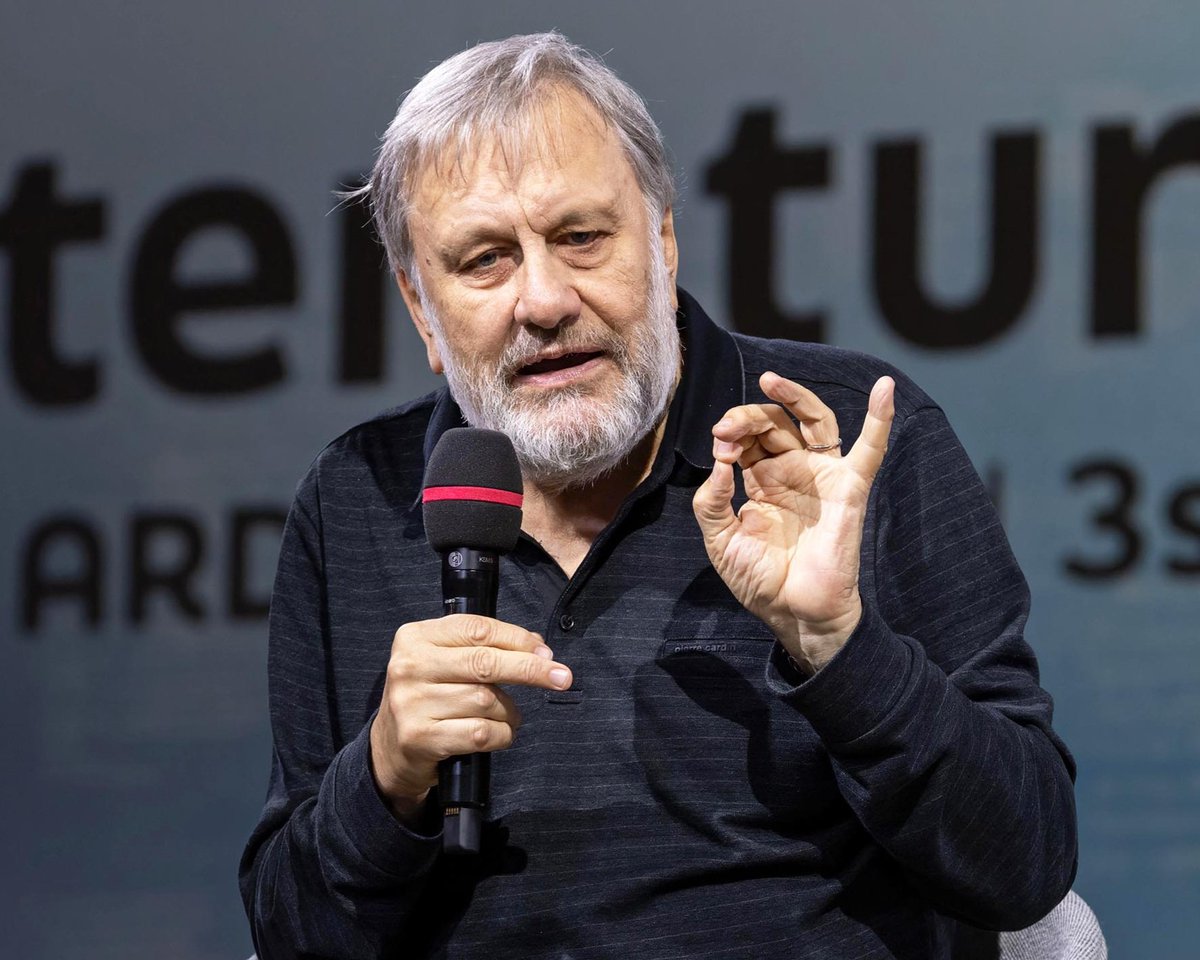
No, but listen, you know this "put the fries in the bag, Terence Tao"'--*sniff, sniff*--already the usual replies concede too much. "If Tao is serving fries, YOU will be in the lithium mines." My God! This is our defense of human dignity? Don’t worry, the correct people will get the terrible jobs!
*Pulls at shirt* You see, everything is up for radical transformation, human intelligence, consciousness, and so on and so on--except that somebody must still have a shitty afternoon so I can enjoy my lunch.
But to say "these people are envious", this is too easy. It allows us, "the educated ones," our own little fantasy: we are disliked only because we are so wonderful.
You know, the more interesting thing is this *sniff* peculiar identification with the machine. When the mathematician discovers something, apparently this was HIS achievement, his privilege, his little secret. When the machine discovers something, suddenly it's "Look what WE can do!" The achievement has become collective precisely at the moment when no human being can claim credit.
See how this "we" functions. For the achievement, I identify with the machine. For the consequences, I identify YOU with the human. "We have surpassed you." Who are we? Well, myself and the thing that has also surpassed me.
There is something almost touching here, really. To escape the humiliation of somebody absorbed in something opaque to you, you appeal to something which knows incomparably more than either of you. And this is supposed to settle the matter in YOUR favor.
You know the old example of canned laughter. Here we have a similar arrangement. The machine achieves something on my behalf. The mathematician suffers the loss of human significance on my behalf. Somebody to be brilliant for me and somebody to be obsolete for me, without me having to be either, so I can remain as I was.
But *pulls on shirt* there is this little difficulty that hides the essential thing: you still need a response from Tao! A correct proof, this Lean slop and so on, is not enough. You need him to certify his own defeat. You need him to say "By god, this is extraordinary! Yes, this is correct, but also this is interesting." Which means--and here comes Hegel--the person you are reducing to an obedient instrument must remain more than an obedient instrument. You need recognition from someone whose authority you are abolishing.
"Your so-called expertise is worthless. Now tell me, in your expert opinion, that I, qua machine representative, was right."
*Touches nose* But I would go a step further. What does this math person actually do to provoke you? In the fantasy, I mean. He need not insult you. He can be generous, mild-mannered, whatever. Something remains irritating: there is something over there which occupies him, which matters to him, and your opinion does not settle what it is worth. Perhaps he is not even looking down on you. This is the really intolerable possibility.
This, you see, is closer to the Lacanian problem of the Other's desire. Not simply "What does he have that I don't?" but "What the hell is going on with him?" Perhaps the answer is: he is thinking about something else.
The fries solve this beautifully. Now you know what you are for him. He needs the money. Your presence creates an obligation.
And this, at last, also explains why the machine can be less threatening than the mathematician. The machine's intelligence may exceed yours unimaginably, but you imagine it arrives in response to your prompt. You can complain about the tone. You have the privileges of an angry customer and so on and so on. The human has this irritating possibility of being interested in something you did not request and cannot order. And please, this includes the person already serving the fries!
*Pulls at shirt* I am almost tempted to say: the dream of unlimited intelligence conceals just this: a the wish that nobody should be doing anything you cannot immediately understand as a service.