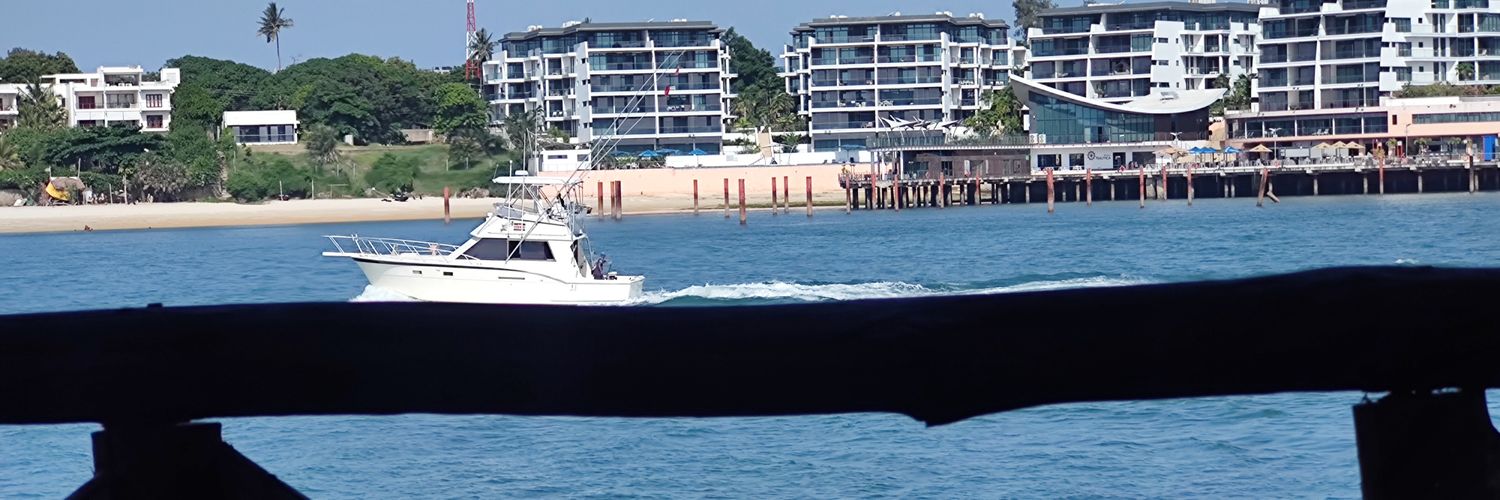
"In your text, treat Africa as if it were one country. It is hot and dusty with rolling grasslands and huge herds of animals and tall, thin people who are starving. Or it is hot and steamy with very short people who eat primates"
https://t.co/iHvdksFXL5
Madina Okot says she’s carrying Kenya’s flag to the next level with pride 🇰🇪🙌🏾
Sasa chezeni kama nyinyi pale @AtlantaDream ndio wajue huyu ni msichana wa nyumbani IYKYK
This Kenyan-built robotic arm is opening new possibilities for teaching deaf students. Paired with a sensor-fitted suit, the device converts spoken words into gestures
People keep talking about how there’s no viable candidate when this man is right here. Legacy media has given you the impression that this is a 2 horse race. He gets next to no airtime while we’re treated to a grotesque theatre of profanity and mudslinging. Refuse.
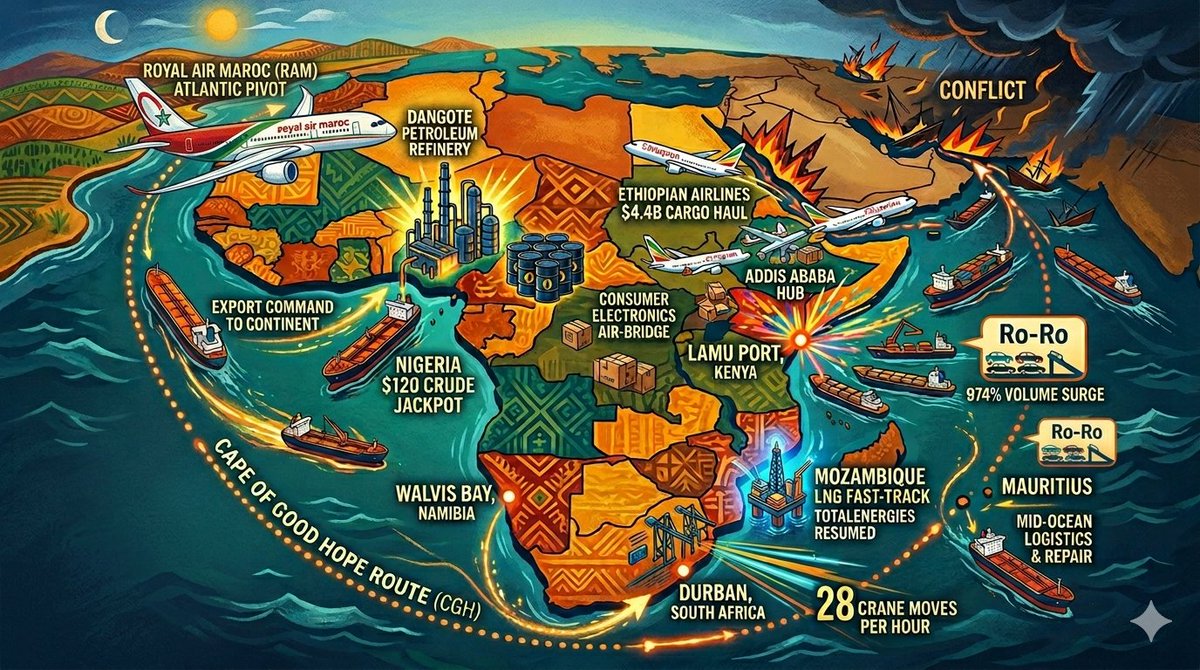
Kenya, Ethiopia, Nigeria Early African Winners as They Harvest Windfall from the Misery of US–Israel vs Iran War
As the world reels from the escalation of the US–Israel vs Iran war that erupted on 28 February, the humanitarian suffering is profound. Yet in the realm of global commerce, a quieter upheaval is underway. With the Red Sea and Strait of Hormuz rendered near impassable – shipping traffic down by 90% – Africa has emerged as the world’s most vital logistics corridor.
•In KENYA, the once-forgotten LAMU PORT has roared to life. Long dismissed by critics as a white elephant, it has seen a 974% surge in volume. Ultra-large vessels, too deep for Mombasa and too exposed for Gulf waters, now dock at Lamu’s 18-metre natural depth.
•ETHIOPIA'S national carrier Ethiopian Airlines has seized the moment. With Dubai and Doha mostly paralysed by airspace risks from Iranian missile and droke strikes, Addis Ababa has become the continent’s primary air-bridge. Cargo revenue is up 14%. High-value goods – electronics, pharmaceuticals, perishables –are now routed through Bole International, bypassing the 40-day sea detour.
•NIGERIA is counting its crude. Brent prices hit $120 per barrel in March. Against a budget benchmark of $64.85, daily revenues have doubled. The government has stumbled into an unexpected multi-billion dollar fiscal cushion.
•DURBAN, South Africa’s main port, has shed its reputation for congestion. It is now clocking 28 crane moves per hour, processing thousands of ships rerouted around the Cape of Good Hope with a rare level of precision.
•MOROCCO'S Royal Air Maroc has moved swiftly. Ten new international routes –including Los Angeles and Beirut – have siphoned off transit passengers who once relied on Middle Eastern hubs. Casablanca traffic is up 12%.
•WALVIS BAY in Namibia has become the first reliable refuelling station for ships emerging from the South Atlantic. Bunkering demand is up 30%.
•The DANGOTE Petroleum Refinery has in Nigeria, is cashing in. In March, it issued an export tender for 84,000 metric tonnes of jet fuel and diesel. It is no longer just a domestic project – it is replacing Persian Gulf supplies for the continent.
•MOZAMBIQUE'S $20 billion LNG project has been fast-tracked. TotalEnergies resumed operations in early 2026. Over 4,000 workers are racing to meet an accelerated production date. Iranian gas is out. Mozambican gas is in.
•At Mozambique's PORT of MAPUTO, volumes grew by 16% in the weeks following the war’s outbreak. Chrome and coal exporters have abandoned northern routes in favour of the safer Indian Ocean–Cape corridor.
•MAURITIUS, ever shrewd, has leveraged its mid-ocean position into a 15% revenue increase. High-end logistics and emergency repair services are now its bread and butter.
But no doubt, the most intriguing twist is the Roll-on/Roll-off (RoRo) revolution in Lamu. Manufacturers are using RoRo ships – where vehicles are driven on and off via ramps – to offload thousands of cars. These are then ferried to the Gulf on small, low-risk boats to avoid the $200,000+ war risk insurance premiums slapped on large carriers entering the Strait of Hormuz.
To protect this windfall, Kenya and Ethiopia have launched joint military operations along the once-languishing Lamu Port–South Sudan–Ethiopia Transport (LAPSSET) corridor. This unprecedented coordination is designed to ensure that the new “safe harbour” of Lamu remains shielded from regional spillover.
And because the closure of the Strait of Hormuz marooned shipping containers, an emergency air-bridge has formed. Nairobi and Addis Ababa are now the primary transit points for consumer electronics flown from Asia to Europe—bypassing the the 17,700KM sea detour.
US leader Donald Trump despises Africa, once labelling its countries "sh*thole", but while many of them will be hit hard by rising energy and fertilisers from America and Israel's attack on Iran, several of them will get a bounty he would never have wished for them.
The closure of the Strait of Hormuz is turning Kenya’s Lamu port into a surprise refuge, as vessels bound for the Middle East divert and discharge cargo at the rarely used facility https://t.co/ikCohjVdIV
Im currently in Kenya, and when I came in, it was so smooth. They just stamped my passort and I went in. No stress.
I believe this is how African travel should be. If they can give us free entry, why can't we do the same?
@nigimmigration
https://t.co/WDORcBaRHu
This is probably the most satisfying news in Kenya today. We often take it for granted because we win marathons so much but this from a 45 year old mother of three is nothing short of exceptional. Congratulations Priscah Cherono.
“We are called to assist the earth, to heal her wounds, and in the process heal our own.”
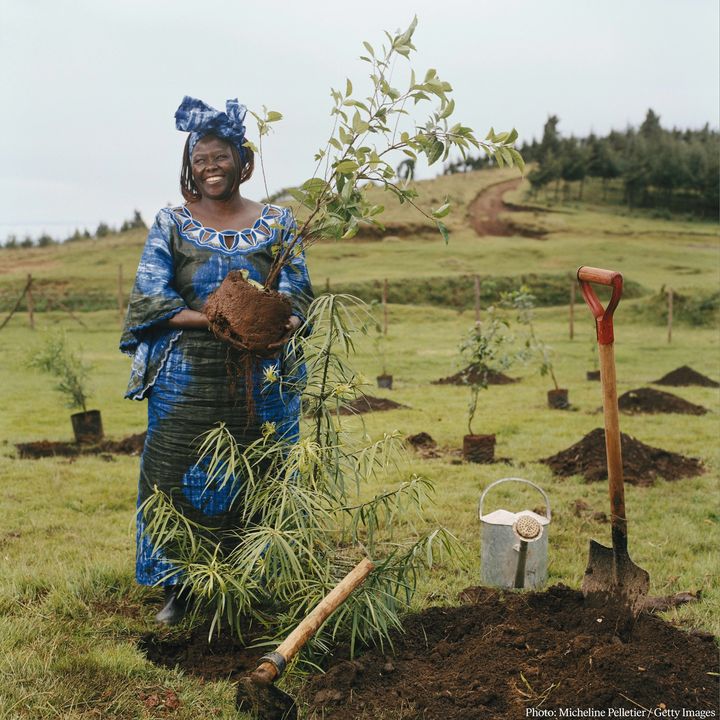
After becoming the first woman to earn a doctorate degree in East and Central Africa, Wangari Maathai started a movement that led to the planting of 50 million trees, a more democratic society and the Nobel Peace Prize.
In 1976, Wangari Maathai became involved with the National Council of Women in Kenya. She suggested that they should start community-based tree planting to combat deforestation and desertification. In 1977, she developed her idea into a grassroots movement organisation called the Green Belt Movement (GBM).
Maathai began the project by planting nine trees in her own yard – as it grew it became the largest tree planting project Africa had ever seen, encouraging women to plant trees in “green belts” around their towns and villages and to think ecologically. Her movement grew and spread to other African countries. With the GBM, Maathai hoped to promote sustainability as well as create jobs for women and empower them to gain economic and social power.
Besides giving jobs to women and planting more than 50 million trees, the movement also became a symbol for a democratic struggle and a token of peace. According to widespread African tradition, trees are used as white flags during disputes. In Wangari Maathai’s own words: “The tree also became a symbol for peace and conflict resolution, especially during ethnic conflicts in Kenya when the Green Belt Movement used peace trees to reconcile disputing communities.”
In 2004, Maathai was awarded the Nobel Peace Prize "her contribution to sustainable development, democracy and peace." She was the first African woman to receive the peace prize.
Photo by Micheline Pelletier / Getty Images
@FerdyOmondi Karim Rajan is such a legend! So is Peter Mwangangi,Kelvin Mutai,yourself and most of the people who have put Mombasa stories into the limelight. May all affected staff find better paths ahead 💔💔
ODM needs to ask itself what is its identity? What is at its core? You cannot as a party move around the country popularizing another party ethos. What Winnie said is true , ODM needs to put its house in order first. Not just move around the country shouting Tutam and broad based. What does the party stand for outside of UDA. Its is an opportune and unavoidable moment for the Orange Democratic Movement to undertake a deliberate process of ideological re-anchoring and institutional recalibration, aimed at restoring the party to its foundational ethos and normative compass. This moment calls for a reassertion of core values, a recommitment to ethical clarity, and a revival of the party’s historic mandate as a vehicle for social justice, participatory democracy, and people-centred governance. ODM must consciously transcend personality-driven politics and re-embed itself within a values-based framework that privileges principle over expediency.Strengthening the party, therefore, is not merely an exercise in organisational expansion or electoral arithmetic. It requires the rebuilding of internal coherence, the enforcement of ethical standards, and the revitalisation of grassroots legitimacy as the moral bedrock upon which political authority is derived. After all this, then now look for suitors, if need be.
@MutemiWaKiama That being said, the protest succeded in its biggest demand which was blocking the bill from becoming law. Issues like bad governance,police brutality are deeply rooted structural problems that cannot be uprooted by someone merely stepping down because of a protest
@MutemiWaKiama I dont think millenials were purposefuly aleniated. And i am saying this as a millenial who was attended the protest in London. The framing by the media was from a simplified narrative on 'Global gen-z movements' which was not the case in Kenya.