I've yet to memorize the order of the books of the Holy Bible! However, at the end of the day, it's not important to memorize the order of the books, but it's critical that I live my life according to what's taught on the pages of these books! 🙏✝️
@dapr_goat That is a beautiful site for building a monastery. What a blessing and God bless you all for your support to bring this project to fruition. 🙏
@dapr_goat Yes, replacing those switches is the only way to solve the flickering. Ugh! Wasting more time and incurring more expenses! So many reasons we should bring back incandescent bulbs, please!!
V. Let us pray for Leo XIV, our Pope.
R. May the Lord preserve him, and give him life, and make him blessed upon the earth, and deliver him not up to the will of his enemies.
I'm grateful that the President and his entourage are unhurt after this latest attack. May I raise my voice against the viciousness and tribalism that are so prevalent on the internet and that contribute mightily to the violence we see in our political culture. Can we please remember that it is possible to disagree with a politician's ideas without demonizing and de-humanizing him? Jesus commanded us to love our enemies, and that includes our ideological opponents.
There is a way past the absurd and deeply divisive “war” between the President and the Pope, which has been enthusiastically ginned up by the press. And it is indicated in the Catechism of the Catholic Church, paragraph 2309 to be precise. After laying out the various criteria for determining a just war—proportionality, last resort, declaration by a competent authority, reasonable hope of success, etc.—the Catechism points out that “the evaluation of these conditions for moral legitimacy belongs to the prudential judgment of those who have responsibility for the common good.” The assumption is that the just war principles function, to use the technical term, as heuristic devices, designed to guide the practical decision-making of those civil authorities who have to adjudicate matters of war and peace.
The role of the Church, therefore, is to call for peace and to urge that any conflict be strictly circumscribed by the moral constraints of the just war criteria. But it is not the role of the Church to evaluate whether a particular war is just or unjust. That appraisal belongs to the civil authorities, who, one presumes, have requisite knowledge of conditions on the ground. So, is the war in question truly the last resort? Is there really a balance between the good to be attained and the destruction caused by the war? Are combatants and non-combatants being properly distinguished in the waging of the conflict? Do the belligerents have right intention? Is there a reasonable hope of success? The posing of those questions—indeed the insistence upon their moral relevance—belongs rightly to the Church, but the answering of them belongs to the civil authorities.
The Pope has said, on numerous occasions, that he is not a politician and that his role is not the determination of any nation's foreign policy. But he has just as clearly said that he will continue to speak for peace and for moral constraint. In making both of these claims, he is operating perfectly within the framework of paragraph 2309 of the Catechism. If we understand that the Pope and the President have qualitatively different roles to play in the determination of moral action in regard to war, we can, I hope, extricate ourselves from the completely unhelpful narrative of “Pope vs. President.”
“La libertà non consiste nel fare ciò che ci piace, ma nell’avere il diritto di fare ciò che dobbiamo”.
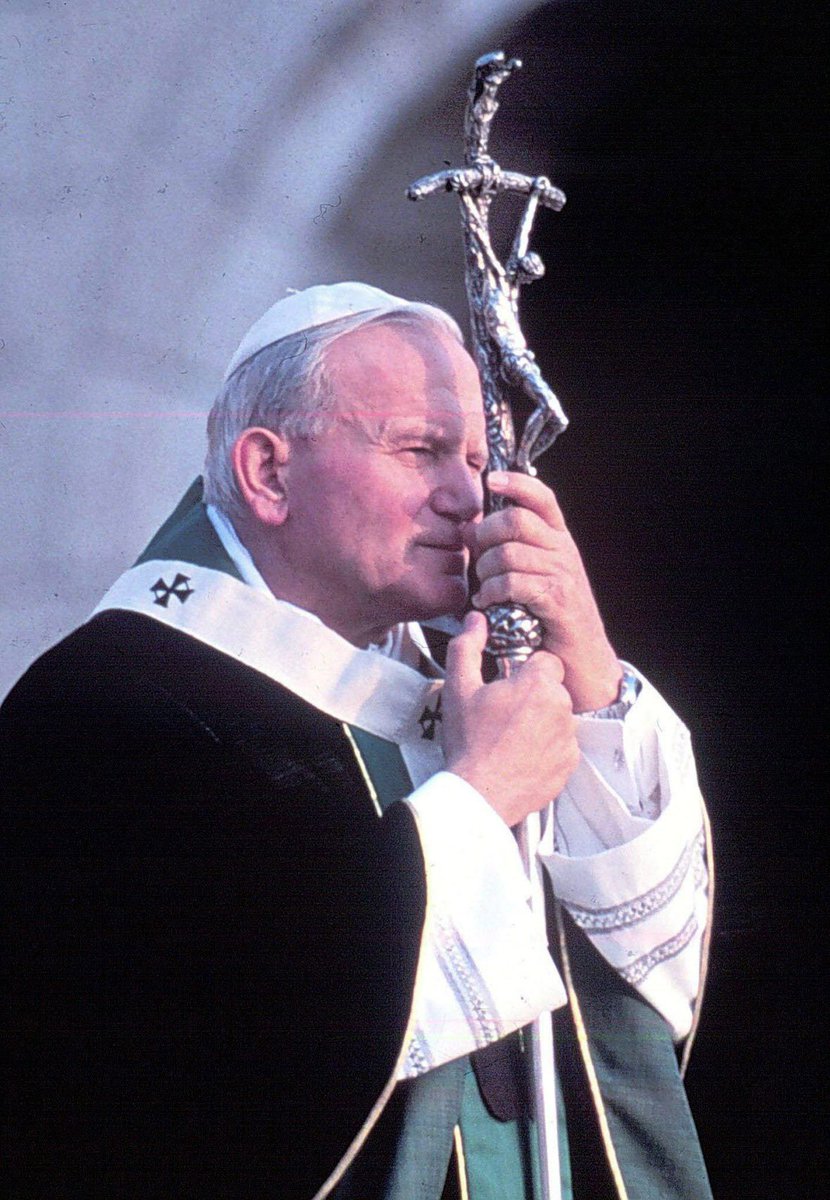
Il 2 aprile 2005 ci lasciava Giovanni Paolo II. È il Papa con cui sono cresciuta.
Ho avuto la fortuna di incontrarlo, e una cosa mi è rimasta impressa più di tutte: il suo sguardo. E quella forza tranquilla di chi sa indicare una strada senza imporla.
In fondo, quello che ha insegnato è molto semplice quanto potente: la libertà non è scegliere ciò che conviene, o ciò che è più comodo. È avere il coraggio di fare ciò che si ritiene giusto. Anche quando costa. Anche quando non è la strada più facile. È un insegnamento che torna, ogni volta che bisogna tenere la rotta. Con serietà, senza scorciatoie.
A distanza di 21 anni, il suo esempio continua a parlare. Non solo nella fede, ma nel modo in cui affrontiamo le sfide di oggi, con ancora più di coraggio e più responsabilità.
In the Bible, it is the little ones who make history! Even when a sense of powerlessness or inadequacy prevails, we need to trust in God’s providence, for we believe that the Kingdom of God is like a tiny seed that grows into a great tree (cf. Mt 13:31–32). #ApostolicJourney #Monaco
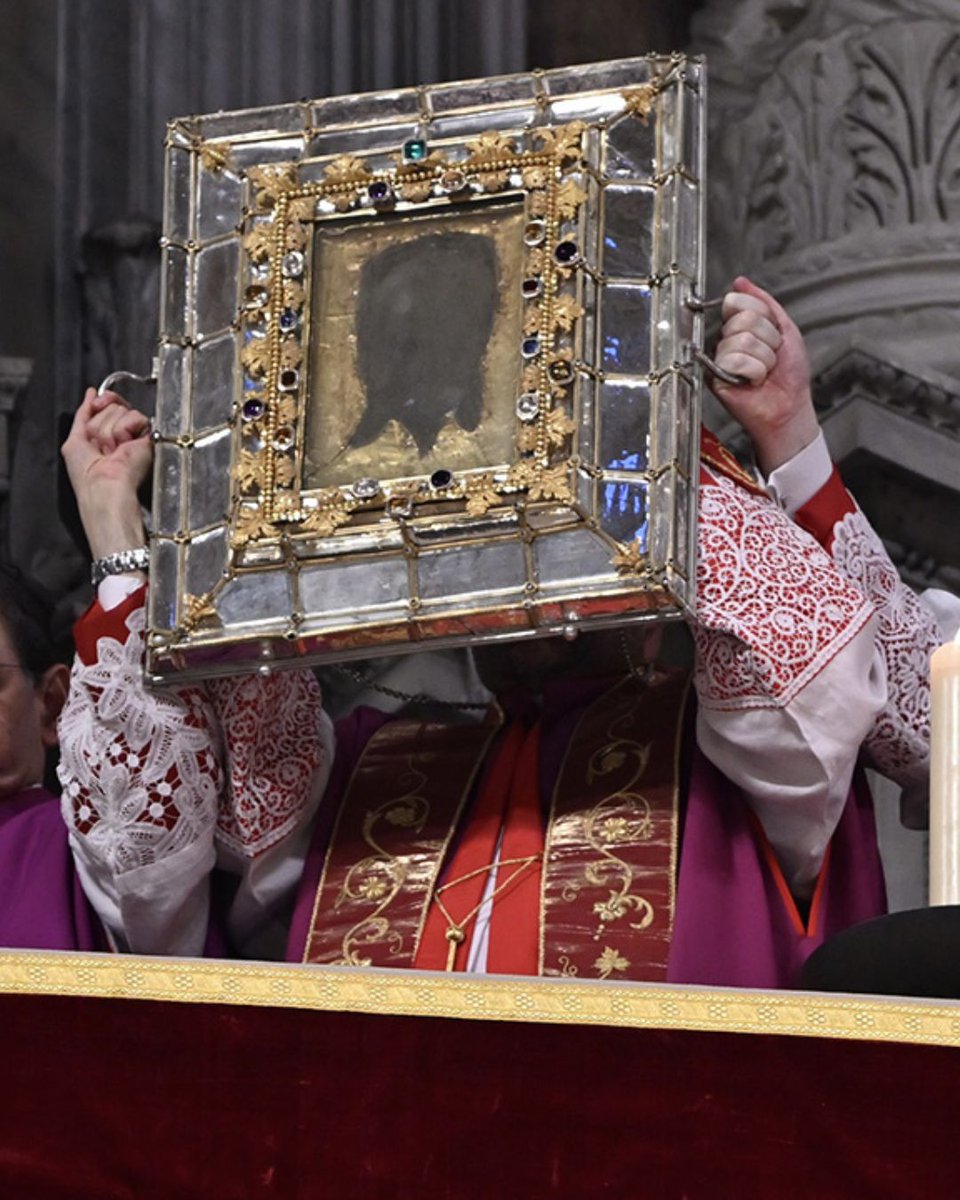
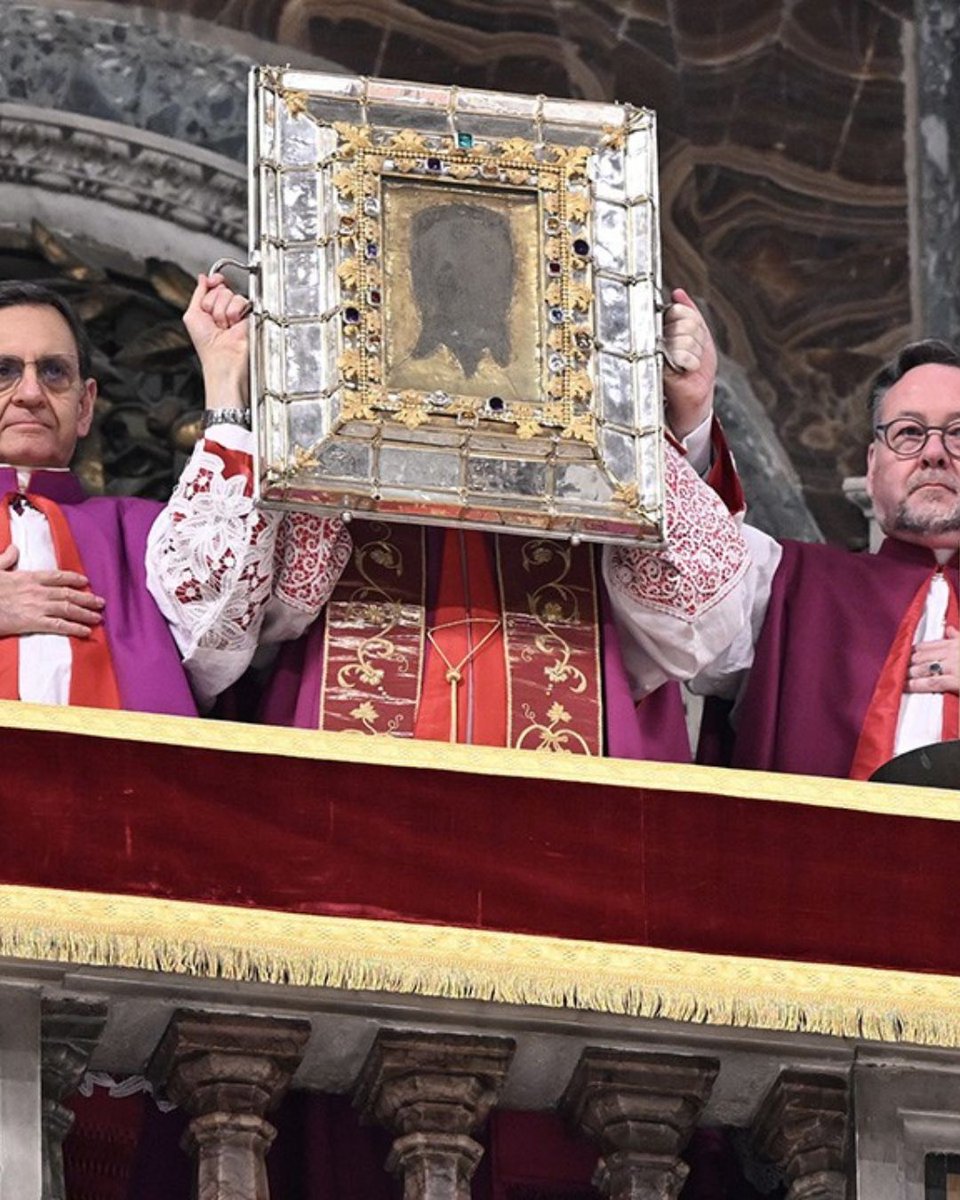
Once a year on the fifth Sunday of Lent, the Veil of Veronica is displayed in St. Peter's Basilica.
On Sunday, March 22, many people gathered in the Basilica to view the cloth which tradition holds bears the image of Christ’s face, left when Veronica wiped Him on the way to Calvary.
He’s got a lot of titles, and St. Joseph is the patron saint of many beautiful things. One that surprises people – that is a Catholic custom well worth recovering – is that he’s the patron saint of a happy death. @thegnewsroom
@CardinalDolan@thegnewsroom Thank you, Your Eminence for taking the time to share with us these important, but often forgotten, Catholic devotions! They need to be revived and practice regularly for sure!🙏
Can you remember the six Precepts of the Church? They’re not as important as the Ten Commandments or the Beatitudes, but they are what you might call “household matters” for us in the Catholic family. @thegnewsroom
It’s important for the Irish, for New York, and for the Church universal. We remember first and foremost that Patrick is a saint, evangelist, apostle, and missionary. Happy St. Patrick’s Day! @thegnewsroom