ANALYSIS: Major Ukrainian attacks have frequently involved hundreds, and at times more than a thousand, drones directed at military, industrial, and energy targets across Russia.
By contrast, Russian strikes have generally relied on smaller numbers of drones supplemented by missiles. Even so, Ukraine appears to be launching several times more long-range strike drones at targets inside Russia than Moscow is sending in the opposite direction.
https://t.co/Q37tXx7aif
About Ukrainian middle strikes over the past couple of months.
- They continue, albeit at a mildly slower rate than at the start.
- The Russians have and are adapting, as known, using primitive MFGs (mobile fire groups) made of trucks with machine guns mounted on top.
As said by others already, their effectiveness is low, and it's not much easier to shoot down a Ukrainian Hornet drone than an FPV.
- At the moment, they are still unable to jam Starlink, which is essential for them if they want to stop the flux of Ukrainian middle strikes.
- Regarding the question of why the total amount of videos showing middle strikes has decreased over the past months, it's not only caused by the already discussed mild decrease in total successful middle strike missions by the Ukrainians but also by the fact that much of the footage is simply not being published anymore, although it's being archived in Ukraine's situational awareness systems.
- In total, Ukraine still definitely lands more successful missions than unsuccessful ones.
Some of the Ukrainian 🇺🇦 mid-range strikes against Russian logistics in August
At least 630 trucks and vehicles were hit this month, stable compared to June and July. As you can see, many long-range FPV drones are being used to strike far from the front, against vehicles and trucks. They are very precise and target the gas tank of the cars.
It's the 4th consecutive month that we have these massive strikes against road logistics, something Moscow failed to replicate yet. As you can see, the quality of some of the videos is stunning...
A truck driver’s footage from Russia’s overland corridor to occupied Crimea gives a remarkable sense of the scale of Ukrainian drone strikes on the route.
I counted 40 destroyed vehicles in this single video cars: 37 trucks, two fuel tankers and an armoured KamAZ truck belonging to a Russian mobile fire group.
Many of the wrecks are still smoking or burning, indicating that a significant portion of this destruction is relatively recent, rather than simply the accumulated losses of many months.
The 3rd Army Corps continues revealing details of the extensive use of ground robots during Operation Vivaldi on the Lyman axis.
In one mission, UGV operators from Arma Group of the 21st KRAKEN Regiment rescued four civilians under Russian shelling.
This Ukrainian robot alone held position for 45 days. It’s called TWW127.
Robots don’t bleed. Saving manpower is the top 1 priority of the Ukrainian army, United24.
NC13 Commander “Makar”: Strike UGV direction is the newest and least studied. But its potential is the biggest.1/
«Не людина має розміновувати — це має робити робот»: під час «Вівальді» НРК розмінували 30+ км територій!
Командир взводу наземних роботизованих комплексів, друг Татарин із 96-го окремого батальйону підтримки корпусу, розповідає, як роботи-розміновувачі допомагали штурмовикам просуватися вперед під час наступу на Лиманщині.
Сьогодні Трійка — перша й єдина, хто застосовує НРК-розміновувачі для підтримки наступальних дій. Власні розробки та здатність швидко адаптувати техніку до нових викликів війни дозволяють корпусу оперативно впроваджувати рішення, які відповідають реальним потребам на полі бою.
Саме на це спрямований вектор розвитку корпусу, заданий бригадним генералом Андрієм Білецьким: зменшити кількість бійців на найбільш небезпечних ділянках і замінити їх роботами.
Понад 30 км територій уже розміновано спільними зусиллями підрозділів НРК Третього армійського корпусу — і ця цифра буде тільки зростати!
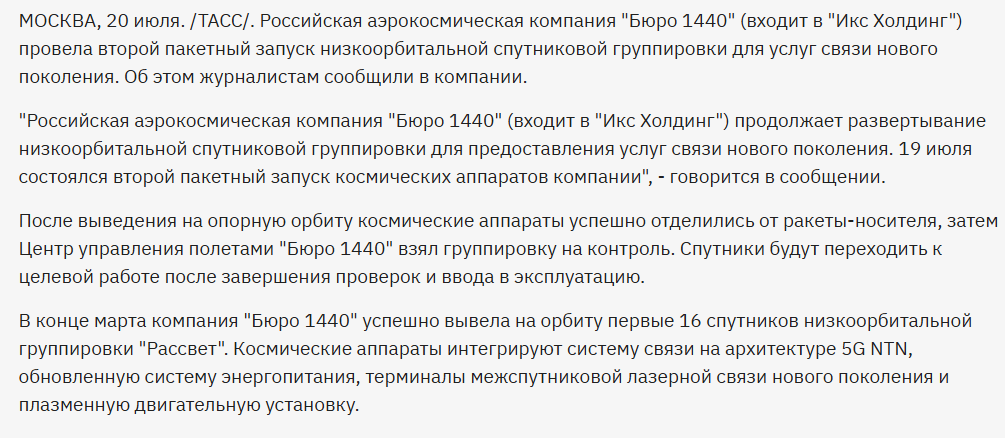
Russia's Bureau 1440 announced that it launched the second batch of Rassvet satellites into space yesterday. The first batch was launched in March.
https://t.co/86L4F9aVbF
Back in Soviet days, Soviet school kids used to war-LARP in an initiative called "Zarnitsa" (Lighting) to prepare for actual potential WW3. Today, Russian kids are taking part in "Zarnitsa 2.0" to "practice the use of and countermeasures against UAVs, and hone their skills in cartography, combat engineering, and medical procedures." https://t.co/KUB4sxv2hN
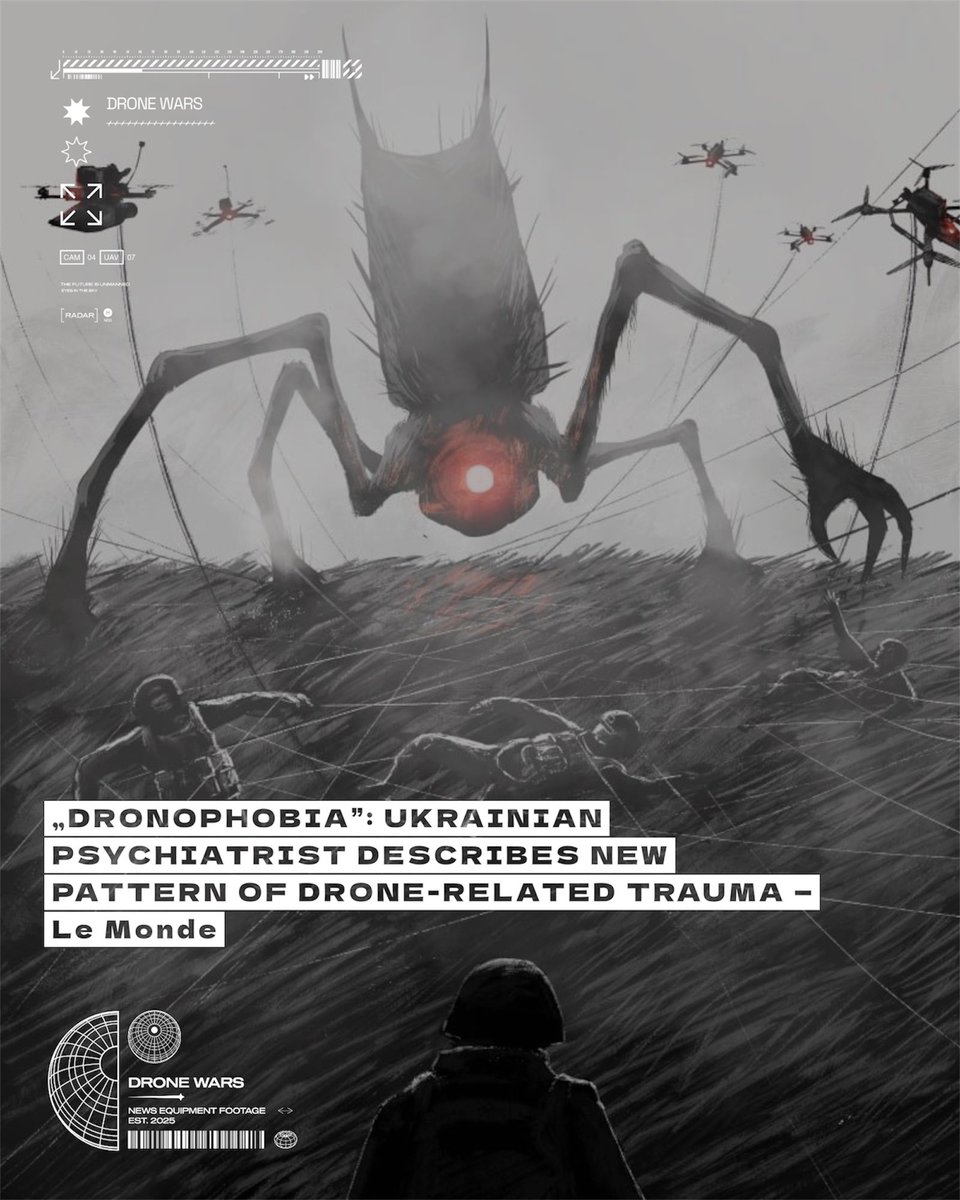
“Dronophobia”: Ukraine’s drone war and a new pattern of trauma — Le Monde
Ukrainian military psychiatrist Serhii Andriichenko has used the term “dronophobia” (or drone-related anxiety) for a pattern of persistent fear linked to unmanned aerial vehicles. He told Le Monde that patients with intense drone-related anxiety began appearing around 2023, often without physical wounds but needing psychological care.
The constant presence of drones — their hum, the risk of sudden strikes, and the feeling of being helpless against a visible, hovering threat — can produce obsessive anxiety, panic, hypervigilance, exhaustion, and a lasting sense of danger. Symptoms often resemble PTSD or adjustment disorder and can continue far from the front, including in cities.
Triggers are not only an actual drone or explosion. Ordinary mechanical sounds (scooters, lawnmowers, air conditioners) and even silence can recreate the alertness learned under fire.
Andriichenko and colleagues, including Ukrainian and American researchers, are studying the phenomenon. It is not a separately recognized diagnosis in the ICD; he has described the label as imperfect and closer to a specific form of trauma-related anxiety mixed with classic PTSD.
Source: Le Monde
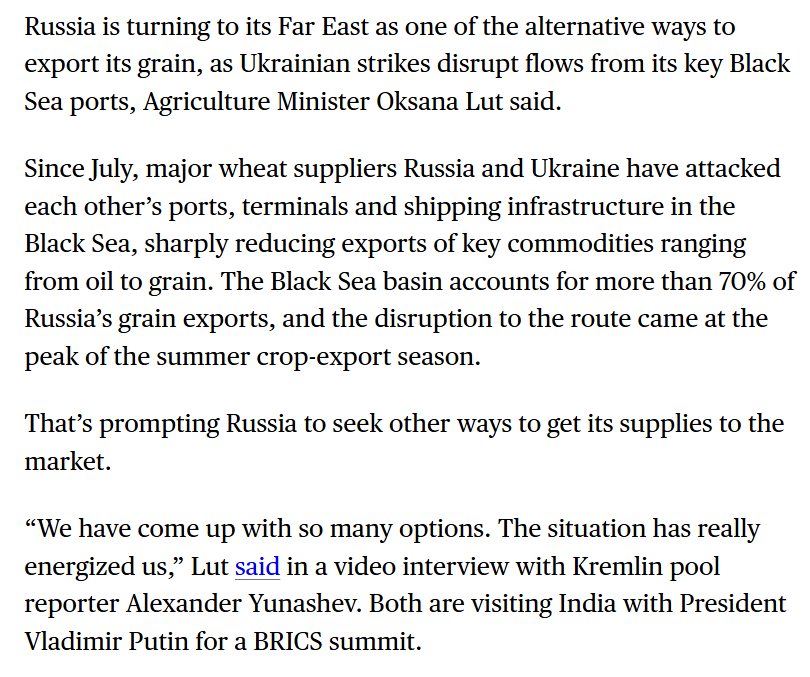
"Russia is turning to its Far East as one of the alternative ways to export its grain, as Ukrainian strikes disrupt flows from its key Black Sea ports, Agriculture Minister Oksana Lut said.
Since July, major wheat suppliers Russia and Ukraine have attacked each other’s ports, terminals and shipping infrastructure in the Black Sea, sharply reducing exports of key commodities ranging from oil to grain. The Black Sea basin accounts for more than 70% of Russia’s grain exports, and the disruption to the route came at the peak of the summer crop-export season."
https://t.co/YVzok1q9Rd
The Ukrainian 3rd Army Corps (@ab3army) showed this week that its counteroffensive has built not just tactical but operational momentum. It has also released information on aspects of UGV integration into ground operations. Welcome to my weekly update. 1/7 🧵🇺🇦
Ukraine is building a full AI defense ecosystem and testing it in live combat.
Now, it has 200+ companies building AI-powered drones, 300+ AI developments on Brave1, and 70+ AI and computer-vision systems already on the battlefield, Kyiv Independent. 1/
This was the first large-scale test of automatic guidance technology conducted under a single scenario and clear criteria. Six of the seven manufacturers passed the test and had their solutions recommended for procurement. https://t.co/DTstzUHlDH
Towed artillery pieces are hard to destroy using FPVs, but the barrel itself is often targeted with a shaped-charge warhead.
A Ukrainian 2P22 “Bohdana-BG” 155-mm howitzer was seen with stand-off “hedgehog” protection made of unraveled steel cables attached to the barrel.
Vladimir Mirchuk, Commander of the Lava Unmanned Systems Regiment of Ukraine's 2nd Corps Khartiia:
Russian forces are clearly afraid of Hornet strike UAVs and closely monitor their activity. 1/6
Ukraine’s Unmanned Systems Forces struck a Pantsir-S1 air defense system in Crimea, Neva coastal radar stations near Mariupol and a naval tug in Crimea.
Pantsir-S1 attempted to engage the incoming drones, with missile launches visible shortly before the system was destroyed.
Russia concentrated its best air defenses around Moscow, leaving much of the rest of the country exposed to ballistic strikes, according to expert Vadym Kushnikov
Building the missiles remains the hard part, since Ukraine's production is mostly located under direct Russian fire
https://t.co/7ISoMKsbYM