Read more about the successes as well as the misfortunes that plagued the Gemini IX mission as NASA continued to press toward landing the first astronauts on the Moon. https://t.co/hPzp741CnI
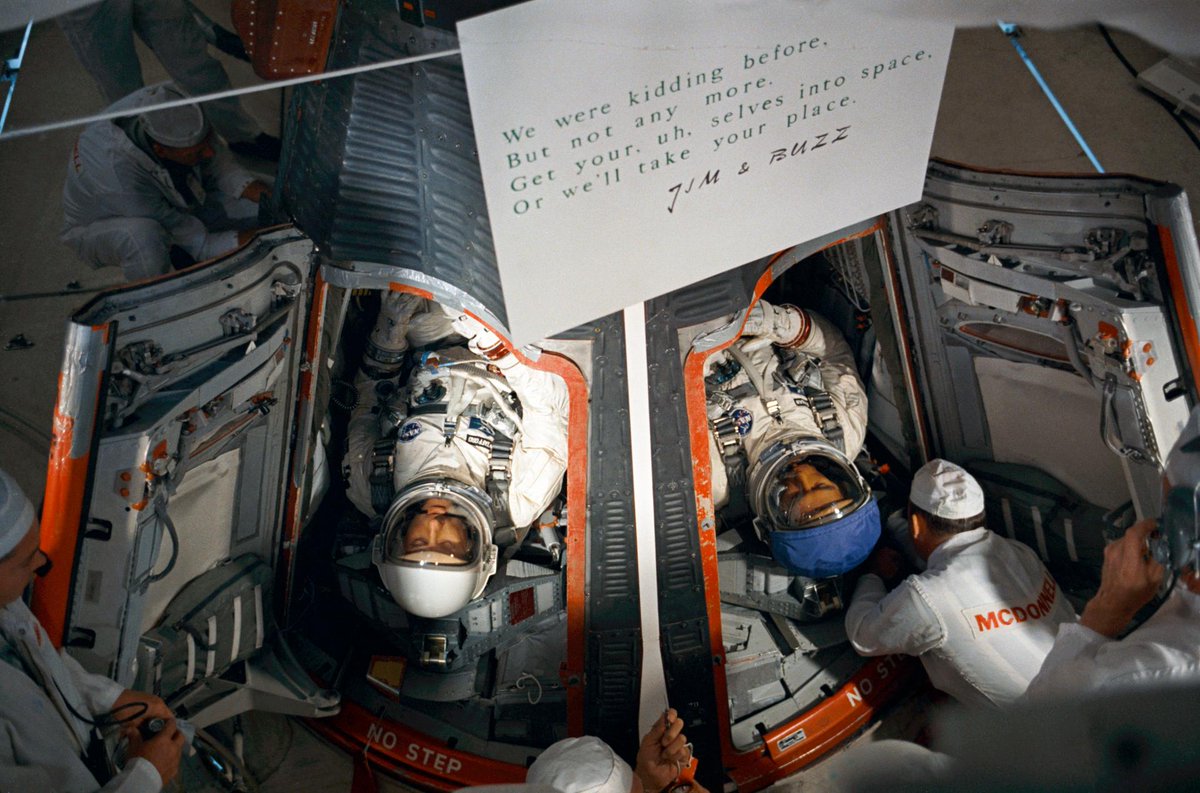
After a number of setbacks, astronauts Tom Stafford (left) and Gene Cernan strapped into their Gemini spacecraft for the third time OTD 60 years ago, ready to begin the Gemini IX-A mission.
The Gemini IX backup crew, Jim Lovell and Buzz Aldrin, left a poem taped on their spacecraft (seen in the foreground) with a little extra incentive to successfully launch.
The mission lifted off at 8:39 am on June 3, 1966. Their next task: rendezvous with an "angry alligator."
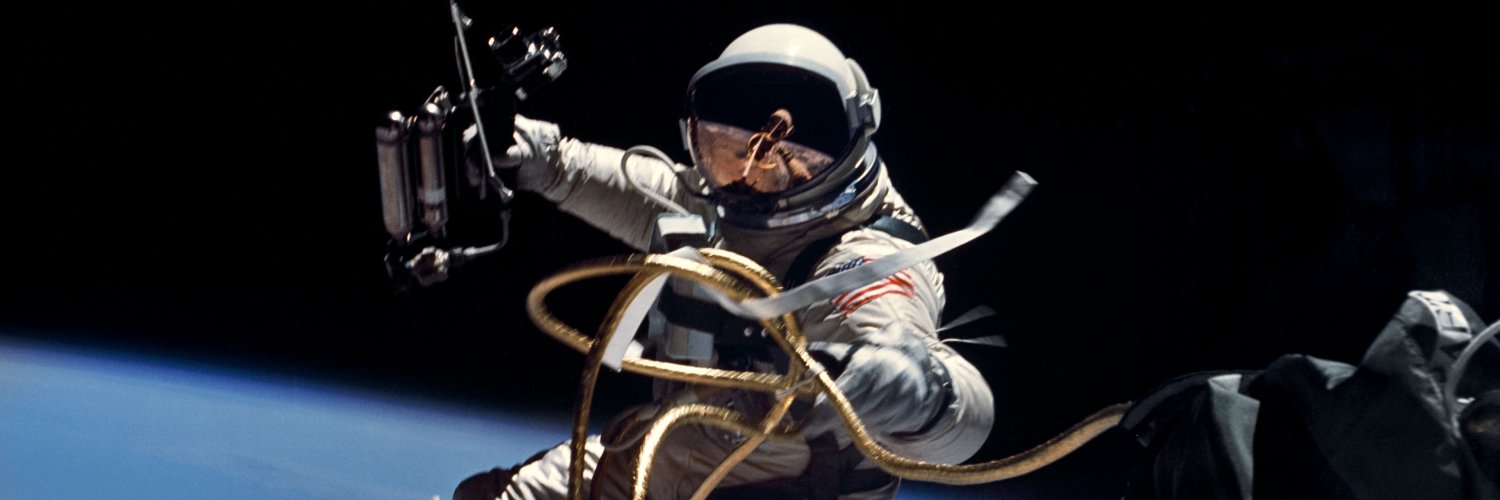
Before Neil Armstrong could take his historic first steps on the Moon, NASA first had to master the techniques that would let an astronaut safely exit a spacecraft in space.
On June 3, 1965, Gemini IV pilot Ed White made that first step with the first American spacewalk.
When Surveyor 1's first lunar night started on June 14, 1966, 12 days after landing, it had transmitted over 10,000 images. But it did survive the lunar night and transmitted additional images in July of that year. NASA scientists were able to contact the spacecraft until January 7, 1967—six months later.
60 years ago today, Surveyor I made a three-point soft landing on the Moon—the first soft landing for America's space program—AND accomplished on its first try. Over the next 6 weeks it returned more than 11,000 images of the lunar surface including this one featuring its shadow.
The mission was one of the great successes of NASA's early lunar program.
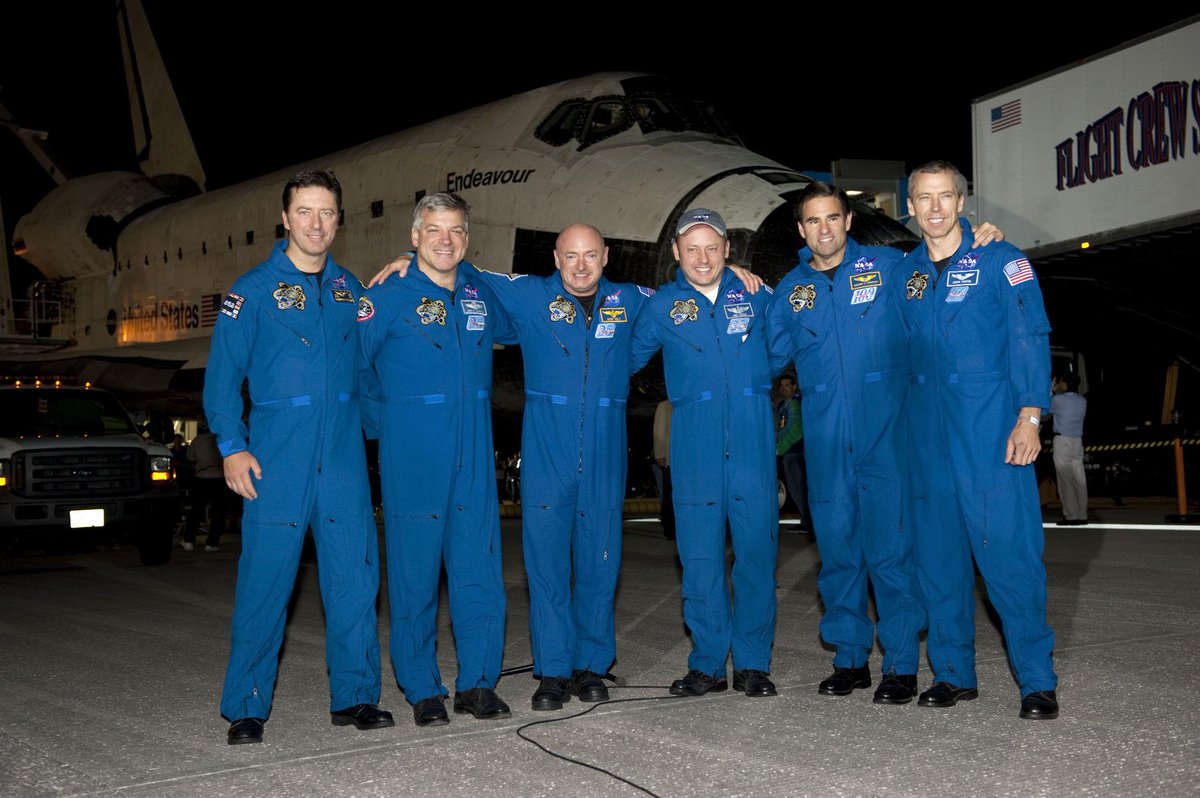
The crew of STS-134 celebrated with their ride OTD 15 years ago after landing at NASA's Kennedy Space Center.
With this 25th night landing of the Shuttle Program, Endeavour had completed its final mission.
On May 30, 1971, Mariner 9—the first spacecraft to enter into orbit around another planet—launched to Mars.
Mariner 9 mapped 85% of the Martian surface and sent back more than 7,000 images, including our first clear images of Olympus Mons and the Valles Marineris canyon system.
@archipeppe Excellent schematic! We like how it shows both the parasol sunshade installed by Skylab 2 and the twin pole sunshade that was installed by the Skylab 3 crew in August 1973.
Let's fix that up
Hours after Skylab 2 launched on May 25, 1973, the crew got its first view of the damage Skylab had sustained during launch.
As shown here, the Orbital Workshop (OWS) was missing one of the shiny shields designed to protect it from micrometeoroids and the sun's harsh rays. Additionally, one of the solar arrays was gone, and the other only partially deployed. The following day, the crew moved into the OWS, where temperatures had soared to about 55°C (130°F). It took hours to assemble and deploy a parasol through the scientific airlock: the small white square visible on the right. Once deployed, the OWS's temperature began to drop.
The next problem to be solved was Skylab's limited power.
@Keinnection This documentary from the 1970s shows the Skylab launch, but the cloud cover that day prevented visual tracking of the vehicle. https://t.co/eEpRgFyAXK
On her 75th birthday, we remember Dr. Sally Ride, the first American woman in space!
At the age of 32, this physicist and astronaut launched aboard Challenger in June 1983 for her first of two space missions. Her example inspired generations to reach for the stars. ✨
"I believe that this nation should commit itself to achieving the goal, before this decade is out, of landing a man on the Moon and returning him safely to the Earth."
65 years ago today President John F. Kennedy addressed a joint session of Congress. Among his "Urgent National Needs"— achievement in space.
With the Space Race in full swing, he said, "while we cannot guarantee that we shall one day be first, we can guarantee that any failure to make this effort will make us last."
A rare sight!
15 years ago today was the first and only time a Soyuz spacecraft departed from the @Space_Station while a space shuttle was docked.
Russian cosmonaut Dmitry Kondratyev, NASA's Cady Coleman, and ESA astronaut Paolo Nespoli were on their way back home after 159 days in space. As they set off, Nespoli captured a series of photos of Endeavour docked to the space station. STS-134 was Endeavour's last mission and the penultimate mission of the space shuttle program.
The Apollo 10 lunar module was an earlier version that was nearly 200 pounds heavier than the Apollo 11 lunar module. Also, its ascent stage (the part that lifts off from the Moon) carried only about half the propellant needed for a full lunar liftoff and rendezvous. This was all part of the mission plan: NASA wanted Apollo 10 to accurately simulate the weight of an ascent stage after a landing (with depleted fuel).
So close
Astronauts Tom Stafford and Gene Cernan flew the Apollo 10 Lunar Module "Snoopy" to within 9 miles (14.4 km) of the lunar surface OTD in 1969, completing a critical test of all the systems and procedures needed for the Apollo 11 lunar landing. In this photo we see Maskelyne crater, located 250 km away from "Tranquility Base," the Apollo 11 landing site.
After maneuvering to the lower altitude and returning to dock with the "Charlie Brown" Command Module, Snoopy was jettisoned into an orbit around the Sun, unlike the other Apollo lunar module ascent stages. In 2019, a team of astronomers who analyzed terabytes of radar data reported they were 98% certain they found Snoopy.
The wording of our post could be clearer. The Shuttle did have wings, though stubby ones. Neither the lifting bodies nor the Shuttle had much in the way of lift, but the lifting body research showed how an unpowered vehicle travelling at high speeds could be maneuvered to a runway landing.
As the Apollo 11 vehicle was rolling to the launch pad in Florida OTD in 1969, across the country in the California desert NASA test pilot Bill Dana (right) was flying the wingless HL-10 lifting body (left).
NASA's lifting body program paved the way for the space shuttle by showing that a wingless craft could glide to a landing like an airplane.
Good question! The lift for these vehicles was created by the shape of their bodies rather than wings. The modified half-cone shape with a rounded bottom and flat top, along with the rounded nose and twin tail-fins allowed the lifting bodies to be maneuvered both in a lateral and a longitudinal direction. https://t.co/eNsYh9GFyE
May 18, 1969: Tom Stafford, John Young, and Gene Cernan begin the second crewed mission to the Moon.
Apollo 10 was the final critical test flight before Apollo 11's lunar landing, just 2 months later.
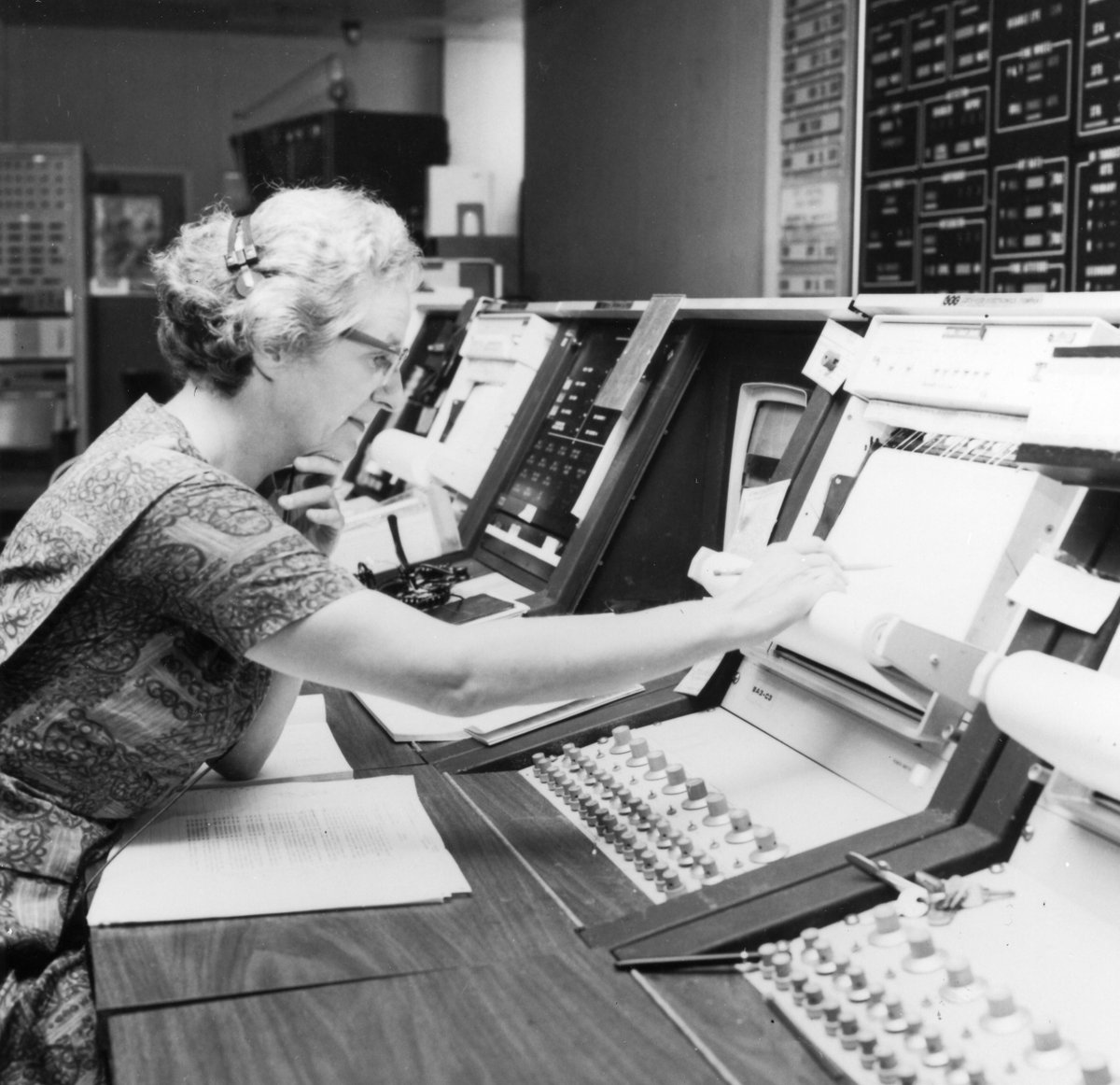
Today would have been Dr. Roman’s 101st birthday! 🎉
We are honored to have @NASA’s next space telescope, launching later this year, named after such an inspiration who understood the importance of leaving Earth's atmosphere to better understand our universe.
Learn more: https://t.co/xfYshhDutI