It's time to say goodbye.
Thanks for commenting, liking and sharing. At the end of the month, this page will deactivate and move over to the @NASAEarth page.
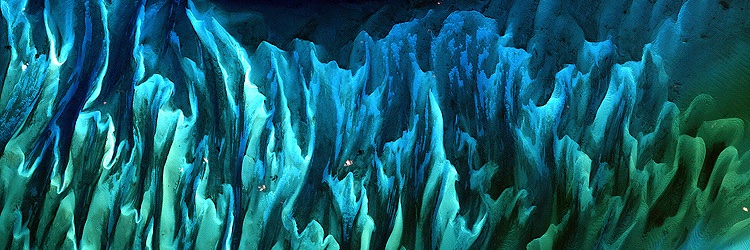
🌊 Deep-sea hydrothermal vents release minerals that feed tiny organisms—so many, they’re visible from space! These vents help drive global carbon cycling, and NASA tracks their impact via remote sensing. Nature is wild. 🔬🛰️
Watch how below 🔽
In Season 9 of our Curious Universe Podcast, NASA scientists Dr. Kelsey Bisson and Dr. Cécile Rousseaux share their love for Earth’s water and how full of life it is. From its lively colors to its bustling life, PACE’s ability to make the invisible visible is truly radiant!
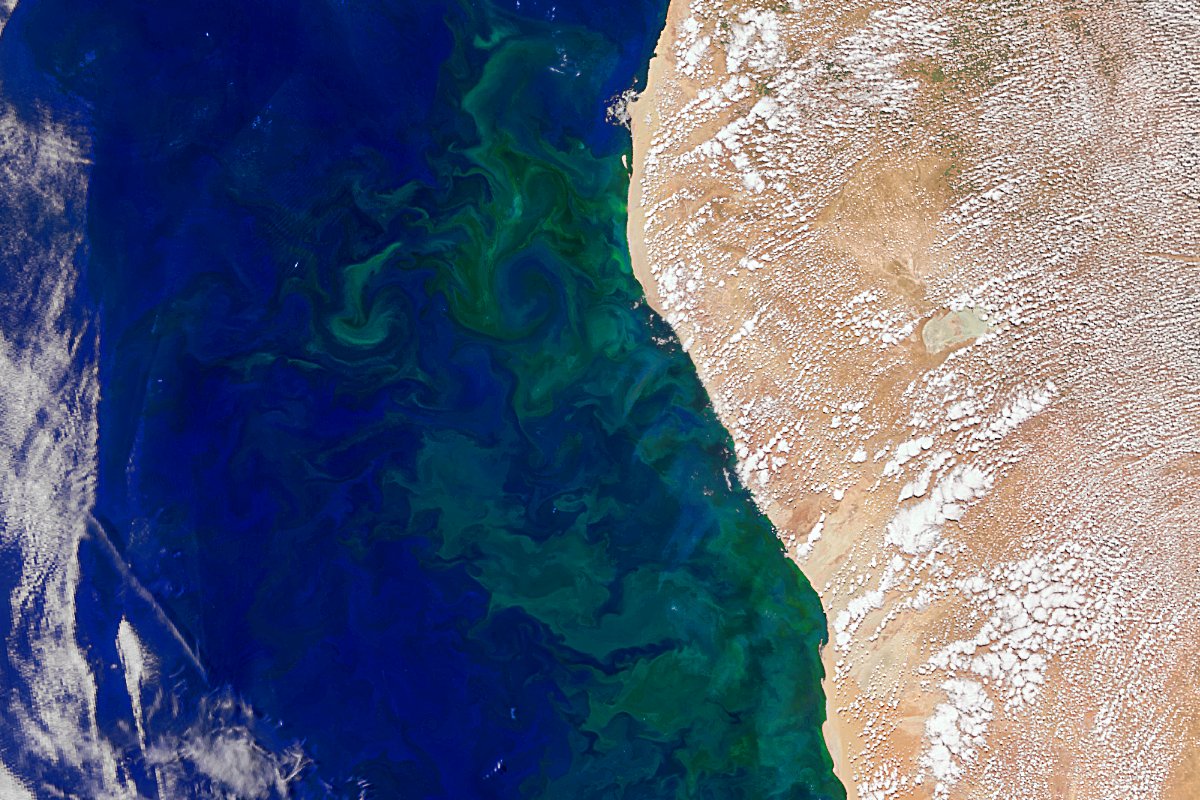
Let’s celebrate World Oceans Day by exploring the beautiful colors and vibrant life of our oceans! Imagery from the #PACE satellite allows us to see Earth’s ocean life from a new perspective by tracking color changes from phytoplankton.
https://t.co/yRuhe1J1JP
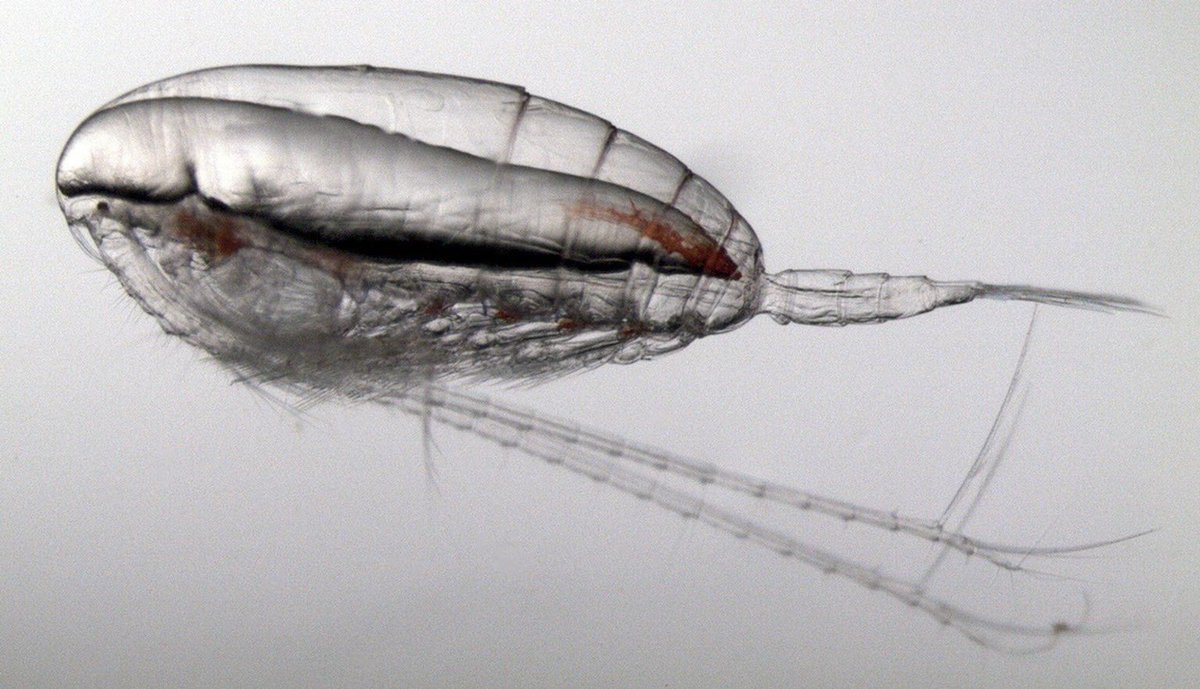
Using NASA satellite data, researchers found a way to detect Calanus swarms at the ocean surface in the Gulf of Maine, picking up on the animals’ natural red pigment.
The North Atlantic right whale filters clouds of tiny reddish zooplankton — called Calanus finmarchicus — from the sea.
These zooplankton are the whale’s lifeline.
Only about 370 of these massive creatures remain.
https://t.co/nqvxEgFR0y
Small features, big science! 🌊
Data from the SWOT satellite reveals how small ocean features, some just a mile across, may have larger impacts on the movement of nutrients and heat than previously thought.
Learn more: https://t.co/KMg3mNlwDV
Name a better duo than PACE and SWOT
The Plankton Aerosol Cloud ocean Ecosystem satellite and the Surface Water
and Ocean Topography satellite work in tandem to provide us with
unprecedented information about our planet’s oceans.
https://t.co/jqqCD6PO08
One Earth satellite can see plankton that photosynthesize. The other measures water surface height. Together, their data reveals how sea life and the ocean are intertwined.
This is how the PACE and SWOT missions work together to see the ocean. https://t.co/V5RpkleOEM
Scientists are using NASA satellite data to map tiny red zooplankton, the food source for one of Earth’s rarest mammals: the North Atlantic right whale. 🛰️🐳
These beautiful, spiraling currents play a big role in Earth’s climate!🌀🌊
These are Agulhas Rings. They carry salt and heat from the Indian Ocean to the Atlantic and are part of a system of ocean currents that shapes the climates of North America, Europe, and Africa.
Iceland is still covered in snow and ice at this time of the year. However, in the ocean waters surrounding it, phytoplankton are starting to bloom. Phytoplankton is photosynthetic organisms that can form in visible swirling patterns.
https://t.co/7JkZnjXYOZ
What’s for dinner? 🍽️
Tune in to the latest episode of @nasa’s Curious Universe podcast to learn how one long-running satellite program collects the data that farmers need to grow the food on your plate. https://t.co/O7GMZU4hFm
It's almost Earth Day. Let’s celebrate our home planet from a unique viewpoint – space!
Use our “Your Name in @NASA_Landsat” app to spell out your name (or a pet, family member, or significant other’s name) with Earth features seen by satellite: https://t.co/BAgIoB0JhC
Blooms of trillions of phytoplankton allow these microscopic organisms to be viewed from space during the day, and they can be observed glowing at night creating a bioluminescent sea sparkle.
Talk about a glow up!
These dinoflagellates (Noctiluca scintillans) blooming in the Arabian Sea produce bioluminescence when water is disturbed . The image from the PACE satellite captures the swirls and these microscopic organisms.
https://t.co/HQMVNIo2hr
Hints of Spring
In this image captured by PACE, we can see that even though Iceland is still covered in snow and ice, phytoplankton in the water are blooming, signaling a change in season.
https://t.co/7JkZnjXYOZ
“When you look at the Earth from space, you realize that our planet is a beautiful, interconnected system. We are all in this together.” - Mae Jemison, Space Shuttle NASA astronaut
This time-lapse taken aboard the International Space Station shows a blanket of stars surrounding our Earth. The view is one that is known to create a moment of pause in appreciation of the beauty of our shared home.
#WorldViewWednesday
NASA has landed on the Moon, driven robots across Mars & peered into the depths of time and space… But we don’t have to look far to find an amazing, mysterious world: Earth. 🌎
Explore Earth with an upcoming miniseries from the Curious Universe podcast. https://t.co/TM02uDqMZa