Don’t let anyone dull your shine 💫
The heart of galaxy M77 nearly outshines the galaxy itself in this mid-infrared Webb image. Gas rapidly orbits the central black hole, heating up, and radiating light. https://t.co/LDOGmXEytb
Webb is looking at the chemical fingerprints of interstellar comet 3I/ATLAS in the mid-infrared 🔎
New data points to a very different formation environment and chemistry for this object compared to most comets that formed in our own solar system.
https://t.co/6xJl3L6W9K
Which came first, galaxies or black holes?
New Webb observations show that some supermassive black holes were enormous from their beginnings, shifting traditional ideas around how black holes form and grow.
https://t.co/YNSs2QIFbu
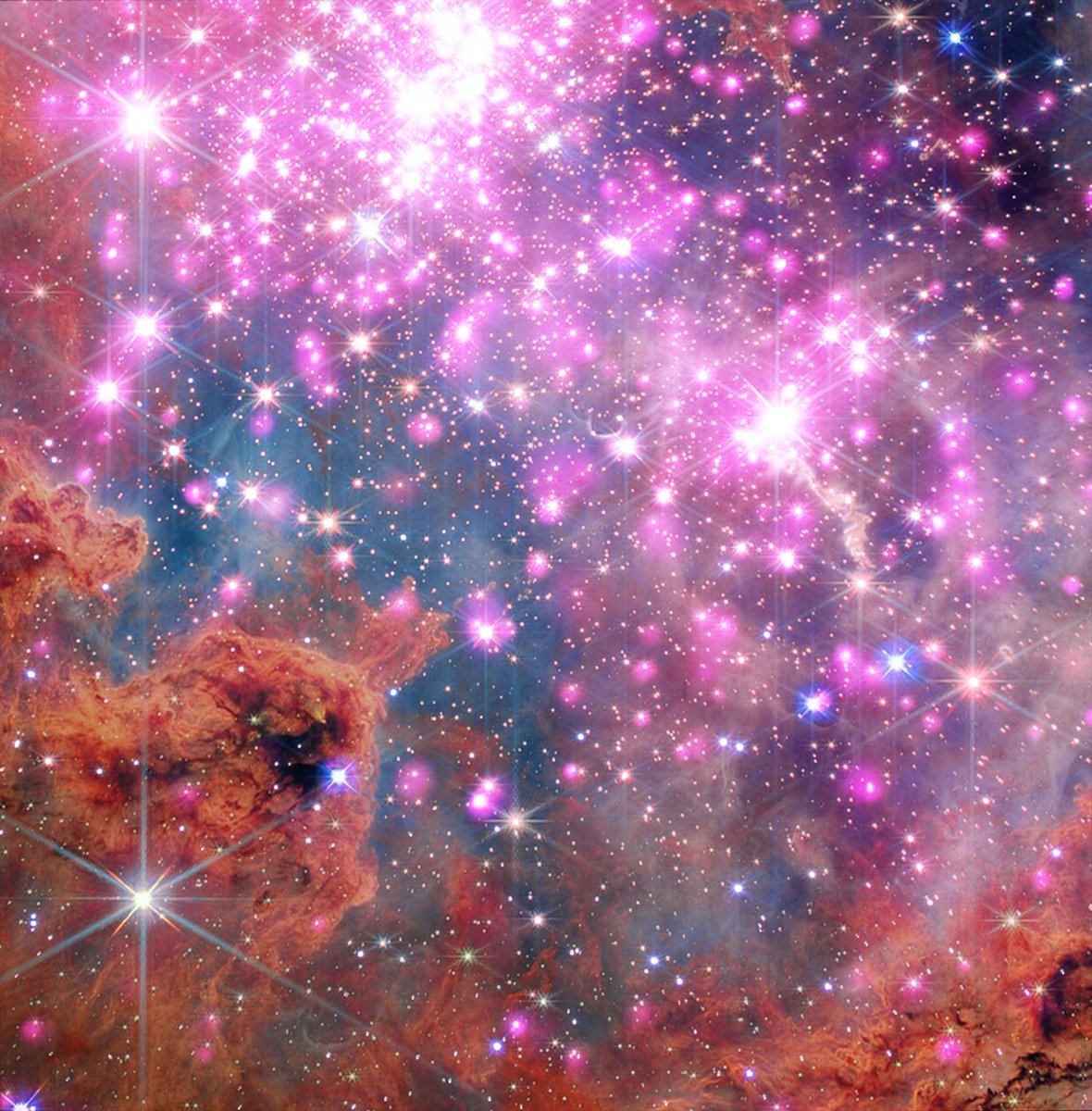
Westerlund 2 is a young cluster of thousands of stars located about 20,000 light-years from Earth. This close-up image, roughly 12 light-years across, combines observations from NASA's Chandra X-ray Observatory & @NASAWebb.✨
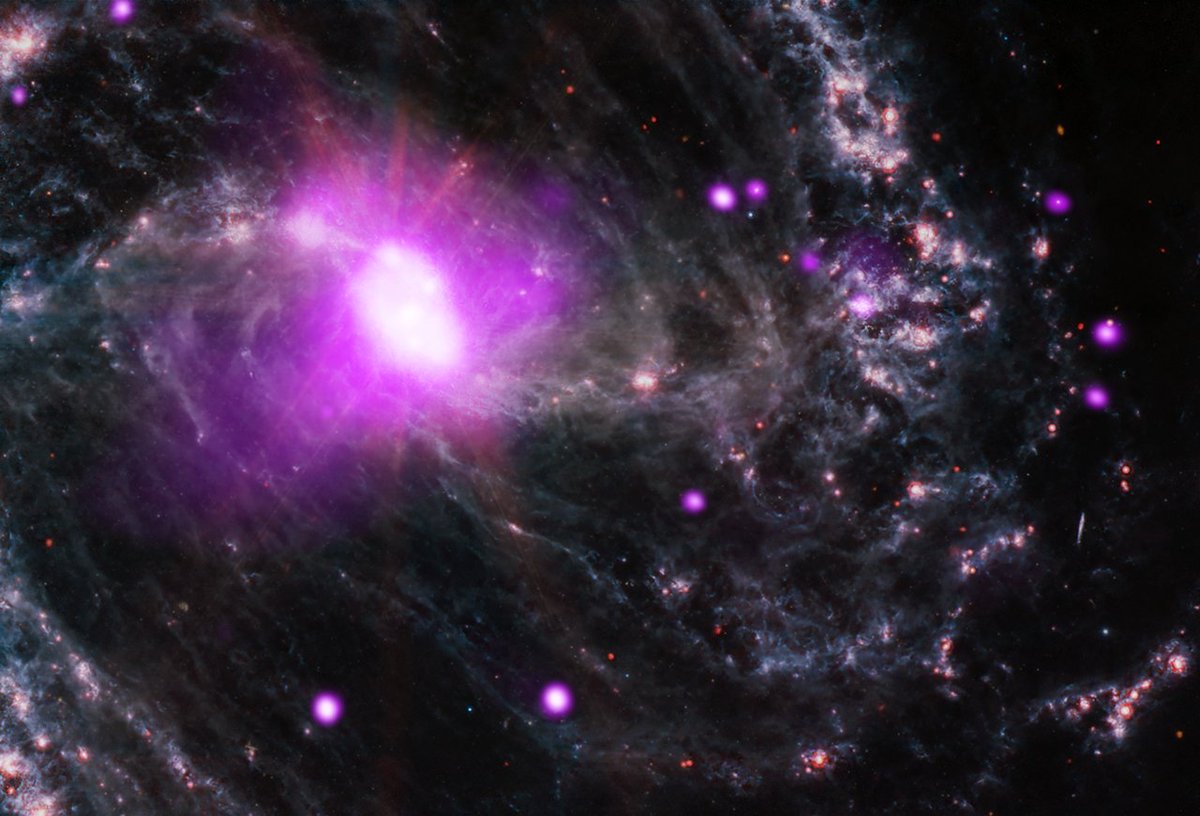
At the heart of galaxy NGC 1365, a supermassive black hole is basically feasting at an all‑you‑can‑eat buffet in this image from Chandra and @NASAWebb. Located about 60 million light-years from Earth, this gobbling black hole has a mass of roughly 2 million suns... and growing.⚫
There is a massive black hole in the center of almost every galaxy. How did it get there, and importantly, how does it grow? On May 19, we'll discuss what new #NASAWebb data is driving the biggest tensions in our understanding of the black hole phenomenon.
https://t.co/ELxCrpvA8i
To MoM-z14 & back! 💐
Let a caregiver in your life know your appreciation for them reaches the farthest galaxy ever detected!
Read more about MoM-z14: https://t.co/ejbBjLSlQr
Light can bend (or be diffracted) around the edges of the telescope primary mirror and the struts that hold the secondary mirror. Bright objects in Webb images show a distinctive six-plus-two-pointed pattern. Hubble's have 4 point diffraction spikes due to its structure.
Don’t let anyone dull your shine 💫
The heart of galaxy M77 nearly outshines the galaxy itself in this mid-infrared Webb image. Gas rapidly orbits the central black hole, heating up, and radiating light. https://t.co/LDOGmXEytb
This image is a composite of both mid and near infrared. The bright orange lines radiating out of the center are diffraction spikes. They aren't a physical feature of the galaxy, but an optical effect caused by the structure of the telescope.
It’s heaven in my heart, and we could find you some *space* ✨
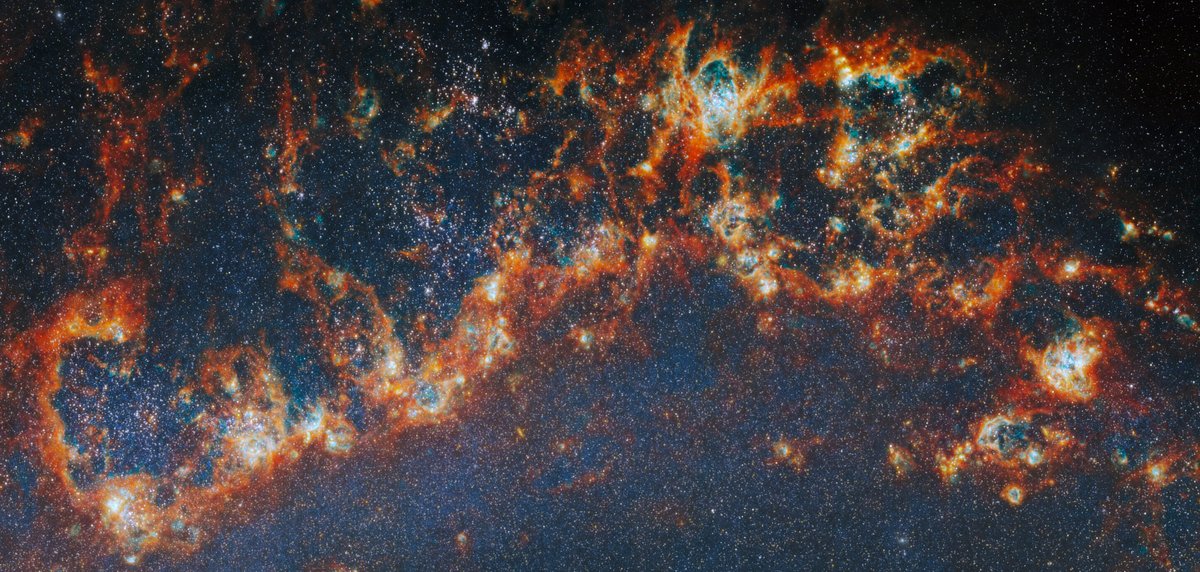
Webb looked at nearly 9000 star clusters in four different nearby galaxies and its data shows that more massive star clusters emerge more quickly from the clouds they are born in.
https://t.co/d6dfPf0eOM
From Hubble discoveries to your screen. 👇
You can do NASA science, too.
With Galaxy Zoo, volunteers classify @NASAWebb galaxies – sometimes as the first humans to see them. 👀
Get started: https://t.co/UkCMo9NzUG
We won both the Webby and People's Voice awards for best education and science social campaigns in @TheWebbyAwards! Saying we're grateful for you all doesn't even scratch the surface! Thank you so much for following, engaging, and voting!💗
https://t.co/D70y4d2vWW
Shine, dream, smile! Oh, let us light up the night… with a pair of new stars, and maybe some planets!
Webb captured edge-on views of two protoplanetary disks, which will help us better understand the process of planet formation.
https://t.co/kxzH0WR3Uu
The end is near! The fate of this nebula's central star and Webby voting is the same, both reaching the end.
There are a few hours left to get your Webby vote in! Voting ends tonight (Thursday, April 16) at 11:59 PM PDT. Click here to submit yours: https://t.co/H77VV0SoUd
There's still one more day to cast your vote in @TheWebbyAwards!
If you've enjoyed unfolding the universe with us this year, vote here: https://t.co/H77VV0SoUd
To MoM-z14 and back 💞
Wait, there's more Webb in this year's @TheWebbyAwards!
Vote for Cosmic Dawn as the best longform documentary by Thursday, April 16: https://t.co/PDnjMJrZPp
We heard Hearing Hubble got nominated for @TheWebbyAwards! 👂🎊
Our DIY-experience lets you transform the scientific data in Hubble images into sound.
Voting closes on Thursday, April 16: https://t.co/zsYl0tPiJG
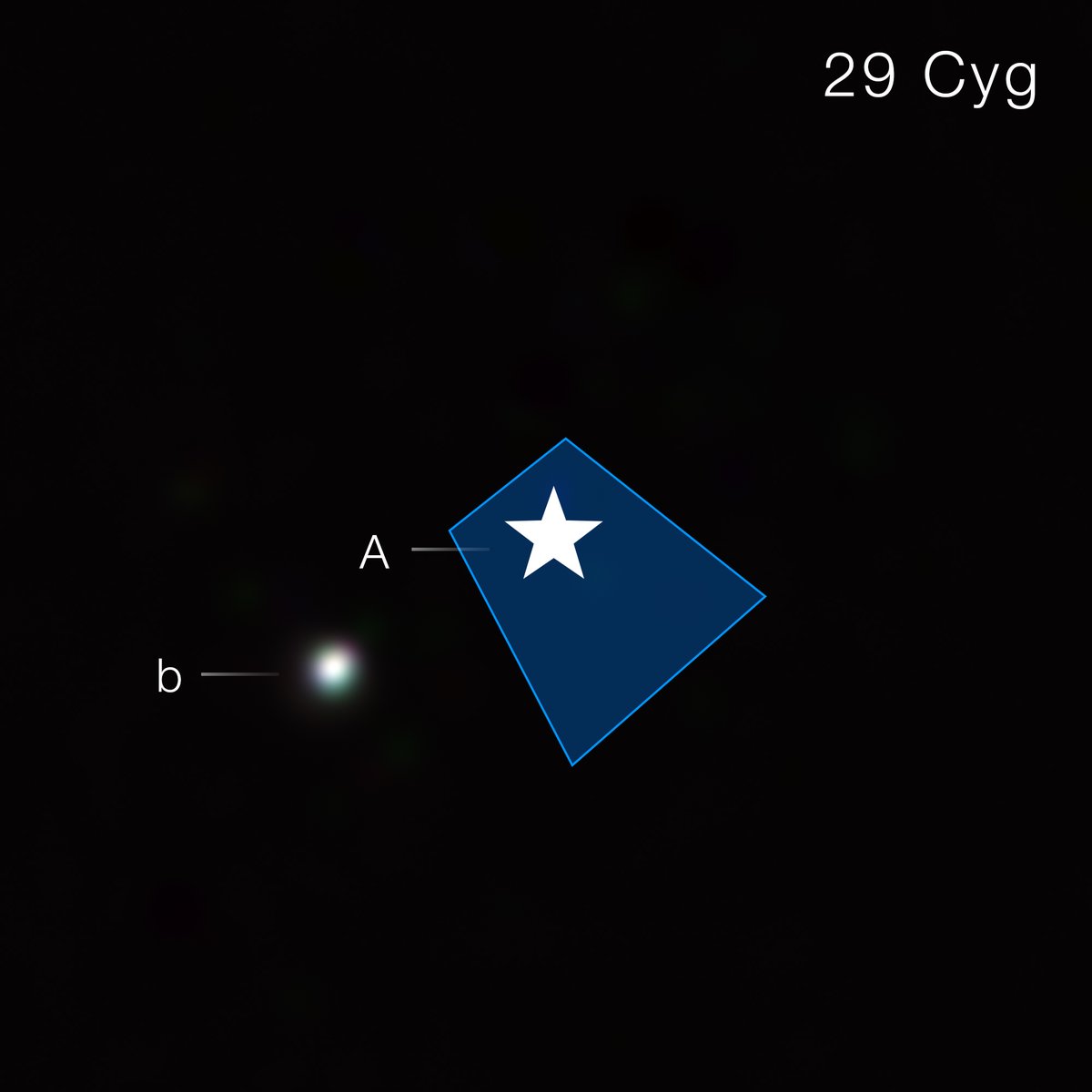
Webb directly imaged 29 Cygni b, an object 15 times the mass of Jupiter, to find out if it formed like a planet or a star, since they result from different processes. Data show it's a planet! https://t.co/K48elMpcRs