It is with a heavy heart that we share that Warren Washington, internationally recognized leader in the atmospheric and climate sciences and trailblazer for Black and other underrepresented scientists, passed away at age 88.
🧵
The road up to the Mesa Lab was designed to provide beautiful views and a breathtaking reveal of the building for visitors.
This silent film shows the road as it was constructed in the early 1960s.
#ArchivesHashtagParty#ArchivesOnTheRoad
In 1940, Janet and Walt Roberts packed their Graham-Paige with a coronagraph and set out for Climax, CO to establish the solar observatory that would become NSF NCAR @HAOSunEarthLab.
📸: Janet Roberts pushing the car uphill at Climax.
#ArchivesHashtagParty#ArchivesOnTheRoad
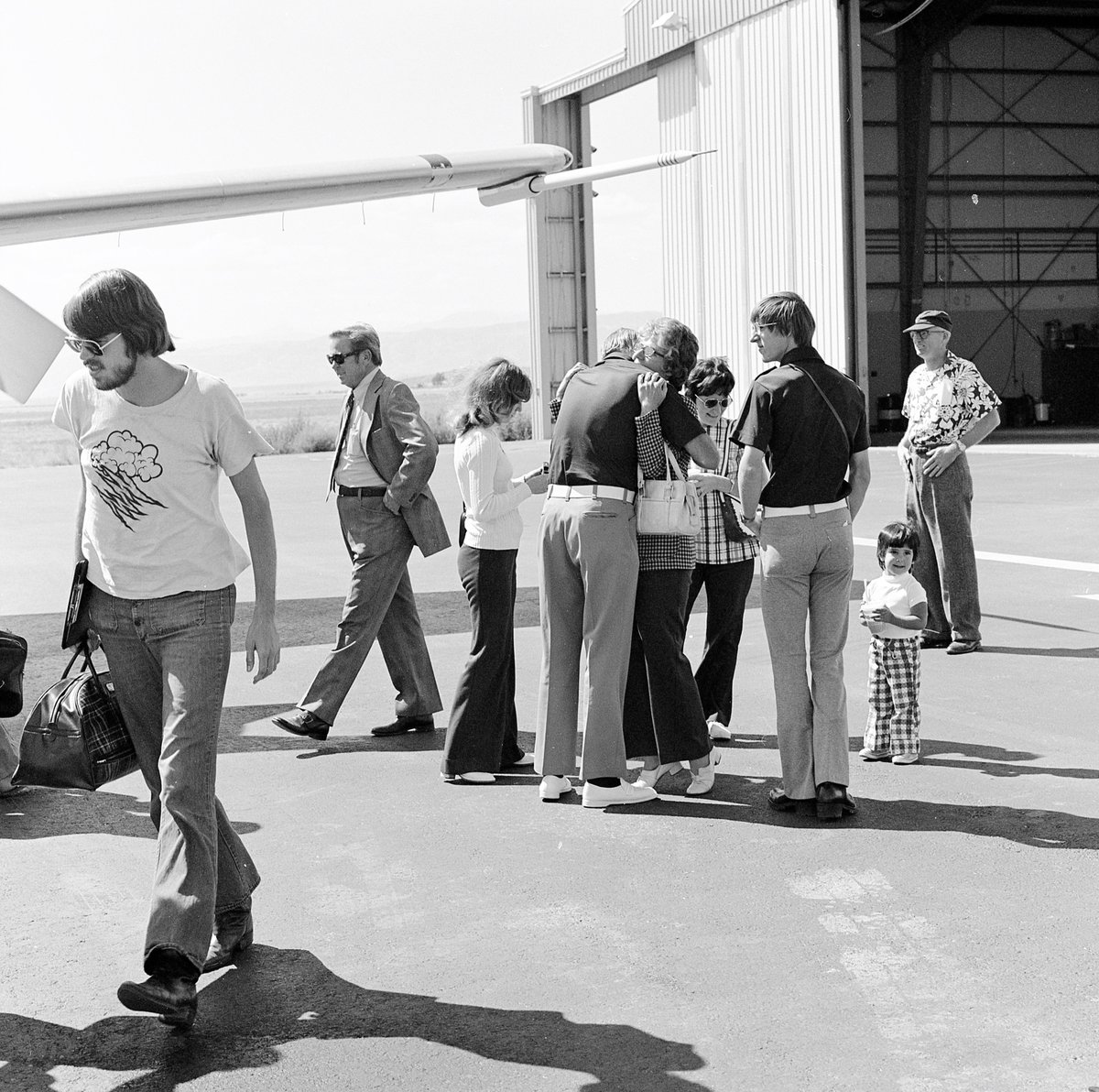
#OnThisDay in 1974 the NSF NCAR research team began to return from the field phase of the GARP Atlantic Tropical Experiment (GATE).
40 NCAR staff joined people from over 70 countries to participate in this program to collect data from a large region of the tropics.
It's easy to get lost (literally and figuratively) in the patterns of the Mesa Lab. The building, designed by I.M. Pei, is a trove of interesting textures, twists, and turns.
#ArchivesHashtagParty#ArchivesPatterns
The road up to the Mesa Lab is closed due to a wildfire south of the Mesa Lab. Staff have been evacuated and crews are currently on scene fighting the fire.
This is an amazing behind the scenes peek into the NSF NCAR Vacuum Tunnel Facility! Here's a photo of the construction of the tunnel during an underground expansion of the HAO facilities in the early 1980s!
Read more about the expansion here: https://t.co/Pz7FF3Hswv
#DYK? There's a hidden tunnel beneath the Mesa Lab! Welcome to the NSF NCAR Vacuum Tunnel Facility (w/ a calibration chamber for coronagraphs), run by our High Altitude Observatory (NSF NCAR HAO). Come along with the @UCAR_News Comms team for a tour!
https://t.co/4EC8sUuGxf
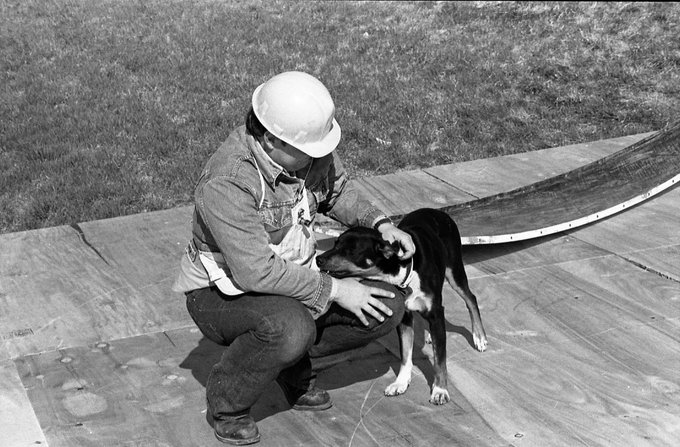
Sparky was an honorary member of the research team during the National Intensive Meteorological Research On Downburst Project. Sparky is pictured here supervising the radar setup and conferring with a colleague.
#ArchivesPets#ArchivesHashtagParty
Before our Mesa Lab tornado simulator exhibit, our scientists used a #tornado simulator during the National Intensive Meteorological Research on Downburst project in 1978, studying damaging winds. #tbt
🌪
Interested in exploring NSF NCAR’s history? Check out the @NCAR_Archives.
Remembering and celebrating Mesa Lab architect I.M. Pei on his birthday.
In this interview, Pei spoke a bit about his process for designing the Mesa Laboratory: https://t.co/V3AiF2LeYW
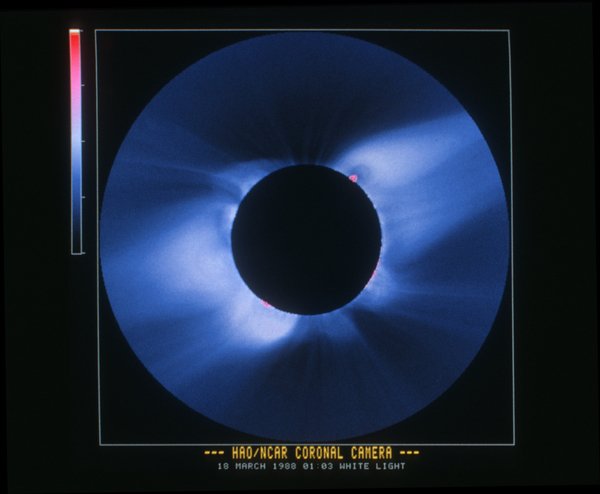
While we're waiting for today's #SolarEclipse, we're taking a look back at @HAOSunEarthLab's first eclipse expedition in 1952 in Khartoum.
Check out more historical eclipse material in the High Altitude Observatory online collection: https://t.co/EMVqMCyQm8
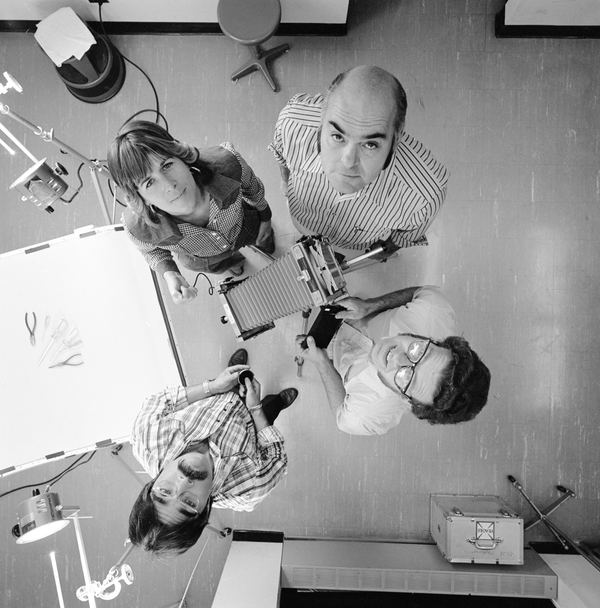
The Photographics Lab team used a superwide camera hanging from the ceiling to take this 1976 selfie.
Clockwise from top left: Ginger Wadleigh, Bob Bumpas, Charlie Semmer, Tony Galván. See more of their photos: https://t.co/wvU2TWYPvv
#ArchivesSnapshot#ArchivesHashtagParty
Our NSF @NCAR_Science scientists are getting ready to observe and study our Sun during the total solar eclipse on April 8. Beyond the event at the Mesa Lab, we will have experiments and outreach going on all over the nation. Read more about what is planned https://t.co/S8jOBLabIk
It’s ❄️SNOW❄️ secret that snow days have always been our favorite! They're just 1 reason that the mesa was the perfect location our research lab. Even in the early days, they were a source of excitement and knowledge– and a great photo opp! #MesaLabMonday
https://t.co/S72spdcIPD
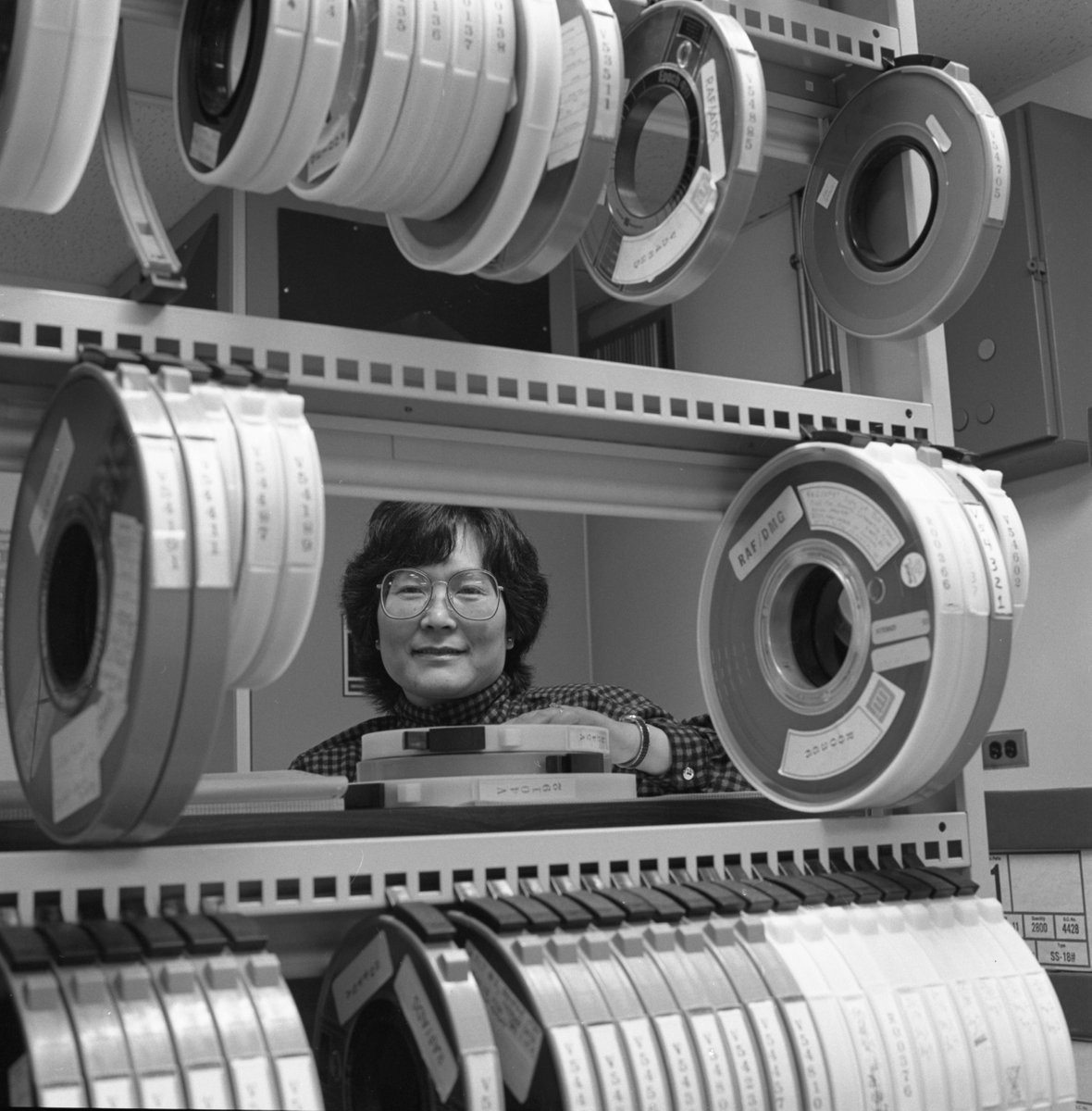
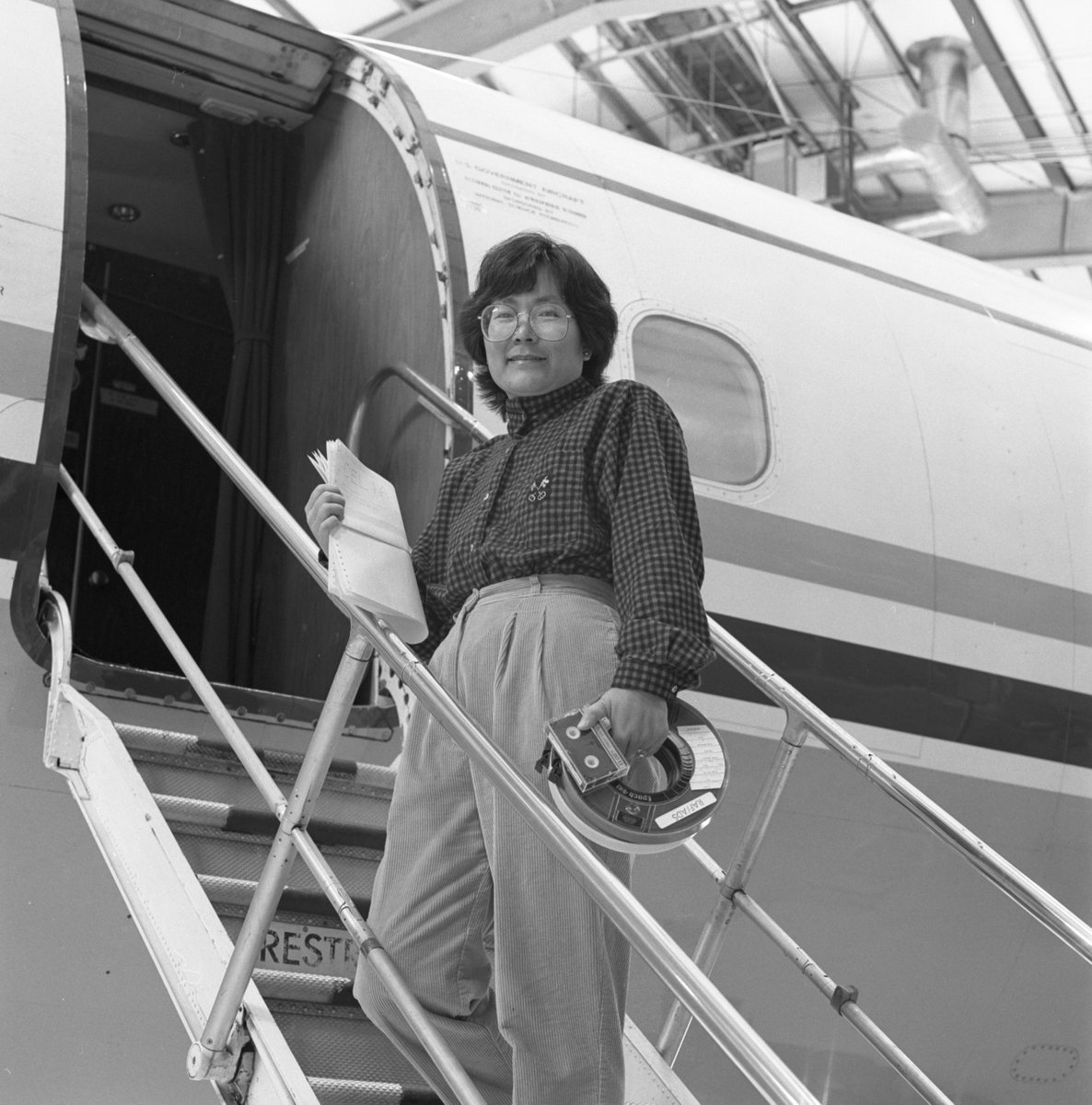
Celia Chen began her career as a computer programmer in NSF NCAR's Atmospheric Technology Division in 1972.
Read more about Chen in this 1990 staff newsletter profile: https://t.co/PNlviQLzfa
#ArchivesHashtagParty#ArchivesWomenInSTEM
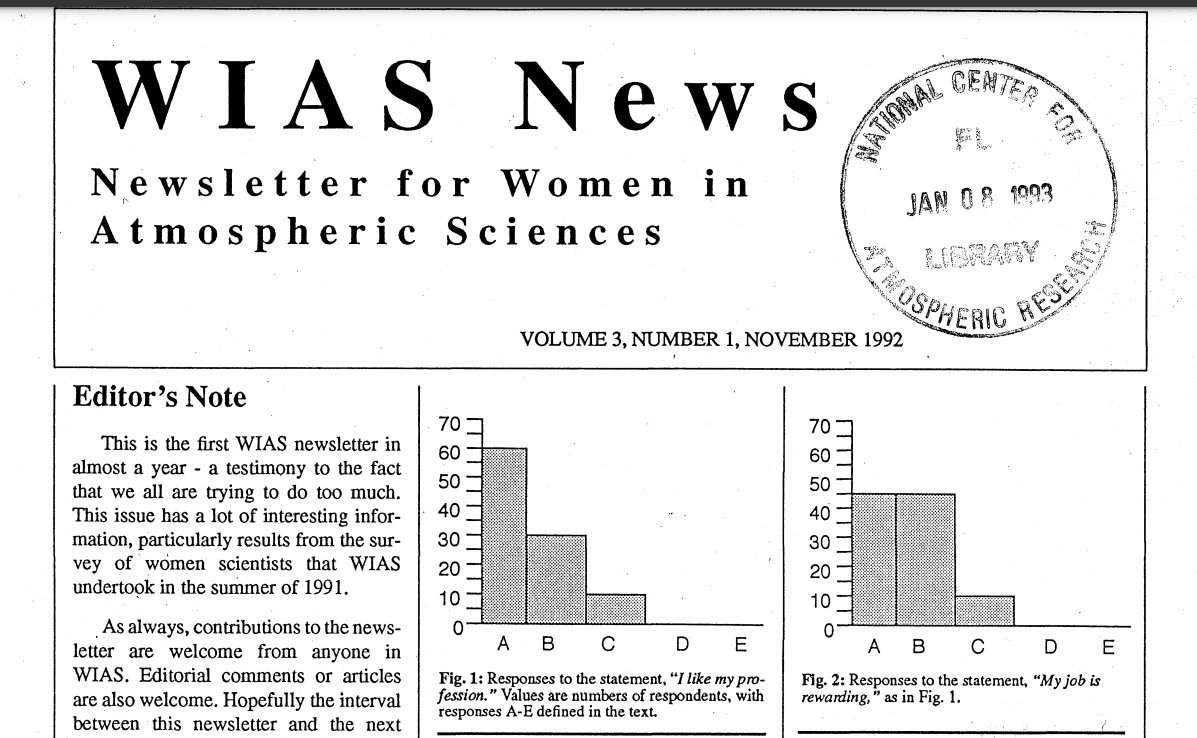
Women in Atmospheric Science (WIAS), a group of Boulder area scientists, put out a survey in 1991 to learn about the experiences of women in STEM. View results of the survey in this WIAS newsletter: https://t.co/iDq1vNGayS
#ArchivesHashtagParty#ArchivesWomenInSTEM
Read more about the Auto-nowcaster here: https://t.co/VcaCAOEUGh.
And, check out an interview with Sandra Henry for the Science Now newsletter here: https://t.co/qQgpKFxSVG.
"We try to figure out exactly when and where a thunderstorm will develop."
As a scientist at NSF NCAR, Sandra Henry studied thunderstorm formation during projects like Real-time Analysis & Prediction of Storms, & development of the Auto-nowcaster (pictured).
#BlackHistoryMonth