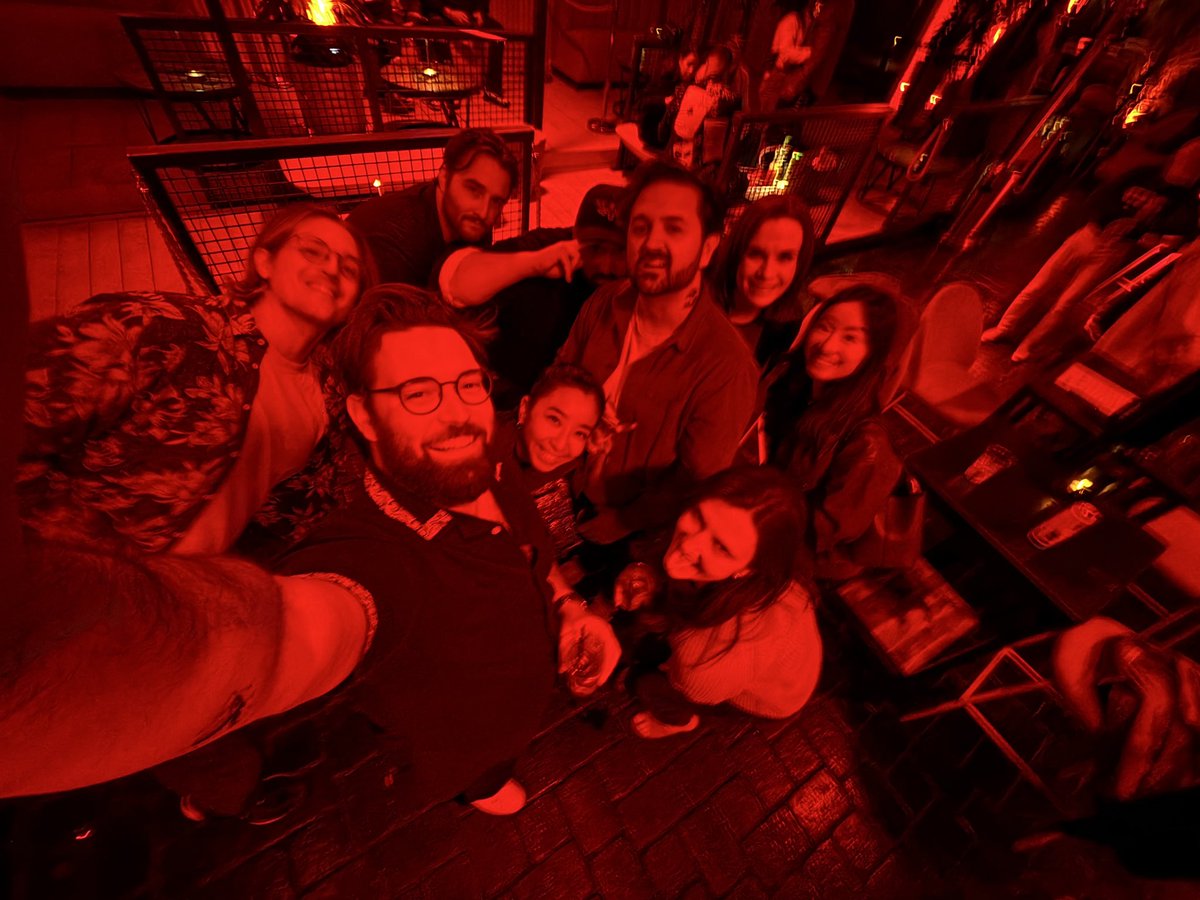
Today I'm launching @asylumventures, a new venture firm dedicated to the creative act of building companies.
Asylum's first $55 million fund is an embodiment of my belief that founders are artists, not assets:
The fallacy of this is that more creates more. More hours, more hiring, more something.
And it is true in a sense. If you put in more work, more work will happen. But I think for most startups, the leverage is really in how differently you approach the problem, how well you cultivate your team, and the strategy.
Any large company can outspend you on hours. They have thousands or tens of thousands more people, spending more hours. If hours worked were the metric, every large company and government organization would always win and do the best work. More hours, better output.
This thinking is often representative of younger founders, where the startup becomes their identity and life. They have a hard time doing anything else, and cannot understand that your work is not the person that is you. But activities outside of work can grow you as a person too and make you do better work.
I’ve never worked this way. As a designer, I always saw the need to take a step back, to take a break. At times, I might work 12 hours or 16 hours, or whatever amount was needed, but it wasn’t the norm. You just can't grind design, you need inspiration. But taking that step away from the work, would give me more perspective, inspiration and I could approach the problem differently or I could just see the solution.
Grinding is never good for any creative problem, and startups or creating new products are often mostly about creative problem solving. Grinding works ok for email jobs, or where you just executing on very clear playbook.
With Linear, we’ve never worked this way. We work reasonable hours, 5 days a week. All of us founders have families. Many of our employees have families. I personally stop every evening, spend time with the family, cook dinner for the family, eat dinner together, and focus on things outside of work. Sometimes I work in the late evenings or weekends, but to me the pride is that I don’t need to. Company should be succesful without it.
My goal is to build a company that is sustainable in the long term, and doesn’t require heroics or personal sacrifices every single day.
There are times when our team is heroic. Launches, incidents, some other work that just needs to be done. They will work late into the night because they know it is the right thing. But we don’t require that every day or every week, and the more this happens, the more I think it is a failure of our company and leadership. The team and the leaders should always keep a reserve to use when something is needed.
Our thinking was also that quality, which we value, doesn’t emerge from working more or stressing people more. It emerges when you create the conditions for it to emerge. Often it is the appreciation, space, time, and how the person feels. A person who is rested will do better work.
I wouldn’t attribute much of our success to working a lot. The success came from having clear thinking, ideas, and focus to do the right things.
I sometimes wish we could move the culture more toward a Zen master.
Real mastery is not exerting the most effort. It is achieving the outcome with the least necessary effort.
The fallacy of this is that more creates more. More hours, more hiring, more something.
And it is true in a sense. If you put in more work, more work will happen. But I think for most startups, the leverage is really in how differently you approach the problem, how well you cultivate your team, and the strategy.
Any large company can outspend you on hours. They have thousands or tens of thousands more people, spending more hours. If hours worked were the metric, every large company and government organization would always win and do the best work. More hours, better output.
This thinking is often representative of younger founders, where the startup becomes their identity and life. They have a hard time doing anything else, and cannot understand that your work is not the person that is you. But activities outside of work can grow you as a person too and make you do better work.
I’ve never worked this way. As a designer, I always saw the need to take a step back, to take a break. At times, I might work 12 hours or 16 hours, or whatever amount was needed, but it wasn’t the norm. You just can't grind design, you need inspiration. But taking that step away from the work, would give me more perspective, inspiration and I could approach the problem differently or I could just see the solution.
Grinding is never good for any creative problem, and startups or creating new products are often mostly about creative problem solving. Grinding works ok for email jobs, or where you just executing on very clear playbook.
With Linear, we’ve never worked this way. We work reasonable hours, 5 days a week. All of us founders have families. Many of our employees have families. I personally stop every evening, spend time with the family, cook dinner for the family, eat dinner together, and focus on things outside of work. Sometimes I work in the late evenings or weekends, but to me the pride is that I don’t need to. Company should be succesful without it.
My goal is to build a company that is sustainable in the long term, and doesn’t require heroics or personal sacrifices every single day.
There are times when our team is heroic. Launches, incidents, some other work that just needs to be done. They will work late into the night because they know it is the right thing. But we don’t require that every day or every week, and the more this happens, the more I think it is a failure of our company and leadership. The team and the leaders should always keep a reserve to use when something is needed.
Our thinking was also that quality, which we value, doesn’t emerge from working more or stressing people more. It emerges when you create the conditions for it to emerge. Often it is the appreciation, space, time, and how the person feels. A person who is rested will do better work.
I wouldn’t attribute much of our success to working a lot. The success came from having clear thinking, ideas, and focus to do the right things.
I sometimes wish we could move the culture more toward a Zen master.
Real mastery is not exerting the most effort. It is achieving the outcome with the least necessary effort.
1/ Venture investing is often framed as a strategy game, but it’s just as much an exercise in emotional calibration. And who you have behind you matters.
@nchirls & I unpack a new framing “cynical optimism” in the new Origins minisode.
My🔑Takeaway 👇
https://t.co/LYvn0XMlUp
we're bringing the @riffledotstudio run to sf! intimate, invite-only, house party. artists, creatives, and everyone in between.
rsvp here: https://t.co/1yIx1knBdA
🧵How does a Juilliard-trained classical musician wind up managing a $6B endowment at a church in Manhattan older than the United States itself?
That's the story of our fascinating Origins guest: Nicholas Csicsko, MD of Investments, Trinity Church Wall Street 👇
I've watched this ad several times and genuinely can't understand the point.
If you want a condescending VC who believes they're the moral authority on whether or not your product should exist...contact General Catalyst?
If you don't, we're open for business @a16z 🫡
One way that I think about it - there are inevitable successive phases of absorption and expression in the creative process. Having (a) partner(s) allows for relatively consistent output while allowing for this natural cycle
1/ Power law still holds at scale - just at a different magnitude.
On Origins, @daveclark85 walks through the math (w/ @NChirls). If you’re allocating to $1B+ funds, the assumptions matter.
What has to be true:
→ Exit markets need to support massive outcomes
→ Even a $6B fund can produce fund returners
→ A return-driven lens ≠ IRR-driven lens
Stoked to announce our $16m Series A led by Healthier Capital. This team made it possible.
I wrote some thoughts about what growth means to me. Read below.
Otto wrote a vulnerable piece today about his journey to date and what’s ahead. It’s an example of what real leadership looks like on the field —>
https://t.co/tqJLnunJM9
One of the joys of this work is to see people grow into true leaders. @ottosipe is making art in an unlikely place - prescription routing for patients, which will bring down the cost of our therapeutics.