I love Aeronautical,Aerospace, Cosmology,Space exploration. :)
Music lover (Lindsey Stirling♥)
Animal lover(cheetahs,pere..flcon)
“We are Jehovah's Witnesses”
“In the time of the end the king of the south will engage with him in a pushing, and against him the king of the north will storm with chariots and horsemen and many ships; and he will enter into the lands and sweep through like a flood”.
:-Daniel 11:40
The small, northern constellation Triangulum harbors this magnificent face-on spiral galaxy, Messier 33. Its popular names include the Pinwheel Galaxy or just the Triangulum Galaxy. M33 is over 50,000 light-years in diameter, third largest in the Local Group of galaxies after the Andromeda Galaxy (M31), and our own Milky Way. About 3 million light-years from the Milky Way, M33 is itself thought to be a satellite of the Andromeda Galaxy and astronomers in these two galaxies would likely have spectacular views of each other's grand spiral star systems. As for the view from the Milky Way, this sharp telescopic image shows off M33's blue star clusters and pinkish star forming regions along the galaxy's loosely wound spiral arms. In fact, the cavernous NGC 604 is the brightest star forming region, seen here at about the 5 o'clock position from the galaxy center. Like M31, M33's population of well-measured variable stars have helped make this nearby spiral a cosmic yardstick for establishing the distance scale of the Universe.
Image Credit & Copyright: George Chatzifrantzis
Colors at night are beautiful when looking at Earth at night. Here you can see blues from the squid boats, the bright lights of cities, storms, and the milkyway, stars, and galaxies rising in the sky. This was shot from the Dragon forward window with 3 second exposures and stitched together into a timelapse. That's what it looks like through the window; just, a little slower.
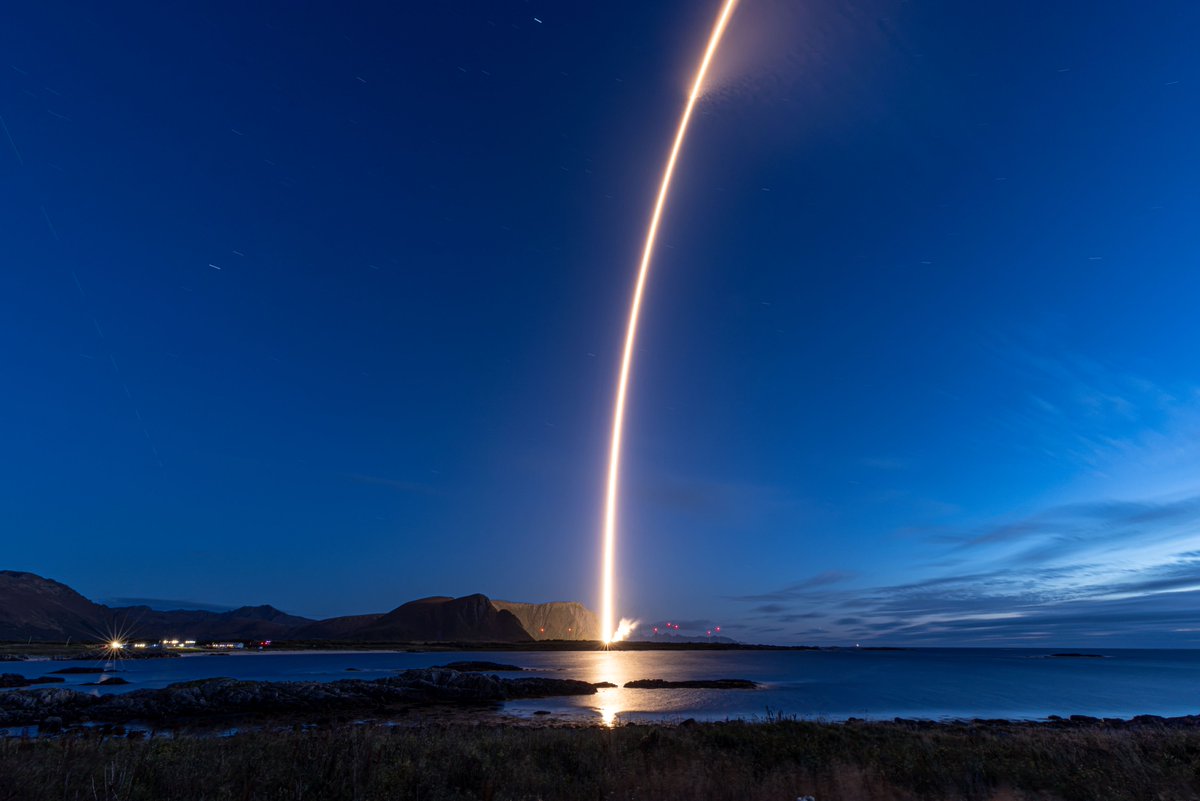
We made history. On just our second flight, we became the first commercial space company from Europe to deliver satellites into orbit. Mission 'Onward and Upward' successfully lifted off and deployed payloads into orbit. A new chapter for European spaceflight. More: https://t.co/EQ8NvB6lEo
Bring a bit of the cosmos into your space
@NASARoman is set to investigate some of the biggest questions in astrophysics, from how the universe evolved to how common planets are beyond our solar system.
Celebrate its upcoming launch by bringing Roman into your own space: https://t.co/L7FR2gLeMU
Liftoff! @NASARoman begins its flight to space. The Roman telescope’s wide field of view will generate never-before-seen images, revolutionizing our understanding of the universe.
Congrats on an out-of-this-world discovery, TESS!
NASA’s TESS mission used the microlensing detection method to find a planet out in the Milky Way’s disk. Roman will use the same method to find new worlds in the center of the Milky Way!
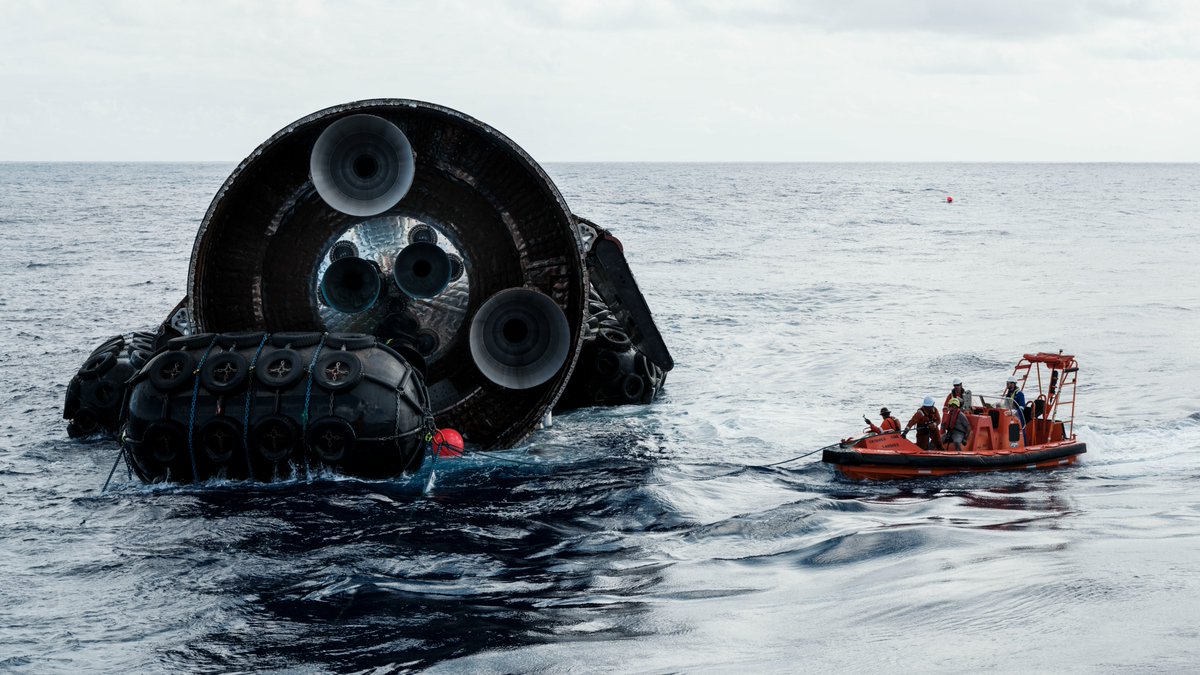
The SpaceX Recovery team is still working to recover Flight 13’s Starship from the Indian Ocean. They’ve been overcoming challenging conditions and increasingly rough seas as they attempt to guide the 52m long spacecraft to port
EVEREST — India’s first full-flow staged combustion (FFSC) rocket engine.
80-tonne class. Fully integrated. Designed and manufactured in Bengaluru, India.
Over one million names will be traveling a million miles away in space in less than a month!
Roman’s Send Your Name campaign wrapped up with over 1.3 million names submitted. Make sure to tune in Aug 30 at 7:26 am ET to watch the observatory launch from @NASAKennedy.
https://t.co/5QN6usiDhB
Roman was conceptualized, built, and tested at @NASAGoddard. After thousands of hours of work by hundreds of people with one goal in mind, the observatory was completed and shipped down to @NASAKennedy, where it is being prepped for its final journey to space.
History made.
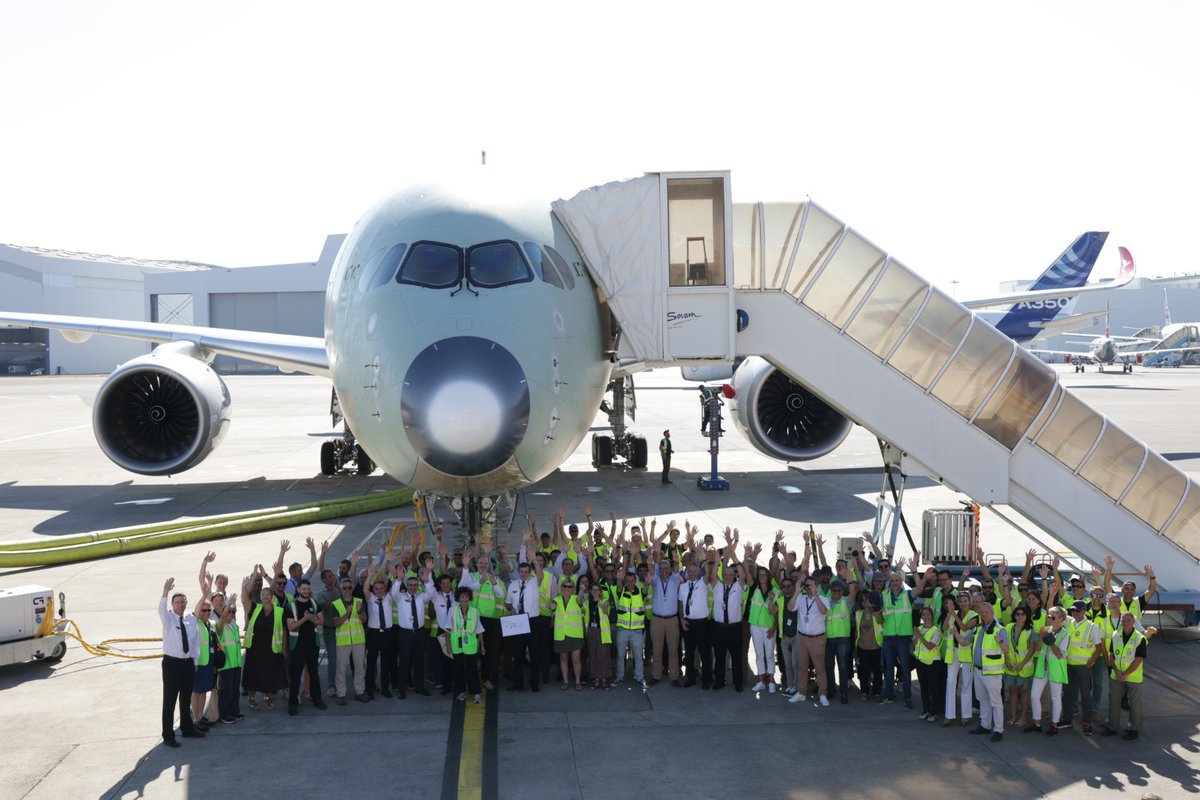
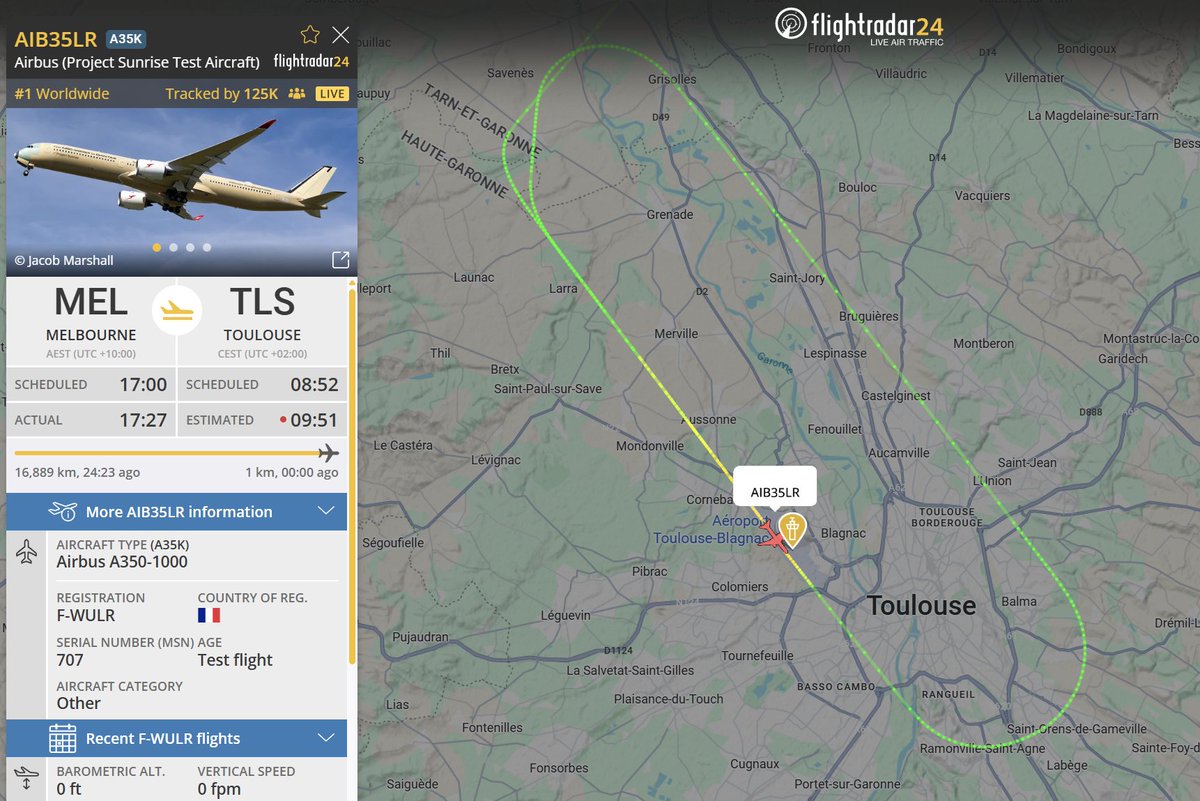
After a 12,460NM (23,075.92 km) / 24 hours 24 minutes direct flight from Melbourne 🇦🇺, the #A350-1000ULR arrives home in Toulouse 🇫🇷.
Watch the journey on @FlightRadar24: https://t.co/tzKbCjsfFM
#Ultimate#LongRangeLeader
🚁🪐 Dragonfly : un aperçu de sa structure interne !
Voici une vue en 3D du rotorcraft de la NASA, qui doit atterrir sur Titan en 2034. Développé par le Johns Hopkins Applied Physics Laboratory, cet engin de 875 kg exploitera l’atmosphère dense et la faible gravité de Titan pour effectuer des vols autonomes de plusieurs kilomètres.
🔹 Structure : aluminium ultra-léger de 104 kg, avec une peau de fuselage en nid d’abeille de 0,25 mm d’épaisseur.
🔹 Isolation : près de 850 tuiles en mousse polyméthacrylimide/Solimide, protégeant les systèmes des −179 °C.
🔹 Propulsion : 8 rotors en configuration X8, répartis en 4 paires coaxiales de 1,35 m de diamètre.
🔹 Énergie : un générateur nucléaire MMRTG, associé à une batterie lithium-ion de 134 Ah.
🔹 Instruments : foreuse cryogénique DrACO, spectromètre de masse DraMS, spectromètre gamma-neutrons DraGNS, ainsi que les caméras DragonCam.
🔹 Navigation : lidar, caméras, centrales inertielles, capteurs atmosphériques et liaison en bande X avec le Deep Space Network.
👉 Conçu pour une mission de plus de 3 ans, Dragonfly pourra explorer plusieurs sites de Titan afin d’étudier sa chimie prébiotique.
📹 : NASA / Johns Hopkins APL
The final space shuttle mission touched down 15 years ago today, marking the end of NASA's 30-year Space Shuttle program.
As the world's first reusable spacecraft, the shuttles accomplished so much over 135 missions. From building and supporting the @Space_Station, to launching and servicing missions a variety of commercial and scientific satellites such as @NASAHubble, to conducting groundbreaking research, it left an enduring legacy as a platform for exploration, science, and international cooperation.
On July 21, 2011, the space shuttle Atlantis completed its final mission, landing at NASA’s Kennedy Space Center in Florida and bringing an end to the Space Shuttle program after more than 30 years. https://t.co/QUNQpH5YBP
We’ll be watching this ignition on loop all day.
Kalam-1200 — Vikram-1's first stage, named for Dr. A.P.J. Abdul Kalam — roaring to life and lifting Vikram-1 off the pad, on a flight that reached orbit.
#Vikram1#MissionAagaman