Wheat Breeder for the Great Northern Plains, father of 2 lovely girls, husband to an awesome wife. CO native, I ride for the brand, opinions are my own.
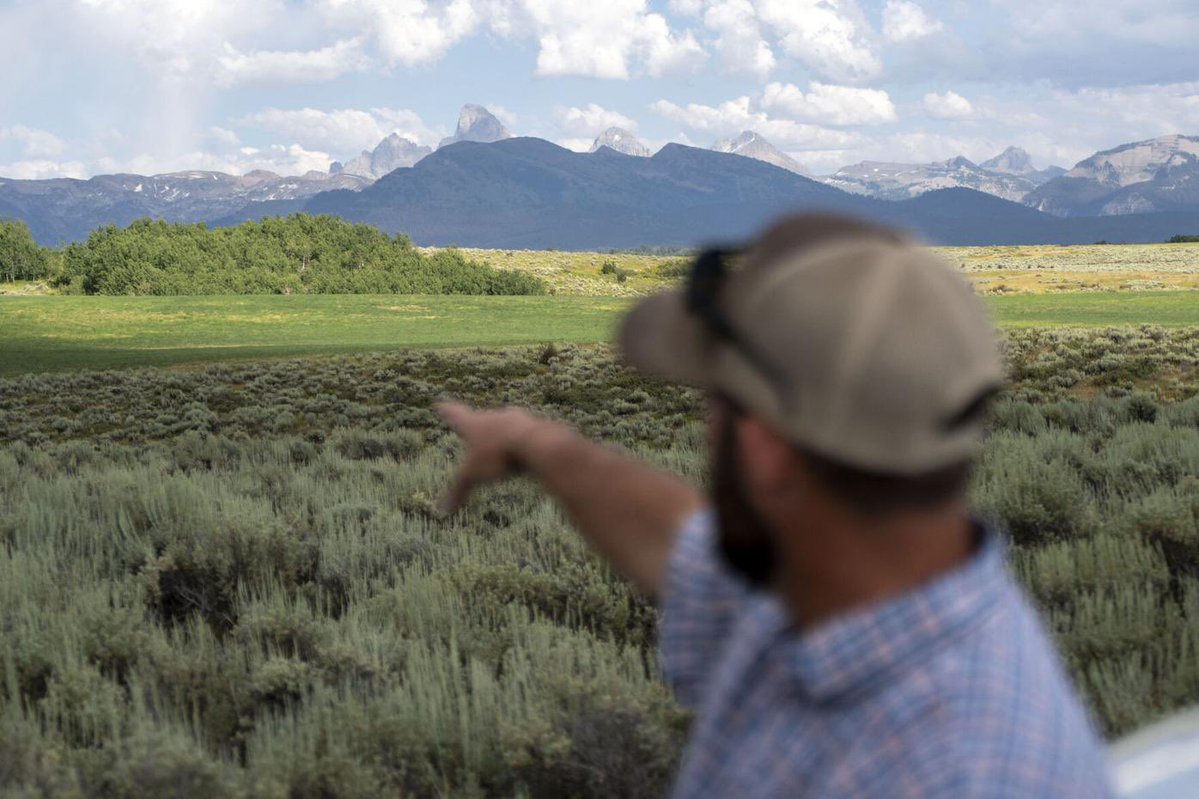
The Idaho constitution requires the state to mange state public land for “long term financial return.” What that means is a 5th generation Teton ranching family will get the boot from their lease when well connected billionaires ask the Idaho Land Board to sell, like what happened with this Tetons Driggs 160 case.
The Mike Lee thing failed, so the next move in the playbook is transferring public land to the states who will then say “we can make more money off this land so we are selling it off.” They’re saying he won’t build a subdivision here, but there’s nothing stopping him as it’s private land now.
The billionaire who bought the parcel is a New York movie producer and tech investor with a lot of financial interests in AI and data centers. He lives full time in Pittsburgh. When we carve up the American West like this, and make something that once was public private, the possibility for development of open land increases.
What made conservation of the Greater Yellowstone Ecosystem possible as one of the only fully intact ecosystems left in America was the scale and connectivity of public land for seasonal migrations of elk, mule deer, pronghorn, and bison. Herds follow green waves of grass with the season. Suburban development has stopped these migrations almost everywhere else.
Public land prevents fragmentation into housing developments that would end these migrations too. Ranchers are a big part of this as ranch lands are often some of the most productive low elevation habitat for herds or they fall along migration corridors. Ranches maintain these large open spaces that allow migration to continue. If the buyer keeps the land undeveloped, that would be great, but now that it’s private and the 5th gen family who had a grazing lease there into the 2030s is gone, there’s no guarantee.
Another part of America sold off to the highest bidder because the line must go up.
The American chestnut was the dominant tree of the eastern US forest for thousands of years. One in every four trees in the Appalachians was a chestnut.
Then, between 1904 and 1940, a fungal blight from Asia killed roughly four billion of them. The species nearly went extinct as a forest tree within a single human lifetime.
The recovery effort is now in its fourth decade. The American Chestnut Foundation breeds disease-resistant hybrids by crossing American chestnuts with blight-resistant Chinese chestnuts, then backcrossing for generations to recover the American tree's form.
Other researchers have used gene editing to insert a wheat gene that detoxifies the blight.
The first restoration plantings are alive and growing in the Appalachians. They won't be mature for another 50 years.
None of the people who started this work will see it finished, but we should all be glad they're doing it.
North Dakota’s policy makers have now built up a voting record of being ranked worst in the entire nation for public land land issues and protections. An F grade…
https://t.co/bEBTOIBvnD
Just a reminder: North Dakota has already sold off more than 80% of its State Trust Lands. FYI - She already knows that.
The biggest concern many miss with this bill (and others like it) is the long-term impact and the slow creep toward worse policy. This bill will further reduce public land access, leading to fewer hunting opportunities and in result…fewer hunters overall.
At first glance, that might seem fine or actually even as a good thing, right?. Well no, IMO it’s another step toward turning hunting into a pure “pay-to-play” sport. If you own private land, get gratis tags, or can afford guided hunts and expensive leases, this might even feel like another net positive, because it is for you, at least in the short term. I get it.
But over the mid to long-term, as the hunting population and its supporters continue to shrink (potentially by two-thirds or more), it becomes much harder to fight back against anti-hunting legislation…the strong ones we’re already seeing in Oregon and other blue states. Private land, gratis tags, or money for outfitters won’t matter if hunting is banned outright.
Small steps like this add up. They’re quietly paving the way for a future where anti-hunting policies enjoy majority support, and our kids or grandkids lose the chance to hunt all together no matter their situation.
It all might sound extreme or far fetched but look at how much our culture has shifted in just the last 15–20 years. This is a real issue outdoorsmen could be facing within the next decade IMO.
You think getting tags in western ND is hard now, wait until all the BLM land is gone soon thanks to fraud @RepFedorchak. When you finally get a tag you won’t have anywhere to even hunt.
This is purposefully misleading.
The bill transfers public BLM lands (open to hunting, recreation, multiple use under federal rules) to state trust lands. State trust lands prioritize revenue generation (leases for energy, grazing, ag). This can lead to:
• Restricted public access: Many state trust lands close seasonally or require permits/fees; some limit hunting. Critics note ND has already sold off much original trust land.
• No recreational value in appraisals: Exchanges use market/equal value (favoring minerals in western ND), not hunting/wildlife access. ND has limited BLM acres (~58k surface); this could affect about 37k.
• Wildlife/habitat/development risks: More state control + potential energy development could fragment habitat or affect migration, even with grazing continuity. No broad public input/transparency on specific parcels.
This is a historically major blow to North Dakota’s limited public lands. Julie’s reputation is gone. She’s a sell out to the donors.
@RepFedorchak@SenJohnHoeven@SenKevinCramer
H.R. 2252 is yet another betrayal to American outdoorsmen. And in this case specifically, to North Dakota outdoorsmen. This time, not only is our delegation in favor of it, they’re actually sponsoring it, driving it, and hoping the major negative implications stay quiet until it’s already a done deal.
After the backlash to Mike Lee’s land‑sale proposal, they know exactly how their North Dakotans constituents feel about losing public access. And because this bill applies only to North Dakota public lands, the responsibility is theirs alone this time around.
What the bill actually does:
It shifts roughly 37,000 acres of already limited BLM land in ND into state trust status, which is a system built around revenue generation, not public access. Under that framework, public access will inevitably get cut off.
North Dakota has less than 10% public land to begin with, and this bill hands over more than half of BLM land in ND. So we can say goodbye to many hunting units in ND that rely on public land access.
Reach out to Fedorchak, Hoeven and Cramer and tell them to withdraw the bill.
https://t.co/K6jXnBFa8U
This old wheat breeder was proud of my youngest (aspiring food scientist) 5th grade science fair. Scoring was done purely off the label, and I was surprised how many don’t know about Goodles. I think she sold a lot of Goodles today. @jenniferland@arthuragronomy@FrontierGen
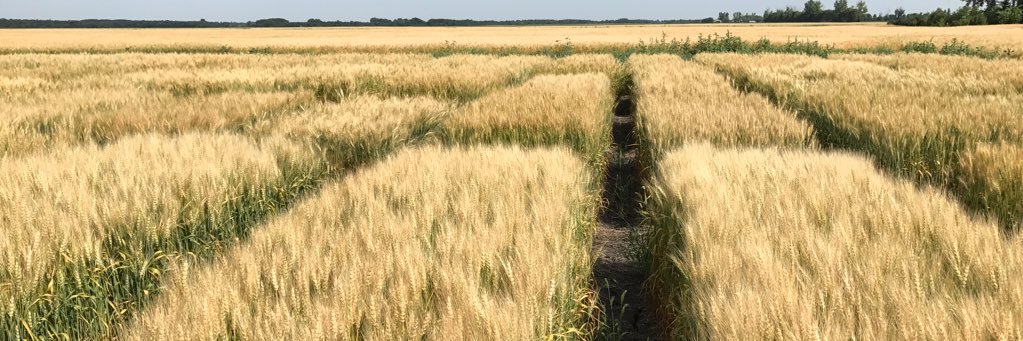
No till HRSW breeding plots into canola stubble and 2 year old wheat stubble. Great moisture, seed placement and really mellow. @NPWheat@arthuragronomy
The government shouldn’t be able to search your texts, emails, or calls without a warrant. Yet that’s exactly what’s happening under FISA. I’m fighting to end unconstitutional backdoor surveillance and restore the Fourth Amendment.
https://t.co/hXvJL3fY8R
January 30th, 1982: The Water Bottle Incident
To really understand this one, we first need to set the table; as was covered yesterday, NoDak and Wisconsin are at the top of college hockey and the rivalry has never been more bitter. The Sioux had a reputation for being a mean, physical bunch, and they used it to their advantage. The venue for this brawl, the Dane County Coliseum, was widely regarded at the time as one of the wildest environments with some of the rowdiest fans in college puck. The fans sat almost on top of the benches, and they weren't shy.
With the Badgers up 3-0, NoDak forward Cary Eades skated past the Wisconsin bench when Badger John Newberry squirted him in the face with a water bottle (the second time that night he did it to Eades). Eades promptly entered the UW bench to "chat" with Newberry where he was met with a punch from Pat Eithier that set off a powder keg. They fought in the benches, on the ice and in the stands. At one point, a Sioux player and Badger rolled into the Beer Garden where a UW band member dumped a pitcher of beer into the NoDak player's face.
The fight set a WCHA record for the number of suspensions arising from one incident. A scuffle that perfectly embodies how these teams feel about eachother, it's one you really just need to watch (and listen to) to appreciate:
The story behind the rise of USB-A is wild.
In 1990, an Intel engineer named Ajay Bhatt couldn't get his wife's printer to work for their daughter's school project. A printer. In his own house. He was a senior architect at the world's biggest chip company, and he couldn't make a printer talk to a PC without rebooting three times and opening the case.
He pitched the idea of a universal connector to his managers. They didn't just pass. They told him nobody would want it.
Bhatt switched teams, found a manager who said yes, and spent the next four years convincing Compaq, IBM, Microsoft, NEC, and Nortel to sit in the same room and agree on a single plug. Seven companies that competed on everything else agreed to share one connector. The USB 1.0 standard shipped in January 1996. Almost nobody used it. Windows 95 barely supported it. USB was basically dead on arrival.
Then Steve Jobs did something nobody expected. He shipped the 1998 iMac as USB-only. No serial port, no parallel port, no floppy drive. Just USB. Apple, the company that fought standards harder than anyone, single-handedly forced an entire industry onto Bhatt's connector.
Intel owned the patents. They made the entire thing royalty-free. Any manufacturer on earth could build a USB-A port for pennies. By 2009, 6 billion USB products were in the market, with 2 billion more shipping every year.
Making the connector reversible would have doubled the cost, so Bhatt kept it one-sided to keep adoption cheap. "In hindsight, we blew it," he said years later. The most cursed design decision in consumer electronics, and it was a deliberate trade.
USB-A killed serial ports, parallel ports, PS/2 connectors, game ports, and eventually the floppy disk. One rectangle replaced an entire generation of cables. The connector is 30 years old and as of 2024, Type-A still accounted for 46% of all USB device shipments. Billions of ports in airplane seatbacks, hotel nightstands, hospital beds, and office walls.
The EU mandated USB-C on all new devices in December 2024. The installed base of USB-A will take 20 years to turn over. One guy's printer problem became the most successful connector standard in computing history. And now the rest of us carry a bag of dongles everywhere we go because of it.