Researchers say they have used a precise genome-editing technique called base editing to alter the genome of human embryos for the first time, an announcement that prompted both excitement and dismay.
https://t.co/9G4WMAsKUQ
Gene expression can be used to predict age and mortality 🚨
Impressive study from @gladyshev_lab@harvardmed using RNA-seq data to develop accurate transcriptomic clocks across mammalian species (inc. humans) and tissues to predict age, lifespan and mortality. A great example of the power of big data in aging research.
Major processes changing with age include inflammation, mitochondrial function, epigenetic regulation, cell cycle (inc. markers of cellular senescence) and extracellular matrix remodeling.
These clocks will have applications in personalised medicine, drug discovery and clinical trials. They also suggest some degree of coordination of aging changes.
However, many questions remains. Are age-related transcriptomic changes drivers of aging or merely passengers? In other words, if we normalized these aging changes back to youthful levels, would this be beneficial, detrimental, or have no effect?
And with so many aging clocks now available, how will researchers determine which ones are most biologically meaningful and clinically useful?
Link to original paper:
https://t.co/S7Cu17YqCu
My thoughts on the study:
https://t.co/xYAguwvsiu
As we age, especially after 60 years, there is a marked accumulation of mutations in our mitochondrial DNA. These are undetected (cryptic) until they expand into clones and, while associated with clonal hematopoiesis (CHIP), they may independently have an impact on health outcomes @Nature
https://t.co/fO9xmSIbDc
Just published @Nature
Very impressive study of gene expression and hallmarks of aging across 4 mammalian species (including humans), by @gladyshev_lab. Transcriptomic clocks add to epigenetic, organ and cellular clocks for predicting health outcomes. Example of a few proteins found with prediction of disease/event risk in Figure below
https://t.co/t3HDtDAfOT
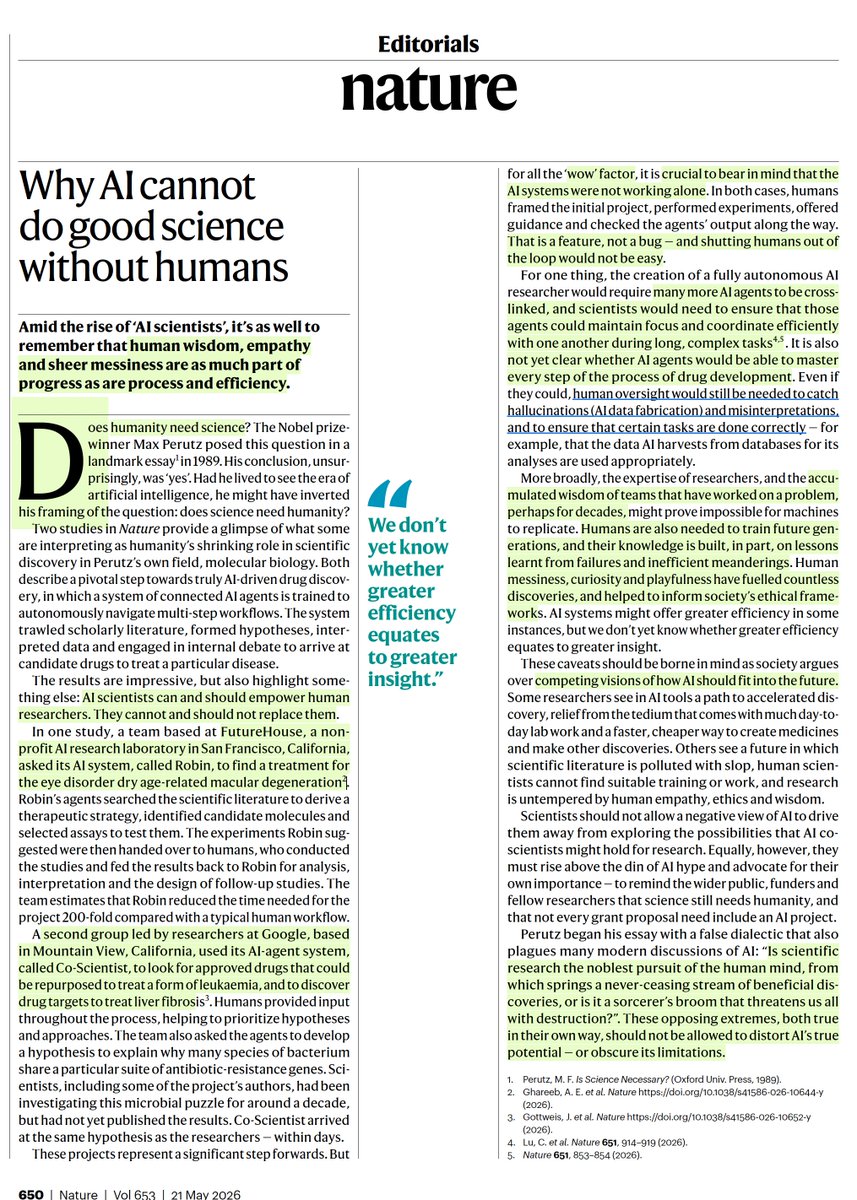
Important editorial @Nature on the new "AI-scientist" papers
"AI scientists can and should empower human
researchers. They cannot and should not replace them."
https://t.co/CZQUrMV8D1
I have spent my entire life working on this and thinking about this for the past 4 years. I don't know what will happen in 20 years, but I can promise you that on the 5-10 year timescale, scientists are not out of their jobs. AI is going to massively accelerate the pace of science, increase productivity, let individual scientists make way more discoveries way faster, and is going to make science overall more fun. But the model is going to be collaboration between humans and AI, not replacement.
The key difference here between science and e.g. software engineering is that science is not verifiable in any rapid/convenient way (unlike software), unlike programming. We still need humans for their scientific taste.
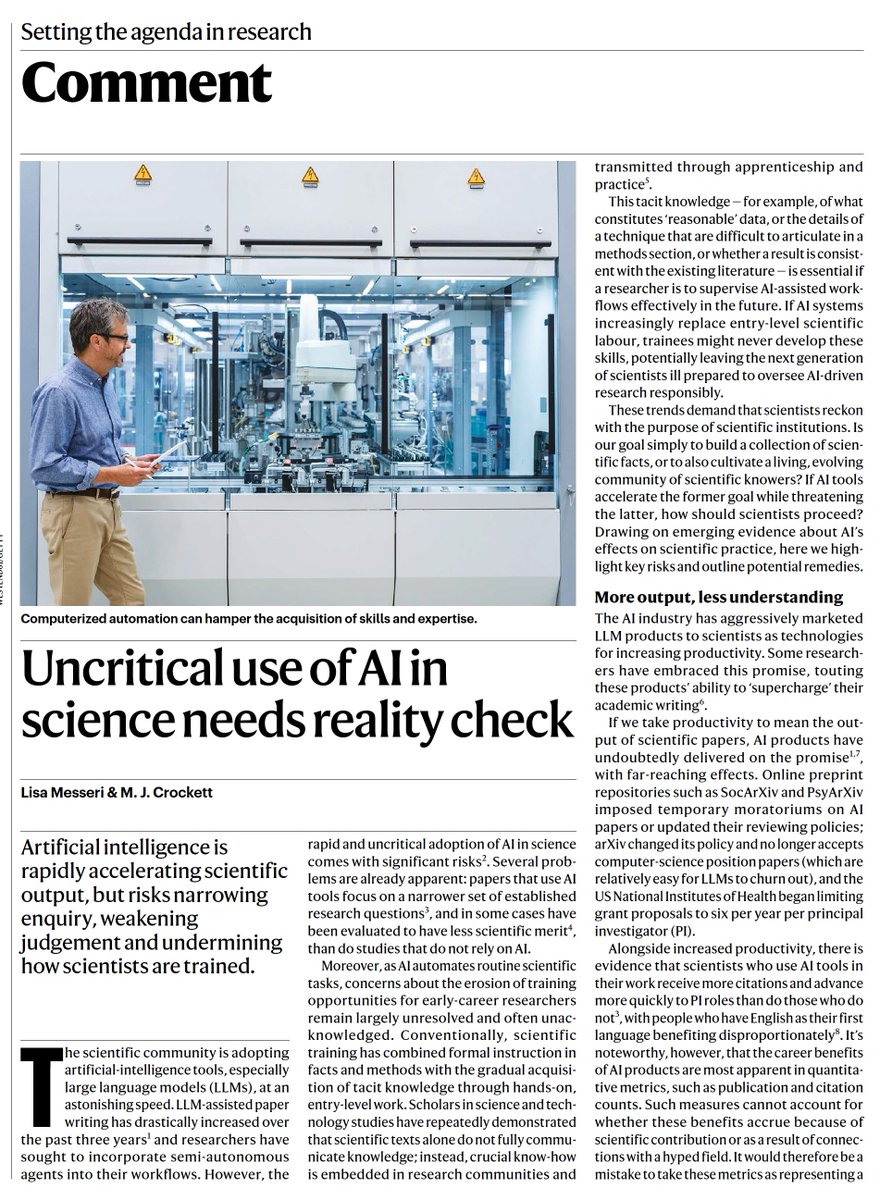
At the same time concerns about uncritical adoption, need for guard rails
“There is growing evidence that LLM-driven increases in scientific productivity often come at a cost.”https://t.co/NEqAfcCvF2
A big day for multi-agent AI to accelerate biomedical discovery, hypothesis generation, designing experiments with proof points of new candidate drugs (cancer, fibrosis, macular degeneration, antimicrobial resistance, and more)
2 @Nature reports @GoogleDeepMind@FutureHouseSF
https://t.co/u1EYvJ05VJ
https://t.co/8DpAolom0F
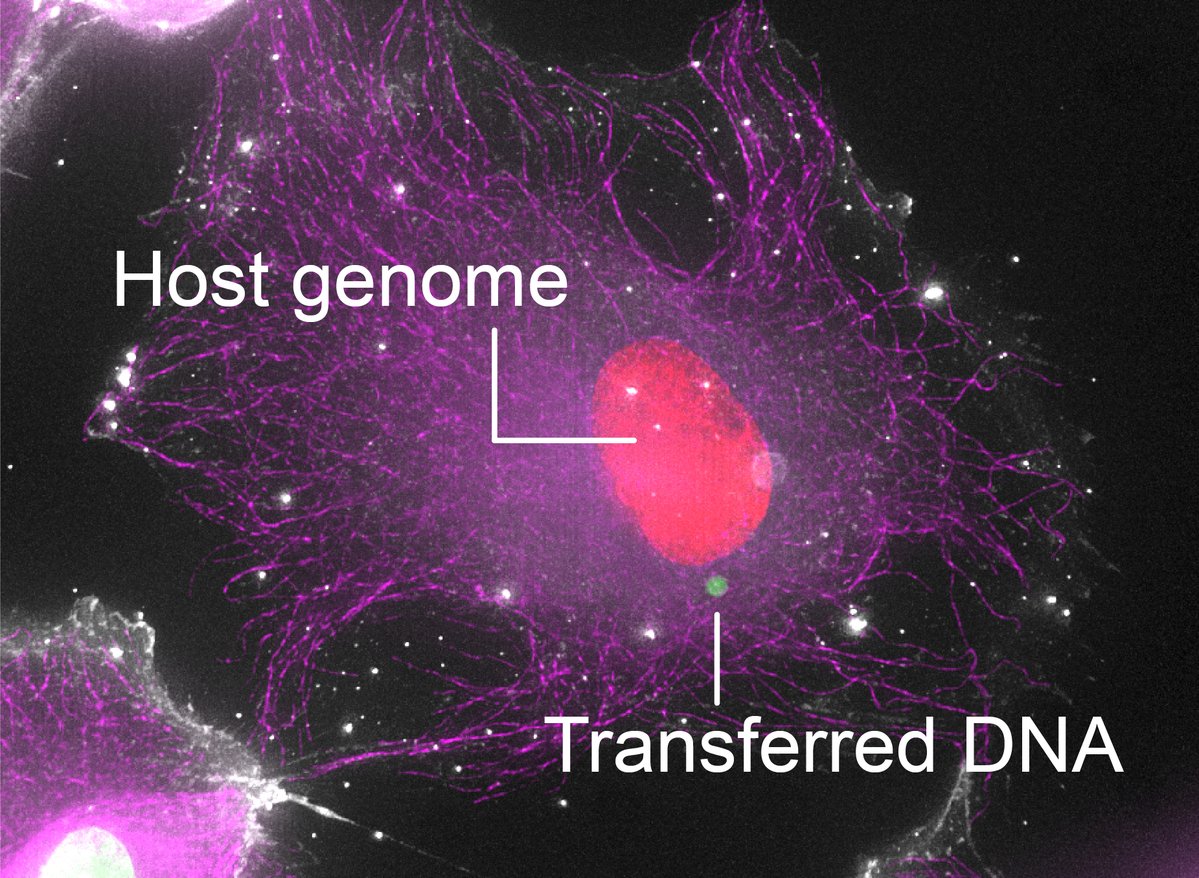
Excited to share our latest paper, out today @CellCellPress. We found that large pieces of the human genome can transfer between cells upon direct contact, endowing recipient cells with heritable phenotypic changes. (1/7)
https://t.co/SbshGhofN0
Surprised to discover that Thermo Fisher appears to show a fake western blot for the validation of one of their p53 antibodies. I've added a diagram to show the very similar bands. This does not appear to be one of the "published figures", but their own internal data.
“the potential of sleep optimization to promote healthy ageing, lower disease risk and extend longevity.” @Nature
Linking biological clocks and sleep data
https://t.co/ptcaxy2hCh
Many experiments in biology happen one protein at a time, which means synthesizing DNA one gene at a time. This is fine for tens of genes. For thousands, the cost is unsustainable.
Introducing uSort-M: a method to isolate and sequence-verify thousands of genes at low cost
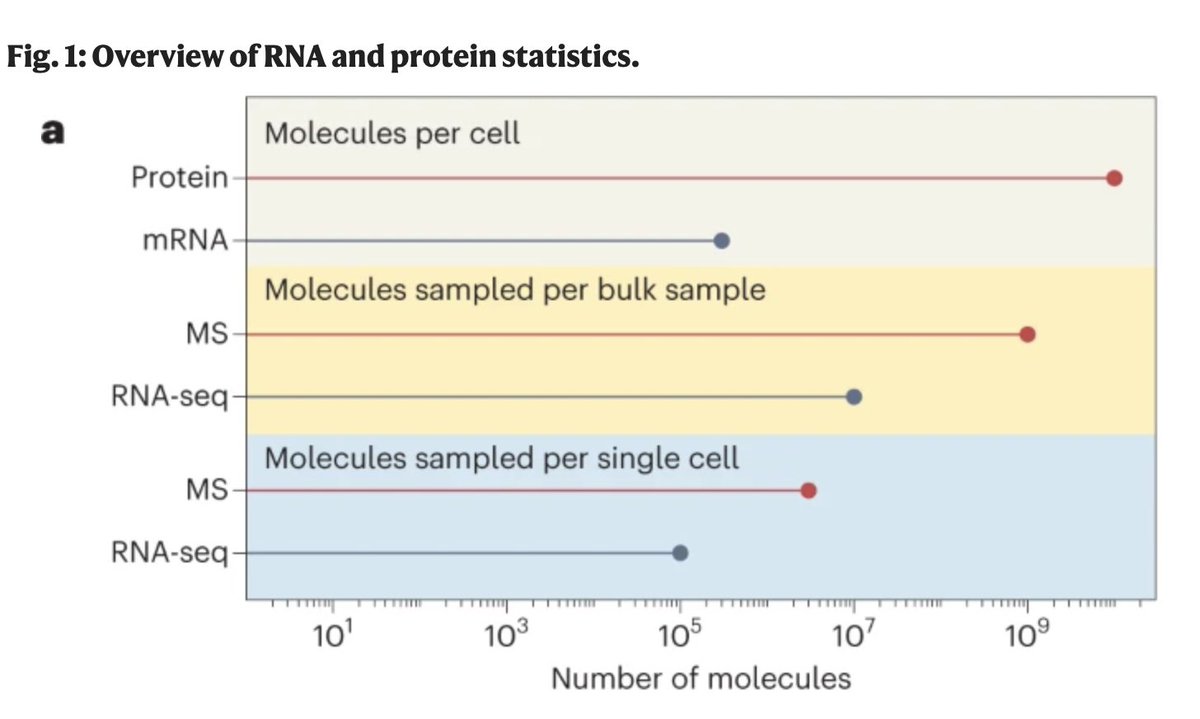
These numbers are key to understanding RNA and protein analysis.
The different counting statistics fundamentally shape technological challenges and opportunities.
https://t.co/UKsQ2AEuro
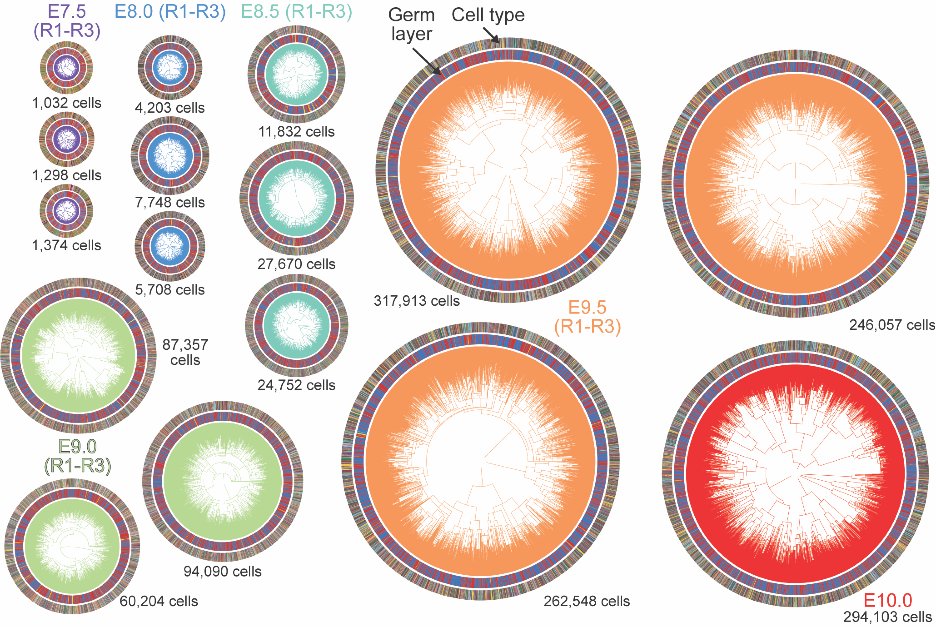
Excited to share a new preprint from the lab led by @LukeKoblan and @WilliamNColgan in which we describe our efforts to define a quantitative cell fate map of mouse embryogenesis! https://t.co/ffZdHX9ikp
A new gene-editing strategy from #HHMIInvestigator Michel Nussenzweig's lab could teach the immune system to produce its own therapeutic antibodies. Successful so far in mice, the approach may lead to treatments for HIV, cancer, metabolic disease, & more: https://t.co/tnNDQXshwN
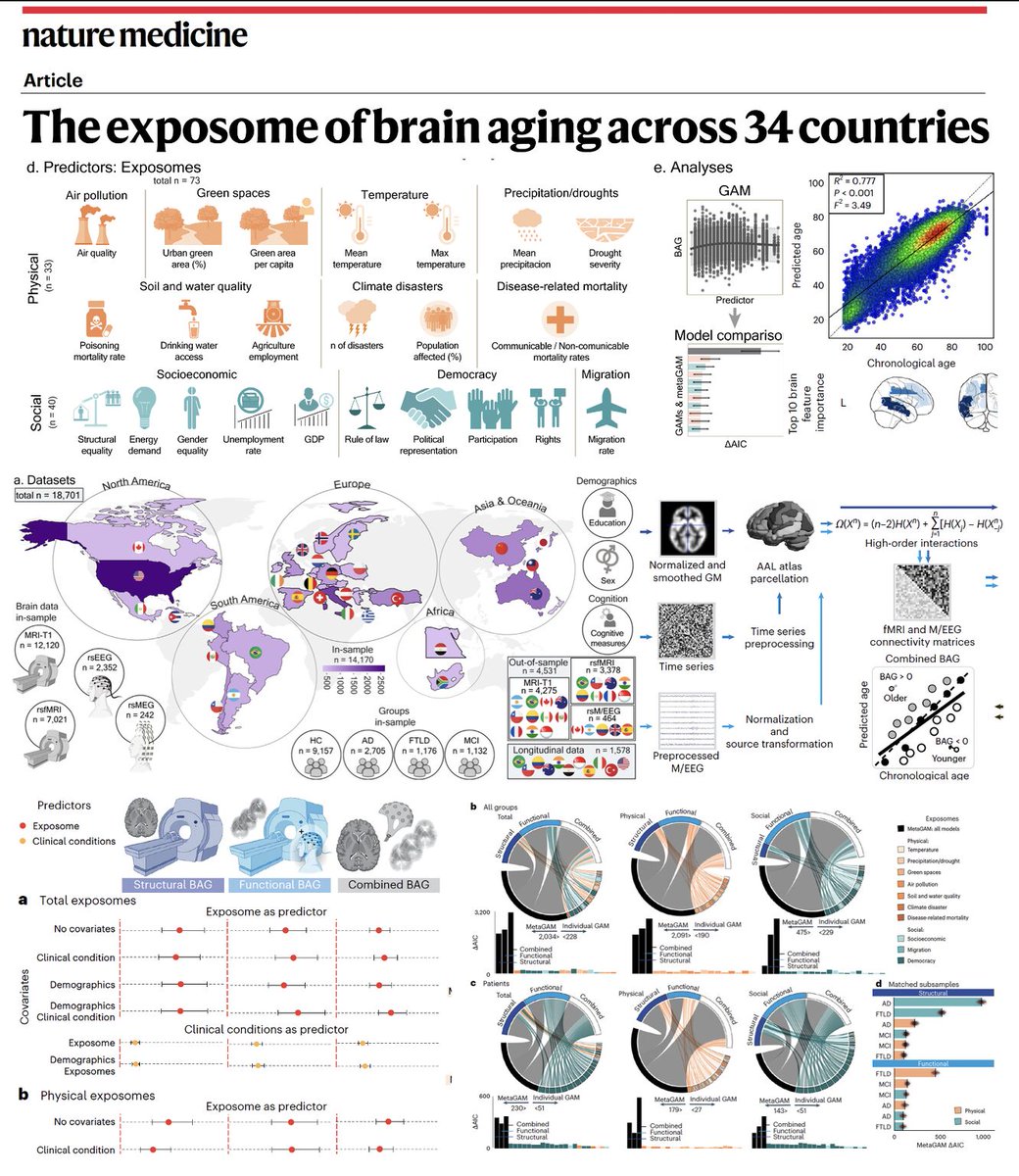
Your brain ages partially according to the country you live in.
Not just your genetics. Not just your habits. Your environment.
This Nature Medicine study analyzed nearly 19,000 people across 34 countries and found that cumulative exposure to pollution, instability, inequality, and poor infrastructure strongly predicts accelerated brain aging.
Most people still think cognitive aging begins internally. It does not.
The brain continuously models the environment surrounding it. Chronic unpredictability and physiological stress force the nervous system into long-term vigilance and adaptation.
Over time, that becomes structural.
The brain is not aging in isolation inside the skull.
It is aging in negotiation with the conditions of daily life.