Breaking 🚨
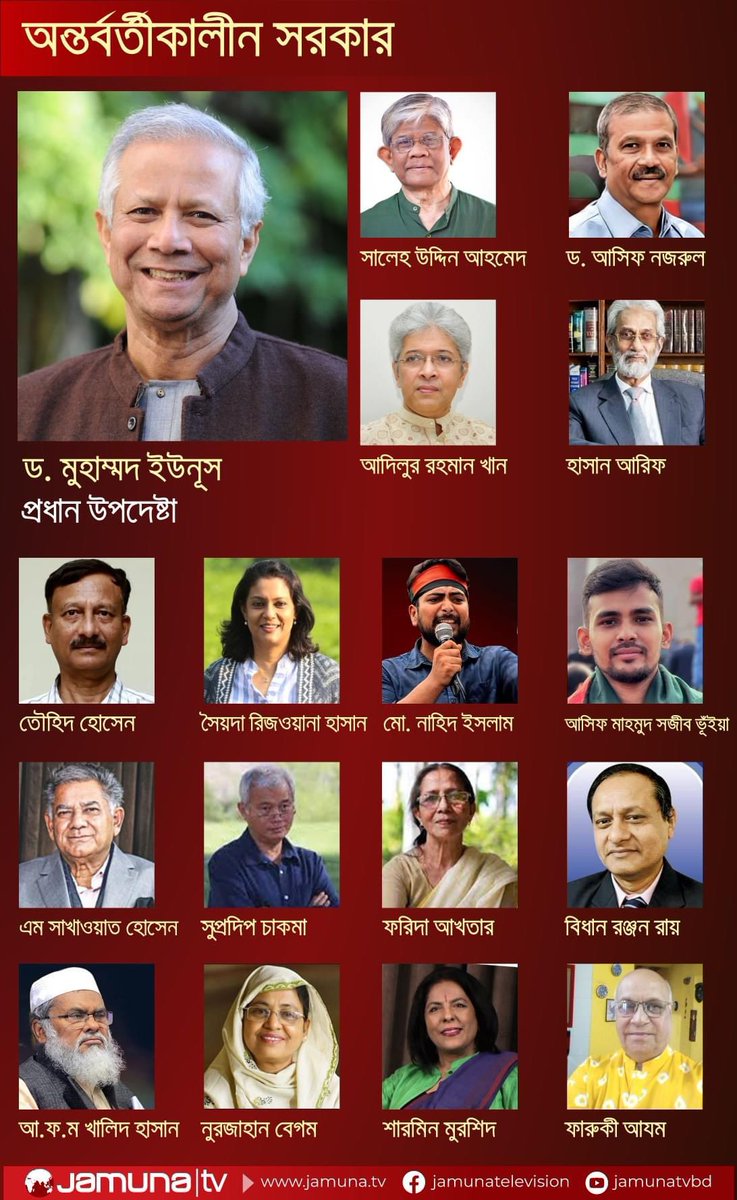
Dr Yunus has asked Dr Kamal, who is known as the "Father of the Bangladeshi Constitution", to help his government Amend and rewrite the Constitution.
The current constitution has been edited and ruined by Sheikh Hasina over the last 15 years.
#Bangladesh
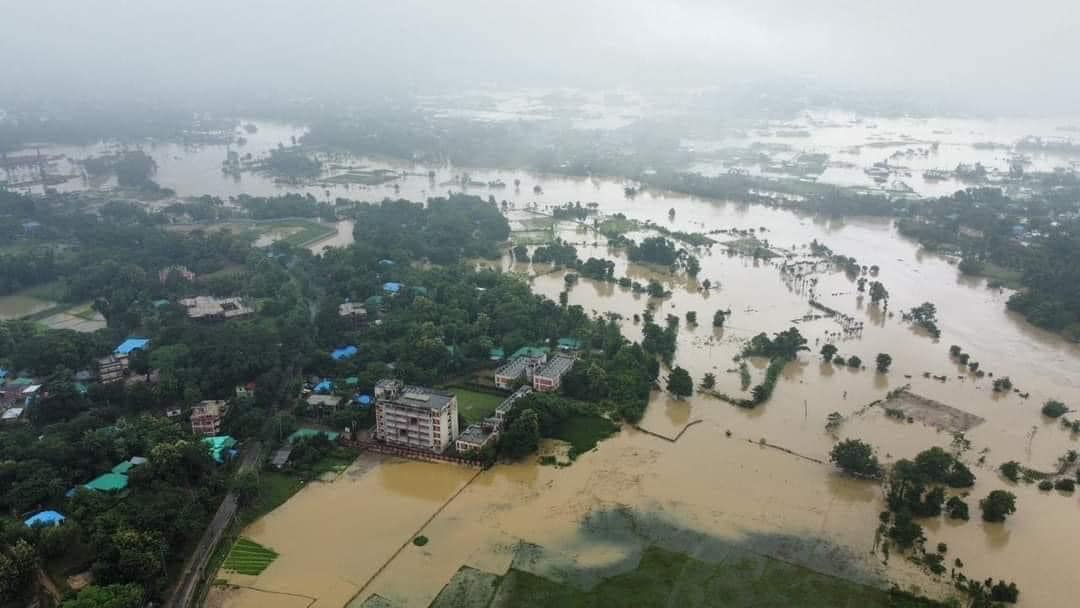
#Bangladesh: India's Reckless Actions Are Worsening the Flood Crisis in Southeast Bangladesh
For the first time in generations, Bangladesh's entire southeastern region is facing its worst flooding in history affecting millions of people. The cause? Indian authorities opened the gates of the Dumbur Reservoir in Tripura for the first time in three decades, releasing massive volumes of water into an already rain-soaked region.
(Read: https://t.co/Cnp1TjrTxE}
Could there have been flooding without India opening the Dumbur Reservoir gates? Perhaps yes, but on a significantly smaller scale. The sudden release of water from the dam has inundated the region to an extent it hasn't experienced in generations.
International law obliges India to notify Bangladesh of any actions that could cause significant harm downstream. Yet, India's failure to notify Bangladesh before opening the gates has caused significant distress and damage.
Unfortunately, the Dumbur Reservoir is just one of many dams India has built on the rivers that flow into Bangladesh. Of the 54 transboundary rivers shared between the two countries, India has constructed dams on at least 30 of them, with the Farakka Dam being the most infamous for its catastrophic impact on northern Bangladesh.
India's unilateral construction of dams and its arbitrary control of water flows have become a constant threat to Bangladesh, causing either drought or flooding downstream. This reckless behavior has devastated millions of lives and wreaked havoc on the environment. For example, over 80% of Bangladesh's 20 million small farmers depend on water flowing through these transboundary rivers to grow rice. (Source: https://t.co/t0Fo6jP5bP)
By inflicting such widespread damage, India is effectively breaching international law on a regular basis. Here are some of the key obligations that India is failing to uphold:
1) Under Articles 5 and 6 of the UN Convention on the Law of the Non-Navigational Uses of International Watercourses (1997), upstream and downstream countries have the right to equitably and reasonably utilize shared waters.
2) Article 7 of the 1997 Convention, along with customary international law, obliges upstream countries, like India, to prevent significant harm to downstream nations, such as Bangladesh.
3) The Espoo Convention (1991) and customary international law mandate that upstream countries notify and consult with downstream states before undertaking any activities that could significantly affect shared waters.
Yet, India has consistently ignored these obligations and has never acknowledged the rights of Bangladesh and its people under international law.
Despite these hostile actions, Indian officials continue to claim that they are friendly neighbors—yet they wonder why Bangladeshis hold such deep resentment against them.
Is India truly a friendly neighbor to Bangladesh? Their actions speak louder than their words.
🧵1/2
𝐈𝐦𝐦𝐢𝐧𝐞𝐧𝐭 𝐓𝐡𝐫𝐞𝐚𝐭𝐬 𝐭𝐨 𝐭𝐡𝐞 𝐈𝐧𝐭𝐞𝐫𝐢𝐦 𝐆𝐨𝐯𝐞𝐫𝐧𝐦𝐞𝐧𝐭:
Since the resignation of the Bangladesh Awami League government, only Major General Zia of the National Telecommunications and Monitoring Center has been dismissed from service. A superficial reshuffling of senior officers occured to distract public attention, while crucially, no changes have been made among field commanders implicated in human rights violations during the student movement. Although the heads of the notorious intelligence agencies, the Directorate General of Forces Intelligence (DGFI) and the National Security Intelligence (NSI), were replaced, nearly all brigadier general-level directors, with records of extrajudicial killing and political affiliation with the Awamileague regime, remain unchanged.
This dangerous nexus between intelligence agencies, field commanders, and senior staff officers poses a severe threat to Dr. Yunus' interim government. The Chief of Army Staff (CAS) is surrounded by these influential figures. For instance, Lieutenant General Tabrez Shams, formerly Director General of DGFI and a key figure in the infamous Aynaghar, has been appointed Quartermaster General. He is next in line to become CAS should the current CAS be unable to serve.
During the recent crisis, Lieutenant General Muzib directed field commanders to use excessive force and maintained direct communication with awami ministers, bypassing the CAS. Now stationed as General Officer Commanding (GOC) of the Army Training and Doctrine Command (ARTDOC), he has assembled several platoons in Mymensingh, possibly for ulterior motives. He has also provided refuge to 250 Indian embassy staff and high-profile political leaders in Dhaka Cantonment and may instigate unrest at an opportune moment. As a former Director General of the Special Security Force (SSF), he retains significant influence over the force that is responsible for Chief Advisors overall security.
Major General Moin, GOC of the 9th Division, used brutal force during operations in Jatrabari and other locations. His Artillery Brigade Commander, Brigadier Mahmud, is a staunch supporter of the Bangladesh Awami League and applied deadly force around Narayanganj. Another Brigade Commander, Brigadier Saifullah, formerly a military aide (AMS) to Sheikh Hasina, led raids at Jahangirnagar University. The 9th Division under Major General Moin is a significant threat to the government.
After seeing this government change, political news, and past history, I came to understand that Bangladeshi people have seen or know what freedom is. We have to fight for freedom but what does this mean we never get to know this.
#savebangladesh#Freedom
Bangladesh now has a government (caretaker) who are educated and well known for their contributions to this country.
Thanks you
#StudentProtest#DrMuhammadYunus#Bangladesh
বৈষম্যবিরোধী ছাত্র আন্দোলনের অন্যতম সমন্বয়ক নাহিদ ইসলাম বলেছেন, সরকারের সঙ্গে আলোচনায় বসার কোনো পরিকল্পনা তাদের নেই। অন্যদিকে প্রধানমন্ত্রী শেখ হাসিনা জানিয়েছেন তিনি আন্দোলনকারীদের সাথে আলোচনায় বসতে চান। প্রধানমন্ত্রী বলেন, 'গণভবনের দরজা খোলা। আন্দোলনকারীদের সঙ্গে আমি বসতে চাই, তাদের কথা শুনতে চাই। আমি সংঘাত চাই না।'
#Bangladesh #Protest #Quota_Reform_Movement
So far, @ProthomAlo Bangladesh’s newspaper of record, has been able to verify the deaths of 203 protestors during the carnage by Sheikh Hasina’s henchmen. But the total number of fatalities is many times more. I have received reports from trustworthy sources that the police have taken away dead bodies from hospitals along with CCTV footage and death registers, so there is no record of those deaths. (And in places where they have been unable to do so, they are warning the hospital authorities not to mention the fatalities or deny receiving any patient with bullet wounds.)
The police are burying some of those hijacked dead bodies in Rayer Bazar Intellectuals Graveyard, an expansive but unsought-after cemetery in Dhaka. In this clip, 36 unmarked graves can be seen in that cemetery. Those graves were dug out between Friday late night and Tuesday night. The bodies came from Shaheed Suhrawardy Medical College and Hospital, Dhaka Medical College and Hospital and Mitford Hospital. The graveyard staff are saying that they have never seen so many unidentified corpses in their life (except massive accident/natural disaster).
The lengths this butcher of Bangladesh will go to hide her sins!
FYKI @srpoverty@UNPeacekeeping @RFKHumanRights @hrw@crdefenders@CIVICUSalliance@CIVICUSMonitor@volker_turk@StateDRL@Lacroix_UN@FCDOGovUK@StateDept@usembassydhaka@UKinBangladesh@EUinBangladesh@StateDeptSpox@State_SCA@HumanRightsCtte@MaryLawlorhrds