Live by the block, die by the clock,
Life's a journey, take your own stock.
Chase your dreams, reach for the stars,
In the end, it's not about fancy cars.
Kindness and love, they're the key,
Spread them wide, set your spirit free.
Learn from mistakes, they're your guide,
In the darkest storms, you can still ride.
So live by the block, with passion and grace,
In life's grand puzzle, find your own space.
@tferriss@naval Siddhartha's wisdom reminds us that our true gifts are often intangible yet profound.
Imagine, create, learn, and enjoy being human, not by what we possess, but by what we can think, wait, and endure.
Siddhartha by Hermann Hesse is recommended by many of my podcast guests.
There is one takeaway that Naval Ravikant (@naval) has reinforced with me several times on our long walks.
The protagonist, Siddhartha, a monk who looks like a beggar, has come to the city and falls in love with a famous courtesan. He attempts to court her, and she asks, “What do you have?” A well-known merchant similarly asks, “What can you give that you have learned?” His answer is the same in both cases, so I’ve included the latter story below.
Merchant: “. . . If you are without possessions, how can you give?”
Siddhartha: “Everyone gives what he has. The soldier gives strength, the merchant goods, the teacher instruction, the farmer rice, the fisherman fish.”
Merchant: “Very well, and what can you give? What have you learned that you can give?”
Siddhartha: “I can think, I can wait, I can fast.”
Merchant: “Is that all?”
Siddhartha: “I think that is all.”
Merchant: “And of what use are they? For example, fasting, what good is that?”
Siddhartha: “It is of great value, sir. If a man has nothing to eat, fasting is the most intelligent thing he can do. If, for instance, Siddhartha had not learned to fast, he would have had to seek some kind of work today, either with you, or elsewhere, for hunger would have driven him. But, as it is, Siddhartha can wait calmly. He is not impatient, he is not in need, he can ward off hunger for a long time and laugh at it. ”
***
I think of Siddhartha’s answers often and in the following terms:
“I can think” → Having good rules for decision-making, and having good questions you can ask yourself and others.
“I can wait” → Being able to plan long-term, play the long game, and not misallocate your resources.
“I can fast” → Being able to withstand difficulties and disaster. Training yourself to be uncommonly resilient and have a high pain tolerance.
The best-selling cars by country in 2022:
🇦🇷 Argentina: Fiat Cronos (38,769)
🇦🇺 Australia: Toyota Hilux (64,391)
🇧🇷 Brazil: Fiat Strada (112,456)
🇨🇳 China: BYD Song Plus (459,424)
🇩🇰 Denmark: Peugeot 208 (3,920)
🇫🇷 France: Peugeot 208 (88,812)
🇩🇪 Germany: VW Golf (84,282)
🇮🇳 India: Maruti Wagon R (217,317)
🇮🇩 Indonesia: Daihatsu Gran Max (65,062)
🇮🇪 Ireland: Hyundai Tucson (6,444)
🇮🇹 Italy: Fiat Panda (105,384)
🇳🇱 Netherlands: Toyota Yaris (11,178)
🇳🇴 Norway: Tesla Model Y (17,356)
🇵🇱 Poland: Toyota Corolla (21,819)
🇵🇹 Portugal: Peugeot 2008 (6,001)
🇷🇺 Russia: Lada Granta (99,356)
🇪🇸 Spain: Hyundai Tucson (21,985)
🇸🇪 Sweden: Volvo XC 40 (14,252)
🇨🇭 Switzerland: Toyota Yaris (5,572)
🇹🇷 Turkey: Fiat Egea (68,779)
🇬🇧 UK: Nissan Qashqai (42,704)
🇺🇸 USA: Ford F-Series (653,957)
Es mi cumpleaños @MashiRafael un saludo un RT una presencia para el futuro político de la patria.
O sea Yo.
Es broma pero sino quieres no es broma
#LosCorruptosSiempreFueronEllos
And so the real question (or two) turns out to be: is traditional architecture - whatever that means for whichever part of the world - still important? And, if so, is it still possible?
In many places it continues to exist and in others it is making a comeback.
And that's the thing about traditional and vernacular architecture - people seem to prefer it.
In buildings with distinctive, more localised style, they find a sense of belonging and identity.
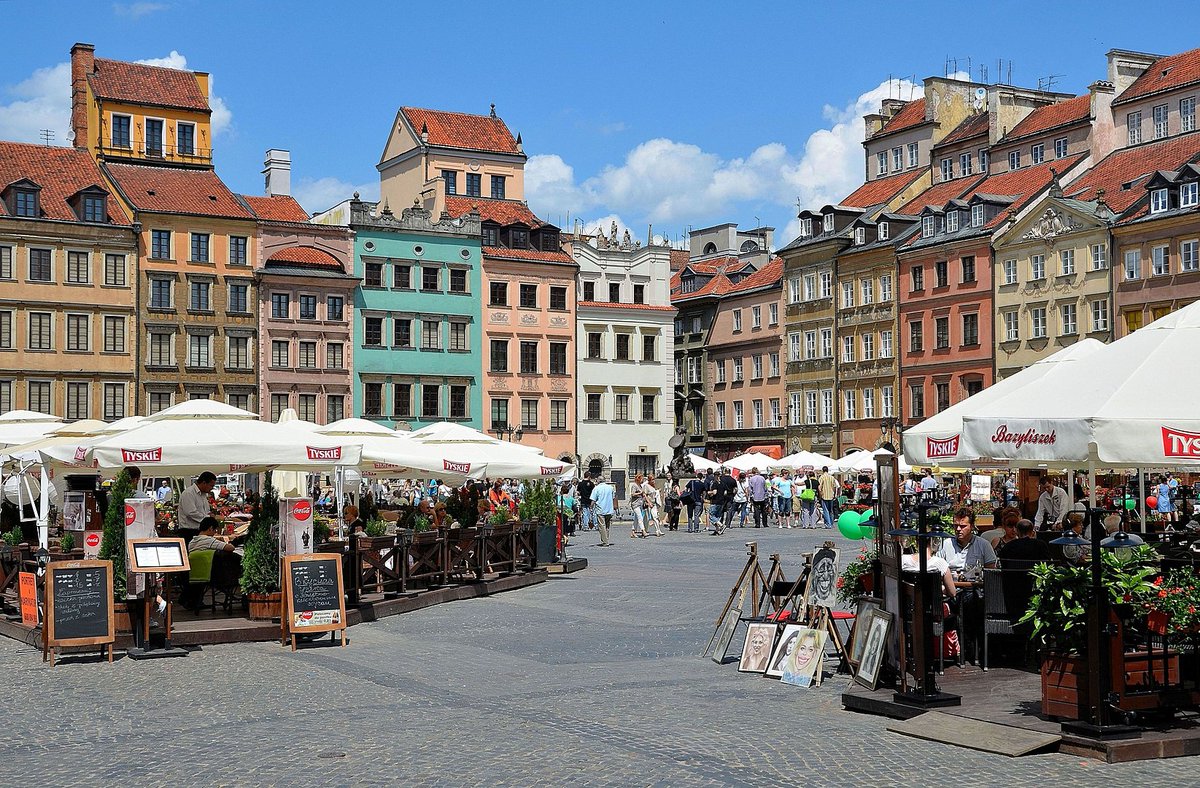
Warsaw's Old Town was also rebuilt after WWII - it was part of the city's identity.
Each country and region in the world once had distinctive architecture first and foremost because of their geology, ecology, and climate.
Factors with which culture then interacted to create styles that were more consciously specific to a group, religion, or culture.