Spine always grows in the back that is against the wall. America denied us crucial LOX/LH₂ cryogenic engine technology. We developed it indigenously and using it we now send American satellites into space.
India can remain sovereign only if it has a sovereign AI. @narendramodi
“Collaborative ecosystems to tackle science & healthcare issues” by prof. Sudhir Krishna.
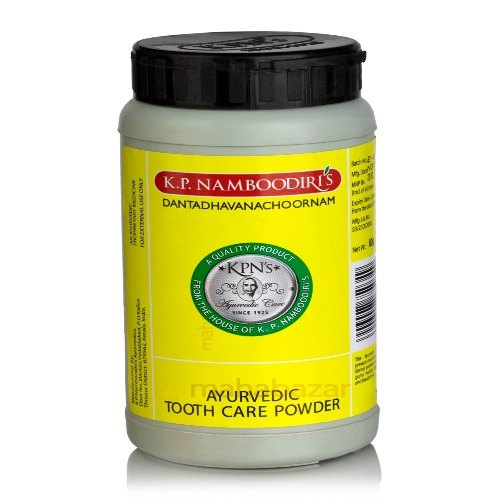
It’s time to build bridges and Nanjangud toothpowder is going to be at the heart of this process 🌁
https://t.co/iJgpNdfXiS
@thrishul@achyutha@Fintech03 yes. but the same colour can be achieved by combustion timings too. however, may minimise the remineralising capability.
once again, colour additive is not ideal.
We have Indians who are wiling to hand over our millennia old indigenous knowledge system to the West for parochial self-interest.
In the 90's two Indians-origin PhD's, Soman K.Das and Harihar Kohli, from University of Mississippi got the patent (briefly), that opened the floodgates for Western attempts on neem, ashwagandha, basmati, brahmi and dozens more.
Mira Kulkarni sold Forest Essentials to Estée Lauder. Vivek Sahni sold Kama Ayurveda to Spanish fashion group, Puig.
India's doors were always opened from inside!
Indians keep losing out due to Aesthetics.
Ayurveda especially needs an aesthetic rebrand.
Tiger Balm is so popular and considered premium and it is expensive.
While the orignal is easily available and cheap, it lacks the attractive packaging & branding that Tiger Balm has.
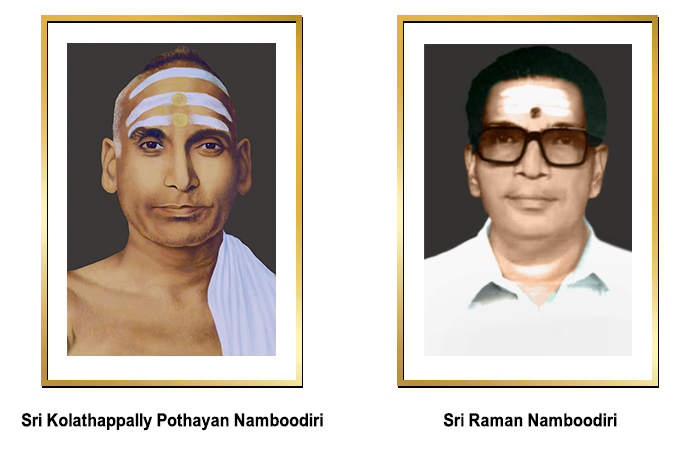
Today, global dental giants are sprinting to launch Activated Charcoal lines, charging a premium for the charcoal revolution. But in 1925, a physician in a small Kerala village was already selling it in paper pouches. The British mocked it as primitive ash, while secretly, their own officers used it to scrub away the stubborn stains that Imperial White paste could not touch. An indian invented Biological Magnetism 100 yrs before the West could put a marketing name on it.
K.P. Namboodiri, an Ayurvedic physician, realized that the British were fundamentally wrong about the science. When paddy husk is charred at a specific temperature, it creates a micro-porous structure almost identical to what we now call Activated Carbon.
Namboodiri infused the ash with Pepper, Clove, & Ginger. The black carbon acted as a magnet (adsorption) to pull toxins & stains out of the gums, while the spices provided the thermal healing. He was practicing Molecular Chemistry in a small Kerala village decades before Western brands understood that carbon is the most efficient way to detoxify the mouth.
The British tried to market their white powders as a symbol of The New India... the educated, clean, Westernized Indian. Namboodiri flipped the script. He made his Black Ash a symbol of Vedic Purity. In the 1920s & 30s, the most orthodox Brahmins & the most radical revolutionaries in the South both used the Black Powder.
It became a silent way to identify who had rejected the British lifestyle. If your gums were slightly tinted with the dark residue of charred husk in the morning, it was a badge of honor. It said: "My mouth is cleaned by the soil of my ancestors, not the chalk of the King."
British dental companies tried to run smear campaigns against Black Powders, claiming they were abrasive. Namboodiri’s powder was so fine that it actually had a lower RDA (Relative Dentin Abrasivity) than the British chalk-based powders. It was physically impossible for the British to prove it was harmful.
The Black Powder was so effective at removing the stubborn stains of Betel Leaf (Paan) & Tobacco that even British officers in the South reportedly bought it in secret. They could not get their Imperial White pastes to remove the deep stains of Indian life, so they relied on Namboodiri’s Ash behind closed doors.
For 90 yrs, global giants like Colgate & Pepsodent spent millions on advertising to tell Indians that Black is Bad & White is Bright. In the late 2010s, those same companies launched Charcoal toothpastes at a luxury price point. They are now using the exact same tech K.P. Namboodiri was selling for a few annas in 1925.
If we look at a modern, high-end Activated Charcoal tube today, we are looking at a 100 yr old apology to K.P. Namboodiri. He was not backward; he was a century ahead of the global dental industry. The British used Chalk (a sedimentary rock) because it was cheap & looked clean. Namboodiri used Paddy Husk (a life-giving grain) because it was biological & functional.
K.P. Namboodiri’s legacy is the story of a man who looked at the waste of a rice field & saw a diamond. He took the blackest substance he could find & used it to give India its brightest smile.