BREAKING: Legendary Chicago Bears coach and Pro Football Hall of Famer Mike Ditka has died at age 86, according to his family.
Ditka led the Bears to their first Super Bowl championship in 1986, cementing his legacy as one of the most iconic coaches in NFL history.
Known for his fiery personality and tough coaching style, Ditka also enjoyed a successful playing career as a tight end, winning a Super Bowl with the Dallas Cowboys before becoming a legendary coach.
Read more: https://t.co/wjFgrhjyjk
Rest in peace, Freddie Jackson…
The New York singer behind some of the biggest quiet-storm records of the ’80s, including “You Are My Lady,” “Rock Me Tonight,” and “Have You Ever Loved Somebody.”
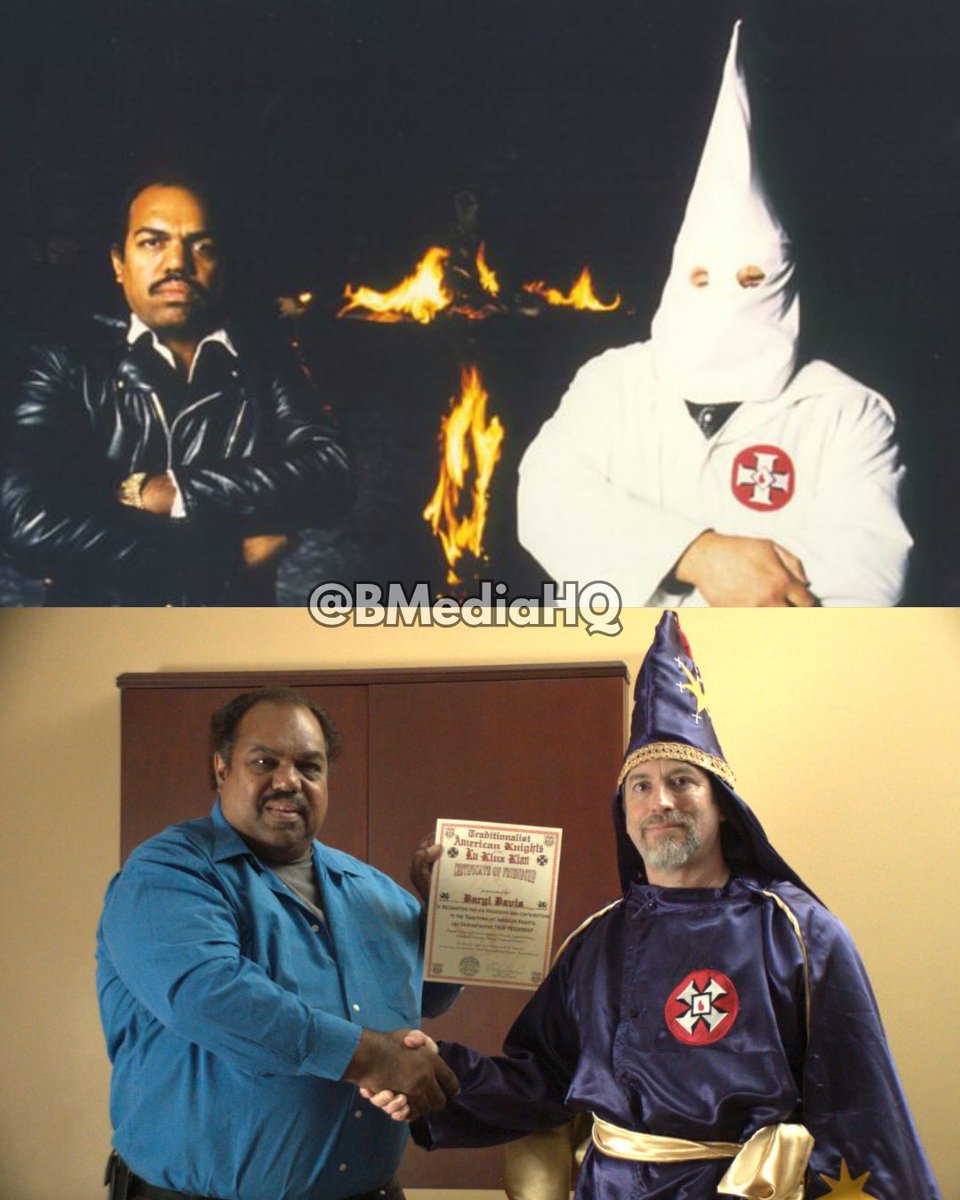
That time this black man convinced over 200 KKK members to quit, 1980s.
In the 1980s, Black musician Daryl Davis began a remarkable and controversial journey to understand the people who openly hated him because of his race. The question had been with him since childhood: how could someone hate him when they did not even know him? As a child, Davis had experienced racism firsthand when people threw rocks and bottles at him during a parade. Rather than accepting racism as something he could never understand, he became determined to find out where that hatred came from. The Guardian
In 1983, while Davis was performing piano with a country band at the Silver Dollar Lounge in Maryland, a white man approached him after the performance and complimented his playing. The man eventually revealed that he was a member of the Ku Klux Klan. Davis initially thought he was joking, but the man showed him his Klan membership card. The encounter became the beginning of a relationship that would change the direction of Davis's life. The Washington Post
Years later, Davis decided to go further. He wanted to interview Klan members and leaders and understand the ideas that had led them to embrace white supremacy. One of the most significant people he eventually met was Roger Kelly, a Maryland Klan leader who later became an Imperial Wizard. Their first meeting was arranged at a motel, and Kelly arrived with an armed bodyguard. Despite the danger and tension, Davis stayed, asked questions and listened. Their relationship eventually developed into a friendship. The Washington Post
Davis later attended Klan gatherings and met other members, deliberately placing himself in environments where few Black people would have been welcomed. His approach was not simply to argue with people or tell them that they were racist. He tried to challenge their beliefs through conversation and personal interaction, allowing them to see the person behind the stereotypes they had been taught. In some cases, those relationships eventually contributed to members leaving the Klan. The Guardian
One of the most striking examples involved a Klan member who claimed that Black people carried a genetic tendency toward violence. Davis challenged the idea by applying the same faulty logic to white people, pointing out that such racial stereotypes could be made about any group. According to Davis, the man eventually recognized the absurdity of the argument and left the Klan several months later, giving Davis his robe. North Country Public Radio
Davis has said that he does not personally describe himself as having "converted" Klan members. His position is that people ultimately changed themselves after being exposed to information and relationships that challenged their existing worldview. Over the years, he collected numerous Klan robes and hoods from former members. He also documented his experiences in his 1998 book, Klan-destine Relationships: A Black Man's Odyssey in the Ku Klux Klan. Yascha Mounk
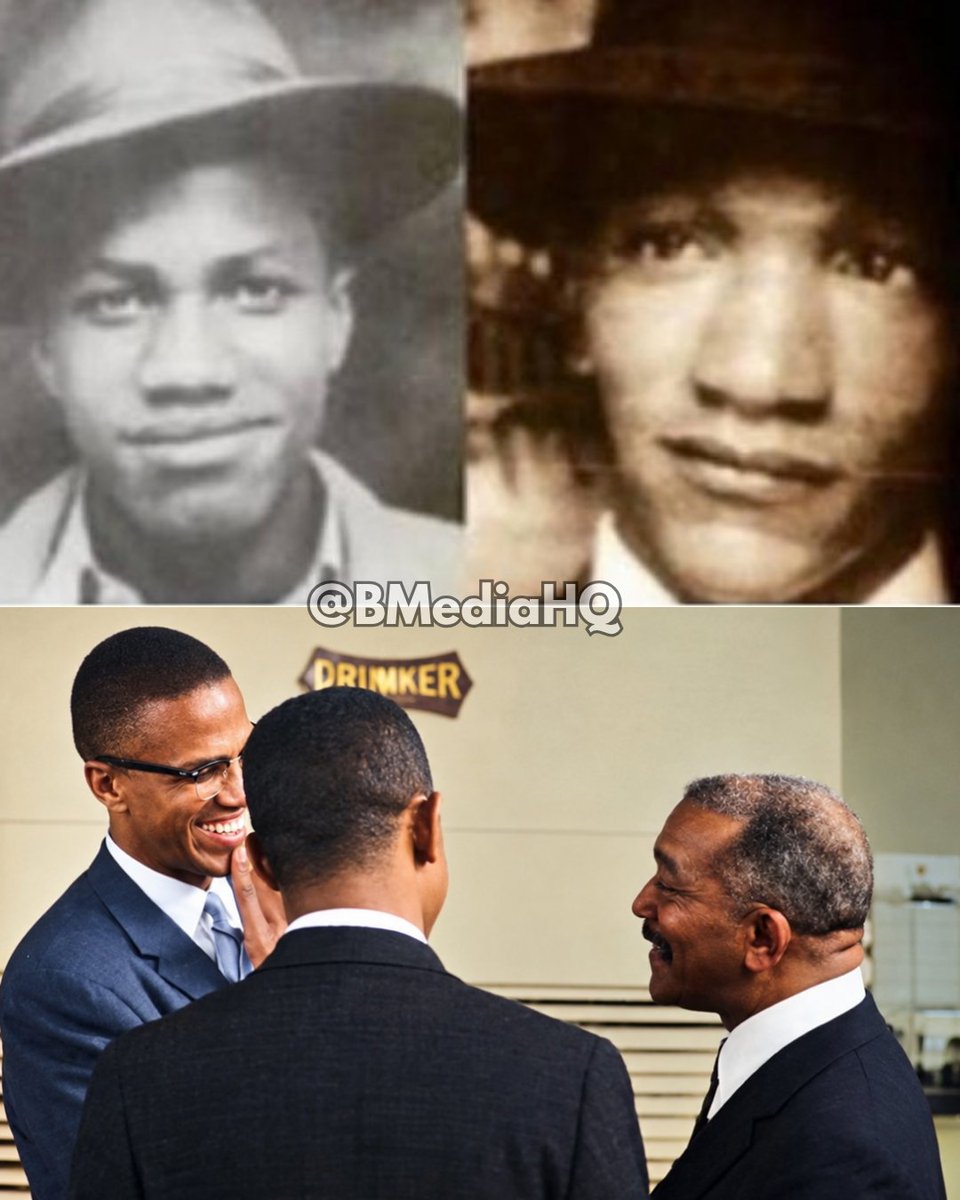
Comedian Redd Foxx and Malcolm X were best friends and worked together as dishwashers at the same restaurant in Harlem in the 1940s. The staff called Malcolm “Detroit Red”. and Foxx “Chicago Red”.
Before history froze them into separate legends, Redd Foxx and Malcolm X were just two young Black men trying to survive Harlem in the 1940s.
They were best friends, hustling side by side as dishwashers at the same Harlem restaurant, scraping by in a city that offered talent but very few chances. Among the kitchen staff, they earned nicknames that followed them like street folklore:
Malcolm was called “Detroit Red”, sharp, fiery, and already intense in thought and presence.
Foxx was “Chicago Red”, quick-witted, loud, and endlessly funny—even while elbow-deep in dirty plates.
What makes their story powerful isn’t just where they ended up, but where they started. One would grow into a revolutionary voice that challenged America’s conscience. The other would become a comedy icon, using laughter to expose the same truths from a different angle. Different paths. Same roots. Same grind.
Long before microphones, speeches, or television fame, they were brothers in struggle—laughing, debating, surviving—proving that greatness often begins behind the scenes, unseen and uncelebrated.
History rarely tells us how close legends once stood to each other. But sometimes, the most extraordinary futures are born in the most ordinary places—like a Harlem kitchen sink.
BREAKING: All 6 US crew members on refueling tanker that crashed after mid-air collision with other aircraft are confirmed dead, bringing total US killed in action to 13 during Operation Epic Fury
Sally Hemings was the mother of several children with Thomas Jefferson. She was also enslaved by him. Mixed-race, legally considered property, her body and her future were never her own under the laws of slavery.
Enslaved women had no legal right to refuse sexual violence. Their children inherited bondage at birth. At just 16 years old, while living in Paris where slavery was illegal, Hemings faced an impossible choice. She negotiated her return to enslavement at Monticello in exchange for what Jefferson called “extraordinary privileges” and a promise: freedom for her unborn children.
For more than 32 years, Sally Hemings raised four surviving children in slavery, quietly preparing them for lives beyond it. She secured their emancipation. She secured their futures. She never secured her own. Sally Hemings died enslaved.
Shannon Lanier, the sixth great-grandson of Thomas Jefferson and Sally Hemings, works today as a television reporter in Houston. Growing up as a Black man connected by blood to a founding father forced him to live with a history many Americans were never taught. He later wrote a book confronting that inheritance.
When photographer Drew Gardner invited Lanier to participate in *The Descendants* project, Lanier hesitated. Would telling this story be mistaken as excusing Jefferson’s actions? Would truth be misread as praise?
Gardner’s response was simple and direct: if this story is told, more people will finally know Sally Hemings’ name. More people will confront the reality that Jefferson had a Black family—and that it existed within slavery, not romance.
Gardner hopes the image does what history books often avoided: force conversation. Force discomfort. Force acknowledgement. Not to soften slavery, but to face it fully.
This story is not about reconciliation without truth. It is about visibility. About refusing silence. About ensuring that Sally Hemings is remembered not as a footnote, but as a woman who endured, negotiated survival, and shaped freedom for her children in a world that denied her humanity.
History does not change when it is hidden. It changes when it is confronted.
Coretta Scott was the third of four children born to Obadiah "Obie" Scott (1899–1998) Bernice McMurry Scott (1904–1996) in Marion, Alabama.
She was born in her parents' home with her paternal great-grandmother Delia Scott,formerly enslaved, presiding as midwife.
Coretta's mother became known for her musical talent and singing voice. As a child Bernice attended the local Crossroads School and only had a fourth grade education. Bernice's older siblings, however, attended boarding school at the Booker T. Washington founded Tuskegee Institute. The senior Mrs. Scott worked as a school bus driver, a church pianist, and for her husband in his business ventures. She served as Worthy Matron for her Eastern Star chapter
Obie, Coretta's father, was the first black person in their neighborhood to own a truck. Before starting his own businesses he worked as a fireman. Along with his wife, he ran a barber shop from their home and later opened a general store. He also owned a lumber mill, which was burned down by white neighbors after Scott refused to sell his mill to a white logger.
Her maternal grandparents were Mollie (née Smith; 1868 - d.) and Martin van Buren McMurry (1863 - 1950) - both were of African-American and Irish descent. Mollie was born a slave to plantation owner Jim Blackburn and Adeline (Blackburn) Smith.
Coretta's maternal grandfather, Martin, was born to a slave of Black Native American ancestry, and her white master who never acknowledged Martin as his son. He eventually owned a 280-acre farm.
Because of his diverse origins, Martin appeared to be White; however, he displayed contempt for the notion of passing. As a self-taught reader with little formal education, he is noted for having inspired Coretta's passion for education.
Coretta's paternal grandparents were Cora (née McLaughlin; 1876 - 1920) and Jefferson F. Scott (1873 - 1941). Cora passed away before Coretta's birth. Jeff Scott was a farmer and a prominent figure in the rural black religious community; he was born to former slaves Willis and Delia.
Coretta Scott's parents intended for all of their children to be educated. Coretta quoted her mother as having said, "My children are going to college, even if it means I only have but one dress to put on."