Happy International Music Day! 🎵🦋
Sonifications like this one of the Butterfly Nebula reconceptualize data in images by assigning musical elements to information like position and brightness. ⬇️
Here's what you're hearing:
Vertical position is mapped to pitch, so light towards the top of the image is higher pitched. The nebula is "played" on strings and synthetic tones, while stars are represented by digital harp. Plus, brightness controls the volume.
Add some Hubble to your listening list!
From technical deep-dives to stargazing stories, there's an episode for all things Hubble: https://t.co/HUoqjdCcNs
Happy International Podcast Day!
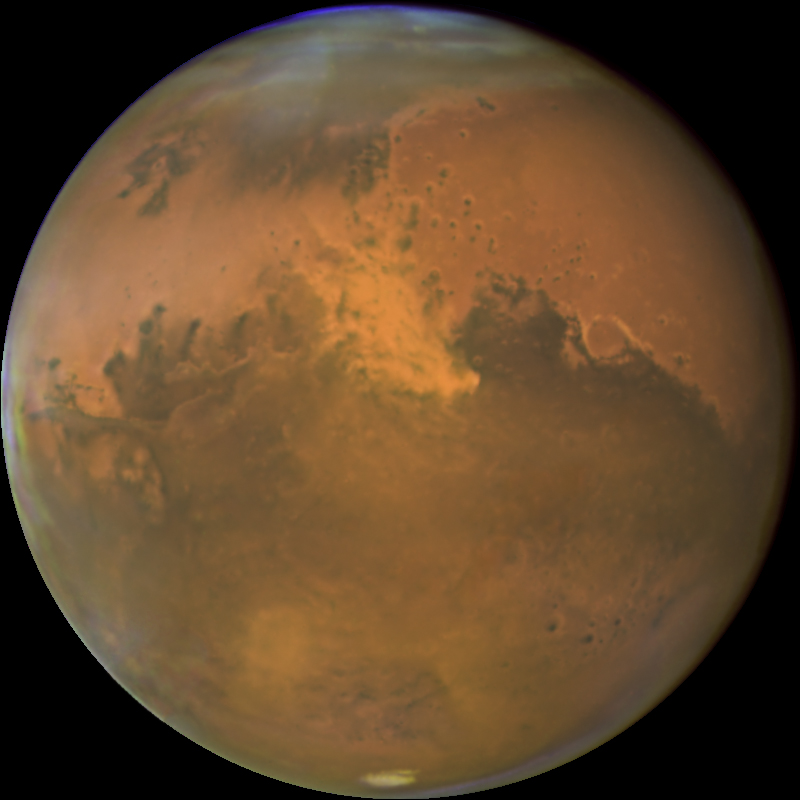
Imagine combining Texas, Oklahoma, and New Mexico.
That was about the size of the Mars dust storm seen by Hubble in 2005. It's the bright, orange-red portion near the center: https://t.co/FcA77U1qn2
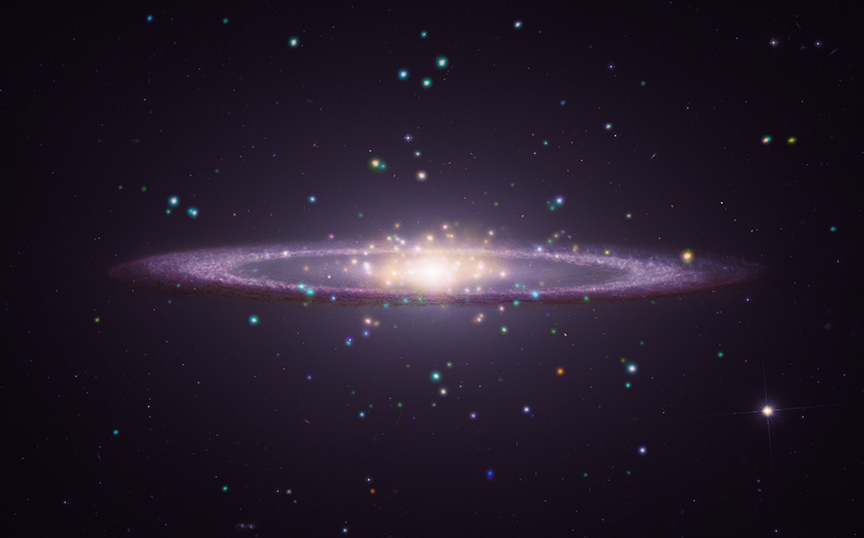
Hubble's visible-light vision highlights the glow of the galaxy's center (warm white), while @chandraxray isolates point sources and hot gas in the galactic halo (cyan and orange). Plus, @NASAWebb's infrared data brings out dust lanes (purple-red): https://t.co/FnzenFQCjZ
Together, NASA's telescopes wear many hats – capturing different wavelengths of light and cosmic happenings.
This group image of the Sombrero Galaxy shows how! ⬇️
Curling up next to a crackling fire? @NASAWebb and @NASAHubble captured this cosmic scale bonfire in the Cigar Galaxy, M82, no matches needed. The galaxy is in the midst of a burst of intense star formation, likely the result of a galaxy merger.
https://t.co/abydjDIC8I
We are using every minute we have on the road to get where things are happening, thank the NASA team, encourage our suppliers, spend time with the men and women who serve in uniform, and visit universities and young people who will shape what comes next.
Our first stop in Arizona was @Honeywell_Aero, where we met with the team and toured the facility. A personal highlight was seeing a Hubble Space Telescope reaction wheel assembly recovered during STS-82 in 1997. I have a special love for Hubble, so that was pretty incredible.
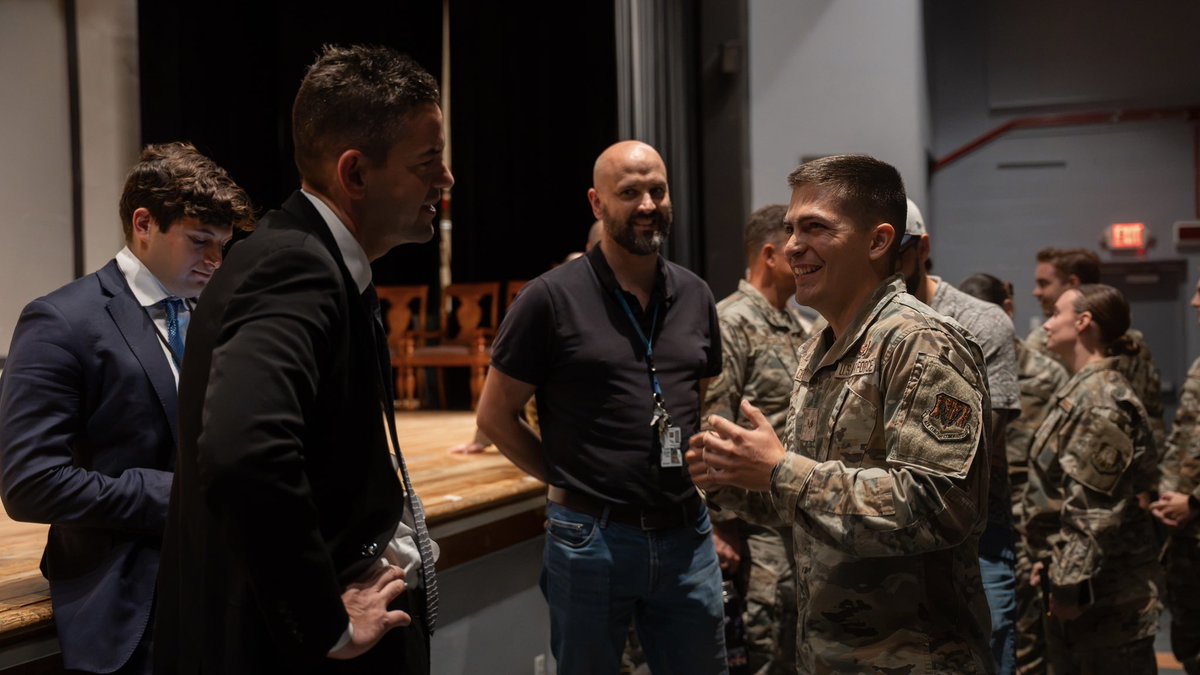
Then it was on to @DMAFB in Tucson to spend time with @usairforce Airmen and @CivilAirPatrol cadets, answering their questions about NASA and the future of American leadership in space.
Those cadets already have their sights set on space. We might have just met a few members of the first class of the United States Space Academy.
Over the course of its mission, Hubble has traveled more than 5 billion miles around Earth.
Hubble's 200,000th orbit marks another extraordinary milestone for an observatory that continues to transform our understanding of the universe. Here's to many more!
200,000 orbits and counting 🌎
On Sept. 19, Hubble completed its 200,000th orbit around Earth — here’s an observation completed on the big day!
This image shows a cluster of galaxies called MACS J0417: https://t.co/ZhxRbn6uCn
This image shows Hubble data of diffuse hot gas nestled within the spiral disk (seen in blue, brown, and gold) along with @ChandraXRay data that pinpoints high-energy point sources, such as supernova remnants (magenta).
Breaking free 💨
M90 is part of the Virgo Cluster of galaxies... for now. Its orbit through the cluster has accelerated so much that it's in the process of escaping the gravitational hold of the cluster entirely: https://t.co/GmQ00NNPQQ
NGC 7541 is above average! 🏅
This galaxy boasts a higher-than-usual star formation rate. A bar of stars and gas that intersects its center might be the reason why!
This bar likely funnels in the material and fuel needed to create and nurture new stars: https://t.co/A1I62vldSC
NGC 4698 is one of only a few known spiral galaxies with a central bulge that extends out from its disk at a right angle.
The elongation is faintly visible, with the ghostly glow of the starry bulge peeking above and below the dusty disk: https://t.co/0VSL0hDDpw
Back and better than ever! 📡
After Typhoon Mawar caused severe damage to @NASA's Guam Remote Station in 2023, its central antenna is now fully rebuilt and back online.
With restoration efforts led out of NASA Glenn, our experts played a key role in bringing the site back to full operations, ensuring critical missions operating near-Earth, like the @Space_Station and @NASAHubble, can continue transmitting important science and exploration data.
More: https://t.co/k6GfFKA1sD
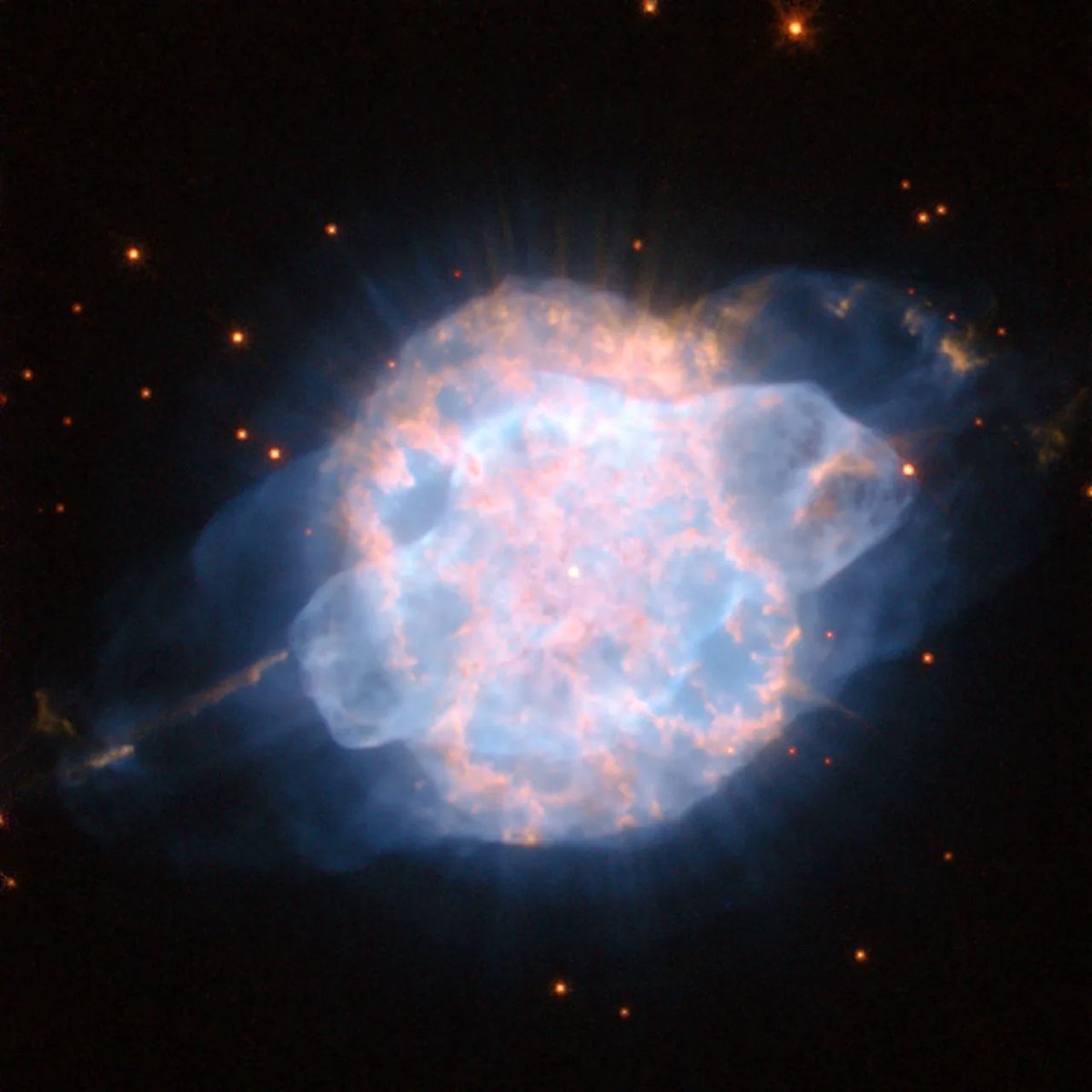
Eye see you 👁️
NGC 3918 resembles a piercing cosmic eye, but in reality, this is a nebula created by a dying star casting off its outer layers of material: https://t.co/qAA7YLHgav
Group shot!
In this image of galaxy NGC 4258, @chandraxray data (royal blue) show superheated shockwaves created by black hole jets, along with Hubble's optical data (red, yellow, pale blue) and @NASAWebb's infrared view of dust filaments (orange): https://t.co/BHOg1GR5Qx
Born anew ✨
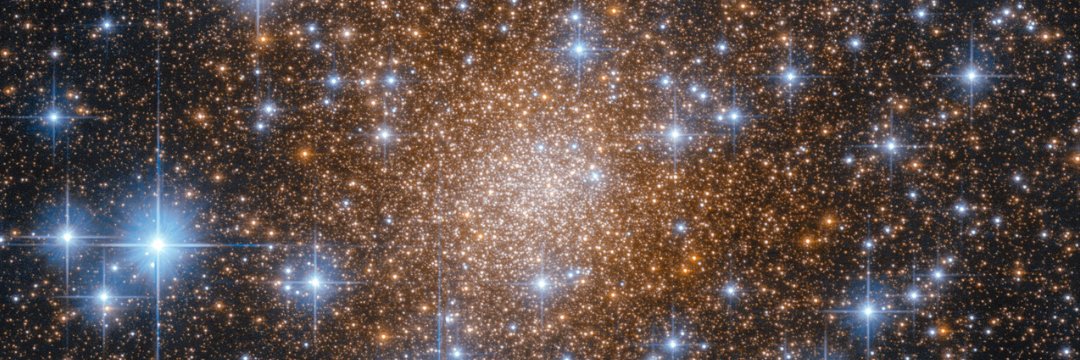
The star cluster M30 is home to some "blue stragglers" – old stars that reclaim their youth in near head-on collisions with other stars, or by siphoning hydrogen from a larger, orbiting companion star: https://t.co/JMmiRARAQS
Orbiting the Sun far beyond Neptune, "Trans-Neptunian Objects" are surviving relics from our solar system's formation.
Hubble and @NASAWebb studied the color, composition, and size distribution of 27 newly discovered tiny, dim TNOs: https://t.co/JbjqNu1ffd