Webb teamed up with @NASAHubble to examine a relic from our galaxy’s formation. This object might look like a globular cluster of stars, but is actually something much odder and rarer - a “bulge fossil fragment.” https://t.co/5isHyQ92aV
One well-done gas giant planet, coming right up! Webb examined a “hot Jupiter” exoplanet called HD 80606 b, with four times Jupiter’s mass, and a very elliptical orbit that sweeps close by its Sun-like star. https://t.co/X3s69WG4qQ
Go far and wide with @NASARoman! NASA’s next space telescope will be joining Webb in L2, a million miles away to join us and your name can come too!
Get your boarding pass to send your name with Roman as we work to create the most complete picture of the universe yet: https://t.co/APitGw1qkR
Have you ever wanted to have your name 'Roman' a million miles away?
Now you can! Send your name along the Nancy Grace Roman Space Telescope, scheduled to launch Aug. 30, 2026!
Sign up here: https://t.co/mSLkvPLgVB
Submissions close July 12.
Webb has delivered the strongest evidence yet that its discovery of mysterious Little Red Dots (LRD) are “black hole stars.” They appear starting ~600 million years after the big bang, and scientists are still working out exactly what they are. https://t.co/MIEwfifyzi
This gas accounts for why most LRDs are faint in X-rays; any X-rays given off are likely absorbed by the surrounding cocoons. More typical growing supermassive black holes are not embedded in dense gas, which allows UV light and X-rays from material orbiting them to escape.
Every stage of star formation — from the youngest stellar embryos, to protoplanetary discs, to newly-minted pre-main sequence stars — is contained within just this scene (captured by Webb’s Near-Infared Camera) which stretches 150 light-years across.
Beyond the Orion Nebula is a long and massive filament of cold gas and dust divided into four parts and collectively called the Orion Molecular Clouds. This image shows just a small portion of one of the clouds. https://t.co/N5ahKPVSJO
Webb is looking at the chemical fingerprints of interstellar comet 3I/ATLAS in the mid-infrared 🔎
New data points to a very different formation environment and chemistry for this object compared to most comets that formed in our own solar system.
https://t.co/6xJl3L6W9K
Which came first, galaxies or black holes?
New Webb observations show that some supermassive black holes were enormous from their beginnings, shifting traditional ideas around how black holes form and grow.
https://t.co/YNSs2QIFbu
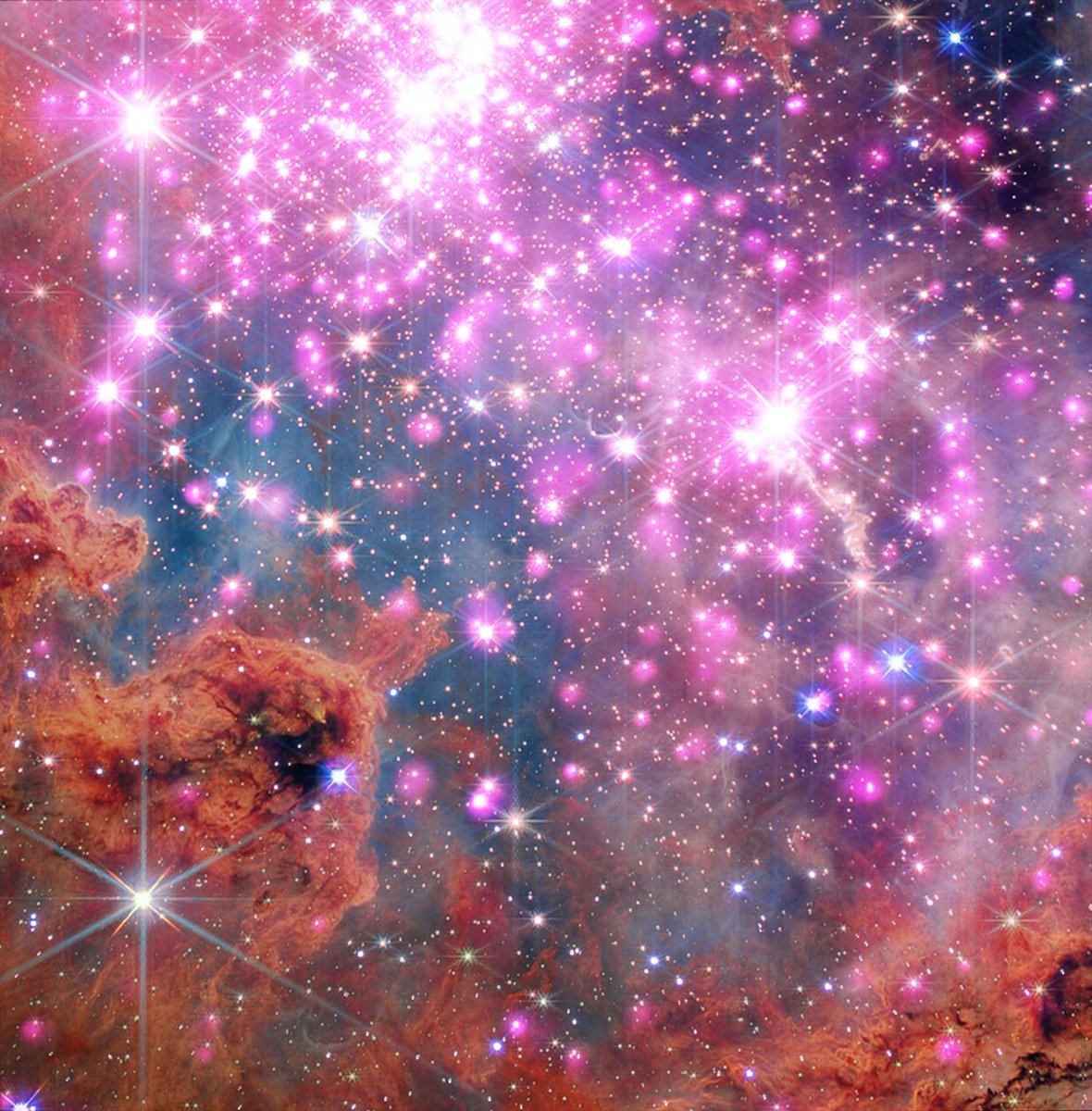
Westerlund 2 is a young cluster of thousands of stars located about 20,000 light-years from Earth. This close-up image, roughly 12 light-years across, combines observations from NASA's Chandra X-ray Observatory & @NASAWebb.✨
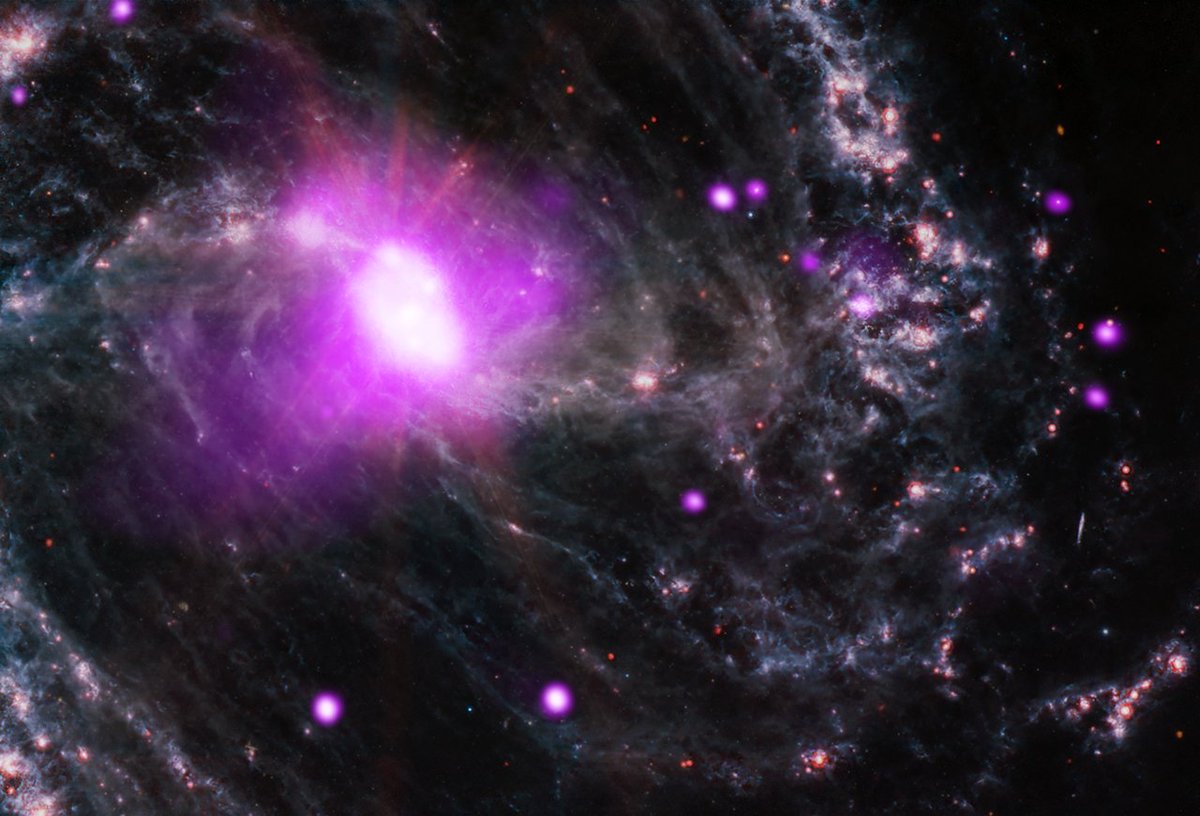
At the heart of galaxy NGC 1365, a supermassive black hole is basically feasting at an all‑you‑can‑eat buffet in this image from Chandra and @NASAWebb. Located about 60 million light-years from Earth, this gobbling black hole has a mass of roughly 2 million suns... and growing.⚫
There is a massive black hole in the center of almost every galaxy. How did it get there, and importantly, how does it grow? On May 19, we'll discuss what new #NASAWebb data is driving the biggest tensions in our understanding of the black hole phenomenon.
https://t.co/ELxCrpvA8i
To MoM-z14 & back! 💐
Let a caregiver in your life know your appreciation for them reaches the farthest galaxy ever detected!
Read more about MoM-z14: https://t.co/ejbBjLSlQr
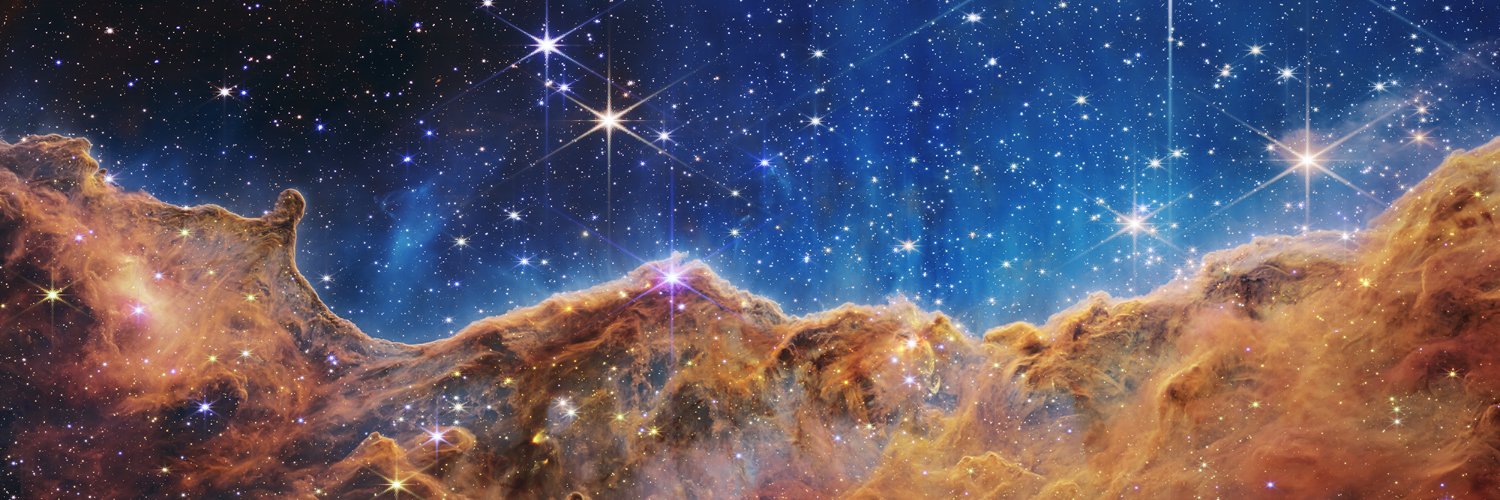
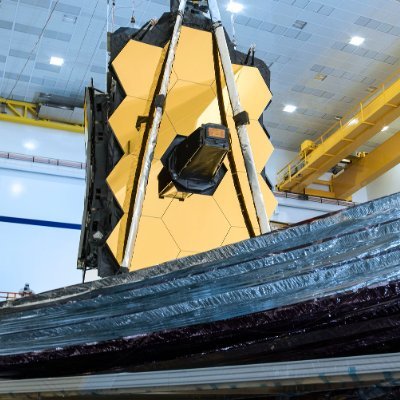
Light can bend (or be diffracted) around the edges of the telescope primary mirror and the struts that hold the secondary mirror. Bright objects in Webb images show a distinctive six-plus-two-pointed pattern. Hubble's have 4 point diffraction spikes due to its structure.
Don’t let anyone dull your shine 💫
The heart of galaxy M77 nearly outshines the galaxy itself in this mid-infrared Webb image. Gas rapidly orbits the central black hole, heating up, and radiating light. https://t.co/LDOGmXEytb
This image is a composite of both mid and near infrared. The bright orange lines radiating out of the center are diffraction spikes. They aren't a physical feature of the galaxy, but an optical effect caused by the structure of the telescope.