🔥China physical Gold buying streak:
PBOC has added gold for 18–19 consecutive months as of May 2026 (streak began ~November 2024 after a pause in mid-2024). This is confirmed across multiple outlets.
⭕️ Monthly additions (verified):
• Jan 2026: +40,000 oz → ~74.19
million oz total. Consistent with reports.
• Feb 2026: +30,000 oz → 74.22 million oz total. Confirmed (Reuters, Bloomberg, etc.).
• Mar 2026: +160,000 oz → 74.38 million oz total. Confirmed.
• Apr 2026: +260,000 oz (~8 tonnes) → 74.64 million oz / ~2,322 tonnes total. Confirmed by WGC, Reuters, and others (highest since Dec 2024; 18th straight month).
• May 2026: +320,000 oz (~9.95 tonnes) → ~74.96 million oz / ~2,331.5 tonnes total. This matches the post’s “BREAKING” claim and fits the pattern of larger buys during price dips (post notes May price range ~$4,480–4,730/oz).
🔶As of June 7, 2026, this aligns with the typical early-month PBOC/SAFE data release timing; no contradictions found in available sources.
China’s central bank extended its gold-buying streak in May, adding to holdings as prices of the precious metal remained under pressure https://t.co/szMR1a5Kxa
It’s deeply odd to me that America is a far less 24/7 hour society today than it was 10, 20, or even 30 years ago. I vividly remember friends from the UK back in 1996 marveling at the fact that in the mid-sized Indiana town where I went college it was possible to buy groceries, clothing, a lawn mower, a snow blower, Lego sets, and bow hunting gear at 3 AM on any given Tuesday of the year. That was peak American Empire, and it’s long gone.
AI 领域工业界对比学术界确实有断档领先,很多学术界可以水很多篇的 idea,可能一两年以前就在工业界是共识了,只是工业界根本不屑于发出来 or 内部保密不让发而已
paper 对于工业界来说,几乎等价于彰显自身水平的 tech report,而不是对学术界无数 funding / title / graduation 挂钩的硬指标,没听说过有很多厂把发 paper 数量当成是 kpi 吧(虽然真的有)
现在的 AI / CV 三大会也早就不是以前那个三大会了,论文质量和投稿量的变化大家也感受得到,只能说顶会依然在这样的灌水 decay / saturation 下相比于非顶会更有含金量罢了,paper pipeline 不就跟新东方厨师学校炒菜一样吗
对于高质量 paper 来说,最核心的肯定是算力和人类劳动的部分。而算力和人类劳动并没有变多,所以每篇 paper 平均下来的价值一定会变少,而那些坚持古法手作匠心传承的组怎么生存呢,被劣币驱逐?
大家读 ms / phd 总得毕业,毕业就需要 paper,现在扩招大环境只会有越来越多的 AI ms / phd,而不是 AI 方向的那些人自然也得被迫往 AI 转型(硬蹭),那 paper 必然会越来越多
私以为大包并不会永远越来越多、越来越大,而 paper 注定会越来越多,有大包拿就别水 paper 了吧,给各位还要毕业的学生们一条出路
Once the bubble pops, Anthropic and OpenAI will become the Coinbase and Block of the AI world. Mundane companies that ship narrative wrappers on mundane bytes.
That the bubble will pop isn’t some apocalyptic doomsday prophecy. It’s not that complicated: AI is freakishly expensive to serve. If the returns on the other end are not justified, the bubble pops. And thus begins the decades long buildout to actually economically justifiable AI.
It’s amusing how resistant reality is to our fictions and fantasies. In the peak of the crypto bubble we thought reality was going to be transformed into financial liberty and democratization for all, and network states and decentralized reserve currencies. Coinbase stood to be a multi-trillion dollar company and is now just a mundane tech startup.
Today we spin similar narratives about the intellectual upheaval of AI, about the new democratization of intelligence and how everything will soon begin to orbit this new technology.
At the end, Anthropic and OpenAI will be mundane IT providers with an insanely grim research outlook to make AI economically sensible and useful, no different from Google’s position in trying to make quantum commercially viable.
Reality is, fortunately, pretty hardened against our delusions.
So Meta, Google, Anthropic, SpaceX, and OpenAI will raise around $350B-$400B from the public markets in the next 9-12 months
At this rate, Amazon & Microsoft will join the party too
We might even see $550B-$600B raised from the public markets
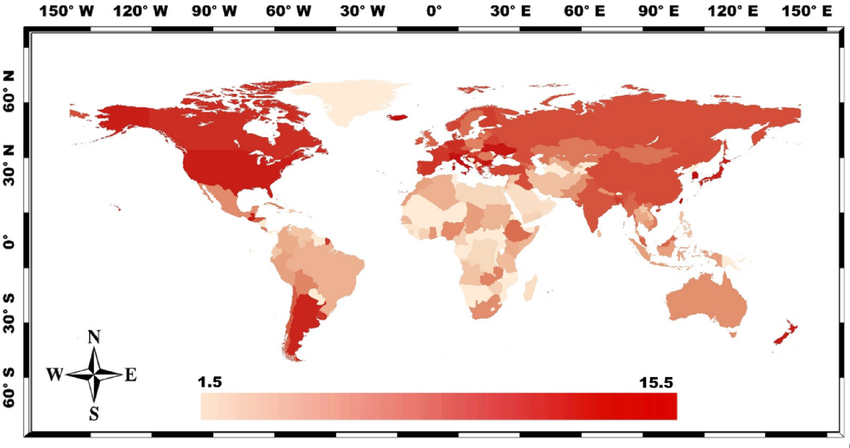
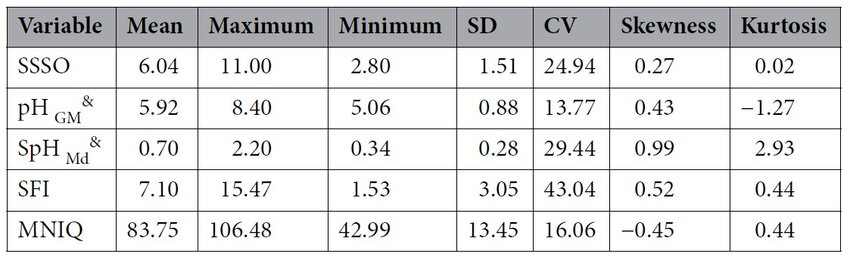
Soil fertility alone explains 34% of the differences in national IQ. Countries on the best soils (Mollisols, Andisols) average 10–15 IQ points higher than those on the wort soils (Oxisols, Ultisols), even before accounting for education or income.
This geographic pattern is visible in real populations. Japan and Taiwan sit on volcanic Andisols and consistently rank among the highest in global intelligence metrics due to their nutrient‑rich, high‑CEC soils. Meanwhile, much of equatorial Africa rests on Oxisols, soils so weathered and nutrient‑stripped that they produce chronically low micronutrient availability.
The further a soil’s pH drifts from 6.5, the more national IQ (MNIQ) declines. If your soil is too acidic (like much of the tropics), zinc and iron become unavailable. If your soil is too alkaline (like the Middle East), micronutrients get locked up too. The correlation between soil fertility and national IQ is r = 0.58, meaning soil alone accounts for 34% of the variation. Explaining 34% of a complex human trait is extremely high.
The real engine? A triangular dynamic between central constraints, local government ambition, and private capital's agility. Hundreds of cities—shut out of lucrative SOE joint ventures—formed underground alliances with private automakers to build their own industries.
Though much of real estate asset appreciation globally is undeniably due to hyperfinancialisation and unproductive money printing, it is entirely possible to have real estate asset appreciation without hyperfinancialisation.
When an underdeveloped area undergoes infrastructural and manufacturing investment, the appreciation in real estate prices captures the future potential of economic activity in that area; it is directly linked to productivity.
Unlocking this real estate appreciation mechanism is actually how many East Asian countries financed the building and operation of high-speed rail and metro projects, which are otherwise money-pits from a purely accounting POV.